
***Guest Appearance
Credits to:
https://www.youtube.com/@OurBlackEmpowerment
“It’s All About the Private Real Estate MONEY – Jay Conner shares on the GetOnCode show”
https://www.youtube.com/watch?v=eyPBbR6KMuM
What do you do when your bank unexpectedly closes the door on your real estate deals? For Jay Conner, it was the catalyst for not only building a multi-million dollar business, but also a movement in financial empowerment.
In a recent conversation with Seko Varner for the Get On Code podcast—an empowerment platform centered on Black empowerment and wealth—Jay delivered a masterclass on raising private money and the mindset needed to succeed in real estate investing.
From Bank Roadblocks to Opportunity
Jay’s journey began in 2003 with a humble start in eastern North Carolina. For six years, he and his wife Carol Joy relied on traditional banks to fund their house flips. Then, in January 2009, disaster struck: “We’re not loaning money to real estate investors anymore,” Jay’s banker, Steve, told him amid the global financial crisis.
Staring down the loss of his funding, Jay asked the pivotal question that changed everything: “Who do you know that can help you with your problem?” This led him to Jeff Blankenship, who introduced him to the world of private money, where individuals, not banks, finance deals. This lesson underscores Jay’s core advice: when you’re stuck, ask better questions and seek connections—your network is everything.
Private Money: It’s About Mindset
Jay is adamant that getting private money is first about owning “the real estate between your ears.” That is, changing your mindset from asking for money to teaching and serving others. Instead of desperately chasing investors, Jay suggests putting on your “teacher’s hat”—educating your connections about how they can get high returns through safe, secured investments in real estate.
Most of Jay’s 47 private lenders had never heard of private money or self-directed IRAs—tools that enable individuals to use retirement funds to invest in real estate deals, earning returns tax-deferred or even tax-free. By sharing knowledge and structure—not just asking for cash—he transformed relationships and built trust.
The Magic Script and Secret Sauce
One of the most actionable parts of Jay’s conversation with Seko was his script for approaching potential private lenders:
“I have great news for you. I can now put your money to work. I’ve got a house under contract; the funding matches what you have available, and closing is next week. You’ll need to wire funds to my attorney’s trust account, and I’ll send over the details.”
Notice what’s missing? There’s no pressure, no desperate pitch. Lenders are brought in before a deal exists, educated on the process, and their comfort and trust are prioritized. “Desperation stinks,” Jay quips, emphasizing that deals go smoother—and faster—when you lead with value.
Growing Your Network for Capital
Jay identifies three sources for private money: your warm market (people you know), your expanded warm market (business networking, such as BNI), and existing private lenders. But he encourages starting with those you know, especially retirees who may have unused funds and are tired of volatile, low-yield investments. He even shared his favorite openers—sometimes just “I need your help”—to spark curiosity and find partners, not just financiers.
It’s a Win-Win
Jay’s approach goes beyond transactions—it’s about changing lives. He shared heartfelt testimonials from investors whose retirements were transformed by safe, solid returns. His message is clear: real estate investing with private money isn’t just about personal gain. It’s a ripple effect, empowering families, community members, and everyone looking for better financial options.
Closing Advice
Jay left Seko’s audience with a powerful challenge, inspired by leadership guru John Maxwell: “When was the last time you did something brand new for the first time?” Growth and wealth await those who step outside their comfort zones.
If you’re ready to start raising private money, serve first, educate consistently, and remember: the most important real estate you’ll ever own is in your mindset.
Want to learn more from Jay? Check out his podcast “Raising Private Money with Jay Conner” or grab his best-selling book, “Where to Get the Money Now,” for just the cost of shipping. Empower yourself—the next opportunity is just one connection away.
10 Discussion Questions from this Episode:
- Jay Conner talks about the importance of empowerment and consuming things that uplift you. How does this philosophy relate to real estate investing, and how do you “feed” your mind for success?
- Jay shares that his biggest early mistake was not getting a mentor or coach. How crucial do you think mentorship is in real estate or entrepreneurship generally? Can you relate to his experience?
- When Jay lost his line of credit in 2009, he reframed his problem by asking, “Who do you know that can help you with your problem?” How has asking the right questions changed the course of your challenges?
- Private money and self-directed IRAs were brand-new concepts to Jay until another investor introduced him to them. What are some financial tools or strategies you wish you had learned about earlier?
- Jay emphasizes a mindset of serving and teaching others about private lending, claiming it helps overcome the “fear of rejection.” How do you feel about the idea of ‘leading with value’ as an approach to networking and raising capital?
- The episode highlights the “smell of desperation” when raising private money. Why do you think separating the teaching of the opportunity from pitching a deal is so effective?
- Jay mentions that most of his 47 private lenders had never even heard of private money before he educated them. How important is education in building trust and expanding your circle of influence?
- The three categories for finding private money include your warm market, expanded network, and existing private lenders. Which of these do you think would be most accessible/effective for a beginner, and why?
- Jay shares a story about securing his first $500,000 private lender by asking for help, not money. What does this say about the power of indirect approaches in business conversations?
- At the end, Jay relays a lesson from John Maxwell: “When was the last time you did something brand new for the first time?” What new thing are you considering trying this year, and how do you push yourself out of your comfort zone?
Fun facts that were revealed in the episode:
- Jay Conner’s First Private Lender Came from a Church Conversation: Jay met his very first $500,000 private lender not by pitching a deal, but simply by saying, “I need your help,” to a fellow church member after Bible study. That led to a life-changing partnership and even more referrals!
- Jay Brings Home a Big Check When He Buys Properties: Jay doesn’t just buy real estate—he frequently brings home a check at closing! By borrowing up to 75% of the after-repaired value (not just the purchase price) and buying at a steep discount, he can cover both the purchase and renovation, sometimes walking away from the closing table with extra cash for himself.
- Podcast & Book Giveaway: Jay hosts the podcast “Raising Private Money with Jay Conner” and has been sharing his expertise for over eight years. He’s so passionate about teaching others that he gives away his bestselling book “Where to Get the Money Now” for free—just pay shipping and handling!
Timestamps:
00:01 Starting Mistake: Lacking a Mentor
06:12 Self-Directed IRA Explanation
07:39 Private Money Teaching Initiative
10:57 Funding Script for Private Lenders
16:11 Streamlining Investment Conversations Strategy
17:56 Real Estate Investment Strategy
23:21 Expanding Your Network
24:42 Networking Strategy for Real Estate Investors
28:48 $50K Check Without Own Funds
31:39 25% Equity Cushion Strategy
35:22 Securing $500K via Indirect Lending
38:29 8% Interest Investor Pitch
41:45 Shipping Price & Real Estate Insights
46:57 Keys to Success: Embrace New Challenges
48:03 Try More, Succeed More
Connect With Jay Conner:
Private Money Academy Conference:
Free Report:
https://www.jayconner.com/MoneyReport
Join the Private Money Academy:
https://www.JayConner.com/trial/
Have you read Jay’s new book, Where to Get the Money Now?
It is available FREE (all you pay is the shipping and handling) at https://www.JayConner.com/Book
What is Private Money? Real Estate Investing with Jay Conner
http://www.JayConner.com/MoneyPodcast
Jay Conner is a proven real estate investment leader. Without using his own money or credit, Jay maximizes creative methods to buy and sell properties with profits averaging $67,000 per deal.
#RealEstate #RealEstateInvesting #RealEstateInvestingForBeginners #Foreclosures #FlippingHouses #PrivateMoney #RaisingPrivateMoney #JayConner
YouTube Channel
https://www.youtube.com/c/RealEstateInvestingWithJayConner
Apple Podcast:
Facebook:
https://www.facebook.com/jay.conner.marketing
Twitter:
https://twitter.com/JayConner01
Pinterest:
https://www.pinterest.com/JConner_PrivateMoneyAuthority
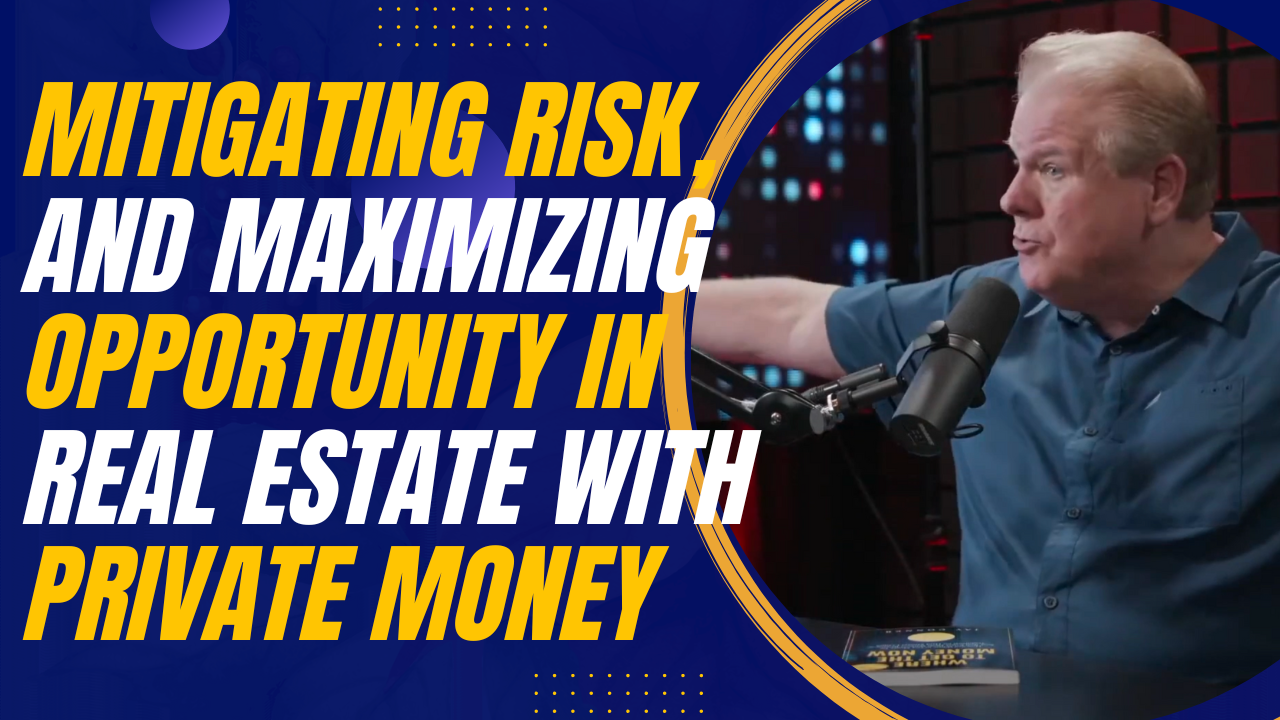
Mitigating Risk and Maximizing Opportunity in Real Estate with Private Financing
Seko Varner [00:00:00]:
Beautiful, Beautiful. Alright, well, I’m not the typical type of interviewer. I like having conversations. Our platform is called Get on Code—ourBlack Empowerment. We focus on empowerment, and we say that our code is empowerment. Everything you eat should empower you. Everything you consume.
Seko Varner [00:00:20]:
I’m drinking some water now.
Jay Conner [00:00:22]:
Okay.
Seko Varner [00:00:22]:
You know, you know, God’s nectar should empower you. Everything you consume mentally, in terms of podcasts, reading, things you take into your soul and to your mind, to your ears, should empower you. And so one of the ways that we look at empowerment is through having resources. And that’s where you come in. You know, it looks to me like you’re. If you’ve done 500-plus flips, you’ve found some strategy that seems to work well.
Jay Conner [00:00:53]:
Well, that’s. That’s because I screwed everything up first. Oh.
Seko Varner [00:00:59]:
Oh, okay. So let’s start there. Tell us about the challenges, the screw ups that you had to overcome.
Jay Conner [00:01:08]:
Well, I mean, one big one. Well, the biggest screw up was not getting a mentor or a coach when I started. I mean, you know, if some people think education is expensive, you know, try going out there and doing this thing on your own to start with. My wife Carol, Joy, and I started in 2003 in our small market here in eastern North Carolina. Only 40,000 people. And so the first six years, Sako, from 2003 to January 2009, all I knew to do to get my deals funded was go to the local bank and get on my hands and knees and say, Please fund my deal. And, you know, the lender would make me pull up my skirt and look at all my assets, financial statements, and credit score, and I had to abide by their rules. And, you know, Seiko, that worked out okay for the first six years.
Jay Conner [00:02:06]:
And I remember it like it was yesterday. I was sitting right here at this desk. You know, we still live in archaic times here. We actually still have handsets and cords attached to landlines, you know, here. But I sat here at my desk, Seiko, and I picked up this phone and I called Steve, my banker. Now, this was January 2009. So, just sort of think about what was going on then.
Jay Conner [00:02:32]:
And so I called up Steve and. And Seiko, I had these two houses under contract to buy. And I’d had this kind of conversation with Steve many, many, many times because he’d been. He’d been funding my deals for six years.
Seko Varner [00:02:46]:
Six years.
Jay Conner [00:02:47]:
Six years, 2003 to 2009. So I told Steve about my two deals that I got under contract and the funding required for the deals. And he said. He said, Jay, we’ve closed your line of credit. I said, what? What are you telling me? You closed my line of credit? He said, We’re not loaning money out to real estate investors anymore. I said, Steve, I got these two deals under contract. You and I’ve been doing business for six years, and you’re telling me that you’re closing my line of credit? Why? What in the world is going on? He said, Jay, don’t you know there’s a global financial crisis going on right now? I said, no, but you just gave me a global financial crisis because now I don’t have a way to fund my two deals. He says, well, the line of credit is closed.
Jay Conner [00:03:37]:
So I hung up the phone. I hung up the phone. Seiko, I sat here for a moment and I asked myself a very powerful question. And you know, the power is in the right question. The empowerment is in the right questions.
Seko Varner [00:03:51]:
Amen.
Jay Conner [00:03:52]:
And so I asked myself this question. I’m going to share this question with you and your audience. And I’m telling you, this question will help fix any problem anybody’s got. I don’t care if it’s financial, career, relationships, health, or whatever it is. Here is the question to help with the problem. By the way, these people running around saying, every problem is an opportunity. I want to throw up. I didn’t have any opportunity.
Jay Conner [00:04:18]:
Are you kidding me? I didn’t have an opportunity. I had a problem, right? Let’s face the facts. So you know. So here’s the question I asked myself. I said, Jay, who do you know? Who do you know that can help you with your problem? I tell you, it’s funny, Seiko. I immediately thought of Jeff Blankenship. Now, Jeff Blankenship’s a dear friend of mine and Carol Joy’s. He lived at the time in Greensboro, North Carolina, and he was flipping some houses.
Jay Conner [00:04:51]:
And I picked up this same telephone and I called Jeff and I told him what happened in hopes he’s going to help me with my problem, right? I told him. I told him. He said, Well, Jay, welcome to the club. I said. I said, What club are you talking about, Jay? He said, well, that’s the club of having your line of credit shut down at the bank. He said, My banker shut me down last week. I said, Well, I must be calling the wrong person. I said, Well, how are you going to fund your deals, Jeff? He said, Well.
Jay Conner [00:05:32]:
He said, Have you heard of private money? I said, no. I’d never heard Of I never heard of hard money now. I never heard of hard money. I said, private money? No. I don’t know what private money is. He said, Well, private money is when an individual like you or me uses their investment capital to fund our deals and loan us money. And we get to make the rules, we get to underwrite our deals, we get to set our interest rate because we’re not asking, begging, chasing, or persuading, or where instead of asking for a mortgage, we’re offering an opportunity, right? I said, That’s interesting. I said, No, I never heard of that. He says, Well, let me ask you another question.
Jay Conner [00:06:12]:
He says, Have you ever heard of self-directed IRAs? I said, I said, no, what’s that? He says, well, that’s where an individual like you and me can take current retirement funds that they’re not happy with. Maybe it’s in the stock market, maybe it’s a previous 401k. And they can take those retirement funds, and they can, without any kind of tax effect, they can move those funds over to an IRS-approved self-directed IRA company, also known as a third-party custodian, and they can loan that money out to us on our real estate deals. And they’re all the interest that we pay them, either accrued or quarterly or whatever, is either for them tax-deferred or tax-free. And I said, Jeff, I don’t have a clue what in the world you are talking about, but I said, you’re talking, talking mighty powerful stuff, right?
Seko Varner [00:07:05]:
Right, Right.
Jay Conner [00:07:06]:
So Jeff and I spent some phone, some time on the phone. He filled me in on what he was getting ready to do. And so then I hung up the phone, and Seiko, I put my program together, and here’s what I decided, okay? I decided, I said, look at here. I’m not going to chase, beg, persuade, sell, or try to talk anybody into anything. What am I going to do? I’m going to put on my teacher hat. My teacher hat. I can’t put on my teacher hat with my headphones. But I see it as private money.
Jay Conner [00:07:39]:
Teacher money. Teacher. And so what I decided I was going to do is go about teaching people in my connections, my warm market, people I go to church with, okay? People at business networking, international, people in my cell phone. I was gonna start teaching people what private money is, how they can get involved, and how they can invest in real estate, totally passively get high rates of return safely and securely. So the first thing I did was, you know, people ask me all the time, Seiko, they say, Jay, how do I get involved in private money? What’s the very first thing I need to do? And here’s the answer. You’ve got to own the real estate in between your ears before you start owning real estate out here. Meaning you’ve got to get your mindset right. You know, people say to me, a lot of times they’ll say, Jay, I’m fear of rejection.
Jay Conner [00:08:36]:
I’m afraid that if I ask for money, I’m going to be rejected. And I answer that question with this question. And that is, how can you be rejected if you’re never asking anybody for anything? You’re serving, you’re serving, you’re leading with value. You’re showing a world to the people in your connections initially. You’re showing people in your connections how they can earn high rates of return safely and securely in a world that they’ve never heard about. You know, here’s what’s interesting, Seiko. I have 47 private lenders that are funding our deals. And you know what’s, you know what’s interesting? Not one of them, 47 private lenders, ever heard of private money.
Jay Conner [00:09:24]:
Until I told them about it. They never heard of private money. They never heard of self-directed IRAs and how they could use retirement funds to do this and be involved. Over half of my private lenders are using their retirement funds. And I introduced them to the self-directed IRA company rep that I recommend, and they moved their money over. And so now all the interest they’re earning is either tax-deferred or tax-free, depending on the type of account they’ve got. So that’s the mindset. That’s the mindset is serving, teaching, right, and exposing people to this world.
Jay Conner [00:09:59]:
And you know, I did it one-on-one, I’ve done it on one. I’ve done it in groups. I’ve put on private lender luncheons where I’d invite 20 people in my network. Going to feed them lunch over at the Dunes Club at Atlantic beach and put my, and show my little PowerPoint presentation and teach, okay, this program with no deal attached to it. You see, I’ve never pitched a deal. Here’s a rider downer right here. Now here’s a writer downer, quote unquote. Desperation has got a smell to it.
Seko Varner [00:10:33]:
True that.
Jay Conner [00:10:34]:
Desperation stinks. Desperation stinks. And you know, when you’re talking to somebody, they can smell it. They can sense it. And look, when is the worst time in the world to be raising private money? When you need it. When you need it. When you need it. For a deal.
Jay Conner [00:10:56]:
Right. You know?
Seko Varner [00:10:57]:
Right.
Jay Conner [00:10:57]:
And that’s, that’s where the desperation comes out. So, so here, here is some secret magic sauce right here. Secret magic sauce. Separate the conversations of teaching the program and the opportunity, and then having a deal for your private lender to fund for you. I want to share with you, Seiko, and your audience right now the exact script. I’m going to give you the exact script right now as to what I say over the telephone to my private lender when I get a deal for them to fund. And they’ve. And they fund it every time.
Jay Conner [00:11:36]:
Every time.
Seko Varner [00:11:37]:
Let’s put a pin in that. Let’s put a pin on that. I want the people to know who we’re talking to, you know? Whoa. I mean, you. You really put up some great information, Jay. I mean, you. Whoo. Great information.
Seko Varner [00:11:51]:
I also want them to know who you are and where they can find you. Just in case they say, I need to find this guy immediately.
Jay Conner [00:11:58]:
Right, right, right.
Seko Varner [00:11:59]:
If they need to find you immediately, this is where they need to go. All right.
Jay Conner [00:12:03]:
Yes. So, to find me, what do you want to say that they’re interested in? I love it. Anyway, here we go. I want to give away my book to your audience. That’s a great way to connect with me. I want to give away my book.
Seko Varner [00:12:18]:
Okay. And that’s it. That’s a beautiful book. Is this the one you’re talking about? Where to get the money now?
Jay Conner [00:12:23]:
Yeah, this is it. Yeah. Where to get the money. And by the way, did you know the post office is still in business? Can you believe? Anyway, this is not an ebook. This is not an ebook. This is a book. Book.
Jay Conner [00:12:34]:
Book. It’s a. It’s a bestseller. Where to get the money. Now, Subtitle how and where to get money for your real estate deals without relying on traditional or hard money lenders. Okay, it’s 20 bucks at Amazon. But don’t spend 20 bucks. Let me give you the book for free. Just cover shipping and handling.
Jay Conner [00:12:54]:
And here’s where you are. Here’s where you go. I’ll autograph it and I’ll send it out three-day express delivery through the post office. JConor.com and I’m an ER not an or so www.j a y c o n n e r.com forward slash book. JConner.com forward slash book. And I’ll rush it right out. Yep, that’s it right there.
Seko Varner [00:13:18]:
Right here. Right here. So, yeah, beautiful. J. Connor.com, and I’m glad you spelled out that Connor has an er.
Jay Conner [00:13:27]:
Correct.
Seko Varner [00:13:28]:
So J-A-Y C O-N-E-R.com, forward slash book. And I set the hyphen details.
Jay Conner [00:13:37]:
Yeah, don’t worry about that. Just J connor.com, forward slash, book. And that’ll get you.
Seko Varner [00:13:41]:
Okay. I’m going to get rid of the details and make sure that we put the right thing up there. There we go. All right, good. So, man, I can’t wait to get my copy. So 695 for shipping and handling. That’s. That’s.
Seko Varner [00:13:57]:
That’s a winner. That’s a winner. Winner, chicken dinner. Now, the other thing they love and I wanted the Code Keepers to know is, you know, we’re a podcast. I love podcasts. Jay has a podcast. I’ve listened to about five episodes so far.
Jay Conner [00:14:14]:
Okay.
Seko Varner [00:14:15]:
Raising Private Money with Jay Connor.
Jay Conner [00:14:17]:
That’s it. You have some eighth. We’re in our eighth year. Eighth year of podcasting. And. And what I do on the podcast is I interview people all the time. I get two shows a week. One comes.
Jay Conner [00:14:30]:
One comes out early Monday morning, and the other one comes out early Thursday morning. And I’m all the time interviewing other peowhothat have raised private money, and I dig into their brains as to how they go about raising private money.
Seko Varner [00:14:43]:
Okay. Wow. Yeah. I was surprised to listen and find out that you were interviewing somebody. And I was lying. Jay knows all this, but you. You. You allowed them to shine and to go on to the information that you were already providing.
Jay Conner [00:14:58]:
Absolutely.
Seko Varner [00:14:59]:
And Code Keepers, you can also go. You know we’re YouTubers, right?ght. You can go to Raising private money for real estate. He has a YouTube channel. Raising private money for Real estate. Just the at sign. Raising Private Money REstate. And there are a plethora of videos up here.
Seko Varner [00:15:18]:
I’m seeing at least 40.
Jay Conner [00:15:20]:
Yeah, there’s more than that.
Seko Varner [00:15:22]:
Okay. Okay.
Jay Conner [00:15:23]:
Yet there are hundreds and hundreds and hundreds.
Seko Varner [00:15:27]:
That’s crazy. That’s crazy. And Code Keepers, you also know that I do my work. So, one of the great things is that Jay’s team reached out to me and shared their one sheet. And so he talked about how he started and how he relied on his local banker. I’m telling you guys, this is. This is the real deal. This is the real deal.
Seko Varner [00:15:52]:
Holyfield for real. So I want to go through a lot of the interview questions that you have in here, your discussion on talking points. But to be honest with you, I just want you to keep talking and keep sharing like you were doing earlier. You were just giving us the secret sauce.
Jay Conner [00:16:11]:
Yes, yes. So here’s the script, here’s the script. So remember, the secret sauce is we’re separating conversations between teaching the program, the opportunity. And when they say, yeah, I’m interested in this, will they let me know how much they’ve got to invest? Remember, there’s no deal, no deal attached to this initially. And if they’ve got retirement funds and they’re not happy with the returns on the retirement funds, then the next thing I’m going to do is introduce them to a self-directed IRA rep and get their questions answered. And it normally takes about two weeks to four weeks to get their account funded, you know, before they can fund a deal. So you talk to the program, and they love it. They’ve told you how much they have to work with.
Jay Conner [00:16:54]:
And you don’t have to ask. I mean, you teach, they’re gonna tell you, right? And so let’s do a little role play here, Seiko, and I’m gonna make it easy for you. I’m gonna role-play, I’m gonna role-play with you. And you ain’t got to say a word except shake your head, right? You ain’t got.
Seko Varner [00:17:10]:
Okay, I can do that. I’m pretty fluent. Make fluent. I can shake on it both sides, up and down, sideways, you know.
Jay Conner [00:17:23]:
Holy mercy. Let’s assume, let’s assume, Seiko, that you are one of my new private lenders. And let’s also assume that you’ve got $150,000 that was sitting in a 401 (k)401k that you’re not happy with from a previous employer. And so you got $150,000 sitting over there. I’ve taught you the program. You love the program. You love the interest rate. You know, you already know what the maxiloan-to-value is of after-repaired value, by the way, I don’t borrow a percentage of the purchase price.
Jay Conner [00:17:56]:
I borrow a percentage of the after-repaired value. That’s why I always bring home a big check when I buy every deal. Who wants to get paid to buy properties and take their own money to the closing table, right? So you know the whole program. And you told me you had 150,000. I introduced you to self-directed IRA, rep, and now your account’s got fun, and you’ve let me know you got money sitting there, you’ve got the 150,000 sitting in your account. And I tell you, Seiko, I’m going to call you just as soon as possible when I can put your money to work. And you say okay, all right, so let’s say a week goes by, a couple of weeks go by, and I pick up my rusty dusty handset here for my telephone and I dial you up and you answer the phone. There you are.
Jay Conner [00:18:49]:
And we say hello, we have a little chat at and here’s the script. Here’s the script, verbatim. Seiko, I got great news for you. I can now put your money to work. I’ve got a house in Newport under contract. It’s got an after-repaired value of $200,000. Now the funding required for the deal is 150,000. That matches up to what you’ve got.
Jay Conner [00:19:16]:
Closing is going to take place next Friday. So you’ll need to have the funds wired to my real estate attorney’s trust account by next Thursday. I’m going to have my real estate attorney email you the wiring instructions. That’s the end of the conversation. goodness”sakesakes. The most stupid. The most stupid. The most stupid question I could have asked SeikoDos: Do you want to fund the deal? Of course, Seiko wants to fund the deal for the following reasons.
Jay Conner [00:19:47]:
Number one, he moved the money over to a self-directed IRA company that I recommended. Number two, he’s not making any money until I put his money to work because Seko trusted me with what I had taught him about the program. And thirdly, he knows I’m not going to bring a deal for him to fund unless it matches the criteria of the program that I already taught him. And so Seiko is elated, Seiko is elated that I have called him with the great news phone call because he’s been waiting to start making money.
Seko Varner [00:20:26]:
Yes, yes, yes. I’m excited. Let’s make this money, man.
Jay Conner [00:20:32]:
So it’s, it’s like so, but, but let’s, let’s take a second and just unpack what’s going on here. Right? I didn’t try to slam dunk Seiko and pitch him on a deal and teach him the private lending program in the same conversation. I mean, a confused mind takes no action, right? So I want to keep it simple. Want to keep it simple. And by me not having a deal attached t,,o me teaching the opportunity.
Seko Varner [00:21:01]
We weren’t desperate.
Jay Conner [00:21:02]:
I wasn’t desperate. I wasn’t desperaWhenwhen I was sharing the program with you, lly a sense that you needed me more than I needed you. Because we have lots of private lenders. There’s private money all around. There’s, there’s more private money than we can use todBeforer to Covid, five years ago, prior to Covid, there was $18 trillion in cash sitting on the sidelines. $31 trillion in ash sitting on the sidelines looking for a home.
Jay Conner [00:21:42]:
Looking for a home.
Seko Varner [00:21:43]:
I’m home, baby.
Jay Conner [00:21:45]:
Come home. Come homePapapapa. Come homePapapapa. You know, and so that is just critically important because you see these people that you’re sharing this with, thave have hey never heard of it. They never heard of private monThere arere’s three categories of where you find private money. Three categories.
Seko Varner [00:22:05]:
What are they? What are they?
Jay Conner [00:22:06]:
The first category is your warm market, your connections that you already have. They’re in your cell phone, your social media, your Facebook friends, you, you know, your LinkedIn, your email list. If you’re over 60 years old, you still might have a Christmas card list. And you only get three Christmas cards these days. But you know, wherever you got connections, you know, people you go to church with. Okay. Yeah. Hey, here’s a writer downer question.
Jay Conner [00:22:34]:
Category number one, write her downer question. Where do you go every week and see the same people? Where do you go, where do you go on a regular b, basis and see the same people? Now, the reason I asked that question is that when you are seeing people with, and you are in their top of mind awareness on a regular basis, those are the people that trust you the most. Right. I mean, do you have you got the longest term relationships with?
Seko Varner [00:23:07]:
Yeah.
Jay Conner [00:23:08]:
You know, so those are easy-peasy lemon-squeezyeezy people. Right. So that’s the first category. People in your own, people in your connection.
Seko Varner [00:23:19]:
So that’s the warm market. Right.
Jay Conner [00:23:21]:
Okay, that’s the warm-up. The second category is what I call the expanded warm market. So what’s the expanded war market that’s growing your network? Because you know, we all know there’s a direct correlation between the value of your network, your relationship capital, your relationship capital and your net worth. So you’re going to, you’re going to. Meaning if you are focused on raising capital, you’re going to run out of people eventually. You’re going, you’re going to run out of people eventually in your market. So, how do you expand your network so quickly? Here’s a writer downer right here. Business Networking International.
Jay Conner [00:24:01]:
B I I. Bni. Yes, bni. And have you ever been a member of BNI Seiko?
Seko Varner [00:24:07]:
I’ve been to three BNI meetings, separate meetings, not with the same group. But because I also have a contract during the daytime, I’m not able to normally attend most of the BNI groups.
Jay Conner [00:24:19]:
Gotcha. Gotcha. Well, I’ve gotten Millions of dollars, new funding by being by beingBNI bni. And the great thing about BNI, Ivan Meisner founded it decades ago. Their motto is givers gain. Givers gain. That’s where we’re leaving that servant’s heart. Well, the purpose of the BNI local chapters is for each member to share leads with each other.
Jay Conner [00:24:42]:
And they truly only have one Realtor, one real estate attorney, you know, one general contractor, one H Vac, one essential oil lady, you know what I’m saying, right? One seat. And so your job is to support each other and, you know, take on the seat of the. As a real estate investor, you teach people about private money, and you’re letting your fellow members know who you want to get in front of. Right. Which, by the way, I tell people to make their list. How should you start your list? Here’s how you start your list. In your warm market. People in your cell phone that are retired, people in your cell phone that are retired, there’s a good chance they got retirement f and, and they may not be happy with it.
Jay Conner [00:25:27]:
So that’s your expanded war market. The third category of where you find private money is existing private lenders. These are people who are individuals just like you. And I’m not talking hard money brokerages, just individuals like you and me that are already privlenders and already lending money out. Well, my community, my net, my community of real estate investors that follow me. I give them access to what we call our private lender data feed. And that is a data feed that we update every month. Every month.
Jay Conner [00:26:03]:
And we get every private lender closing in the nation. We got their contact information. We know what kind of interest rate they’re getting on every deal. And that’s great. But let me tell you something. I like the warm market and the expanded war market better than existing private lenders because with existing private lenders, I’m not putting on my teacher hat.
Seko Varner [00:26:27]:
Right? Right.
Jay Conner [00:26:28]:
They already know what private money is, and a lot of them are spoiled. And they’re already getting 10 and 12%. I don’t pay 10 and 12%. I pay 8%. And no points. 8%, no points, no extension fees. I get 100% funding for the purchase. I get 100% funding for THE rehab, if there’s a rehab.
Jay Conner [00:26:49]:
And here’s another rider downer right now. Here’s another rider downer. When you’re paying all cash, when you’re paying all cash with private money on a real estate deal, if you’re bringing home a big check when you buy. You’re paying too much for the property. That’s a double check right there. See, you’re only bringing home a big check because you’re buying the property at a significantly discounted price. And you’re bringing him a big check because you can borrow up to 75% of the after-repaired value. Hmm, I didn’t say 75% of the purchase price.
Jay Conner [00:27:29]:
Right, so let’s go back to that deal a second ago that you funded for me with your $150,000 retirement money. Okay, so let’s just run that, run that math real quick. It had an after-repaired value of $200,000. I bought it for $100,000. That’s 50% of the after-repaired value. Well, how did I get that kind of deal? Because it needs a rehab, it needs renovation, and they not, they can’t sell it in the multiple listing service in the current condition that it is. So let’s say it’s got $35,000 in renovation budget. Follow the math.
Jay Conner [00:28:10]:
Here’s how you’re going to bring home a big check. Here’s the math. $200,000 after repair value. I can borrow up to 75% of the after-repaired value. Well, 75% of the after-repaired value is $150,000. So SACO is wiring into my real estate attorney’s trust account 150,000. Well, if I’m buying it for $100,000, here comes Seiko’s 150,000 into the trust account. We thousandssand of that, 150,000 goes to the seller.
Jay Conner [00:28:48]:
Here’s an excess cash to close check coming to me for $50,000 less a little bit of closing costs. So that’s how I’m bringing home a $50,000 check on that transaction and taking none of my own money to the closing table. Now I’m going to take 35,000 of that 50,000 and do the renovation. That leaves me an additional 15,000 to do whatever in the world I want to. I can do it for carrying costs, cutting the grass, utilities, take Carol Joy to Dallas Fort Worth, Texas on the airplane, whatever, whatever I want to do, because that’s I’mI’mll I’m just pulling out that, that extra equity. So obviously I’m not keeping the majority of that $50,000 when I close. I’m going to use the majority of it for the renovation. But that’s how the math flows, you know, as to how I’m bringing home a check without taking any of my own money to the closing table.
Jay Conner [00:29:45]:
When I buy the property. And so make sure everybody understands this is not hard money. There’s no middle person. This one-on-one transaction is between you, the real estate entrepreneur, and the individual who’s funding the deal. By the way, you can have more than one private lender secured by the same property. You see, we’re not borrowing unsecured money. Every private lender’s got a promissory note, and it is collateralized by the property. Property, okay, that’s being purchased in North Carolina, in Texas, it’s a deed of trust.
Jay Conner [00:30:20]
In most states, most people call it a mortgage. Right. So we’re going to give our private lenders the same exact protection that a bank gets. There’s a right or a downer. The private lender is the bank, and the private lender does not own any of the property. This is not a joint venture partnership. They get a set 8%, and that’s an annual percentage rate, by the way. 8% annual percentage rate.
Jay Conner [00:30:47]:
So if I’m only using the money for six months, I’m paying 4% because I only had it, you know, so it’s 8% APR. And so they’re the bank, right? And we protect them just like the bank. I’ll take a second if you want m,e to Seiko and share exactly how we protect our private lenders. Here’s how they got a promissory note. We’re collateralizing the note with the deed of trust or the mortgage. So if I don’t pay them, there’s a writer downer. If I don’t pay them, the property does. If I don’t pay them, the property does.
Jay Conner [00:31:22]:
That’s their legal recourse. If I don’t pay them, they get the property. Now, of course, they don’t want the property. That’s why they’re a private lender. They want me to do the work. Right. But that’s their protection. We also, as I said, don’t borrow more than 75% of the after-repaired value.
Jay Conner [00:31:39]:
The property in our example is worth $200,000. After it’s prepared, I’m not going to borrow more than 150. So we’ve got what’s called a 25% equity cushion. A 25%. So if the prices start coming down in the market or whatever, they are protected, right? I, we’ve got plenty of time to cash out on this deal, and they don’t have to worry about, you know, losing money. I also named the private lender as a mortgagee. I named the private lenders a Mortgagee on the insurance policy. So if there’s ever a claim on the insurance policy for that property, then the insurance company makes the check payable to the lender and to my company.
Jay Conner [00:32:22]:
So now the lender has to sign off on that check before I’m able to cash it. Well, you see, you see, my private lenders don’t know this, but that’s in the program. I teach them this, right?
Seko Varner [00:32:35]:
Okay.
Jay Conner [00:32:36]:
I named them on the insurance policy, I mean, excuse me, on the title policy as an additional insured. So there are any title issues down the road, then they are protected. So even though they are not a partner, even though they’re not a joint venture partner, I treat them like a partner and protect them. And I tell you what, when you’re in this world of teaching people, you have got to look out for your private lenders, particularly like my private lenders. They, they never heard of this world. They’re trusting you. They are counting on you to take care of them.
Jay Conner [00:33:11]:
And let me tell you something, at the end of the day, your private lenders, the way the business is, they’ll not invest in your deals. They’re not investing in your deals. What are they doing? They’re investing in you. That’s what they’re doing. Right? And so they’re looking for your confidence, they’re looking for your trust. And as I said, let’s go back to our example of you funding the deal with that retirement fund money. They are sitting on the edgetheir seatsseats waiting to fund your deal because they have relied on you to be able to perform and put their money to work after they move that money over.
Seko Varner [00:33:50]:
I love it. I love it. Code Keepers, I hope you’re paying attention. You know, Jay mentioned earlier that he’s going to allow you to get a copy of his book. You just pay shipping and handling. 695. You know, for something that can make you millions, that’s negligible. A CKeeperpers.
Seko Varner [00:34:08]:
Also, want to make sure that you remember that the documentary mixtape series that I’ve been putting out, Generational Flip, is available, and right now you can find www.generationalflip.com or you can find it on YouTube. Speaking of that. Yeah, that’s the documentary trailer for Generational Flip. You can find th@ at@ generational flip dot that’s generational flip dot com. You can also find it on YouTube. The same as you can find Jay Connor. You can find him on YouTube. You can find his podcast.
Seko Varner [00:34:40]:
I love it. I love it. You can get his book 695. For something that can make you millions, that’s an investment you have to make. Jay, you. You just really kind of opened our minds collectively about the possibilities that exist. When you’re, you know, looking at creating your private money lending cohort.
Jay Conner [00:35:03]:
Yes, yes, thank you. I don’t know whether we’ve got any time left, but if we do, I’ll share a short story as to how I got my first $500,000 lender without asking for money.
Seko Varner [00:35:17]:
Ooh, you know what? We just added time. Time was added.
Jay Conner [00:35:22]:
So this will take about three minutes, and I’ll turn it back over to you to wrap up Seiko. But. So here’s how I got my first $500,000 lender right after the bank cut me off without asking for monThere arere’s two different kinds of conversations lead in conversations I like to have with a potential private lender. One is called the direct method. One’s called the indirect method. So I don’t have time to share the direct method right now, but I’m going to share the indirect method by sharing this story. Right after I was cut off from the banks back in 2009, I learned about private money, put my program together, put on my teacher hat, and went about leading with a servant’s heart to teach this program.
Jay Conner [00:36:05]:
So this story took place from 7:30 pm to 30 pm on a Wednesday here in Morehead City, North Carolina, at the Church of Christ at 209 Barber Road. That’s where Carol Joy and I have been members since 1988. We’re very involved in the church and love our church family. So we went to Bible study. On Wednesday night. I walked into the foyer, I was looking for a gentleman by the name of Wayne. Now, Wayne and I had known each other for a while, and I walked up to Wayne d I saWayneayne, I got something I want to talk to you about confidentially. After Bible study.
Jay Conner [00:36:41]:
Have you got a few minutes after Bible study? He said, Well, sure, Brother J. So we sat down, we had Bible study, and got together afterwards, we went down to the nursery, we shut the door, and here is exactly. Here’s the script. Here’s exactly what I said to Wayne. I, saWayneayne, you know everybody in this town. And he did. He was the Zenith Television dealer in Morehead City, North Caro, for decades. And if you don’t know who the Zenith Television dealer is or was, that means you’re too young to remember life before Walmart came to town.
Jay Conner [00:37:20]:
The Xena Television did. It was cellular TV. Finance your TV and even repair your TV. They repaired TVs back then. I, Wayneayne, you know everybody in this town. He was very well connected to the Rotary Club, etc. And here’s the magic phrase. I, saWayneayne, I need your help.
Jay Conner [00:37:39]:
I need your help. I, Wayneayne, what I’ve now done is I’ve opened up my real estate investing business by referral only, and I’m now paying insane high rates of return to my investors. When you run across someone who’s complaining about the stock market or not making hardly any money in the local bank iCDa cd, would you refer them t,o me, and I’ll share my program with them? Wayne looked at me. He, saWellwell, now, brother Jay, what you got going on there? And I am, are you? What do you mean, Wayne? Are you saying you might be interested? He, saWellwell, I might be interested. I saWhy why is that? He, saWellwell, we’re only making 3%. And that’s what it was. We’re only making 3% in the local bank, and we’re losing money big time in the stock market.
Jay Conner [00:38:29]:
What kind of rates are you paying there, Jay? I said, well, it sort of depends on the deal. What kind of rate sounds high to you, Wayne? He saWellwell, we’re only making 3% in the local bank. He said, I don’t know, maybe 5% or 6%. I said, Wayne, I can’t pay you 5 or 6%, but I can pay you 8%. He said, Put me down for $250,000. So the next day I went to his house, I sat down with Wayne and his wife, and I put on my teacher hat, and I shared the whole program with them. The interest rate I’m paying of 8%. Can they get their money back early in case they have an emergency, my max loan-to-value ratio, and how are they protected, and all the points of the program? After two cups of coffee, that $250,000 became $500,000 that afternoon, right? And so I told them, with what I’ve been sharing here on your show, Seiko, I said, I’ll put your money to work for you just as soon as possible.
Jay Conner [00:39:36]:
And I did. And. And you know what? When I had that conversation. So let’s unpack. What I said. I said, I need your help.
Seko Varner [00:39:43]:
Hold on, hold on. Let’s stop. We gotta clap again. We gotta clap that up. Clap that up. Whoa, whoa. And it began with, I need help.
Jay Conner [00:39:57]:
I need your help. I need your help. You see, I didn’t ask him for money. I asked him to spread the word, and boy, did he ever. He and his wife became private lenders.nd, I lost count. I don’t know how many new private lenders they referred to us because of what they had enjoyed. And you know, one more pand I’ll, and I’ll be done.
Jay Conner [00:40:20]:
Seiko, I turn it back to you, but one more point. I never guessed when I started out raising private money like this and leading with a servant’s heart, I never guessed what the impact was going to be on our private lenders like Wayne and his wife. We got a handwritten note from them thanking us for changing their retirement years. They say, Jay and Carol, Joy, we would not have been able to train and do the things that we’ve done all these years unless you had told us about private money. So it’s all about win, win, all about win, win.
Seko Varner [00:40:59]:
And it sounds like you’re winning and winning and winning,ning who? Oh, man, I’m just so glad that we got a chance to talk, Jay. You’ve, you’ve kind of opened up a lot to think about, a lot to act on.
Jay Conner [00:41:18]:
Yeah.
Seko Varner [00:41:18]:
And I think that’s the important piece. It’s a lot to act on. So look, I can gojconnor.com.com and that’s once again J A Y C O N N E R. All right, Jay. Connor.coI. I can get the book if I go to j counter.com forward slash book. And I’m just going to pay the 695 and a ckeeper’s share. I’m back on this page.
Seko Varner [00:41:45]:
And that’s the shipping price as we kit now. It might go up, it might go down, but whatever it is, is great. It’s a great deal. Here’s more about Jay. Where can I get the cash to do my real estate deals? Well, we just kind of went through that. That’s who. And man, I’m telling yoully learned a lot just listening to you because even though I’m familiar with private money, I hadn’t heard about it the way you just described.
Jay Conner [00:42:19]:
I love it. Seiko, thank you so much allowing menity to share because that’s what I’m passionate about is sharing with other real estate investors, whether they’re brand new looking to get their first deal, or seasoned real estate investors looking to stop paying crazy rates and points and extension fees and lead with a servant’s heart and make a difference in other people’s lives. It’s never heard of this opportunity, man.
Seko Varner [00:42:47]:
Y’all, code keepers, if you say amen, give an amen if you say Ashe, give a Ashe. If you say let’s go, give a, let’s go. This is the type of information that’s going to lead to the empowerment that we need to see. I’m checking this out. This is intriguing. Why private money will skyrocket your real estate business. Yes, seven reasons.
Jay Conner [00:43:13]:
That’s right. Yeah. So that is, that is an ebook. That’s mook book that we were talking about. But that’s an ebook. That’s an ebook that I also wrote that folks can download as well.
Seko Varner [00:43:25]:
All right, so if I just click here where it says learn more. All right, this gives me some other information, and I can click here to download the PDF. I guess I’ll submit my email address and all that information, and that’s all I need to do, and next thing I knowwI be get this great information from you.
Jay Conner [00:43:45]:
You got it, brother. You got it.
Seko Varner [00:43:47]:
You just told us how you changed the life of the first person who decided to invest and support, and be alongside you with this project. Tell me about some other lives that you’ve changed. I mean, Jay, I know you’ve changed some lives. I. Well, I know you’ve been the conduit for life-changing opportunities. Let me put it that way.
Jay Conner [00:44:12]:
Yes, yes. Well, I’ve. The biggest opportunity I’ve had to change lives are people that come to my live event, which I do, which I do three times a year. It’s called the Private Money Confer,ence and it’s right here in Morehead City. AtlanBeacheach just had one recently, three weeks ago. And we had people from all over the nation. People from California, Texas, Florida, Arkansas, Michigan, Minnesota, New Jersey, everywhere from all over. And there were brand-new real estate investors in the audience.
Jay Conner [00:44:46]:
The majority of the audience were people who had done real estate, but they were either running out of money or they were sick and tired of paying, you know, high interest rates. The hard money lenders or the local agency were looking to make the rules. And so I’ve been so blessed. Oh Seiko, I have been. Carol, Joy, and I have been so blessed. We have been able to impact thousands now thousands of people by exposing this world of private money and how you can leave with a servant’s heart, be a teacher, and make a difference in other people’s lives. An,d so because of the podcast, my live events, that’s where Illy been able to make the biggest impact and reach so many people.
Seko Varner [00:45:30]:
Wow. Live events. I’m so glad we’re back to Live Events after the pandemic. Eemic, it sounds to me like your live events are life events.
Jay Conner [00:45:42]:
I like that.
Seko Varner [00:45:43]:
Itely change your life. And I was just looking at some of the testimonials on your website, too. You have some great testimonials. They have support and have changed their lives by supporting you, you know. His course opened my eyes to all the possibilities of private lenders. I sent a copy of Jay’s brochure to an attorney. I got $100,000. Give me a call as soon as you can.
Seko Varner [00:46:12]:
People want to get tapped in, and I’m glad that folks want to get tapped in. Let’s. Let’s tap in. Let’s tap in. Any last thoughts, Jay? Any last thoughts that you can share with the code keepers, and they can share with the people that they know?
Jay Conner [00:46:28]:
Yeah, yele, let me share this question. I learned this question from John Maxwell. I was blessed. Carol, Joey, and I were blessed to be able to actually meet John Maxwell in person and have a little visit with him and hear him do a keynote bestBest speaI’veer I’ve ever heard in my life. Best speaker. I was on the edge of my seat, and. And when it came to Q and A, an audience member said, Mr.
Jay Conner [00:46:57]:
Maxwell, let me ask you a question. What’s the number one thing that contributed the most to your success? He said, well, he said, I’ll answer that with two things. He says, first of all, he says, write down this question. And so here we go. And the question he said to write down was, ask yourself, when was the last time you did something brand new for the first time? In other words, what have you done most recently, or how long has it been since you did something new that was out of your comfort zone? Because getting out of your comfort zone is where all the growth takes place. People who are successful become comfortable with being uncomfortable by doing new things. And the second answer to the question was, he says, what lent itself to my success more than anything else is, he says, I’m just willing to fail more than anybody else. He said, on average, when somebody tries something new, they’ll succeed maybe 30% of the time.
Jay Conner [00:48:03]:
He says, if somebody tries 10 things that are new, they win three times and fail seven times. He says, I try in the same length of time a hundred new things. I’ll fail 70 times, but I’ve got 30 wins. Try more new things more often, and it’ll take you to the next level.
Seko Varner [00:48:27]:
That’s good. That’s juicy. That’s Angus good. Wow. That’s good, man. Hey, man, salute to you, your lovely wife, your church family, and your investor family. I hope that all of us are blessed together. I hope that the prosperity continues to show and grow.
Seko Varner [00:48:47]:
I hope the prosperity becomes like rain. It just spreads everywhere. Jwaterters and plant seeds, let those seeds grow. Jay, I’m supremely thankful for everything you share with the Code Keepers today.
Jay Conner [00:49:03]:
Me too. I’m so thankful to have met you, Seiko, and to be on your amazing show. You got an amazing show with all the sound effects.
Seko Varner [00:49:12]:
Man, this has been great. Code Keepers, make sure you tap in with everything that Jay has to offer. All right, I stopped.