
When it comes to building wealth, most people think about grinding away at their day jobs, stashing cash in retirement accounts, and hoping the stock market smiles kindly on their investments. But what if there was a smarter, more strategic way to make your money work for you, so effortlessly, it feels almost unfair?
On a recent episode of Raising Private Money with Jay Conner, private money expert Rich Lennon shared his journey and the powerful lessons he’s learned about growing wealth as both a real estate investor and private money lender. If you’re looking to make your money work smarter, not harder, here are the key takeaways from Rich’s fascinating approach.
The Shift from Busy Investor to Effortless Lender
Rich’s story is one that many investors dream about. After spending years as a full-time real estate investor—flipping four to five homes a month—he decided to pivot in early 2020, right as the pandemic hit. He’d reached his financial “magic number,” felt burned out by the daily grind, and recognized that lending money to other investors was not only less stressful but also more profitable and less time-consuming.
Today, Rich manages over $8 million in private loans and works less than five hours a week. The secret? He stopped being the one swinging hammers and started being the one providing the capital—the backbone of every successful real estate deal.
Why Private Lending Makes Sense
Private lending is all about putting your money to work for you. Instead of seeking out, purchasing, renovating, and selling properties yourself, you provide the funding for other experienced investors to do the heavy lifting. Rich’s lending model allows him to earn double-digit returns while enjoying a much lighter workload. Just three hours of due diligence per deal—mostly underwriting the property and paperwork—yields returns that rival or exceed what he made flipping properties himself.
How Rich Minimizes Risk
A key pillar of Rich’s strategy is underwriting based on the asset, not the borrower. He relies on rigorous, asset-based criteria, typically lending no more than 70% of a property’s After Repair Value (ARV) minus repairs. This conservative approach protects him if a borrower defaults, since the underlying real estate is usually worth more than the amount loaned.
Rich has also embraced technology by leveraging Artificial Intelligence (including ChatGPT) to analyze comps and value properties. According to him, AI is now just as accurate as human analysis for determining ARVs, which speeds up his process and further reduces his risk of error.
Unlocking Massive Returns with Private Money
One of the most remarkable aspects of Rich’s model is how he combines his capital with what he calls “lazy money”—funds from passive investors looking for solid, predictable returns. Here’s how it works: if a borrower needs $200,000, Rich might put up $100,000 while another investor provides the other $100,000. He then lends out the total at 20% interest to a flipper. He pays his partner a flat 10% return, keeping the remainder for himself. The result? His money often earns a 30% annual return, while his partners enjoy passive income with little involvement or worry.
The Power (and Simplicity) of Self-Directed IRAs
Rich also teaches investors how to supercharge their retirement savings using self-directed IRAs. By flipping or funding real estate deals within a tax-advantaged account, investors can grow their portfolios exponentially faster than traditional stock market investments allow. While there are rules to follow, the key advantage is that all profits compound tax-free, allowing even small accounts to snowball rapidly over time.
Final Thoughts: Action Drives Wealth
The ultimate message from Rich Lennon is simple but powerful: take massive action and let your money move. Whether you’re tired of riding the stock market rollercoaster or you’re looking for ways to scale your wealth with less hustle, the world of private lending offers real opportunities. As Rich says, having the courage to use other people’s money responsibly and strategically is what sets wealth builders apart from the rest.
10 Discussion Questions from this Episode:
- What motivated Rich Lennon to transition from flipping homes to becoming a private money lender, and how did the pandemic influence this decision?
- Rich mentions earning 30-50% returns as a private lender. What are the mechanics behind achieving those high returns, and what risks might be involved?
- How does Rich decide which deals to fund as a private lender? What role does asset-based lending play in his underwriting criteria?
- In the episode, AI tools like ChatGPT are used to determine after-repaired values (ARV). How do you think artificial intelligence is changing the real estate investing landscape?
- Jay Conner and Rich discuss leveraging self-directed IRAs for real estate investments. What are some advantages and rules to be aware of when using retirement accounts for real estate deals?
- Rich describes the importance of teaching his children financial literacy and entrepreneurship early on. What are your thoughts on his approach to kids and money?
- What qualities does Rich look for in his “lazy money” partners, and why does he prefer more hands-off investors?
- Rich emphasizes the value of taking massive action and understanding the pivotal role of moving money in real estate. How do you interpret this mindset for your own investing or business endeavors?
- What are the benefits and challenges of building a real estate investing business that requires minimal weekly involvement, as Rich has done?
- After listening to this episode, what new strategies or perspectives might you consider in your investing journey, whether you’re interested in lending, flipping, or growing your retirement accounts?
Fun facts that were revealed in the episode:
- Rich Lennon Uses Artificial Intelligence to Value Properties
Rich shared that he leverages AI, including ChatGPT, to analyze real estate deals and determine the “after-repaired value” (ARV) of properties. He believes AI has become just as accurate as a human expert at picking comparable sales, and it saves him tons of time during underwriting! - He Works Less Than Five Hours a Week—Yet Handles $8 Million.
After flipping hundreds of houses for over a decade, Rich transitioned to private money lending and now manages over $8 million in funds. Believe it or not, he does all this while working less than five hours a week! - Rich Teaches His Kids About Money—Complete with Family Taxes!
Rich didn’t grow up with a financial education, so he’s teaching his kids early by giving them allowances, charging a “family tax” of 50%, and encouraging them to invest or spend what remains. His kids even lend money in some of his deals—talk about starting young!
Timestamps:
00:01 High-Yield Real Estate Lending
05:01 Efficient Deal Management Strategy
08:19 Asset-Based Lending Strategy
11:47 Understanding ARV in Real Estate
14:33 Growing IRA Through Real Estate
17:53 Richmond Loan Strategy: 20% Interest
21:00 Ideal Investor Profile: Seeking Stability
23:37 Connect with Rich Lennon:
24:28 Teaching Kids Financial Responsibility
Connect With Jay Conner:
Private Money Academy Conference:
Free Report:
https://www.jayconner.com/MoneyReport
Join the Private Money Academy:
https://www.JayConner.com/trial/
Have you read Jay’s new book, Where to Get the Money Now?
It is available FREE (all you pay is the shipping and handling) at https://www.JayConner.com/Book
What is Private Money? Real Estate Investing with Jay Conner
http://www.JayConner.com/MoneyPodcast
Jay Conner is a proven real estate investment leader. Without using his own money or credit, Jay maximizes creative methods to buy and sell properties with profits averaging $67,000 per deal.
#RealEstate #RealEstateInvesting #RealEstateInvestingForBeginners #Foreclosures #FlippingHouses #PrivateMoney #RaisingPrivateMoney #JayConner
YouTube Channel
https://www.youtube.com/c/RealEstateInvestingWithJayConner
Apple Podcast:
Facebook:
https://www.facebook.com/jay.conner.marketing
Twitter:
https://twitter.com/JayConner01
Pinterest:
https://www.pinterest.com/JConner_PrivateMoneyAuthority
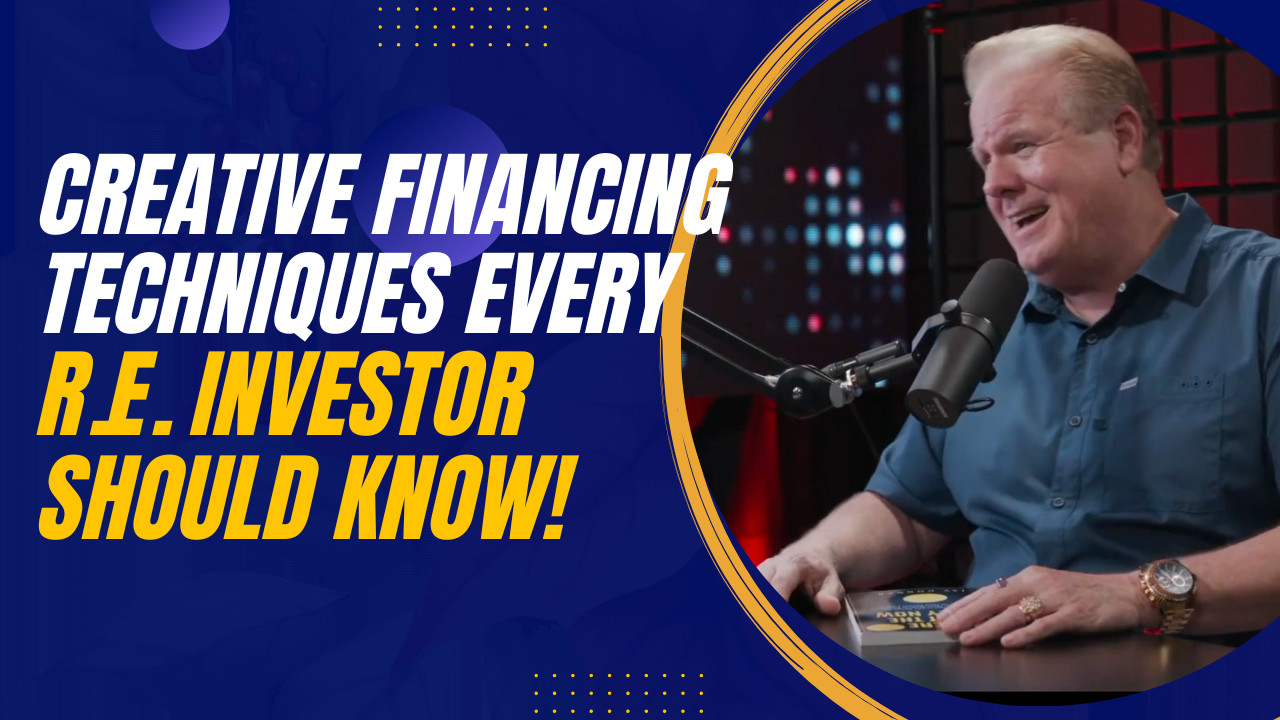
Turning Investment Capital Into Passive Income: Rich Lennon’s Private Money Playbook
Jay Conner [00:00:01]:
Welcome to another amazing episode of Raising Private Money. I’m Jay Conner, your host, also known as the Private Money Authority. This is the podcast where we talk about getting private money for your real estate deals without ever having to ask for money. Well, my guest today is a dear friend. We’re in masterminds together, and he is an expert at growing money. He’s got over $8,000,000 in private money deployed in different deals. And so we’re gonna be able to dive deep and learn about how he raised all this private money. Well, he’s done hundreds of deals in his career.
Jay Conner [00:00:42]:
And back a few years ago, he got very aggressive lending money to real estate investors as a private money lender in his local market in Richmond, Virginia, just next door to me here in North Carolina. Well, it’s very common for him to earn 30 to 50% returns on large amounts of money. And guess what? If you’re looking to deploy some money, my friend and my guest he can show you how to earn these kinds of returns on your money. He works less than five hours a week. And as I said, he’s lending as much as over $8,000,000 at a time. In just a moment, you’re gonna meet my good friend, fellow mastermind member, Rich Linen, right after this.
Narrator [00:01:32]:
If you’re a real estate investor and are wondering how to raise and leverage private money to make more profit on every deal, then you’re in the right place. On raising private money, we’ll speak with new and seasoned investors to dissect their deals and extract the best tips and strategies to help you get the money, because the money comes first. Now here’s your host, Jay Conner.
Jay Conner [00:02:00]:
Rich, my dear friend, fellow mastermind member, welcome to Raising Private Money. I’m so excited to have you here.
Rich Lennon [00:02:10]:
Jay, it’s an honor to be here, man. I love it, man. You guys bring so much energy. I love it. It’s great.
Jay Conner [00:02:16]:
Absolutely. Well, for the sake of my audience that hasn’t met Rich Lennon yet, you can answer this question as quickly and as short as you like or as long as you like. And here’s the question. Who is Rich Linen?
Rich Lennon [00:02:32]:
Who? He is a husband. He is a father. He’s an entrepreneur. And, his entrepreneurs changed over the years. I was a real estate investor for a long time. I bought four or five homes a month. I did that for a decade. And, in 02/2020, I kinda converted when COVID happened into a private money lender.
Rich Lennon [00:02:57]:
And now I’m a bit of an educator, kinda teach people what I used to do. But, man, I don’t know. I’m even though I’m in my fifties, I’m not even sure what I wanna do when I grow up. So I don’t know how to answer that question, to be honest, Trey.
Jay Conner [00:03:10]:
You’re doing a mighty good job answering that question. Now stop buying homes in 02/2020.
Rich Lennon [00:03:19]:
Yeah.
Jay Conner [00:03:20]:
And that’s when you started converting over to be a private lender yourself. And you also show other people, I think some of your common clients are doctors and professionals and lawyers that wanna get, you know, high rates of return on their money, and they wanna be sort of passive about doing it. So I know you work with those people as well. So why did you stop buying homes in 02/2020?
Rich Lennon [00:03:45]:
All my gray hair started to add up a little bit. And, you know, I, you know, I’ve been made an imaginary number one time. And I was like, if I ever reach that number, like, that’s it. I’m done. Cashing out. And I met that number late in two thousand nineteen. And, of course, I don’t I wasn’t probably gonna quit, but then the pandemic happened, and the world kinda changed. And I had 14 employees at the time, and I had more rentals, and I still have a bunch of rentals than I ever really wanna have.
Rich Lennon [00:04:18]:
And I was just done. I was a little burnt out. It’s a lot of work being an entrepreneur, particularly flipping homes and buying all those properties. It’s a lot of work. And, yeah, I was just done. That’s not to say that I didn’t enjoy the journey. I’m not just saying that it wasn’t awesome, but, it was it was time for a change.
Jay Conner [00:04:42]:
Well, I would imagine part of this decision as to you becoming a private money lender, the amount of time that you’re involved in, like, even underwriting a deal and loaning the money out, doesn’t take much time on your part, does it?
Rich Lennon [00:05:01]:
It doesn’t. You know, it’s, I’ve kinda run the numbers on that a little bit, and it’s about three hours per deal. And that includes an amount of that, three hours is saying no, as in underwriting a deal that you don’t go forward with. But, you know, it’s like you underwrite a deal, takes thirty minutes, forty-five minutes, and then you get the payoff on the backside of it. That’s another thirty or forty-five minutes. There’s a little bit of maintenance during the process, but you know, I make almost as much money on a deal as when I was flipping. And I’m in the amount of time and the quality of life and, yeah, just getting a little older. And so, yeah, just a lot less time.
Jay Conner [00:05:45]:
Yeah. So, logistically, how did you become a private money lender?
Rich Lennon [00:05:51]:
Yeah. I mean, that’s a great question. I got involved in Roth IRAs and the Coverdales, and the HSAs. I got into that environment early in my career. So I had done some level of lending and investing other than flipping in rentals. I’d kinda done that for ten years. When I stopped, I was surprised how much money I had, like, wrapped up in the machine, if you will. Because each deal, you’ve got 20,000 over here and 30 over there.
Rich Lennon [00:06:18]:
That’s like, when it all comes back to you, it ends up being a big number in the bank account. I’m not buying anymore. And so I just started to deploy the money. I was familiar with lending, of course, and I didn’t set out with a whole lot of intention of building the next business. I just had the money sitting around, and I’m a competitive guy. Even though I had reached my number, I still wanted to have a bigger number. And I just started lending it out, and then I ran out of money again. And I had to go back to all my other, private money lenders, and I had stopped using their money, and they got mad at me for stopping to use their money.
Rich Lennon [00:06:54]:
So I started deploying other people’s money again. So I did that as a flipper, and I do that now as a lender.
Jay Conner [00:07:03]:
So you loan your own money out, and you also raise private money, which you used to use you used to raise private money for your real estate deals, but now you’re raising private money to broker that money out. So when you are, quote unquote vetting out, for lack of a phrase, when you’re deciding whether you want to be a private lender for a real estate investor or not, what’s your decision model look like? How do you decide whether you’re gonna lend money out to a real estate investor or not?
Rich Lennon [00:07:40]:
I almost strictly based it on the real estate. And I had gotten good advice from an attorney. They don’t know they don’t always give good advice, by the way. But I got good advice early in my career, because I got taken advantage of by a criminal. And that attorney said to me, Hey. You can do business with a criminal as long as you don’t find out in the middle. And I didn’t understand what that meant at the time. But what it translates to, if you have a really solid process and you have really solid paperwork, you can do business with any person because criminals are very good at hiding the fact that they’re a criminal.
Rich Lennon [00:08:19]:
And so you won’t always know who you’re dealing with, no matter how much work you do in looking into them. But the real estate is different. If you are an asset-based lender and you have underwriting criteria, I use the same underwriting criteria I did when I was buying for flips, which is 70% of the ARV minus repairs. And then I require skin in the game. And so I’ve had a good track record by not lending based on the person that’s borrowing from me, but rather based on the asset that I’m lending to, with the idea that I might end up owning that asset. And, lending with that philosophy and with the idea that I don’t know who that person is, so I have to have very tight processes, very tight guardrails around it to make sure I get my money back.
Jay Conner [00:09:11]:
So, for example, when you are underwriting a deal and you said you can do it in three hours or less. How do you go about, in such a short period, really knowing and learning what a true conservative, for example, says, knowing what a true conservative’s after-repaired value is on a single-family house?
Rich Lennon [00:09:41]:
Well, you know, that used to be very difficult. It used to be, in my opinion, used to be very difficult when I started my career to figure out how that was, and the MLS dominated everything. So access to the MLS, I still have access to the MLS. And it’s always great to be able to have the MLS and have those actual comps. But I will tell you that the likes, for example, now we use artificial intelligence to go ahead and figure out those comps. And they go out and they scope the Internet. They go to realtor.com. They go to Zillow.
Rich Lennon [00:10:12]:
They pull in the comps. You can set up the criteria. But we we leverage artificial intelligence at this point. We went back and we backdated all of our data to figure out, like, how accurate our human comps and human analysis of the deal were. And I found out that the artificial intelligence, and we just used OpenAI, that they’re just as every bit accurate as I was.
Jay Conner [00:10:38]:
Really? Yep. So do you use ChatGPT?
Rich Lennon [00:10:46]:
Yeah. I use ChatGPT. For this specific thing, I use ChatGPT. I’m a common AI geek. I enjoy AI a lot. For this specific task, I think OpenAI, which is ChatGPT, is the best. And, specifically, I use the three o model for this. It’s a reasoning model.
Rich Lennon [00:11:03]:
And we had we just have a prompt, and the prompt is a paragraph-long description of what we want. And then we give it the address, and it comes up with what it thinks the ARV of the property was. It’ll provide other comps. It’ll even rank the comps for you. It’ll so, like, if it gives you five comps because that’s what you asked for, it’ll say, hey. Option two is the best direct comp. Yeah. Our AI is impressive in this field.
Rich Lennon [00:11:31]:
And I, so I think that the ARV is the easiest part right now. The construction is a little bit different. It’s a little bit more difficult, but that is the part that requires a human to kinda go over, and we do it through pictures and through video.
Jay Conner [00:11:47]:
So, if you’re listening to this episode, just to make sure you understand what ARV is, because Rich and I can get into lingo. But what he’s talking about is after after-repaired value of a single-family house. And our definition of after-repaired value means everything looks and smells brand new. Everything’s been renovated. You got new paint. You got a new floor covering. It’s just in excellent condition, ready for Southern Living magazine pictures. And so, of course, rich for AI to give you back that after-repaired value, then AI is looking for other sold comparables of other properties near the subject property that have been renovated as well.
Jay Conner [00:12:36]:
Correct?
Rich Lennon [00:12:36]:
Yeah. Your description is way better than mine. Yes. I just kinda flew right through that, but that is exactly right. That’s exactly right.
Jay Conner [00:12:44]:
Well, that is really, really amazing. Now, one thing, you know, one thing that you’re good at is growing money quickly, not only your own money, but your private lenders that invest, you know, with your fund or whatever that you lend back out. But you and I were visiting over lunch, not too long ago, at one of our masterminds.
Jay Conner [00:13:08]:
And you said something along the lines of that you should get a % return every year on an IRA until it reaches a hundred thousand dollars. What did that mean, or what does that mean?
Rich Lennon [00:13:24]:
Well, so your IRAs are, you know, they are your independent retirement accounts. They were given to us as a gift from Congress, and they allow you to grow tax-free money. But they are limited in the amount of money that you can contribute to them every year, and they depend on your age to determine how much you can contribute each year. But, you know, I tell people that you can do now, there are some rules. You know, they have to; we won’t get into the details of the rules. I think that would be inappropriate. There are some rules that you have to abide b,y and make sure that you understand. But if you follow those rules, you get to grow the money tax-free.
Rich Lennon [00:14:03]:
And any type of transaction, almost any type of transaction that you can do within an LLC, your normal business entity, you can do within an IRA. Follow the rules. You have to make sure you do it correctly. But, therefore, if you invest the money, you can quickly make lots of money. And I’m sure you know the rooms that you’re in, Jay. I’m sure you can remember many times when you’ve made over $50,000 on a real estate transaction.
Jay Conner [00:14:32]:
Sure.
Rich Lennon [00:14:33]:
And and and so that’s just the last one. So I always tell people if you can only contribute $6,000 to your IRA and year number one, you should go from 6,000 to 12,000. And to do that, you just have to find one real estate transaction that makes $6,000, which I think is fairly simple to do. And then that’s year number two, you can go from 12, you have 12,000. Now you go to $24,000. And so now you have to find a real estate transaction that makes $12,000, and there are a lot of those. And then the next step is, of course, 25 to 50, and then 50 to a hundred. And so you can do real estate transactions within a tax-free vehicle, and you could do them in the same way you can with the LLCs.
Rich Lennon [00:15:19]:
You have to make sure that you follow the rules, but it is not as complicated as I think people put it in their heads that it is.
Jay Conner [00:15:27]:
Would you say the biggest advantage or benefit of having a self-directed IRA account is the tax benefits?
Rich Lennon [00:15:40]:
Yes. I would. I would say that is the number one benefit. But I would also say that learning learning how to use an IRA, particularly because you can’t get access to that money until you’re 59 without penalty. Or you can get access, but there are some penalties. We’re against paid penalties. So it forces you to learn how to be an investor. And how do you make money off of money Versus when I was flipping, business, and I was running a rental business, I was learning to be a business person, and I was doing a lot of transactional stuff.
Rich Lennon [00:16:17]:
And it was great. It was profitable. Loved it. But it wasn’t really till I started to figure out the IRAs that I started to get into the mentality of how money makes money. And because you’re not allowed to eat that money in the IRA until you’re 59, it teaches you how to make money with money, and that was super valuable. It helped me out a lot.
Jay Conner [00:16:41]:
Now, something that I mentioned in the introduction, I really wanna dive deep into because when people listen to there’s a way that they can earn 30% to 50% returns on large amounts of money. It almost sounds too good to be true. I know it isn’t because I know what you do, and I know you, and you’re a trustworthy guy. But I want you to take a couple of minutes here, as much time as you want, to explain to the audience how it is that someone can earn 30 to 50% returns?
Rich Lennon [00:17:22]:
Yeah. I’d be happy to. I’ll probably do it in two minutes. I’ll try at least, because I certainly get this question a lot. So my borrower is someone who is a flipper or someone who’s gonna do a burr. So I’m gonna buy it, and they’re gonna use it as a rental, and they’re gonna refinance it back out. So those those are my those are my clients that are borrowing it. I have a second client, who are the people that I call lazy money, but that’s the private money people who just wanna earn a rate of return of let’s just call it 10% for this discussion.
Rich Lennon [00:17:53]:
And so my average loan in the Richmond market is $200,000, and I lend that money at about 20%. So if someone borrows $200,000 from me at a rate of 20%, and they give the money back to me in one year, then they owe me a total of $40,000 in interest, plus, of course, the original $200,000. So what I do for that $200,000 is I take a hundred thousand dollars of Rich Linens’ money, and then I take a hundred thousand dollars of lazy money or private money. And I combine those two and lend them out. And so at the end of one year, my lazy money partner, who gave a hundred thousand dollars to the deal and earned 10%, gets their hundred thousand dollars back plus an additional $10,000, which is the interest. And so they get a hundred and $10,000 back for a return of 10%. My borrower, though, paid $40,000 in interest payments. So there’s a remaining $30,000.
Rich Lennon [00:18:57]:
And so that $30,000 is mine. So I invested a hundred thousand dollars, and then I got $30,000 in interest. Therefore, I got a 30% return.
Jay Conner [00:19:08]:
Beautiful. Beautiful. It is interesting to stop and think about how being in the space of money-earning money, can be a whole lot simpler business model.
Rich Lennon [00:19:23]:
It is.
Jay Conner [00:19:24]:
It’s then, you know, if I’m I’ve now I’ve now flipped over 500 houses, in my career, and I’m and I’m still doing it.
Rich Lennon [00:19:33]:
I know. You enjoy doing it. You do.
Jay Conner [00:19:34]:
Well, the reason I enjoy doing it is I have an amazing team that makes this greased machine work, if you will, to where, really in the business, all I have to do is make decisions. And thank goodness for software. I mean, I’ve got the same acquisitionist. Her name is Kim. She’s been talking and negotiating with my motivated sellers. All of them are off-market, of course. There’s no deals in the multiple listing service and hasn’t, for the past five years. But Kim and I never talk.
Jay Conner [00:20:07]:
We never talk, but we communicate a lot. Mhmm. It’s all in the software. I mean, she’s, you know, lining up the appointments for the team to go look at properties and getting the budget sheets, and she’s communicating with the seller. And all I gotta do is, in a matter of about ninety seconds, decide how much I wanna offer on a property. So it’s just a decision-making process.
Rich Lennon [00:20:30]:
Huge testament to you. And I know how difficult that is to be able to build that team and to truly have your hands off my dad. That is a very impressive skill set. And when we talked at lunch, I was very jealous. Well, I was openly jealous and respectful because that’s it’s really impressive what you’ve done.
Jay Conner [00:20:48]:
Yeah. Well, I’ve been very blessed with some very, very amazing people on the team, and they stick around. They stick around.
Rich Lennon [00:20:56]:
Being humble. That has a lot to do with you. You’re just being humble.
Jay Conner [00:21:00]:
Well, I appreciate that. Now you, so so, how would you describe your I, call it your avatar. How would you describe your ideal client who wants to invest? You call it lazy money. They have either investment capital or they have retirement funds, and they’re sick and tired of the volatility, of the stock market, or maybe they’ve lost money in the stock market, etcetera. What does your ideal client look like who is investing money with you to get these, you know, high rates of return? You teach these people how to do exactly what you’re doing. Right?
Rich Lennon [00:21:41]:
Mhmm. Yeah. I do. I do. So, my lazy money partner, I want to be someone who is hands-off and allows me to run the deal. And not all lazy money or private money is the same. Some people wanna be highly involved, and some people don’t wanna be involved. And now I’m specifically with my lazy money, in that $200,000 loan, we each have a hundred thousand dollars in.
Rich Lennon [00:22:08]:
But, the way the note is written, I take a % loss I before they lose a nickel. So I lose my hundred thousand dollars before they lose a nickel. So that loss is not split. It’s, it’s taken by me. And so for that, for that, equity position that they’re in, I want them to allow me to make most of the decisions. Not all of the decisions. They need to be involved in some of the pieces of it for sure. But my ideal partner is someone who just allows me to go do what I do best.
Rich Lennon [00:22:40]:
And most people who approach me, though, are because I don’t take a lot of lazy money partners anymore. I’ve just been in the business a long time, and, you know, I don’t raise a lot of capital. Most of the people wanna learn, hey. How do I make a 30% return? They’re either in the real estate industry. They’re flippers or people who are doing rentals. And so they’re familiar with it, and they’re comfortable with it. Or they’re like a doctor or a lawyer who is good at their career. They’ve created a nest egg of money, and they wanna learn how to accelerate their retirement.
Rich Lennon [00:23:12]:
And then they’ll go in, and maybe they wanna earn a higher rate of return so that they can buy some of their time at the end of life. I think those are the kinda how it balances out.
Jay Conner [00:23:22]:
Right. I want everybody to, for sure, know in case they had to leave early, if if someone’s listening to this show and you wanna get some crazy returns like Rich is talking about, 30% and more, Rich, what’s the easiest and best way for them to reach out to you?
Rich Lennon [00:23:41]:
Jay Conner [00:23:43]:
You can’t beat that.
Rich Lennon [00:23:44]:
I mean, that’s pretty straightforward. And I’ve got a button on there. It’s called the Smarter Wealth Blueprint. And you click on that. You don’t cost any money. You can fill it out, and they’ll give you step by step exactly the way I do it. Tells you everything about the business. Don’t hold anything back.
Rich Lennon [00:24:00]:
And, I’m just happy to spread the word.
Jay Conner [00:24:03]:
Yeah. So that’s www.richlinnon.com. That’s richlenn0n.com. Richlinnon Com. Rich, before I let you go, one of my favorite questions that you permitted me to ask you is, What do you teach your kids about money?
Rich Lennon [00:24:28]:
Oh, I we we we do a lot. So I grew up without a financial background. I, lower middle class, would be a fair description of my childhood, so no financial education. So our kids, we have a banking system in the house, and we pay them allowances for the chores they do. And then we tax them 50%, and then we allow them to keep all the remaining money that they have, and they’re allowed to spend it on anything they want. And so that’s kind of the gist of it. But by making the money themselves, they learn the value of the money. And then by making financial mistakes at a young age, as we watch them mature, we’ve watched those financial mistakes go away, like the impulse buying and the, hey.
Rich Lennon [00:25:15]:
I’m gonna buy something that doesn’t hold a lot of value, like a million Pokémon cards. So we’ve allowed them to go through those experiences. And instead of spending mom and dad’s money, because we’re probably gonna give it to them anyway, they learn that it’s their money. And it’s made a dramatic difference in their financial education. I’m not sure that we won’t have to get them therapy at an older age because, like, they lend money now. They lend money in some of the deals and stuff like that. They do it, the kids are teenagers and preteens. So, we try to immerse them as much as we can.
Jay Conner [00:25:48]:
I was gonna ask you how old they are. You know, to have that kind of financial experience, exposure, and, I mean, thinking. I mean, most kids grow up, unfortunately, in fact, I just heard the statistic last week, and I can’t remember what it is. I think it was over 90%. Don’t hold me to it. The percentage of families and households that live paycheck to paycheck.
Rich Lennon [00:26:19]:
Yeah. It’s both staggering stuff.
Jay Conner [00:26:20]:
Mhmm. Staggering statistic. So, yes, your kids are very blessed to have this kind of, these kinds of parents exposing this. Rich, final words of advice to people who are listening to the show.
Rich Lennon [00:26:37]:
Take action. Take massive action. And you, the people who move the money are the real are the real catalyst. And so I think sometimes people have a little bit of discomfort with the idea that they’re gonna use other people’s money. And they are the people who go out and, like, do a flip and move the money; those are the people who bring the value to people like me. And so don’t hesitate. Don’t be afraid to go out and tell people what you do. And if you do it with passion and you have integrity, like the money and your group of people, your flock, they will come to you.
Rich Lennon [00:27:20]:
And, yeah, don’t you’re doing them a favor by moving their money. And I didn’t start with that mindset. It took me a while to get there.
Jay Conner [00:27:28]:
I know what you mean, Rich. Rich, thank you so much for joining me here on Raising Private Money. It’s always a blessing to be around you.
Rich Lennon [00:27:36]:
Thank you, sir. I appreciate it. This is awesome.
Jay Conner [00:27:38]:
You, Rich. And there you have it. Another amazing episode of Raising Private Money, and I need your help. You are one conversation away from making an impact in somebody else’s life. So here’s what I’d like for you to do. Think of just one person, just one person that this episode would make an impact on their life or their real estate investing business, or someone that you know, is perhaps the doctor, the lawyer, that would be interested in getting a nice, super crazy 30% return on their money. Share this episode with just one person, and you can be making an impact. Be sure not to miss out on any of the upcoming episodes.
Jay Conner [00:28:22]:
If you are listening to any of your podcast platforms, be sure to follow me. If you happen to be watching on YouTube, be sure to like, share, and ring that bell so you don’t miss out. I look forward to seeing you right here on the next episode of Raising Private Money with Jay Conner.
Narrator [00:28:43]:
Are you feeling inspired by the knowledge you gained in this episode? Then head over to www.JayConner.com/MoneyGuide. That’s o www.JayConner.com/MoneyGuide and download your free guide that shares seven reasons why private money will skyrocket your real estate investing business right now. Again, that’s o www.JayConner.com/MoneyGuide to get your free guide. We’ll see you next time on raising private money with Jay Conner.