
If you want to level up your real estate business and build lasting wealth, then learning how to creatively leverage private money is a game-changer. In a recent episode of “Raising Private Money,” Jay Conner sat down with Derek Dombeck, an expert with decades of experience in private lending, creative deal structuring, and wealth-building through real estate. Together, they unpacked practical strategies and mindset shifts that have helped Derek successfully structure thousands of deals while helping investors and sellers alike.
Below, we’ll break down the top insights and actionable lessons from their conversation.
Creative Deal Structuring: More Than Just Financing
Derek emphasizes that creative deal structuring isn’t just about finding different ways to fund a property; it’s about using every tool at your disposal to solve people’s problems.
For instance, many think that approaches like “subject to” (taking over a property’s existing financing) or seller financing are inherently creative. For Derek, those are just the basics. True creativity comes from recognizing the unique needs of the seller, the condition of the property, or the investor’s goals, and then combining multiple strategies for a win-win outcome.
Real-World Example
Derek shares a deal where he purchased a property with existing bank debt (“subject to”), arranged for the seller to carry a second mortgage (sometimes at 0% interest), and leveraged private money in a third mortgage position to fund renovations. Each participant was protected and incentivized: the seller got steady principal paydowns, the private lender earned double-digit returns (including a share of profits through a “participating note”), and Derek maximized his leverage without overexposing anyone.
The Power of Participating Notes
A major gem from Derek’s toolbox is the “participating note.” Unlike traditional notes that just collect interest, participating notes allow private lenders to receive a share of the profits when a flip is complete or the property sells.
This approach has several benefits:
- Aligns interests. Lenders are invested in the success of the project.
- Boosts returns. Lenders can potentially earn more than a flat interest rate.
- Eases cash flow. With interest accruing and some payments deferred until exit, it helps investors better manage project costs during rehab.
The paperwork is straightforward: terms detailing profit splits and payout triggers are included in the promissory note—not buried in side agreements—ensuring transparency for all parties.
Multiple Offers: Meeting Sellers Where They’re At
Derek’s approach to negotiations is all about options. Rather than pushing a single offer, he sits with sellers and outlines a menu:
- All-cash, quick-close offers.
- Seller finance with interest at a higher purchase price.
- Full-price (or higher) offers with 0% interest, paid out over time.
- Lease options or creative “installment” arrangements.
This empowers sellers to choose what best meets their specific needs. In practice, many sellers are drawn to the financial advantages of terms deals—often netting more money over time, especially if they can take 0% interest and avoid a big tax hit.
Equity Cushion and Risk Management
No matter how creative the structure, Derek never skips prudent risk analysis. He focuses on maintaining a healthy equity cushion—typically borrowing no more than 65% of after-repair value for flips, and up to 80% for longer-term rentals. This ensures there’s enough margin for error, market shifts, or unexpected expenses, keeping both lenders and the project secure.
Building Relationships & Educating Private Lenders
At the core of Derek’s strategy is education and open communication with private lenders. Explaining unique deal structures, being transparent about risks and rewards, and showing how both sides benefit builds trust and long-term partnerships—a necessity for sustainable wealth-building.
Conclusion
Derek Dombeck’s expertise showcases that building generations of wealth in real estate is less about having unlimited funds and more about mastering creative deal structuring, forming solid relationships, and leveraging private money intelligently. By focusing on win-win strategies and solving sellers’ real problems, you can structure deals that create real value for everyone involved.
10 Discussion Questions from this Episode:
- Derek shared that creative deal structuring is about using various tools to solve the seller’s problem. What do you think are some essential skills or traits an investor needs to effectively “solve problems” in real estate negotiations?
- The episode explored “subject to” deals, where buyers take over sellers’ mortgage payments. What are some of the potential risks for both buyers and sellers in these transactions, and how can they be mitigated?
- Derek mentioned using multiple financing strategies—like combining subject to, seller carryback, and private money—in a single deal. How does this benefit both the investor and the seller compared to a straightforward cash offer?
- What are participating notes, and why does Derek prefer them in certain deals? What are the advantages and possible pitfalls of using participating notes for private lenders and investors?
- Derek provided a rule of thumb for loan-to-value ratios: 65% for flips and up to 80% for rentals. How does this conservative approach protect private lenders, and what would influence your comfort level with leverage?
- The episode touched on creating “multiple offers” for sellers, including cash, terms with interest, and terms with zero interest. What do you think is the psychological impact on sellers when presented with several choices?
- How does structuring a zero-interest seller-financed deal allow an investor to pay more than retail for a property, and still make a profit? Where is the true wealth-building opportunity in this scenario?
- Derek explained the importance of extension provisions in seller-financed deals. Why might this be a crucial element to negotiate upfront, and how does it add flexibility and security for both parties?
- The episode highlighted the use of options for property control without ownership. In what situations might an option agreement be more beneficial than a standard purchase, and how could private money play a role?
- Derek and Jay both emphasized the value of serving and helping others in their investing approach. How do you think this mindset impacts success in raising private money and long-term wealth building?
Fun facts that were revealed in the episode:
- Derek Dombeck doesn’t just structure creative real estate deals—he’s also an adrenaline junkie! Outside of his real estate ventures, Derek has raced stock cars and even gone skydiving.
- Derek favors “participating notes” to reward private lenders. Unlike traditional loan structures, participating notes allow his private lenders to earn a percentage of the property’s profit in addition to regular interest, giving them a share in the upside of each deal.
- He often solves sellers’ problems by combining multiple creative financing strategies. For example, Derek might buy a property “subject to” the existing mortgage, bring in a private lender with a second lien for renovations, and even offer the seller different ways to get paid—all in one transaction!
Timestamps:
00:01 Meet Derek Dombek: Real Estate Enthusiast
03:33 Creative Property Financing Explained
07:16 Creative Real Estate Deal Structuring
11:47 Real Estate Financing Strategies
15:04 Clear Seller Financing Agreement
16:38 Creative Deal Structuring Benefits Explained
20:52 Negotiating Debt and Renovation Terms
23:30 Creative Financing Proposal
28:00 Connect with Derek Dombeck
29:05 Share to Impact Lives
29:57 Free Real Estate Investing Guide
Connect With Jay Conner:
Private Money Academy Conference:
Free Report:
https://www.jayconner.com/MoneyReport
Join the Private Money Academy:
https://www.JayConner.com/trial/
Have you read Jay’s new book, Where to Get the Money Now?
It is available FREE (all you pay is the shipping and handling) at https://www.JayConner.com/Book
What is Private Money? Real Estate Investing with Jay Conner
http://www.JayConner.com/MoneyPodcast
Jay Conner is a proven real estate investment leader. Without using his own money or credit, Jay maximizes creative methods to buy and sell properties with profits averaging $67,000 per deal.
#RealEstate #RealEstateInvesting #RealEstateInvestingForBeginners #Foreclosures #FlippingHouses #PrivateMoney #RaisingPrivateMoney #JayConner
YouTube Channel
https://www.youtube.com/c/RealEstateInvestingWithJayConner
Apple Podcast:
Facebook:
https://www.facebook.com/jay.conner.marketing
Twitter:
https://twitter.com/JayConner01
Pinterest:
https://www.pinterest.com/JConner_PrivateMoneyAuthority
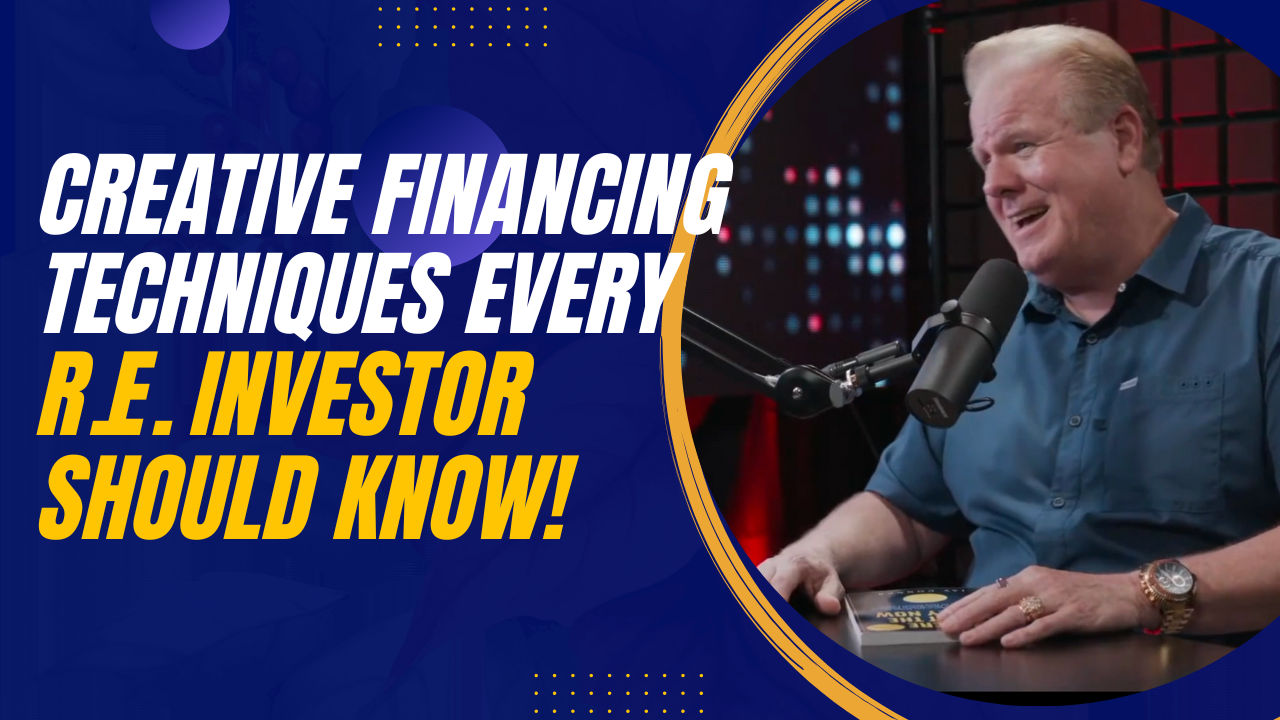
Advanced Creative Financing Techniques Every Real Estate Investor Should Know With Derek Dombeck
Jay Conner [00:00:00]:
Welcome to another amazing episode of Raising Private Money. I’m Jay Conner, your host, and I’m so excited you’ve been, decided to join us today because this is the podcast where we talk about raising private money for your real estate deals without ever having to ask for money. Well, my guest today, I’ve had him on the show before. He’s amazing. I love this guy. Well, he’s raised millions of dollars in private money. His expertise, in addition to private money, also includes creative deal structuring, wholesaling, flipping, landlording, and lending as well. So he’s been involved in thousands of transactions.
Jay Conner [00:00:44]:
What sets him apart is his love for people just like me. Well, as I mentioned, he has cofounded a private lending company, also a real estate acquisition company, and he hosts several national mastermind groups called REI Circle of Trust. Now, as part of his giving back, he founded and ran the Central Wisconsin Real Estate Investors Association, which later merged with the Westco Ria. Well, something interesting on a personal side, he’s an adrenaline junkie at heart. He grew up racing stock cars and skydiving, all kinds of good stuff. Well, we’re gonna dive deep here in just a moment to learn how my guest has raised a lot of private money. In just a moment, you’re gonna meet my guest, Derek Dombek, right after this.
Narrator [00:01:38]:
If you’re a real estate investor and are wondering how to raise and leverage private money to make more profit on every deal, then you’re in the right place. On raising private money, Money, we’ll speak with new and seasoned investors to dissect their deals and extract the best tips and strategies to help you get the money, because the money comes first. Now here’s your host, Jay Conner.
Jay Conner [00:02:05]:
Well, hello, Derek, and welcome back to the show.
Derek Dombeck [00:02:10]:
Thanks for having me again, Jay. It’s always a pleasure.
Jay Conner [00:02:13]:
Absolutely. Absolutely. I love hanging out with you. You’ve got a giving heart, a servant’s heart, and, pretty smart real estate investor too, I might add. Well, for the sake of those that have not met you before, Derek, here’s the question, and you can answer this as quickly, as short, or as long as you would like. And the question is, who is Derek Dombek?
Derek Dombeck [00:02:39]:
Well, I am just a humble servant from, you know, the Central Wisconsin area. I live in the Upper Midwest. Started like most people fixing up a couple of properties and over the last twenty plus years that has just evolved into all the creative structuring and the deals I’ve screwed up quite frankly, and learned all the hard lessons. And, you know, now I get to teach people based on my mistakes, which I love doing, you know, have my podcast called the generations of wealth. And, at this point, you know, anything I do to give back and expand my network is, is my goal.
Jay Conner [00:03:17]:
So when you talk about creative deal structuring, that could mean a lot of different things to a lot of different people. So what’s your definition of creative deal structuring? And then let’s dive into that a little bit.
Derek Dombeck [00:03:33]:
Yeah. I think a lot of people think that buying a property subject to or on a land contract or seller financed, all these things are creative. To me, that’s just another way of financing. So I define creative deal structuring as using all of these different tools and strategies to solve somebody’s problem. So I might do a deal where I buy it sub two, the sellers may carry back a second mortgage, and I’ll bring in private money on a participating note to rehab the property and then ultimately lease option it to a tenant buyer. I consider that a creative structure because we’re using all the tools or as many tools as we need to solve a problem. That’s the short version.
Jay Conner [00:04:19]:
Alright. Right. Well, so just to make sure all of our listeners here understand what you’re talking about. When you say buying a property subject to, what does that mean?
Derek Dombeck [00:04:31]:
Typically, that’s going to be subject to existing debt, and that may be bank debt. That may be private debt, but we’re stepping into the position of the seller making their payments for them on their behalf. However, they are still, if it’s institutional debt, they are still on that as a personal guarantor. We’re not assuming that debt, we’re just, you know, taking over their payments for them on their behalf. But we get the deed. We own the property.
Jay Conner [00:05:01]:
Exactly. Well, who in their right mind would agree to sell you a property and agree to leave the mortgage in their name and trust you to make the payments?
Derek Dombeck [00:05:12]:
Well, that is the key to figuring out what their challenge is. And I do that in a lot of different ways, through my negotiations, which I will define as just a social conversation. But through that conversation, what are their needs? And let’s just assume that they have, maybe some financial troubles, maybe they’re in foreclosure, maybe there’s some medical bills, maybe they lost their job. There are so many different reasons that somebody could be in financial turmoil, and the property could be perfect. It could be turnkey. So if I step in and just let’s just use a foreclosure example. Somebody’s behind on their payments. I’m able to come in, catch up on their payments, and start making those on time.
Derek Dombeck [00:05:57]:
It fixes their credit. It stops the foreclosure in that example, and they move on. If they have equity in a property, we may pay them out either all cash or we may pay them out over time. That’s just case by case. But there are a lot of people who are benefiting, you know, benefiting by us taking over their debt.
Jay Conner [00:06:19]:
So what it sounds like is a person, would be willing to sell their single-family house, specifically, subject to leaving the note in their name, is somebody who is stressed out and needs debt relief for whatever reason.
Derek Dombeck [00:06:38]:
Correct. And in some cases, they may not even have any financial turmoil. It may just make more financial sense to keep that debt in place and get paid out the rest of the purchase price over time. A quick example might be a landlord that doesn’t want to take a chunk of money because they’re gonna end up paying capital gains taxes or, you know, put them into a higher tax bracket this year. So stretching it out using an installment sale as well as taking over their existing debt could make a lot of sense, and they weren’t in any kind of financial turmoil with their actual loan.
Jay Conner [00:07:16]:
Now, one of the examples that you gave about creative deals and creative deal structuring was combining two strategies simultaneously to make that particular deal work. So the example you gave was buying a property, a single-family house, subject to the existing note, but then you included in that example borrowing private money and giving the private lender a second lien position or a second mortgage or junior mortgage in second position to either bring payments current. You can use that cash to bring it current. Maybe there are some renovations or whatever. So when a real estate investor that’s structuring that type of deal, combining subject to the existing note and then having a private lender in that second position, what what what advice would you give to, either red flags or warnings about doing that combined strategy to where everybody’s protected, specifically the private lender?
Derek Dombeck [00:08:32]:
Yeah. So I can tell you about a deal I’m doing currently. We were buying the property, and it’s not subject to. It’s seller-financed. Well, let me tell you a different story, Jay, real quick. I’m closing on a property in two days. This person owns the property but has a hard money loan against it. So we’re buying that one.
Derek Dombeck [00:08:58]:
I’m bringing new private money to pay off the hard money loan. So that private money is going to be in first position. The seller is going to carry back a second-position note, which is a participating note. So they have a locked-in amount that they will get. However, when I resell the property, I get the first thirty thousand dollars of profit, and any profit over and above that, the seller will participate in. So he ultimately can make more after I sell the property. So that’s an example of not subject to, but bringing in new private money first, seller second. A quick example of taking over a subject and then putting private money in place, I bought a property subject to bank debt of about $50,000.
Derek Dombeck [00:09:52]:
I gave the sellers some cash at closing, and then they’re taking payments in the second position at 0% interest. And then I put a third position of private money in place to rehab the property. In that third position, why would anybody go into third? Because we made it safe, but we also made it worth their while. We structured that as a participating note, paying the private investor six percent interest only every quarter and 10% of the net proceeds when the property sells. And that is in his IRA. So, ultimately, he gets a double-digit yield, but I get a smaller interest payment while I hold the property. So it’s safe for all parties because that was completely leveraged. I shouldn’t say completely.
Derek Dombeck [00:10:44]:
That was leveraged up to about 80% of the value. So there was still plenty of value in the property as well.
Jay Conner [00:10:52]:
I was gonna be my next question is when you have multiple mortgages, or not even multiple mortgages, it doesn’t matter. How much of what I call an equity cushion, now let me define what I mean by that, for the sake of our listeners. When I say equity cushion, I’m talking about what that property is going to be worth after it’s renovated, if renovations are required, versus how much is being leveraged, how much money is being borrowed. That’s the equity cushion. In other words, what do we call it loan to loan-to-value, for the sake of our audience? Loan to value, what’s the most that’s being borrowed as a percentage of the after-repaired value? What is your rule of thumb for that, Derek, that, you know, protects your private lenders and everybody?
Derek Dombeck [00:11:47]:
Absolutely. So, if I’m just doing a straight-up cash purchase flip and I’m bringing in private money to fund the entire thing, I max out at 65% loan-to-value of the after-repair value. If I’m taking a property subject to or there’s seller financing in first position, and I’m bringing in private money on the backside or in second position, I will go up to about 80% if it’s going to be held as a rental. There are rare cases where I do go up to a % loan to value. That is going to be more along the lines if the seller is taking a payment at 0% interest, and I can expand on that if you want me to. I may bring in my private money to provide rehab funds or even down payment money. So I just bought a property a couple of months ago. Sellers were very stuck on their price. And I said, okay, that’s fine.
Derek Dombeck [00:12:43]:
I’ll give you your full asking price, which is full retail, but they agreed to a payment that was at 0% interest over eight years and a balloon at that eight mark. And then my private money, I brought in fully disclosed all the numbers, and he’s in again. I love using participatory notes. He’s participating in the upside, but he’s also participating every month in the cash flow. And because I’m paying zero interest every month, it’s all principal. So my investor is getting a part of that principal. He doesn’t realize it until the end when he gets paid off. But doing zero interest, seller finance gives us the ability to make it safe for everybody.
Jay Conner [00:13:32]:
And when you’re doing a zero-interest finance deal, that being zero interest to you, I mean, the pay down on that principal loan amount comes down, like, super fast.
Derek Dombeck [00:13:44]:
Absolutely.
Jay Conner [00:13:45]:
As compared to interest only, where it’s not coming down at all, or principal and interest, the initial few years are not coming down at all either. So, on these creative structuring of deals, you’ve mentioned two or three times about participating notes. So I haven’t had many guests here on Raising Private Money that talk about using participating notes. So let’s talk more about participant notes. How is that how’s the how’s the paperwork put together? And, I mean, is it is it is it when you say participating note, is that language that’s in the promissory note, or is there is there a side agreement? Is any of this on public record? How do you structure a participating note?
Derek Dombeck [00:14:37]:
Yeah. I don’t believe in side agreements, Jay. Everything is in writing. It’s all documented for the whole world to see who has the right to see the note. Right? The the mortgage does not mortgage or deed of trust does not mention any language about participation. So that’s on public record. But the note itself, it’s you just write it and type it in the repayment portion of your note. And whatever the terms are, make it as black and white as possible.
Derek Dombeck [00:15:04]:
You don’t want any disagreements in the future. So, I just drafted the note for this week’s closing that says, seller will carry back this note for $25,000. And, you know, it’s typed up to say, I, as the borrower, will get all of my money reimbursed, that is the actual expense before figuring out what the net profit is. I will get the first thirty thousand dollars of profit, and anything above that, the seller and I will split $50.50. So it’s just line-itemed out just like that in the language. So you don’t have to have any fancy documentation or anything in excess. If you don’t know what you’re doing, you know, get legal counsel. But for us, we’ve done this long enough that we draft our notes and mortgages.
Jay Conner [00:16:01]:
I got you. So with this world of creative deal structuring, there are lots of ways to put a deal together. Mhmm. And, of course, for someone to have variable ways, more than one way to structure a deal, first of all, they gotta be educated on that. They gotta know these different options they have. But when you’re looking at a deal and you’re you’re negotiating with a seller, having that casual conversation, how do you decide which way is the best way to structure a deal when you’ve got so many different options to choose from?
Derek Dombeck [00:16:38]:
Well, I came back from a kitchen table, negotiating an hour before this show. And what I do is I map out multiple ways that they can do it, and I let them choose. And the reality is, whatever they choose, I’m fine with because structuring it in a way that we’re gonna hit our profit potential. Often, I can give them a lot more money over time than if they take my cash offer. So this woman, her name is Amy, with whom I was sitting down with today, the cash offer isn’t attractive to her, and I’m showing her that. You, I’m telling her, I don’t believe you should take my cash offer. However, if she ultimately chooses that, I’m fine with it. But if you take this terms deal or this creative structure, you’re going to put this many more thousands of dollars in your pocket.
Derek Dombeck [00:17:28]:
And if you do, I haven’t even mentioned to you on the show, but I also like using options and controlling property without ever taking ownership of it. So I presented that to her as well. I said you could maintain ownership. We will put an option in place, and that option will dictate how we, you know, move forward with the deal. What do you get? What do I get? What are the timelines? And it’s another way of creative deal structuring that is very underutilized. And when you wanna talk about how private money comes into play with an option, perhaps I still need $10.20, $30,000 to bring to the table. I can have my private investor be a part-owner of that option. So we may not own the property.
Derek Dombeck [00:18:16]:
They may not have a lien against the property, but they own part of an option. Completely different way to get private money involved.
Jay Conner [00:18:25]:
So, what you’re doing is you’re making multiple offers simultaneously, for them to choose from.
Jay Conner [00:18:33]:
And would you agree that taking on this strategy of multiple offers, you get a lot more offers or deals put together than if you just made one straight offer?
Derek Dombeck [00:18:43]:
Of course. And you’re not talking to them like they’re not going to move forward. You’re talking to them like we’re moving forward. Which one do you like the best?
Jay Conner [00:18:53]:
I love that. Well, to get even a better understanding of this multiple offers, and I love this strategy, do you mind, since we don’t have a name associated with it other than Amy, and we don’t have a physical address or the property associated with it, do you mind sharing with the audience these actual numbers? And let’s get a grasp and understanding of, okay. Here’s my first offer that you gave Amy. Here’s the second offer I gave her. Here’s the third option, and it’ll be really interesting, Derek, to hear you talk about, well, here’s the all-cash offer, but this second one, well, here’s the price, which is more, but it’s a terms deal. Do you mind walking us through those examples?
Derek Dombeck [00:19:40]:
I can. It’s going to be a little bit hypothetical because we’re still penciling that one out. But Sure. The property after repaired value of the property is about $80,000. This is a four-bedroom, one bath house in Wisconsin. So Midwest pricing for those of your listeners out on the West Coast, East Coast drooling over those prices.
Jay Conner [00:20:01]:
Well, now, Derek, you know our California listeners, they can’t even purchase an outhouse for $180,000. So I’m glad you clarified where this property is located.
Derek Dombeck [00:20:11]:
Absolutely. But these strategies work everywhere, just to be clear. So my cash offer, which is just 65% of the after-repair value minus repairs, puts me around a hundred thousand dollars. She has $45,000 worth of debt on the property, and she’s relocating to Alabama. So and she already has a house in Alabama that she’s purchasing in June. So she doesn’t need this loan paid off to purchase that other house. That’s important to know. Okay? Because if we were going to buy it sub two, how does that affect their future buying ability and their credit? So the cash offer, a hundred thousand dollars.
Derek Dombeck [00:20:52]:
The house needs about 20,000 in updates and renovations. If she takes a term’s offer where I take over her existing debt and start making those payments, then I would make a payment to her over time. And she talked about a two-year time frame, which is short. Okay? And I told her so. I said, if I agree to a two-year time frame, I would want an extension provision built in. And I do want your listeners to hear this because, Jay, even though you agree to something short-term, it doesn’t mean you can’t have an extension provision today when everybody’s getting along and happy, and here’s how you do it. You just say, you know what, Jay? I I don’t think it’s gonna be a problem paying you off in two years, but if we have some kind of event that’s beyond our control like COVID, for example, and I’m not able to pay you in two years, can we just agree now that I can get another two years if I give you $5,000 cash towards the principle of what I owe you? 99% of the time, people will agree to that extension provision, so I just doubled what they want. I went from two to four.
Derek Dombeck [00:21:57]:
Or if they were saying they want five years, I can go from five to 10 with that simple question. So I really
Jay Conner [00:22:03]:
Want. That’s a powerful strategy.
Derek Dombeck [00:22:05]:
Yeah. And they can’t argue with COVID, you know, presidential elections, possible wars, all these things. You make it graphic. And they’re like, yeah. I don’t wanna have a problem either. Let’s have that solved ahead of time. Okay? So she’s talking two years, and I said to Amy, two years is a short amount of time. So my offer is not going to be as high because I still have to come up with a chunk of money two years out.
Derek Dombeck [00:22:29]:
So that’s not gonna be a lot higher than my cash offer. Now, if you’re willing to go out five to ten years, my offer goes up, but it’s going to be based on do you want to collect interest or not. And then I have to explain to them what that looks like? Well, if a homeowner collects interest on an installment sale, the interest portion is going to be taxed at their ordinary income tax rate, versus if they take 0% interest, everything is a return of capital. And if this is their primary residence, I don’t give anybody tax advice, and I tell them that. And I’m not giving any of you tax advice, and I’m telling you that. But most people do fall within code section one twenty-one on their primary residence, where they have capital gains tax up to a certain level, where they don’t have to pay it. So I can pay more. I can even pay above retail value and pay them 0%, and they keep more money in their pocket. That’s the goal.
Derek Dombeck [00:23:30]:
Right? That’s what you want them to understand. You can keep more. Pay Uncle Sam less. Okay? So, again, I don’t have those numbers worked out, so I’m gonna kinda make it up a little bit, Jay. A hundred thousand on a cash price, maybe a hundred and $20,000 if she wanted to collect 5% interest on the payments and I took over her existing debt subject to, or maybe the full $180,000 that’s worth if she’ll take zero percent payments and I cap my payment amount for all debt, including the subject to portion of the debt at 45% of rents. So if she’s agreeable to that, then I can pay her out at 0%. And I have no problem paying full retail, which most people, blows their mind. How can you pay full retail or even above retail for a house? Depends on the length of the terms and what the terms are.
Jay Conner [00:24:28]:
So I want to dive into that a little bit more because what you just said is exactly what 99 percent of my audience is asking right now, and that is, how in the world can you pay full retail or more than retail for a house? And you answered it with the 50,000-foot view, but I’d like for you to drill down a little bit. So, how does that work? I mean, if it’s zero interest, you’re still paying that full price or above retail. Talk to us a little bit more about how that can work and be beneficial to you as the buyer.
Derek Dombeck [00:25:08]:
Sure. So, the house we bought a couple of months ago, the sellers are taking payments on, they wanted $260,000 for the house. So we agreed that they would get $20,000 down upfront, and they would take payments at $800 a month at zero interest for eight years and then get the remainder balance at that time. Now I can take that same house and sell it for exactly what I just bought it for on terms and charge a buyer bank rates, six and a half, 7%, and make a spread. Because if you put it into a loan calculator at six and a half percent, the payment on a $260,000 house is about $1,500. So I could make what is that? A $700 a month spread selling it for exactly what I just bought it for. And what’s my capital gain? My capital gain is zero. Right? So that is one way.
Derek Dombeck [00:26:07]:
The way we’re doing that exact deal is they’re taking $800 a month payments. We’re leasing it for $2,000 a month, and the tenants are paying down my mortgage to the sellers. And it’s just all math. You have to sit down and calculate it out, that eight-year mark. And I don’t have the numbers in front of me, but the payoff is significantly less than what that property will be worth eight years from now. But even if it doesn’t go up 1 dime in value in the next eight years, we’ve paid down that principal.
Jay Conner [00:26:40]:
It’s right at $80,000. Right? So twelve months times 8, 90 6 hundred, call it 10 ground times eight years. That’s $80,000 of pay down you got. So, how did you come up with the $800 a month figure that you offered to pay them, 100% going towards principal with no interest?
Derek Dombeck [00:27:02]:
40 to 45% of rents. And that’s Okay. So 40
Jay Conner [00:27:06]:
To 45. So you knew that you could bring in a round figure of about $2,000 a month. Yep. Yeah. And what I
Derek Dombeck [00:27:16]:
Do I ask them because this was a rental property? I said, What were you getting for rent? And I’m gonna base it on what they were getting for rent, not what I’m gonna get.
Jay Conner [00:27:25]:
Right.
Derek Dombeck [00:27:25]:
So they were getting about $1,500 a month, and they said, well, it probably should be 17 to $17.50. I said, okay. Great. We’ll go off $17.50. 40 5 percent of $17.50, roughly $800. And that’s where we came up with that number. So even if it’s a breakeven cash flow, I’m gaining $800 a month of principal.
Jay Conner [00:27:49]:
Because of the pay down.
Derek Dombeck [00:27:50]:
Correct.
Jay Conner [00:27:51]:
Because of the pay down. That’s brilliant. That is brilliant, Derek. Derek, thank you so much for sharing your experience and your wisdom. What’s the best way for my audience to continue the conversation with you and learn more about all this creative structuring and using private money?
Derek Dombeck [00:28:09]:
Well, simple enough. Go to derekdombek.com. On there, you will see links to everything I do. I do have negotiation training out there, and I do have links to all my social media. And, honestly, if any of you have questions and you just wanna reach out to me with a quick question, I’m more than happy to help.
Jay Conner [00:28:29]:
That’s awesome, Derek. You are truly a go-giver, and I appreciate you so much, Derek, for joining me on the show. Thank you so much, Derek. And there you have it. Be sure and check out Derek’s website, www.derek, and that’s d e r e k. Of course, all this is gonna be in the show notes. But if you’re listening, www.derek, d 0 m b e c k, dereck dombek Com, and you’ll be connected with a go giver that’s pretty smart when it comes to these creative deal structurings. Thank you so much, Derek.
Jay Conner [00:29:05]:
God bless you. And there you have it. Another amazing episode of Raising Private Money. I’m so glad you decided to join us here on this show. And let me tell you, you are only one conversation away from making a huge impact in somebody else’s life. So here’s how I need your help. Just think of one person, one person that you believe this episode can make an impact and a difference in their life, and share this episode with them. Of course, if you’re watching on YouTube, always like, share, subscribe, and click that bell so you don’t miss out on any more of our upcoming episodes.
Jay Conner [00:29:47]:
I look forward to seeing you right here on the next episode of Raising Private Money with Jay Conner.
Narrator [00:29:57]:
Are you feeling inspired by the knowledge you gained in this episode? Then head over to www.JayConner.com/MoneyGuide. That’s www.JayConner.com/MoneyGuide, and download your free guide that shares seven reasons why private money will skyrocket your real estate investing business right now. Again, that’s www.JayConner.com/MoneyGuide to get your free guide. We’ll see you next time on raising private money with Jay Conner.