
Raising private money without the need to ask for it directly is a skill that not many possess. However, Chris Linger, a seasoned real estate investor and accredited investor, has mastered this art. As a general partner in nine apartment syndications, encompassing over 1,750 apartments valued at $270M, Chris has a wealth of knowledge to share. In a recent enlightening conversation with Jay Conner on the Raising Private Money” podcast, Chris detailed his journey and provided invaluable insights into real estate investing, raising private funds, and scaling one’s business.
From Humble Beginnings to Investing Powerhouse
Like many successful investors, Chris Linger began his venture into real estate with modest beginnings. While serving in the military, he faced a dilemma that many in the armed forces encounter—frequent relocations. Chris’s journey began in Pensacola, Florida, where he was unable to sell his home during a move in 2007. This necessitated renting out the property, unknowingly planting the seeds of his future real estate empire.
The Power of Partnership
Chris attributes much of his accelerated growth in real estate to his partnership with his wife Maricela. When they met in 2017, they discovered a mutual interest and synergy in real estate investing. By pooling their resources, Chris and Maricela began purchasing properties, starting with small quadplexes and gradually scaling up. This partnership was not just limited to pooling financial resources but extended to strategic decision-making and support, allowing them to take more calculated risks and bigger steps toward their goals.
The Shift to Raising Private Money
Their foray into raising private money began out of necessity when a lucrative opportunity arose unexpectedly. With funds tied up in another project, Chris and Maricela turned to individuals who had shown interest in investing with them. Instead of approaching institutional lenders—which could be time-consuming—they offered their potential investors short-term loans to fund their project. This approach not only sped up the process but also laid the foundation for future private money-raising endeavors.
The Benefits of Private Money
One of the significant advantages of private money, as highlighted by Chris, is speed. Real estate transactions, especially those involving wholesalers, often require swift action. Private money allows for rapid closings, enabling investors to seize time-sensitive opportunities. Chris also pointed out the value of teaching potential investors about private money, including the use of self-directed IRAs for tax-advantaged returns—an approach that aligns well with Jay Conner’s philosophy of educating rather than pitching.
Scaling Up: Beyond One-on-One Conversations
To scale beyond one-on-one interactions and raise over $20 million in less than four years, Chris leveraged various platforms. Networking at events, attending webinars, participating in podcasts, and maintaining a strong social media presence played significant roles. By consistently sharing their successes and educational content, Chris and Maricela built credibility and attracted a larger pool of investors.
Lessons Learned and Avoiding Pitfalls
Through their journey, Chris and Maricela have learned valuable lessons, some from costly mistakes. One major lesson was the importance of maintaining control of investment opportunities. While initially partnering with others for asset management, they realized the importance of direct oversight to ensure optimal property management and investment performance. Additionally, as lenders themselves, they learned to structure longer-term notes with interest rate increases to mitigate the opportunity costs of tying up capital for extended periods.
Diversifying Through Business Coaching
Beyond real estate, Chris and Maricela are elite business coaches affiliated with Grant Cardone’s 10x community. They coach entrepreneurs on growing their businesses and creating passive income streams. By offering services including business boot camps, sales, and marketing training, they help others achieve accelerated success. This coaching program not only provides an additional revenue stream but also strengthens their network, further supporting their real estate ventures.
Up-Plex: Elevating Real Estate and Business
Chris and Maricela’s company, Up-Plex, embodies their mission to elevate others through real estate investing. Up-Plex offers opportunities for passive investors to benefit from Chris and Maricela’s extensive experience and success in multifamily investments. The company focuses not just on financial returns but also on improving properties and tenant experiences.
Key Questions for New Investors
For those new to passive investing, Chris advises asking key questions before committing to a syndication. Understanding the experience of the syndicators, reviewing past performance, asking for referrals, and ensuring transparent communication are crucial steps. These questions help potential investors gauge the reliability and expertise of the investment managers, ensuring their money is in capable hands.
Conclusion
Chris Linger’s journey from military service to a multifamily real estate mogul is a testament to the power of strategic investing, partnership, and continuous learning. By sharing his experiences and insights, Chris offers a roadmap for aspiring investors to follow. Whether through direct investments like Up-Plex or through educational platforms, Chris and Maricela continue to elevate the field of real estate investing, proving that with the right approach, building a multimillion-dollar portfolio is within reach.
10 Discussion Questions from this Episode:
- Chris Linger mentioned transitioning from small rental portfolios to larger commercial real estate and apartment syndications. What steps did he take to make this transition successful?
- How did Chris Linger and his wife manage to raise over $20,000,000 in private money in less than four years? What strategies did they employ to achieve this?
- Speed is often cited as a major advantage of using private money. Can you discuss other benefits and potential drawbacks of using private money for real estate investments?
- Chris emphasized the importance of educating potential investors and sharing success stories. How can new investors effectively communicate their successes to attract private money?
- Both Chris and Jay mentioned never having to “pitch deals” to raise private money. What are some of the key differences between educating potential investors and pitching them a deal?
- Chris discussed his experience as both a private money raiser and provider. How can being involved on both sides of private money lending provide valuable insights and advantages?
- One of the key lessons Chris mentioned was ensuring a higher level of control over investment opportunities. Why is this important, and how can investors achieve more control in their deals?
- Chris and his wife also coach other business owners and entrepreneurs. How might business coaching skills translate to successful real estate investing, particularly in raising private money?
- Chris suggests that new private lenders ask syndicators about their team, their track record, and whether they’ve ever lost an investor’s money. What other questions could potential investors ask to safeguard their investments?
- The episode highlights the role of networking and attending events in raising private money. What are some effective ways to network with potential investors, both in-person and online?
Fun facts that were revealed in the episode:
- Chris Linger and his wife Maricela impressively raised over $20 million in private money in less than four years, showcasing their rapid success in the real estate investment world.
- Initially, Chris and his wife managed all of their real estate investments on their own, including single-family homes and smaller multi-family properties, before transitioning into larger syndication deals.
- Chris Linger has a robust background serving 26.5 years in the military, where he also took on the role of program director for his nursing specialty, highlighting his extensive leadership and mentoring experience.
Timestamps:
00:01 Raising Private Money Without Asking For It
06:32 Benefits of private money: speed and flexibility.
09:23 Educating about private money and self-directed IRAs.
12:07 Real estate networking, education, and targeted outreach.
14:45 Building control in opportunities for private money.
20:44 Connect with Chris Linger: https://www.Up-Plex.com
23:27 Question team size, experience, and challenges faced.
25:32 Value consistency, accountability, and direct communication.
27:58 Jay Conner’s Free Money Guide: https://www.JayConner.com/MoneyGuide
Connect With Jay Conner:
Private Money Academy Conference:
Free Report:
https://www.jayconner.com/MoneyReport
Join the Private Money Academy:
https://www.JayConner.com/trial/
Have you read Jay’s new book: Where to Get The Money Now?
It is available FREE (all you pay is the shipping and handling) at https://www.JayConner.com/Book
What is Private Money? Real Estate Investing with Jay Conner
http://www.JayConner.com/MoneyPodcast
Jay Conner is a proven real estate investment leader. Without using his own money or credit, Jay maximizes creative methods to buy and sell properties with profits averaging $67,000 per deal.
#RealEstate #RealEstateInvesting #RealEstateInvestingForBeginners #Foreclosures #FlippingHouses #PrivateMoney #RaisingPrivateMoney #JayConner
YouTube Channel
https://www.youtube.com/c/RealEstateInvestingWithJayConner
Apple Podcast:
Facebook:
https://www.facebook.com/jay.conner.marketing
Twitter:
https://twitter.com/JayConner01
Pinterest:
https://www.pinterest.com/JConner_PrivateMoneyAuthority
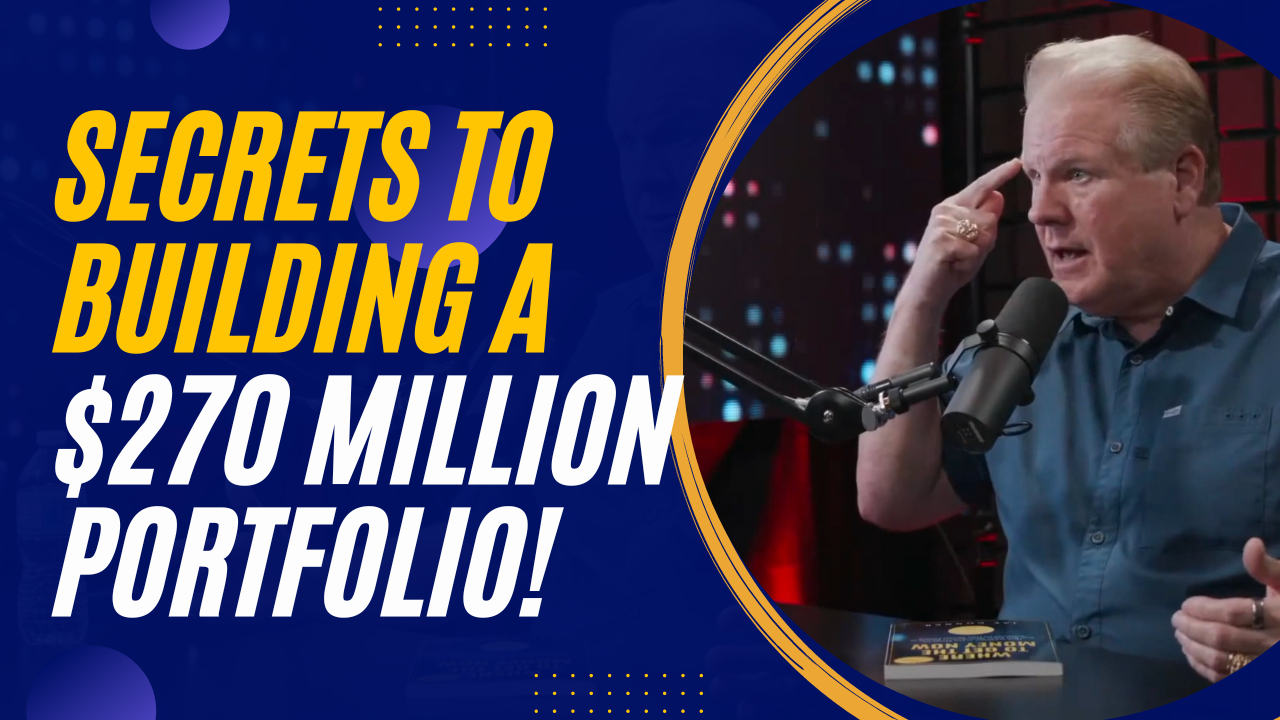
Creating Wealth in Real Estate: Insights from Chris Linger’s $270M Portfolio
Jay Conner [00:00:01]:
Welcome to another amazing episode of Raising Private Money. I’m Jay Conner, your host, and this is the podcast where we talk about how to raise private money for your real estate deals without even having to ask for money. Well, my guest today, I don’t know anybody more qualified to talk about raising private money because he’s already raised over $20,000,000 in private money for different asset classes of, real estate. He’s raised private money for multifamily. He’s raised private money for self-storage, and in addition to that, also mobile home parks. Well, he’s an accredited investor. He’s been investing in real estate ever since 2006. I’ve only got 3 years on him.
Jay Conner [00:00:46]:
And so, like many other investors, how do they start? Well, they start with small rental portfolios, just like my guest did. Well, he slowly built that personal portfolio and now it’s valued, his portfolio is valued at 4 half 1000000, or it was rather, but back in 2020, he started selling off and he wanted a sell-off* so he could move into larger commercial real estate and apartment syndications. Well, that’s where he is today. He is a general partner in 9 apartment syndications, which equates to over 1750 apartments. Currently, they have under management portfolios under management that have a value of $270,000,000 Do you think our guest has some valuable information to share about raising private money and managing projects where you better believe? In just a moment, you’re gonna meet my very special guest, mister Chris Langer, right after this.
Narrator [00:01:51]:
If you’re a real estate investor and are wondering how to raise and leverage private money to make more profit on every deal, then you’re in the right place. On raising private money, we’ll speak with new and seasoned investors to dissect their deals and extract the best tips and strategies to help you get the money because the money comes first. Now here’s your host, Jay Conner.
Jay Conner [00:02:19]:
Well, Chris, welcome to Raising Private Money.
Chris Linger [00:02:22]:
Thank you so much. I appreciate the invitation.
Jay Conner [00:02:26]:
Absolutely. I’m excited to have you here, Chris. We’re going to dive here in just a moment into how in the world you’ve gone about raising so much private money, your favorite ways to raise private money, and the lessons and mistakes that you’ve learned about raising private money. But before we dive into that, we want to hear your story as to how in the world you even got into this, this world of real estate investing.
Chris Linger [00:02:50]:
Oh, man. The beginning, the beginning of, getting started in investing started with, I was active duty military, moved from one duty station to another. And, unfortunately, it was about 10 and a half years into the service before somebody mentioned to me that, if you own 10 homes by the time you retire, you could live very comfortably. I happened to be leaving Pensacola, Florida in 2007, couldn’t sell my home during that time frame, and held onto it, ended up renting that out for the next 15 years, 13 years, excuse me until I sold that off. That was the kickstart, and I was like, wow, man. I’m getting paid. This guy’s paying the mortgage. This is wonderful.
Chris Linger [00:03:35]:
It’s not a lot extra at the end of the month, but it’s something. And, in 2017, I met my now-wife. She was also investing and started to intentionally invest. She had purchased a total of, 11 apartments. She had 2 quadplexes, a duplex, and a single family. And when I met her, we were having these conversations. We realized that we were very in sync, developed a relationship out of that, and decided that we were gonna start investing together. And, so we took our funds, pulled them together, and started partnering on quadplexes.
Chris Linger [00:04:11]:
We did an 8-plex at one point. And, at some of those spots, we were short on cash. And, I know this segues kind of into the start of your show, I guess I’ll say we had an opportunity that popped up in the middle of trying to close on something else. We had our funds set up for this other, property we were purchasing. And a wholesaler came back to us and said, hey, the guy dropped out. Do you guys still want this other property? And that was the start of us trying to raise private money going into a real estate adventure. But that’s the quick story of our getting started. Sure.
Chris Linger [00:04:48]:
Sure.
Jay Conner [00:04:50]:
So what, so in that, in that story, so that’s when you started raising private money. What was it about that experience that triggered your need to go raise private money? In other words, why didn’t you go to the local bank or why didn’t you go to a hard money lender or any, kind of an institutional lender?
Chris Linger [00:05:12]:
You know, I mentioned the fact that it was a wholesaler and they kind of want to move quickly. They like to close their deals. By the time you see it, it’s like, hey. We have 10 days. We have 8 days. Right? And so it’s much more favorable. They always have access to some hard money lenders, but we just wanted to buy this outright. We knew, like, it was an extra for us.
Chris Linger [00:05:33]:
And so we went to, we didn’t go to, a bank because that would have been 30 to 60 days. We decided, hey. Let’s talk to a couple of people. It was a fairly low, entry point for us, And, we felt like we had the people who had wanted to invest with us. We just had never done investors before. And so what we ended up doing was saying, hey, we’re gonna do a loan to our company, Upllex. You guys go borrow it from us. We’re gonna give you a payment back in 30, 60, 90 days, whatever the time frame was.
Chris Linger [00:06:07]:
And we had 3 people that bid in, said, yeah. We’d love to do that. And you’re gonna make me that kind of money that fast? Okay. Cool. And, we kinda just negotiated our terms for how it works, you know. And again, this is a very rudimentary, very early in our stages, so we weren’t quite as, adept at what we could do and how we could make things perform, in that neighborhood.
Jay Conner [00:06:32]:
Well, you just made an important point, and that is one of the big benefits of using private money. And of course, when we’re talking private money, we’re talking about doing business, getting loans from individuals, human beings with no middle person involved. We’re not talking about any kind of institutional money or hard money. And so one of the big benefits of using private money is that you said wholesalers, want to close fast and speed is, is one of the big keys and big benefits of private money. That reminds me, Chris, oh, just a few weeks ago, we were contacted by an individual who had inherited an oceanfront condominium here in Atlantic Beach, North Carolina, and he lived out of state, and it was going to the foreclosure site in less than 2 weeks. And if I hadn’t had $425,000 in private money immediately available, I closed that deal in 5 days, then I would have missed out, turned right around, and started for 628,000 after only $11,000 rehab. The point of the story is speed. Speed with use with using private money.
Jay Conner [00:07:41]:
So, you said that you had people approach you for not investing before you were even approaching anybody else.
Chris Linger [00:07:50]:
Absolutely. Between my wife and I, we had, at that point, I’ll say we probably had about 20, 22 doors, together. And people had heard our story. We were talking a little bit more about it. And that’s the biggest thing is when you’re starting when you’re getting into real estate, talk about your wins to everyone and anyone that you can. They will come back and ask questions if they’re interested and see how your story’s going. Some people, they just come back like, man, it’s so hard. It’s so tough.
Chris Linger [00:08:24]:
Talk about everything, but keep that kind of emotion to yourself to some extent in the fact that you want you wanna bring investors. You have to be supercharged. You have to be excited. You have to be, ready to take on the world when it comes to a real estate, opportunity. And those folks will jump on board with you. Now I’m not telling you to lie to people when your properties are doing terrible, you sold at a loss, you lost money. Don’t lie to them. But you wanna talk about the positive attributes that you’ve had and the positive interactions that you’ve had with your real estate because that’s what’s gonna draw people in to wanna work with you.
Chris Linger [00:09:05]:
If you can show that you’ve made profits on other things before, that you’ve been able to crunch the timeline faster than you expected, that’s gonna draw attention that people will be like, wait, you can make money for me faster than my bank, faster than the stock market. You can do different things with me. Okay. Let’s do this.
Jay Conner [00:09:23]:
Well, I’m so glad you’re bringing up the point of just being excited and talking with people about what you’ve got going on. You know, interestingly enough, Chris, I’ve got 47 private lenders that are investing with us, have been with us a long time, and, you know, we have new referrals coming in as well, but not one of these 47 people had ever heard of private money or private lending until I told them about it. And I do what I call, I put on my teacher hat. I put on my teacher hat. Right? And I teach people what private money is. Not one of them had ever heard of self-directed IRAs what that is and how they can move retirement funds that they currently have, over to a self-directed IRA company and either earn unlimited tax-deferred income per year or if they’ve got a Roth IRA, that’d be tax-free income on investing. So we really do, and it sounds like you as well, we do lead with that mindset of being a teacher and just sharing what’s going on and letting people know. You know, here on the show, we talk all the time about raising private money without ever asking for money.
Jay Conner [00:10:34]:
We don’t pitch deals. I’m in the single-family house space and this market is so crazy. I’m flipping just about everything. But, you know, we don’t have to ask. We teach and, you know, desperation’s got a smell to it. I never talk about a deal and how they can make high rates of return safely and securely in the initial conversation because now you sound like you’re begging and you’re not even trying to beg.
Chris Linger [00:11:01]:
Right. Right.
Jay Conner [00:11:02]:
Has that been your experience?
Chris Linger [00:11:02]:
Yeah. It boils down to I’m buying this, whether you come with me or not. I’m just offering you an opportunity to make money. Okay?
Jay Conner [00:11:13]:
Exactly. So what have been some of your favorite ways to scale that and get the word out? Like, you know, you can visit with people 1 on 1 and tell them what you got going on, But, you know, for you to raise over $20,000,000 there’s got to be a way to get get the word out there versus just visiting with people 1 on 1 at a time. Right?
Chris Linger [00:11:36]:
Oh, absolutely. And I do want I’ll point out the fact that we’ve raised over $20,000,000 in less than 4 years. So it’s been a quick move for us because as I mentioned, we did everything up until those 35 apartments in 2020. We did everything ourselves. We raised a little bit of capital for one deal. Right? One deal. It was all that we ended up raising capital for along the way, and we did it as a loan for ourselves. When we switched over to the syndication model, we knew we had to talk on a broader scale.
Chris Linger [00:12:07]:
So those areas that we talk in, I’ll say we go to events, we network with people, we try to go to the real estate local real estate events. Maybe there’s a RIA or, even a Chamber of Commerce get-together for real estate people. Then there’s, reaching out to folks who have webinars podcasts, and streams. Happy to have those conversations. But the most important thing that we’ve done is we educated ourselves on the different aspects of where people can make money, how they make money, where the tax benefits are, and we talk to an audience even if it’s just our social media. We’re not talking to just one person other than to say that we have, like, the ideal person that we look to speak to so that we have a focus and we’re not just trying to talk to anybody and everybody that’s out there. But the biggest thing is to get out there and talk about the message, what you wanna pass, and how you can help those people with their situation. Every investor is different.
Chris Linger [00:13:13]:
There are different goals, there are different things that they want to, avoid. And so the other side to it is we try to bring projects and opportunities that meet their needs. Doesn’t matter what Chris and Maricela want at a Upllex. It doesn’t matter what we want. It matters what the private money would like to be invested in and what kind of returns they want. That’s what we go after for opportunities, and then we bring that back to the audience.
Jay Conner [00:13:39]:
Smart approach. What are some lessons learned? What are some costly mistakes perhaps that you’ve made in the activity of raising private money that you’ve learned along the way that you don’t do that, whatever that is anymore?
Chris Linger [00:13:58]:
So I’m gonna I’m gonna kick 2 parts here. One is not only have we raised private money, but we have been the private money before. We’re also invested in other people’s opportunities. We also carry, I think we have 7 notes right now, mortgage notes that we carry. And I can talk more to those as well if you’re interested. But, the thing that we learned as being the note provider, is that you may not like this because your people are gonna come back and go, hey, I want some of that. But, if if we do a longer term, like a 2 or a 3-year note, we need to add in an increase in the interest rate or an increase in some way if they decide to activate an option an option year. Because we’re losing out to some extent, we’re losing out on reworking that money that much sooner.
Chris Linger [00:14:45]:
And so we we started to build in, an increased interest rate, for those longer-term opportunities. On the borrower side or the person offering the opportunity for private money, Probably the biggest lesson learned is to make sure that we’ve got a higher level of control over the opportunity. Sometimes when we first started, we were going into other people’s opportunities, helping them with asset management, raising capital, and signing on the loan, but they were the main managers for the Mhmm. For the opportunity. And what we found is there’s oftentimes that we’re a better manager than those people. I’m not saying that’s true across the board, but we definitely, look at these opportunities differently now. And we realized that even though they have some properties, they’ve had some success previously, so we needed to go back and look at their management of the property. Not because they made money, but what did they do during the process? Because the the successes the previous successes that you and I have had, don’t indicate what the success will be in the future.
Chris Linger [00:16:01]:
They got those other folks that we partnered with and had a lot of success because the market improved. We want success because we improved the position of the asset and the market improved. But it doesn’t have to improve for us to make money. Right? We improved the business itself.
Jay Conner [00:16:21]:
Certainly makes sense. Now another activity and business that, you’re involved in is you and your wife Marcella are Elite Business Coaches, where you coach and consult other business owners, and entrepreneurs on how to grow their businesses and create passive income sources. So what does that look like and what is an elite business coach?
Chris Linger [00:16:48]:
So, Grant Cardone from the 10 x community, he has, he has a business coach licensee program that you can join with a licensee. It’s kind of a franchise, I guess I’ll say in some ways, but it’s a licensee. We get to use the 10 x emblem, get to use 10 x information. We can teach 10 x courses. Right? So sales and marketing are 2 of the main ones. We have a business boot camp can we can provide that information to not only our investors but also clients and other business owners, our coaching clients. The elite side is the fact that Grant trusts us to coach his clients. People will join for mentoring and coaching and, you know, for the fee that it costs for joining that program for 3, 6, 12 months, Grant’s not the one teaching that information 1 on 1 in person where you can ask questions and get true and personalized feedback.
Chris Linger [00:17:51]:
He does, however, have a platform called Cardone University that has his recordings of him teaching certain lessons and certain things that we provide access to as well, so that you have a resource to listen to, somebody who has already done it. Right? He’s a billionaire, a multi-billionaire at this point. We just basically partnered with him to be able to teach his curriculum and utilize our personal experiences within real estate at multiple levels Grant didn’t do those levels. So he’s not a niche, specialized, instructor or mentor in that area. The other side of it is, that we are very comfortable with this because as I mentioned earlier, I was military, I did 26 and a half years. We always were part of a mentoring program whether we were being mentored or or providing mentorship. And my last 3 years of being in the military, I was the program director for, my specialty within the nursing community, for our our facilities. So I saw it as an even bigger picture, the impact that mentorship can have, and adding the coaching program, adding the certification from Grant, it has done, I’ll say, numerous different, things that we never expected to have happen out of this, have now given us better, a bigger network.
Chris Linger [00:19:23]:
We’re closer to his executive staff than we ever were or than most people are. And, it also provides us extra insight into, you know, the next steps and where to take your business and how to move it along quicker from where you’re at to that point of success. We can close that gap a little bit easier for people.
Jay Conner [00:19:42]:
Okay. When how can people learn more about that, particular service or coaching service?
Chris Linger [00:19:50]:
You know what? The easiest way is to reach out to us at invest@uplex.com, and it’s updashplex.com. I say that it’s easy that’s the easiest way to reach out to us for any of this information. But if you’re looking for coaching, then definitely, like, specify that in your email, so that we can, so that we can direct in the right direction. I just wanna I wanna give one avenue for people to reach out to us if they’re interested in any of the information that we’re talking about. They want us to go further and deeper into something. Happy to talk to you about any of these things that we talked about today.
Jay Conner [00:20:27]:
That’s wonderful. Now let’s talk about Upllex. Upllex is your company, a platform there where people can invest with you and be passive investors. So, talk about Upllex a little bit and how that works.
Chris Linger [00:20:46]:
Absolutely. So Upllex exists to elevate others. We’re here to elevate the property, the tenant, and the investor, and educate people. We have multiple facets to this business. It’s not just about multifamily investments. We wanna help you grow. And we have done, as you mentioned, we’ve done single-family duplexes, quads, and 8plex. We self-managed.
Chris Linger [00:21:10]:
We’ve had property management. We’ve done mortgage notes. We’ve generated our notes. Trying to think of other real estate avenues, but that’s the facet of it all is, we wanna bring people up. We wanna elevate them. The plex part is the complexity of real estate itself, the different sizes, that you can have a multiplex, a duplex. Right? And then, in business, it’s a complex opportunity, whether you need marketing, sales, you wanna grow your culture, your mission, you wanna grow and, scale your business. These are all different facets that we’re able to help with, within.
Chris Linger [00:21:52]:
And that’s why you see accelerated, biz coaching. That’s the other business, the coaching side of things. We have a virtual assistant agency that we work with, or that we that we run in conjunction with our coaching in many ways. Because business owners and entrepreneurs are trying to grow, they just can’t afford somebody in the house. They can’t afford a new person, but they can get wonderful help in taking care of some of the back office things so that the entrepreneur can focus on revenue-generating activities.
Jay Conner [00:22:24]:
That certainly makes sense. Now let’s say, we have someone listening here to the show and they’ve never been a passive investor. They’re they’re interested in investing, but they’ve never done that before. What are some of the really important questions a new private lender or investor should ask before getting involved in, say, a syndication opportunity?
Chris Linger [00:22:49]:
Oh, I love that question, Jay. Thank you so much. The first questions are to ask about experience. Have you ever gone full cycle is the word that we use. And now in other words, have they bought a property and sold it, and what kind of returns have they given back to investors? K. That would probably might be my number one, question. The other would be to ask for referrals of other investors that they’ve worked with before, and on what projects have they worked. That way, when you’re talking to that investor, you can ask specifics, to vet these people.
Chris Linger [00:23:27]:
The other is to, ask the question of who else is on the team. Because a lot of times people will advertise themselves as the only general partner on the team, but there’s 5 other people or 10 other people, you know. If there’s a if it’s a big deal, it can take a lot to be able to close that, and you need a lot of team members to help. And, let me think. Another question to ask, those syndicators as you’re getting started is, have you ever lost an investor’s money? Especially today, a lot of syndications are struggling. They’re, unable to keep up with the loan, interest rates, and how they’ve they they’ve got into assets with what’s called floating debt, so the interest rate changes based on the market. And a lot of projects, they weren’t able to implement their business plan. This is what I was referring to earlier. They weren’t able to implement their business plan to be able to stay ahead of those interest rates, on their on their monthly payments.
Chris Linger [00:24:34]:
So the cash flow that they were expecting wasn’t there, and they didn’t get the returns to their investors. Now, as long as they’re still in the deal, and they still have that opportunity, the bank didn’t take it back, or they didn’t sell it at a loss, There’s still an opportunity to meet the equity multipliers expected for the deal. It’s just that cash flow had been changed slightly, or changed significantly even, during the operations period until they can refinance or sell that property.
Jay Conner [00:25:06]:
Yeah. Excellent advice there, Chris, on, you know, a new private lender or an investor, you know, looking to get started, as a passive investor. Chris, let me turn it over to you for final thoughts comments, and advice, and we definitely wanna give out, your website and contact information again about how people can get connected with you and continue the conversation.
Chris Linger [00:25:32]:
Absolutely. Thanks, Jay. One additional thing that I’ll talk to, not necessarily to ask them about, to ask a syndicator about, but you want people who are consistent in their message, people who are consistently available for you to come back and ask more questions. Any question that you have of an opportunity that shows up or even just interest in, how do you do this? How do I do that? Right? What am I looking for when I’m trying to evaluate an opportunity? If they’re not willing to answer fully, if they’re not willing to answer directly, then that could be a red flag for you. I’m not telling you to run from everybody in that direction, you know, that doesn’t answer a question directly, but hold them accountable to it. Say, you didn’t answer my question yet. So many of us in life will accept when somebody fishes around, then dance around the answer and don’t give that direct answer. Come back to them and say, you didn’t answer that.
Chris Linger [00:26:32]:
Tell me specifically what’s this answer. That puts people on the spot, but it also tells you whether or not they know what they’re talking about and whether or not they are willing to share the information, whether it’s good or bad. You want people who are willing to give you straight answers. Yeah., we’re available to invest at https://www.Up-Plex.com, https://www.Up-Plex.com, and I appreciate having this conversation.
Jay Conner [00:27:03]:
Chris. Thank you so much for joining me, Chris. Again, you can check out his website at updashplex.com, and, and get started and have a conversation. Chris, thank you so much.
Chris Linger [00:27:18]:
Absolutely. Thank you, Jay. Have a great day.
Jay Conner [00:27:19]:
You got it. And there you have it, my friend. Another amazing episode of Raising Private Money with Jay Conner. I’m so glad you decided to join us. If you happen to be listening in on one of the popular, podcast platforms, iTunes, Spotify, etcetera, be sure and follow me so you don’t miss out. And we appreciate you rating and reviewing us and subscribing. If you’re watching on YouTube, be sure and click that bell. Subscribe and click that bell so you don’t miss so you get all the notifications.
Jay Conner [00:27:49]:
And I’m looking forward to seeing you right here on the next episode of Raising Private Money.
Narrator [00:27:58]:
Are you feeling inspired by the knowledge you gained in this episode? Then head over to www.JayConner.com/MoneyGuide. That’s www.JayConner.com/MoneyGuide, and download your free guide that shares seven reasons why private money will skyrocket your real estate investing business right now. Again, that’s www.JayConner.com/MoneyGuide to get your free guide. We’ll see you next time on raising private money with Jay Conner.