
Transitioning from a stable career to entrepreneurship often comes with its challenges. Brandon Cobb, who was once a medical device sales representative, experienced a significant career setback that propelled him into the world of real estate investing. Today, he manages a $22 million portfolio focused on affordable housing and has raised over $15 million in private money. In this episode of Raising Privat Money Podcast, Brandon Cobb shares his inspirational journey, strategies for success, and lessons learned along the way.
From Medical Sales to Real Estate
Brandon Cobb’s transition into real estate was far from smooth sailing. After being unexpectedly fired from his job in medical device sales, Cobb faced a series of failed online business ventures. However, he found his footing in real estate investing, initially focusing on fixes and flips. Drawing from a diverse set of experiences, Cobb pivoted into new construction, identifying a lucrative niche by addressing the affordable housing crisis.
Mastering the Art of Raising Private Money
One of the key elements behind Cobb’s success has been his ability to raise private money. Instead of directly soliciting funds for deals—a strategy that can often appear desperate—Cobb recommends engaging potential investors by seeking their feedback and gauging their interest. Both Cobb and host Jay Conner emphasize the importance of appearing confident rather than desperate when raising private money.
Cobb’s innovative approach involved negotiating with investors for fixed and flip projects at a 10% annual interest rate with no monthly payments. This method alleviated the financial burden of hard money loans, characterized by high upfront fees and interest rates, thereby allowing for more sustainable growth.
Syndication: A Path to Scalable Growth
Transitioning from debt positions to equity through syndication was a pivotal strategy for Cobb. Syndication, likened to crowdfunding, involves multiple investors pooling their resources to fund larger projects. This not only increases the available capital but also allows investors to become partners in deals, thus sharing higher returns. Through this method, Cobb expanded his funds from $6 million to $15 million, opening up opportunities for larger-scale projects.
Strategizing for Success in Real Estate
Cobb’s company, HBG Capital, specializes in entry-level housing in Nashville, Tennessee, a market with high demand for affordable homes. They have developed a multi-faceted approach that includes owning land outright with investors, contracting with national home builders, and building homes both to sell and to rent. This variety of exit strategies ensures stability and profitability, even in fluctuating markets.
Personal Insights and Lifestyle
Beyond the numbers and strategies, Cobb also shares personal insights into his journey. Real estate investing has afforded him the ability to travel frequently, taking six weeks off per year to explore new places. Particularly meaningful are his annual trips with his mother and a sibling trip to historic locations with his retired history teacher sister. These experiences underscore the personal fulfillment that can accompany financial success.
Learning from Mistakes and Moving Forward
Cobb’s journey from flipping houses to new construction highlights the importance of learning from mistakes and adapting strategies accordingly. Tracking key performance indicators helped him recognize the saturation in the fix and flip market, prompting a shift to new construction which offered higher profits with less competition.
Both Cobb and Conner agree on the significance of continuous learning and adaptation in the evolving landscape of real estate investing. Leveraging private money and shifting from a hard money-dependent model has been crucial for Cobb’s business scalability.
Get Involved
For those inspired by Cobb’s journey, HBG Capital offers opportunities for business owners who want to invest in real estate without the day-to-day hassles. Interested investors can join their fund at hbgcapital.net. Additionally, Cobb offers resources like a free ebook and a podcast, “Recession Resistant Real Estate Radio,” aimed at guiding business owners in real estate investing.
Jay Conner, the podcast host, further promotes a free guide on private money’s role in real estate investing, available at jconnor.com/moneyguide. He encourages listeners to follow, review, and subscribe to the podcast across different platforms.
Conclusion
Brandon Cobb’s transition from a medical device sales rep to a real estate mogul exemplifies resilience, strategic thinking, and the importance of personal growth. By focusing on affordable housing and mastering the art of raising private money, Cobb not only achieved financial success but also created a sustainable, impactful business model. His journey is a testament to how setbacks can become stepping stones to greater achievements.
10 Discussion Questions from this Episode:
Career Transitions:
How did Brandon Cobb’s experience as a medical device sales rep prepare him for the challenges in real estate investing?
Private Money Strategies:
What are some effective strategies that Brandon Cobb and Jay Conner discussed for raising private money without directly asking for it?
Market Niche:
Why did Brandon Cobb choose to focus on entry-level housing, and how does this niche address the affordable housing crisis?
Real Estate Development:
What are some benefits and challenges of transitioning from fix-and-flip projects to new constructions, according to Brandon Cobb?
Cash Flow Management:
How does managing cash flow play a critical role in scaling a real estate business, especially when dealing with hard money loans?
Equity vs. Debt:
Brandon Cobb mentions transitioning from debt positions to equity through syndication. What are the pros and cons of this approach?
Investor Relations:
How can investors effectively gauge interest and seek feedback without appearing desperate when raising funds?
Exit Strategies:
What multiple exit strategies do Cobb and his team employ for their projects, and how do these strategies mitigate risks?
Educational Resources:
How can business owners benefit from the educational resources shared by Brandon Cobb, including his free ebook and podcast?
Personal Benefits:
How has real estate investing allowed Brandon to enjoy personal activities such as annual trips with his mother and sister, and what does this reveal about balancing professional success with personal fulfillment?
Fun facts that were revealed in the episode:
- Brandon Cobb makes it a point to go on an annual trip with his mom, as well as sibling trips to historic places with his sister, who is a retired history teacher. These trips are a cherished tradition for him.
- Brandon’s real estate journey began in an unconventional way—he sold his retirement accounts to fund his very first fix and flip project, and he learned construction skills hands-on as he went along.
- Despite his busy schedule managing a $22 million real estate portfolio, Brandon ensures he takes about 6 weeks off per year to travel and unwind, highlighting the balance he’s found between work and personal life.
Timestamps:
00:01 Raising Private Money Without Asking For It
03:27 Traditional career pursuit leads to unexpected outcomes.
06:32 Shifted from fix and flips to new construction.
12:35 Switched to new construction for higher profits.
13:18 Pivot to larger deals creates lucrative opportunities.
19:13 Switched from deposition to equity and achieved great success.
25:58 Raising private money without asking, leading servantly.
27:55 Connect with Brandon Cobb: https://www.hbgcapital.net
29:38 Nashville thriving with growth and job opportunities.
31:17 Develop land, sell, build, or rent homes.
34:04 Book addresses the lack of knowledge for investors
Connect With Jay Conner:
Private Money Academy Conference:
Free Report:
https://www.jayconner.com/MoneyReport
Join the Private Money Academy:
https://www.JayConner.com/trial/
Have you read Jay’s new book: Where to Get The Money Now?
It is available FREE (all you pay is the shipping and handling) at https://www.JayConner.com/Book
What is Private Money? Real Estate Investing with Jay Conner
http://www.JayConner.com/MoneyPodcast
Jay Conner is a proven real estate investment leader. Without using his own money or credit, Jay maximizes creative methods to buy and sell properties with profits averaging $67,000 per deal.
#RealEstate #RealEstateInvesting #RealEstateInvestingForBeginners #Foreclosures #FlippingHouses #PrivateMoney #RaisingPrivateMoney #JayConner
YouTube Channel
https://www.youtube.com/c/RealEstateInvestingWithJayConner
Apple Podcast:
Facebook:
https://www.facebook.com/jay.conner.marketing
Twitter:
https://twitter.com/JayConner01
Pinterest:
https://www.pinterest.com/JConner_PrivateMoneyAuthority
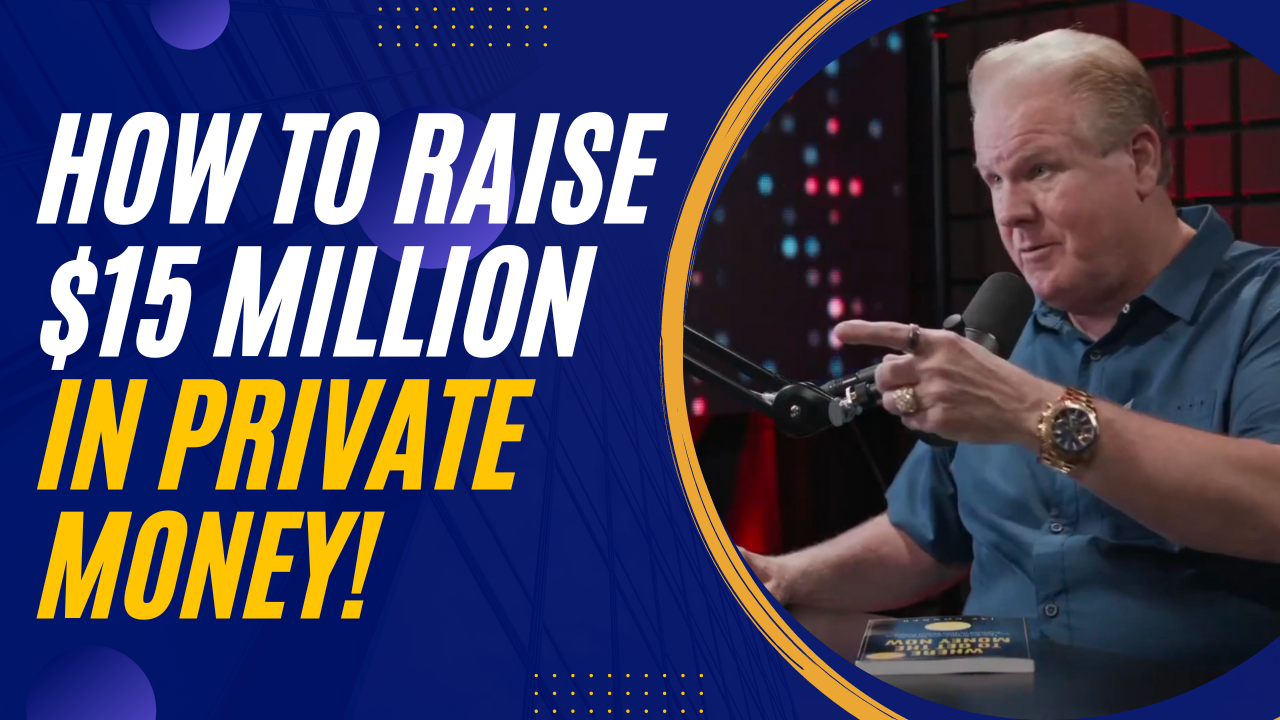
How Brandon Cobb Raised $15M in Private Money and Built a $22M Real Estate Empire
Jay Conner [00:00:01]:
Welcome to another amazing episode of Raising Private Money. I’m Jay Conner, your host, also known as the Private Money Authority. And it’s on this podcast that we talk about how to raise money, private money, for your real estate deals without ever having to ask for money. Well, I’ve got a very, very special guest today. He has raised only 15,000,000 and, of course, I put only in quotation marks. He’s raised, over $15,000,000 in private money, but his career did not start like that. He was a former medical device sales rep before he got into this world of real estate. And so now, he is annually managing $22,000,000 more than $22,000,000 of new first-time home buyer housing and what’s called Build to Rent Communities.
Jay Conner [00:00:56]:
Now, he’s been featured, in all kinds of publications. For example, he’s been featured on the cover of REI Wealth Magazine, and Realty 411 Magazine, And in addition to that, he’s been published in Forbes Magazine. Well, in just a moment, you’re gonna meet my very special guest. We’re gonna talk about raising private money. In just a moment, right after this, you’re gonna meet mister Brandon Cobb.
Narrator [00:01:25]:
If you’re a real estate investor and are wondering how to raise and leverage private money to make more profit on every deal, then you’re in the right place. On Raising Private Money, we’ll speak with new and seasoned investors to dissect their deals and extract the best tips and strategies to help you get the money because the money comes first. Now here’s your host, Jay Conner.
Jay Conner [00:01:53]:
Brandon, welcome to the show, man.
Brandon Cobb [00:01:56]:
Jay, it’s an honor to be here. That’s an exciting introduction. If you don’t get jazzed up after that, I don’t know what can get you jazzed up.
Jay Conner [00:02:03]:
Well, I’ll tell you what’s gonna get the audience jazzed up is your story, man, because you’ve got quite an interesting story. We’re gonna dive deep here in a moment and talk about how you’ve raised private money, and your favorite ways to raise private money because that’s what a large part of our audience wants to hear about. Another part of our audience wants to know how they can just be passively investing, so you might have an opportunity for them as well. But first, the audience and I, want to hear your story on how in the world you go from being a medical device sales rep to developing $22,000,000 of new construction every year.
Brandon Cobb [00:02:43]:
Yeah. It’s something that didn’t happen overnight. Right? If you told me 20 I don’t know how many months ago it was. 8 years ago back in 2017 that we would be inventing these new communities and helping the people that we help, I’d have looked at you like you had 8 dads because I loved what I did. I was in, medical device cells, did orthopedic cells. I was the guy if you had like a sports-related injury, knee, shoulder, I was the guy that you go to and you put some kind of anchors or ACL stuff or allograft tissue into your rotator cuff or like your ACL reconstruction surgery. And that was really what I wanted to do for a living, Jay. I didn’t have this passion to be an entrepreneur like a lot of people, young guy.
Brandon Cobb [00:03:27]:
I just wanted to get a career where I could eventually work my way to freedom, and make my parents proud. I didn’t wanna be tied down, and I wanted to build some kinda or extraordinary life with no regrets. Right? You know, that’s kinda what we all want. And so I followed the traditional path. I played it safe, did everything my parents told me I should do, got a highly desired job, you know, for working for a large corporation, you know, had the company car, the 401k benefits. They told me to save my money, not spend it, and that’s what I did. And it wasn’t until I got sat down one Friday over at the Starbucks in Weston in Nashville, Tennessee coming off, I kid you not, the the best day that I could have possibly had in medical device sales. Before I could even tell my boss how great of a day I was having and give him all the exciting news, he fired me.
Brandon Cobb [00:04:19]:
And let me tell you, that was the biggest shock because I loved my job. I loved what I did. That was my dream job. It took me years to break into that industry. And so like a lot of people who climb a corporate ladder and they’re very passionate about what they do and they end up getting let go from the job, you know that it’s a lot more than that. It’s not just you losing a job. You’re losing your sense of self. A lot of people’s identities are attached to that career.
Brandon Cobb [00:04:46]:
And when that gets taken from you, your identity kinda gets taken from you. And so I had a lot of soul searching that I needed to do. I was no longer employable, and I said, let me give myself a 6-month ultimatum here. And the worst case scenario, I could just go jump back into the career and I can do it. And so during those 6 months, I started an online motivational blog thinking that, you know, I’ll inspire a bunch of people. It failed. I started an online course on how to break into medical device sales. It failed.
Brandon Cobb [00:05:17]:
I also started a life coaching program and, you know, funny thing. Do you think that 26-year-old, people would be tripping over themselves to take life advice from a 26-year-old? Not the case. Couldn’t get anybody to give me. So I had these three businesses that just completely flopped. They completely fell, but real estate was the first thing that took off for me. I discovered this vehicle. I started investing in real estate.
Brandon Cobb [00:05:41]:
I did over 187 transactions over 7 years, and it was tough initially. It was tough wearing all the hats, and figuring out how to hire people. It was tough being out using all of my own money. I sold all my retirement accounts for me to fund my first fix and flip project. And it wasn’t until, you know, 2 years into it when I’d blown through all my savings, all my retirement accounts, and racked up $80,000 I’m sorry, $98,000 worth of credit card debt, that that’s when the learning started to take place. And I was able to start taking the steps to invest my money in online education programs, mentors, coaches, you know, a lot of stuff that that you do and your audience gets a lot of value from. I started investing in myself, And that’s when things started taking off. And so things transitioned from me, you know, fixing and flipping houses.
Brandon Cobb [00:06:32]:
We built that business up to doing about 30, or 40 fixes and flips per year to getting into new construction ground up. And we were doing about 30 new builds a year. And it wasn’t until we hyper-focused and realized, like, oh my gosh. It would be so much easier to build all of these homes in the same 1 or 2 or 3 areas as opposed to being spread out and having 30 new builds within, you know, 20, 30 minutes, all over the place from one another, that’s when we realized that that’s what we wanted to do. We noticed that there was a huge opportunity, specifically in entry-level housing. We just kinda sort of happened upon it. Right? A lot of people are listening to the news. They know there’s an affordable housing crisis.
Brandon Cobb [00:07:13]:
They know that interest rates have gone up. It’s been tough. But we kinda learned that our superpower was working with the local municipalities to identify the vision for the community, and then we helped them make that happen. And so when we pulled a chair up on the same side as the city and said, hey. What do you guys want? What’s lacking? What do you guys need? And didn’t try to show up and just shove something down their throat. They were so much more amenable to what we were going to do. And we realized that we could force appreciate the value of the land. We turn farmland into entry-level housing communities.
Brandon Cobb [00:07:48]:
That’s what we do. And so we build all this equity into the product before we purchase it. We’ve got a process that we use. So it’s been a it’s been a 7, 8-year journey. It did not happen overnight, and I could not have told you 8 years ago that I would be, you know, getting to do the cool things that I get to do. And and and now I’ve I’ve I’ve got a pretty cool life where I get to travel a lot. I think about 6 weeks off per year. I do an annual mom-son trip.
Brandon Cobb [00:08:12]:
We always go somewhere historic. She’s a retired history teacher. I go to places that, you know, my dad would never, you know, be able to afford to go to if it were just himself, and I do these annual sibling trips every single year. So real estate for me has been a tool to, you know, unlock that freedom that I know we all desire.
Jay Conner [00:08:30]:
I wish you had known about private money before you blew through your savings and your credit cards. But you know what? When I look back at my life, I have a ton of mistakes. I’ve lost 100 and 100 and 100 of 1,000 dollars. But I remind myself now and then, it’s what you went through that got you here.
Jay Conner [00:08:51]:
But what you went through won’t get you from where you are to where you want to go Because we’re continuing to learn all the time. So listening to your story, it sounded like you began your real estate investing journey with fixes and flips. Right? It’s not like your first project was a fix-and-flip house. I suppose that was a single-family house.
Brandon Cobb [00:09:14]:
Yep. That’s exactly right. Sold all my retirement accounts, paid the penalties, bought it cash, was driving an hour and 20 minutes every single day to GC this house myself. I was getting the contractors off Craigslist, which doesn’t do that. That’s the worst possible place to get contractors. And meanwhile, I was managing this project while I didn’t know which way to swing a hammer. I did not have a construction background, but I was all in. I would say, hey.
Brandon Cobb [00:09:39]:
You know what? I’m gonna figure this out, and I hit that 6-month ultimatum 8 days before it was up. And so I made about $30,000 off of that house flip and said, well, I made some money by myself. I guess I gotta keep going.
Jay Conner [00:09:55]:
There you go. You said you didn’t know how to swing a hammer. I’ve I I was gonna say I’ve rehabbed over 500 houses. I haven’t rehabbed the first house myself. My team has.
Jay Conner [00:10:06]:
So we’ve done over 500 and I still don’t know how to swing a hammer. I don’t wanna know how to swing a hammer.
Jay Conner [00:10:11]:
But, I have an amazing team that does it. So you started in rehab. I started in rehab. I still do about, you know, 30 a year or so. In a small market here. Our market’s only 40,000 people. You started in rehab, but then you migrated to new construction. In your story with the municipalities, it sounds like the cities and municipalities were more directly your customers, that is the people you’re gonna serve initially to ultimately, you know, serving or to your product going to the buyers.
Jay Conner [00:10:49]:
So what was it what was it that triggered you or motivated you to move from the rehabbing space to new construction?
Brandon Cobb [00:11:00]:
Yeah. So 2 jumps there. 1st jump is rehabbing to the actual infill spec new construction. So think of that as like onesie those projects. You tear a house down and you build 1 or 2 in its place. And then the second step up is working with the cities and doing these larger developments, basically turning farmland into actual communities. That first step happened when we had a house that we had purchased for less than what the land was worth. Half of it was burned down.
Brandon Cobb [00:11:29]:
That second story, it was crispy. But that foundation in the first story wasn’t looking so bad. And so we hired a structural engineer. We brought the city out and said, hey, look. Let’s do this the right way. We cut out all the black stuff, you know, reframed, then we built that house. We built a new house using the existing foundation and some of the existing framing on the first floor. We felt comfortable because we had done these full gut rehabs where we’ve gutted everything down to the studs before.
Brandon Cobb [00:11:55]:
And we ended up selling that house in 6 months. At the same time, we were rehabbing a historic full gut rehab right around the corner that took 8 months. And we made probably $40,000 on that full gut rehab, and we made $120,000 on that new build. And that was a light bulb. We made 3 times as much money building new as we did rehabbing. And that’s when we said, what are we doing flipping houses? Now there are some other reasons I kinda go into. We were tracking a lot of our key performance indicators at the time, and we were flipping houses for $250,000 making $50 off of them. Very good margins there.
Brandon Cobb [00:12:35]:
We were spending about $33100 per contract per acquisition, and we just noticed over time over, you know, 4 years, our KPIs were telling us that we were spending $66100 for every deal that we acquired, and we weren’t flipping $250,000 homes anymore. We’re flipping $450,000 homes and making 30, $40,000. And so the writing was on the wall. Things were saturated. We knew we wanted to, you know, not keep going in that direction because it was getting more and more competitive, And new construction just happened to be the tool, the vehicle that we noticed at the time that we were like, wow. Three times as much money with less time? Heck, yeah. Let’s do this. And so that’s how that manifested itself.
Brandon Cobb [00:13:18]:
And then the problem with the new construction was you’re spread out. Right? You’re it takes just as much time to talk to one person who has one house where you can build, you know, 1 or 2 homes on it as it does to talk and negotiate with somebody that has a piece of land that you can build 100, 200 homes on. Right? And there’s a lot less competition for those deals. And so our second pivot happened when we knew we wanted to do bigger deals, and we started talking with the city, and we realized holy crap. You can make a lot of equity appear in a deal when you take a home from a farm to a 100-home community. There’s a lot of equity that gets baked in, and we can do that before we ever purchase the product. It’s like being able to fix and flip a house and buy it after you fix and flip it, and all the equity is there.
Jay Conner [00:14:09]:
Yeah. So instead of flipping a few houses simultaneously, you’re in your new construction, you’ve, like, scaled your business to where you can do a lot more houses simultaneously than you can finding a deal over here or finding a deal over there. It’s been my experience, you know, over the years, and I’ve been blessed to interview a lot of people. But with all the stories that I hear, it seems to me there’s a common thread among real estate investors. There’s before private money, and then there’s after private money. There’s life before private money, then there’s life after private money. And it seems as though and I’m just curious to hear your story, Brandon. It seems to me that a lot of times there is a pivotable moment.
Jay Conner [00:14:58]:
There’s something that happens in the real estate entrepreneur investor’s career that there is a light bulb moment or there is something that changes.
Jay Conner [00:15:11]:
And that person says, you know, I need to learn about private money, and I need to start raising private money instead of doing things the way I have been doing. What happened? What motivated you to start raising private money?
Brandon Cobb [00:15:25]:
There are 2 big events, and it’s kinda funny. I don’t think anybody’s ever asked me this question before, but I can tell you right off the top of my head, 2 moments come to mind. The first moment was when we realized we were not gonna be able to scale our business with hard money. And so when you’re fixing and flipping properties and you’re going to events, there are people who will give you money. It’s pretty easy to get money for a fix-and-flip project. If you flipped a couple, you’ll probably get letters in the mail from hard money lenders trying to give you money to flip a house. But there’s a difference between what I call hard money and private money. Hard money is expensive.
Brandon Cobb [00:16:02]:
It’s typically anywhere. I mean, I’ve got friends that do hard money loans, and they charge 3 points upfront and, like, a 15% rate. So to get $100,000 from them, you gotta give them 3 grand, and you’re gonna pay them $15,000 in interest over a year. And you’re gonna pay monthly payments. And we were doing a lot of hard money loans where we’re fixing, flipping, and even doing, you know, some of our new bills. And we just realized that we were not gonna be able to scale using hard money because the monthly interest payments were too severe. It was too much. It was too much strain on the cash flow of the business.
Brandon Cobb [00:16:37]:
Real estate is a cash flow management game. You have got to be able to manage cash flow or you will go out of business. And so we knew that we needed to raise money at more affordable rates. You can raise money for fix and flip projects at 10% annual interest all day. There are people, your friends, family, whoever, that will pay that all day, and they’ll be excited about it because they’re used to getting 7 or 8% in the stock market or 2, 3% in a CD or whatever. And so we also negotiated where there are no monthly payments. And so, like, we got, like, $20,000,000 of Altman out. Do you know how much I pay in interest every month?
Jay Conner [00:17:13]:
Sounds like 0.
Brandon Cobb [00:17:15]:
None. 0, zilch, none. I’ve got no monthly payments, which means I can sit on these things as long as I need and stomach things like a COVID crash or interest rates going up because there is no I’ve got holding cost, but you don’t fill it every month. And so that was important to me. I’ve realized we were not gonna be able to grow and scale our business using hard money. We needed to go raise private money, and we needed to have the interest payments accrue to sell it. Then I realized after several years of doing that, I was raising dollar for dollar. Meaning, if I needed $300 to go buy the land and build the home, I need to go find $300,000 from an investor or, you know, whoever.
Brandon Cobb [00:17:59]:
And I and I had I think at the time, I had, like, I wanna say, like, 6 or $7,000,000 out, and I’m like it’s like paying to play Tetris. You might have somebody who has $200,000, but you need 250, so you gotta go fund someone else with 50. And then you gotta fur do a 1st position loan and a 2nd position loan, and it gets, you know, it gets kinda squirrelly. You don’t wanna do that. And so the problem is you spend all this time and effort raising the capital and taking care of the capital and and and, you know, having it perform. And then if you get a deal and you don’t have an investor with that same amount of money, they go somewhere else. It’s a problem. And so, it’s like playing Tetris with people’s money like that.
Brandon Cobb [00:18:40]:
Then I discovered the power of a syndication, and I discovered what equity was. And, boy, let me tell you. This is when things took off. I learned that we could take those investors and instead of having debt positions, we could convert their capital to equity. And then we could use that money to go and leverage and get debt and use that to be able to exponentially grow. When we did that, let I mean, let me tell you what. Things took off because I was able to have these conversations with investors and go, hey. Look.
Brandon Cobb [00:19:13]:
How would you like to come in instead of being a deposition, be a partner in the deal? And instead of making 10%, you know, if we could offer you 18%, would you be interested? And, boy, they jumped at that. Because I’d had a record. I’ve done a lot of deals with these people, and they trusted me. And I had the performance to show that we were going to be able to perform. And let me tell you, I woke up I mean we converted that $6,000,000 from debt into equity. I woke up with $15,000,000 that I could go and do deals with, And that’s when things started to take off. Because I realized at the time, oh my gosh, if I wanna go and, you know, do 300 homes a year, you know, do all this development, I was gonna have to go from 6,000,000 to, like, 40, $50,000,000. I was like, how the hell am I gonna do that? That oh my god.
Brandon Cobb [00:20:00]:
I see how much work it takes to raise $6,000,000. If I gotta go raise dollar for dollar, what happens? And so now, overnight, that problem went away because we’re able to raise equity and use that as leverage to go and get deals financed.
Jay Conner [00:20:15]:
So let’s dive down a little deeper on that just to make sure that everybody is listening, and understands. So what you said was, overnight, you went from 6,000,000, that was the private money you had already borrowed, and that was debt in a debt position where they were earning interest or accruing interest. But then overnight, you went from 6,000,000 to 15,000,000 because of an equity position. Explain that, a little bit more.
Brandon Cobb [00:20:42]:
Yeah. So if you go and you buy your own house that you wanna live in, the bank or whoever is doing the deal with you is gonna require a down payment. So if you’re buying a house for, let’s say, $100,000, you got this nice house. You’re gonna buy it for $100,000. You go put a contract in on it. You’re probably gonna get a loan on that house, and the bank is going to loan you money, but they’re gonna want you to have some skin in the game. And so because you’ve got some skin in the game, they’re gonna want a down payment. And so this is usually you taking the money, $20,000.
Brandon Cobb [00:21:13]:
Usually, it’s 20%. You get an FHA loan due, you know, 3, 4, 5% or whatever. And you put that money down and exchange, they’ll finance another the other $80,000. So in this example, I would go to investors and say, hey. Look. I need to borrow the down payment. I’ve got the financing lined up. I’ve got the bank or, you know, the other private entity, you know, lined up that’s gonna lend on this, you know, and I would raise the down payment.
Brandon Cobb [00:21:37]:
That’s equity. So that’s cash. And so what we would do is we would create these LLCs. It’s a send it’s syndication. A fancy way of saying it’s crowdfunding. You’re pulling money together and you’re giving people an ownership percentage of the deal based on how much capital they contribute. So you could have 10 people on the deal, and if they all contribute, you know, the same amount of money, they’ll get the same distributions when it comes time to sell whatever property it is. Or you might have somebody that brings half the money or, you know, the other person that brings 25%.
Brandon Cobb [00:22:13]:
And so how much money they bring influences what percentage of the limited partnership that there are. And so you can think of it like a jumbo jet. I like the jumbo jet analogy. You can’t just pay for one ticket and be the only person on a jumbo jet to go and get to where they want. You have a bunch of people that contribute a small amount. They buy their separate tickets. This way, they can fill the plane up, and together, you can all get to where you want to go. That is what a syndication is.
Jay Conner [00:22:43]:
I love it. I love the explanation, Brandon. Now what have been some of your favorite ways to raise private money for your syndication or it when it was, you know, just all debt?
Brandon Cobb [00:22:58]:
So there’s been a whole journey. Right? You start with friends and family. I think everybody’s familiar with this model. And you take a list of people and you write all the people down and you call them. And you need to say something along the lines of, you know, I’ll kinda I don’t know how far down the rabbit hole you wanna go on this. Like, we can go into each one. I can go, hey. Here’s the strategy and what you need to do.
Brandon Cobb [00:23:18]:
If you wanna call your friends and family, I can do that. We can go over how we’re raising money from accredited investors online. We can go over how we’re generating referrals from, like, our current investor base. So, like, you tell me how far down the rabbit hole that you wanna go. When I first started, it was friends and family. And so I would pick up the phone. Okay? Yep.
Jay Conner [00:23:36]:
Go ahead. Let’s do that. Let’s do that. It’d be the friends and family.
Brandon Cobb [00:23:40]:
Yeah. I’d have a deal we already did. So create some kinda of investment packet that shows the details of all your past deals that you’ve done. Or if you haven’t, a deal that you’re going to do, go look up online what a pitch deck looks like. Copy and paste that. And then I call my friends and family, and here’s the important thing that you wanna do. Do not say that you have a deal, and I wanna pitch you the deal. It’s the worst thing you could do.
Brandon Cobb [00:24:03]:
You call them up and you say, hey. You know, getting caught up with you. Great. Hey. Look. I wanna pitch an idea to you. You know, I’ve been doing this real estate thing for a while. It’s been going well.
Brandon Cobb [00:24:15]:
I think at some point, we might have an opportunity to bring in more investor partners, for our deal, and I don’t currently have anything. But if I were to find something, are you interested in investing in real estate? Is this something that you’d like to take a look at? Because it puts them at ease. You’re not trying to put them on the spot. And if they say yes, that’s perfect. Now they’ve permitted you to contact them when you do have something. And another way that you can, do this, if you do have a deal and you need to, like, immediately pitch it, is you don’t ask them for, the chance to, like, pitch them a deal. You ask them for advice. Hey.
Brandon Cobb [00:24:54]:
I got this good deal. I got this real estate deal I’m working on. I’m looking for some feedback on it. I want someone to, like, shoot some holes in it. Would you mind taking a look at it and just giving me some honest feedback and shooting some holes in it? You know, let me know what you think it’s lacking. You’re not asking them to invest, but it’s the way of getting the deal in front of them. And you let them give you honest feedback on the deal and then ask, okay. Cool.
Brandon Cobb [00:25:17]:
Great. So this is wrong. This is wrong. Okay. Is anything lacking on this? Anything that you felt needed to be in this presentation? Anything you felt was missing? Okay. Great. Thank you for the feedback. Hey.
Brandon Cobb [00:25:26]:
By the way, do you know anybody who might be interested in learning about investing in this deal? And you’ll be surprised because they’ll probably say, like, yeah. You know what? I thought this was a really good deal. I’m interested in it. And so that was the first way that I started raising money. And let me tell you, I had a lot of bad conversations, and it took me a while to learn to use those two viewpoints right there, those two frameworks to be able to raise money from friends and family via phone call, text, or email.
Jay Conner [00:25:58]:
Well, I tell you, Brandon, you and I have got the same experience. This is why on this podcast, we talk about raising private money without ever having to ask for money. The way I do it is by leading with a servant’s heart having on my teacher hat and teaching people. You know, I have 47 private lenders right now, and not one of them had ever heard of private money or private lending until I told them about it. Yeah. And I want to emphasize the point that you made. The point you made in your story right there was that desperation’s got a smell to it, and the worst time in the world to be raising private money is when you need it for a deal. Right? So the way I do it is we separate conversations just like you shared.
Jay Conner [00:26:42]:
We talk about our program. We talk about how our private lenders earn high rates of return, safe and secure. And I don’t have a deal today, but here’s how it works. Here’s the program. Here’s here’s how you’re protected. Here’s how you can get your money back in case of an emergency. And so in my world, they tell us how much they got to work with or if it’s, you know, retirement funds, and I need to introduce them to the self-directed IRA company where they can move their funds over and earn tax-deferred or tax-free income. And then when I got a deal to put the, for them to fund, I don’t even call them up and pitch them on the deal.
Jay Conner [00:27:15]:
I just called them up with what I call the good news phone call, and I think I am scheduled to be on your show. So I’ll share with your audience what the good news phone call is. My audience already knows what it is. Well, let’s change gears for a little bit here, Brandon. Thank you so much for sharing what you just did because you and I are singing in the same choir, my friend. I mean, these gurus going around saying, oh, just get a deal in the contract. The money will show up. I wanna throw up and run head-first into a brick wall.
Jay Conner [00:27:46]:
It’s like, where’s the money gonna show up? I say get the money lined up first. But let’s switch gears. We’ve got a, we got a percentage of our audience that loves to be involved in real estate, but they don’t wanna go negotiate deals. They don’t wanna be the operator. They just wanna sit back and make nice returns. So in the time we have remaining, please tell my audience about HBG Capital. What in the world is that and how does that work? Yeah.
Brandon Cobb [00:28:14]:
So we’re a real estate investment firm that focuses on Nashville, Tennessee, specifically. And we focus on first-time homebuyer housing, also known as affordable housing. I don’t like to use the term affordable housing just because people confuse it with Section 8 or government housing. And so it’s it’s the first time homebuyer housing. So it’s at 2,000 to $25100 per month mortgage. And we focus on that because that’s what first-time home buyers can afford right now, especially after the interest rate rise. It’s the most undersupplied, highest-demand real estate product in the country right now. You just don’t have enough homes that those first-time homebuyers can get in.
Brandon Cobb [00:28:57]:
And to make matters worse, you’ve got over 33% of the home-buying population, millennials mostly, that are having kids, they’re prime home-buying age, they wanna settle down, and they’re struggling to afford something. 33% of the home-buying population needs a first-time home. Less than 10% of the homes being built are affordable. And so I don’t need to be a genius to tell you that there’s a huge supply and demand imbalance there. There’s a huge supply and demand imbalance for affordable entry-level housing. And so that’s what we focus on. We go in and we turn beautiful farmland communities into entry-level housing communities. We do it in Nashville, Tennessee.
Brandon Cobb [00:29:38]:
There are a ton of reasons why Nashville, but you just think of it like there’s money going into the city. Anytime you can be building and developing in an area that’s, you know, been one of the top 10 fastest growing cities in the United States the past 6 years, you’ve got tons of big corporations like Amazon and Oracle, AllianceBernstein that are moving here and bringing jobs to the area. When you’ve got a business friendly state that did not shut everything down during COVID, it’s attracting $6,000,000,000 worth of institutional capital has come into Nashville, since the COVID area. It’s getting out of it’s getting out of California. It’s getting out of New York. It’s getting out of New Jersey, all these high tax rates, and it is flooding Nashville. So we literally can’t keep up with the opportunity. We’ve got over 1500 units in our pipeline.
Brandon Cobb [00:30:25]:
There’s no way we’re gonna be able to build and develop 1500 homes or develop 1500 lots and sell them to builders. And so we’re just having to sell off the paper right now to other builders and developers after we get it through the approval process, and so we’re leaving a lot of meat on the bone. And so I’d say, you know, the biggest differentiator with us is that we’ve got multiple exit strategies. Everything falls under the entry-level housing umbrella. But first, we partner with the cities to align and give them what they want. After that land has been approved for 50, 100, or 200 homes and you’re ready to go stick a shovel on the ground, 3 to 4 things can happen. 1 is we could just land vacant with our investors, so we own it outright with them. Nobody’s gonna come and be able to snatch it out from underneath us.
Brandon Cobb [00:31:17]:
We usually do this in an area that’s developing. So there’s a lot of stuff happening around it, and we know that the price is gonna exponentially go up if we just sit and hold on to it. 2nd exit strategy is a national home builder, usually a Doctor or Lennar Horton, will give us a contract for the improved finished land lots. So these are land little lots of land that are ready to build. So we go in with our investors’ capital, and we will develop, put it in the roads, put in the utilities and the infrastructure to create the neighborhood without the homes on it. And then the 3rd exit strategy is we’ll go in and we’ll develop and build the homes. And a 4th exit strategy that has been tough to pencil since rates have gone up is the build-to-rent. And so we develop, build, and rent the homes out, for long-term depreciation and long-term cash flow.
Brandon Cobb [00:32:07]:
That’s our whole strategy in a nutshell.
Jay Conner [00:32:11]:
And so then people can invest in your fund at hbgcapital.net and be passive investors and be a part of what you’ve got going on. Right?
Brandon Cobb [00:32:24]:
Yeah. If somebody you’re somebody like, we work with a lot of business owners who are good at business. They’re very good at what they do. You know, doctors, lawyers, HVAC, concrete, contractors. I mean, you name it. And they don’t wanna take time away from what they’re doing, but they’ve got a tax problem, and they’ve got a lot of cash on the sidelines. And they know that one day, they wanna replace their business income with income that is generated by something, and nothing’s better than real estate. Why real estate? Because it doesn’t go to 0.
Brandon Cobb [00:32:52]:
It’s not like investing in Blockbuster which did really, really well for decades, and then all of a sudden Netflix comes along and puts it out of business. No. They want something that’s gonna be around for generations, and so we work with those business owners. We work with those investors to park their capital into real estate, but it’s completely hands-off. They don’t have to worry about finding the deals, managing the deals, selling the deals. They want something that’s completely turnkey that they don’t have to worry about. They just wanna get monthly updates and get very transparent communication no matter what’s going on. And that’s what we do.
Brandon Cobb [00:33:25]:
We help business owners build a legacy, achieve their dreams, and make an impact by creating passive income from real estate. Estate. So, yeah, if you’re interested in learning more about that, you can go to our website, hbgcapital.net. It’s pronounced harrybobgarycapital.net. We’ve got a ton of free resources on the website. We’ve got a free ebook, 100 Questions Business Owners Ask Before Investing. You know, I wrote that ebook because I got a call one day from one of our investors who asked if I would help his friend who lost all of his money in a real estate investment. And after speaking with him on the phone, it became very evident and obvious.
Brandon Cobb [00:34:04]:
The reason he lost all his money was because he was very green. He did not know the right questions to ask. He did not know how to secure his investment, or how to do the right paperwork. And so I wrote that book, and I put that book together because if I could just prevent this from happening to one other person, it would be worth it. And I’m convinced that questions unlock the questions are the keys that unlock the answers we need to make more informed investment decisions. So had he had the right answers, he could have prevented that whole capital loss. So you can go to our website. You can grab that free ebook and a ton of other stuff.
Brandon Cobb [00:34:41]:
We’ve also got our podcast, that you’re gonna be on called the recession-resistant real estate radio. You know, there we interview a lot of entrepreneurs. We talk about real estate investments. You can go there and check us out too.
Jay Conner [00:34:52]:
That’s awesome. Brandon, thank you so much for taking the time to join me here on the show.
Brandon Cobb [00:34:58]:
This has been a pleasure. Thanks for having me on.
Jay Conner [00:35:00]:
Absolutely. And I look forward to being on your show. There you have it. Another amazing episode of Raising Private Money. I’m Jay Conner, your host. I’m so glad you decided to join us. And be sure and do me a favor, if you found this episode insightful and you learned some nuggets and some opportunities, if you’re, listening on one of the podcast platforms, be sure to follow me. Be sure to review and rate and subscribe.
Jay Conner [00:35:27]:
And if you happen to be watching us on YouTube, be sure to subscribe and click that bell so you don’t miss out on the upcoming episodes. I look forward to seeing you right here on the next episode of Raising Private Money.
Narrator [00:35:43]:
Are you feeling inspired by the knowledge you gained in this episode? Then head over to www.JayConner.com/MoneyGuide. That’s www.JayConner.com/MoneyGuide, and download your free guide that shares seven reasons why private money will skyrocket your real estate investing business right now. Again, that’s www.JayConner.com/MoneyGuide to get your free guide. We’ll see you next time on raising private money with Jay Conner.