
Unlock the ultimate real estate investment opportunity with zero competition! Our guest Phillip Vincent is a certified expert in purchasing houses for seniors transitioning to long-term care communities. With over 22 years of experience and hundreds of houses bought, Phillip’s creative and caring approach makes him a favorite among sellers.
His entrepreneurial spirit led him to establish a nationwide network of Mom’s House Certified Buyers, making home-selling easier for seniors. This recession-proof lead source promises boundless potential for real estate investors, ensuring a secure and thriving venture. Don’t miss this chance to be part of the largest emerging market in real estate today.
Key Takeaways
- Phillip’s first time raising private money.
- “If you ask for advice, you’ll get money. If you ask for money, you’ll get advice.”
- Build these relationships early so that you will already know who you will call tomorrow when the deal shows up.
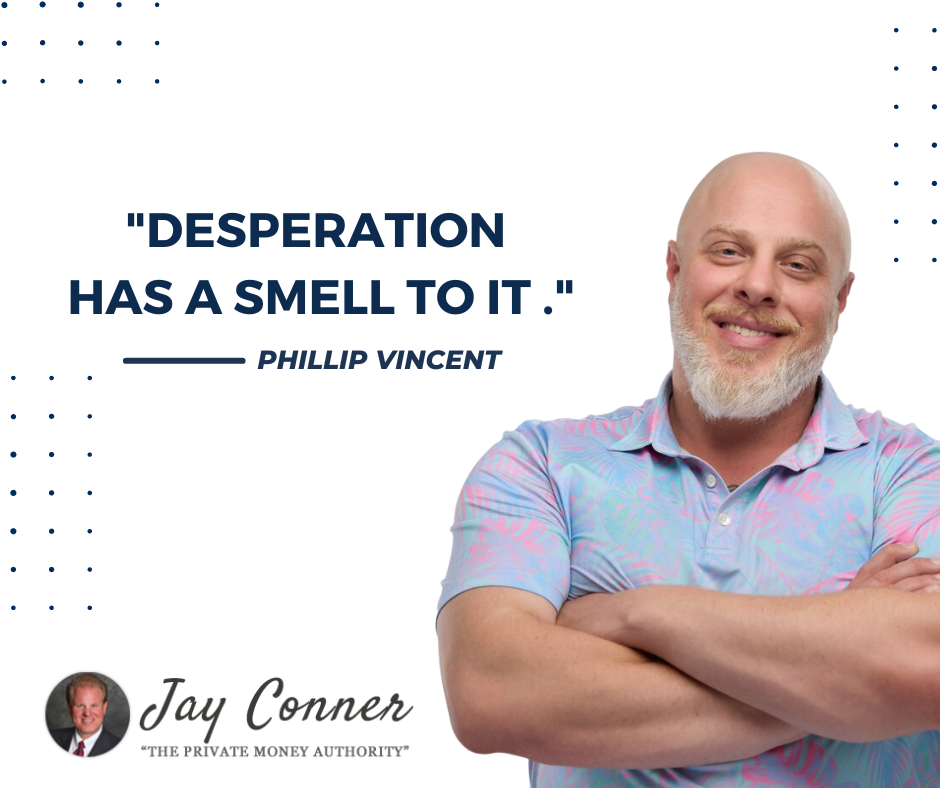
- “Desperation has a smell to it.”
- How did Mom’s House start? And why is it the best lead?
- Do you have to be a real estate agent to join the Mom’s House journey?
- What is a Senior Transition Specialist?
Resources:
Connect with Phillip
Email Phillip at: phillip@momshouse.com
Contact Phillip at 314-537-7445
Website: www.momshouse.com and www.momshouse.com/jay
Check out my book: 7 Reasons Why Private Money Will Skyrocket Your Real Estate Business and Help You Build Incredible Wealth!
Get it here for FREE: www.jayconner.com/moneyguide
Sign up for the Private Money Academy and get 4-weeks free: https://jay-conner.mykajabi.com/offers/AMM4hCPW/checkout
Sign up for the Private Money Academy Conference: https://www.JaysLiveEvent.com
Timestamps:
0:01 – Raising Private Money with Jay Conner
1:26 – Today’s Guest: Phillip Vincent
4:06 – In Most Transactions, The Seller Requires All The Cash
4:56 – Banks Serve A Purpose, But Consider Private Money/ There’s Money Waiting To Be Invested
9:56 – Desperation In Real Estate Leads To Success
13:36 – Build Relationships Early, Teach Money First. No-Begging For Funds, Offer Mortgage Instead
17:03 – Real Estate Investor Finds Best Leads From Seniors
25:28 – Senior Living: Selling Housing With Care
29:54 – Need Thousands Of Real Estate Investors To Become Mom’s House Certified Buyers
31:57 – Connect With Phillip Vincent: https://www.MomsHouse.com/Jay

Why Fight For Scraps? Discover A Rare Real Estate Niche With Zero Competition With Jay Conner & Phillip Vincent
Jay Conner [00:00:01]:
Oh, my lands, have I got another amazing guest on today’s episode of Raising Private Money. Welcome to the show. I’m Jay Conner, the private money authority on today’s show. I’ve got a dear friend, a fellow Mastermind member that has raised hundreds and hundreds of thousands of dollars in private money. He’s going to share exactly how he’s done it. And in addition to that, let me tell show you what my friend’s Jam is. Well, first of all, he’s all about helping and serving other people. Of course, that’s what we talk about here on the show all the time. He is interested in solving their big problems by buying houses. Well, while he started as a home builder way back many years ago as a developer, he quickly transformed and changed and transitioned into buying houses from seniors or adult children. Listen to that. Buying and focusing on buying these properties from seniors or adult children. So over the last 22 years, my guest has bought hundreds of houses, and he’s got a passion for working with families, and his sellers love him. Now, it is his entrepreneurial spirit and his commitment to making the home-selling process so easy for seniors that led him to create this nationwide network of what’s called Mom’s House certified buyers. And let me tell you what, this niche of the real estate investing business is so underserved. That’s what’s great about this business. Well, there is essentially no competition for this segment of the business. In just a moment, you’re going to meet my friend and guest Phillip Vincent, right after this.
Narrator[00:01:53]:
If you’re a real estate investor and are wondering how to raise and leverage private money to make more profit on every deal, then you’re in the right place on Raising Private Money. We’ll speak with new and seasoned investors to dissect their deals and extract the best tips and strategies to help you get the money because the money comes first. Now, here’s your host, Jay Conner.
Jay Conner [00:02:33]:
Well, hello, Phillip. Welcome to raising private money.
Phillip Vincent [00:02:37]:
My friend Jay, thank you for having me on. It’s always good to talk to you. Sounds like I get to see you again here in about a month in real life in our Mastermind, and you’re one of my favorite people to meet. And so thank you for having me on.
Jay Conner [00:02:49]:
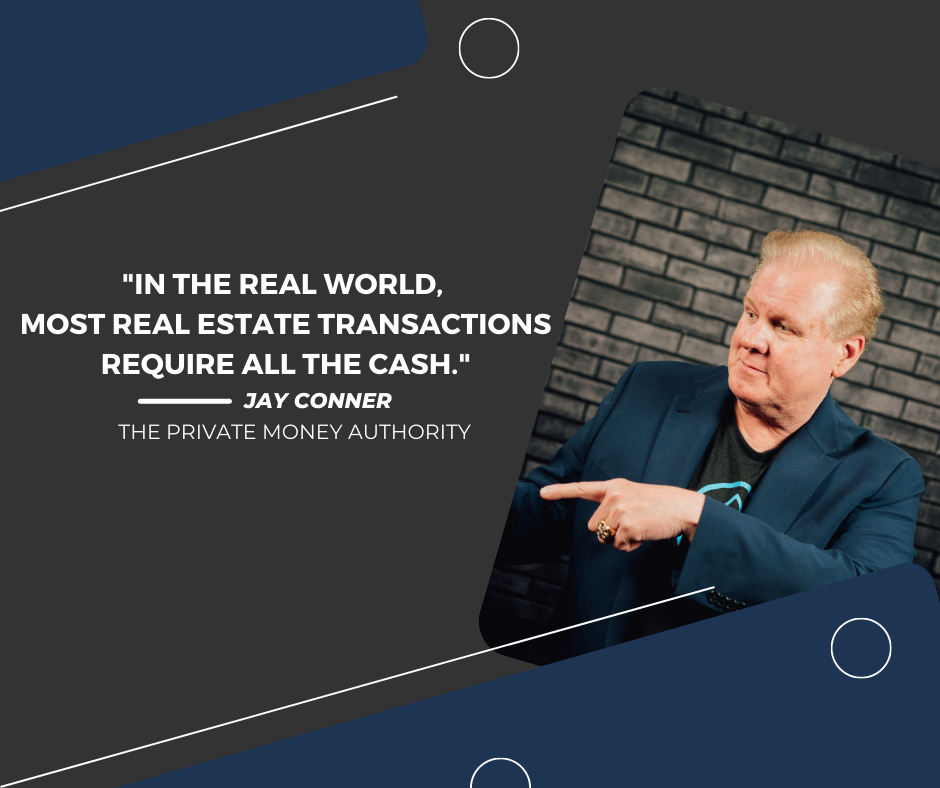
Absolutely. I had you on the show sometime back, and we figured, hey, it’s time to have you back on and get an update on what’s going on with Mom’s House and all that kind of stuff. I mean, as I said here, introducing you, this segment of real estate investing is just, like, essentially underserved. There’s, like, hardly any competition out there. But before we jump into Mom’s House and what that’s all about and how that can give a new real estate investor or a seasoned real estate investor like, a really big competitive advantage to where, like, you ain’t got any competition when you do that slice of the business. But I want to first talk about private money because Phillip, as you and I know out there in the real world, all right, we’re not talking about seminar guru stuff here, but in the real world, most transactions that take place, the seller requires all the cash most of the time, right? I mean, I’ve bought a ton of houses creatively, subject to the existing note wrap, seller finance, and all that kind of stuff, lease options. But at the end of the day, most sellers are going to need and require all the money to do the transaction. So how do we do that? Well, we use private money. Well, Phillip, I know you’ve raised a ton of private money yourself over the years. First question, what advice would you give a new real estate investor? Nope, I’m not going to ask you that question first. I’m going to lead up to that question. I’m going to ask you a different question, okay? Your experience, go back to when you were raising private money at the very beginning. Think about that first private lender. Think about your mindset. Think about, hey, I’m going to go raise some private money. First of all, what was it that happened in your business when you realized you needed private money? Like in my business, my first six years, from 2003 to 2009, I relied on the local bank to fund my deals, and then I got cut off and lost my lines of credit. So by necessity, I was forced to find a better and another way to get funding from my deals. Hence there’s private money. Right. I raised over a couple of million dollars in my 1st 90 days. Out of necessity. What happened in your business to where you’re even out there looking for private money?

Phillip Vincent [00:05:21]:
Yeah, that’s a great question. The banks serve their purpose, right? They do have their purpose sometimes. What I’ve always found about private money is when a deal is unique in some way that a bank doesn’t like it, or also for speed and convenience. And so I think when we, you know, I’m a father, so I want to start with my sons are eight and ten, and I’m in that prime zone of teaching them how to be future adults. Right. And what do I mean by that? I love the saying, is that true, or do you have a self-limiting belief? And what I mean by that is you guys have so many friends you don’t even know it. You have so many friends that have money that’s sitting in a bank that’s doing nothing for them, that’s making them no money, and you haven’t even asked them about the ability to use those funds to fund real estate. Guys, we’re in the real estate business, thank goodness, because people love real estate because it’s secure. Does it mean you always make money? No, that’s not what that means. But they love to invest their money in a person you and into real estate. And so that self-limiting belief of no one’s going to give me money, that’s not true. I always say, is that true, or is that a self-limiting belief? And Jay, almost always it is a self-limiting belief. There are our friends and family, our sphere of influence. There are people out there that have money that want to lend it to me for a deal. And so what happened in my life was I had a unique deal on a piece of ground that I needed. And a buddy of mine, I talked to him about it, and he said, Phil, I’ve got this money sitting here doing nothing. I’d love to let you have it. And you know what’s funny about that, Jay, about he didn’t even record the note that he put against me. He didn’t even record it because he was my friend and he forgot to. He forgot to which means I didn’t have to legally pay him back. Now, of course. Was that my goal? Of course not. The point is, guys, that we’re in relationships with people, and you have relationships with people out there and they want to do this. And of course, I paid him his money back. And if I called Jerry his name, if I called Jerry right now, he’d give me more money because this is that relationship. And you’ll get to the point, guys, it’s probably hard to believe right now you’re going to get to the point soon where they’re going to say, don’t give me that dang money back. Go put it into another real estate deal because I can’t collect interest unless it’s what they call on the streets or in use is another way to say it. And so if I could give anyone advice, whether you’re starting is don’t have a self-limiting belief. Say, Is that true? Or do I just have a self-limiting belief? You’d be surprised at how much money is on the sidelines ready to invest in you, your business, and into real estate.
Jay Conner [00:07:52]:
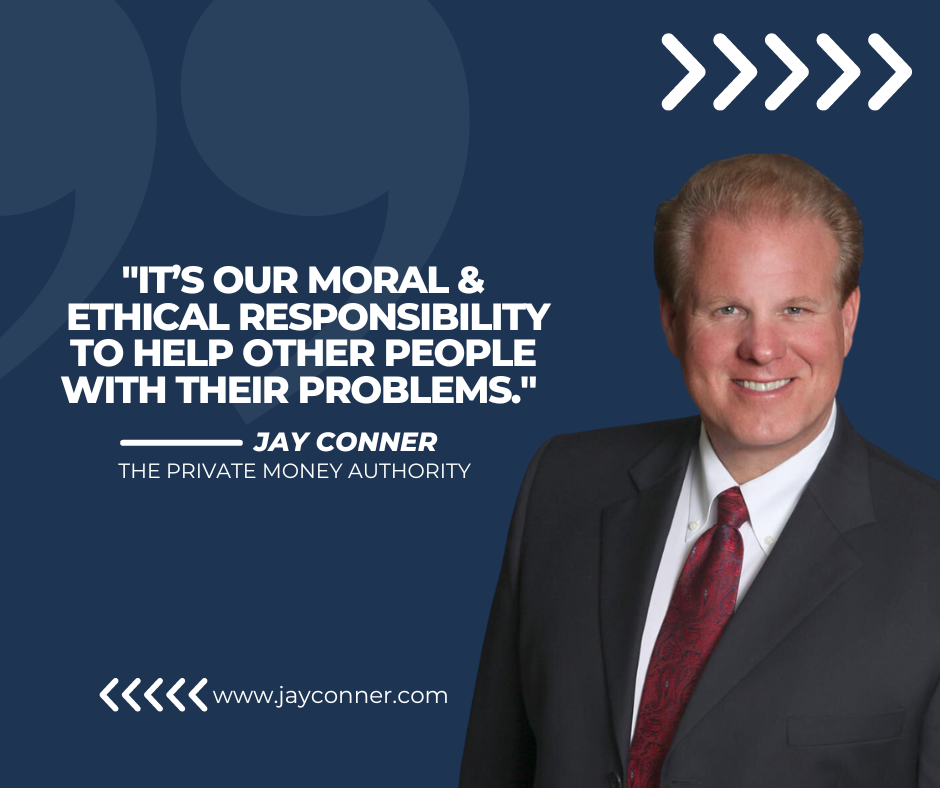
That could not be any more true. Phil, I tell you, there’s so much money. You say there’s so much money. Let me give you a statistic. And I just learned this from Quest Trust, the self-directed IRA company that I refer all of my new private lenders to that have retirement funds. They want to use their retirement money to invest in our deal. Our private lenders either use their investment capital just liquid funds or they use retirement funds. I’ve got one private lender particularly I have in mind that’s doing both. I mean, he’s got invested with us over a million dollars in our deals, including both his investment capital and his retirement funds. But you’re right. I checked with Quest Trust just a few weeks ago, and before COVID, Phil before COVID before March 2020, there was $18 trillion in cash sitting in people’s retirement accounts in the nation. And now, today, this side of COVID there is $31 trillion. People don’t know what to do with their money, and for goodness sake, it’s our moral and ethical responsibility to relieve them of their problems, right? And so there’s so much money out there. Now let’s go back to, by the way, Curtis just commented in here on the show, says thanks. This is awesome information. Thank you for tuning in there, Curtis. So, Phil, back to when you first were raising private money. You had that buddy of yours. How did that conversation go? Right? You’re talking to your buddy. You’ve got this. Did you find yourself begging, or did you find yourself sharing an opportunity?

Phillip Vincent [00:09:43]:
No, not begging. I’ll start with that. I wasn’t begging anyone. It’s really fun when you’re passionate to share your projects with someone. Hey, I have this idea. I’ve got this piece of ground over here in this part of town. Let’s go drive by it. We’re going to get together. Anyway, he’s my friend. We’re going to go get together and maybe share a beer or lunch or whatever we were doing that day. And, hey, I’m looking at this project, and here’s what I need and some free advice. Like is that if you ask for advice, you’ll get money. And if you ask for money, you’ll get advice.
Jay Conner [00:10:11]:
That’s a writer downer right there, right?
Phillip Vincent [00:10:14]:
Yeah, it’s so true. You just ask for advice.
Jay Conner [00:10:17]:
Put that quote in the show notes right there.
Phillip Vincent [00:10:20]:
I didn’t come up with that one, Jay. But you can have it, man. And it’s so true, because if you ask for advice, what Jerry said is, why don’t I just do this right, whereas if you say, hey, Jerry, can I get 100 grand? They’re like, who is this? You know what I mean? They’re like, hey. They’ll give you advice then. And guys, that is so true. Ask for advice and you’ll get money. Ask for money and you’ll get advice.

Jay Conner [00:10:45]:
I’m writing that down right now. Advice leads to money. Yeah, money leads to advice.
Phillip Vincent [00:10:53]:
If you ask for money, that’ll lead to them giving you some advice.

Jay Conner [00:10:56]:
I love it. I love so I guess you had some necessity going on. Now, when I say necessity, one thing that comes to my mind, Phil, is the worst time to be raising private money is when you need it for a deal.
Phillip Vincent [00:11:13]:
Yes. Because you know what? Desperation has a smell to it, Jay. You can smell desperation. And by the way, if you want to get good advice, they’ll be telling you you should ask sooner, right? Because guess what the private lender you’re going to get it from, they don’t care about your timelines. Ask for it early, man. Ask for it before you. That’s so true, Jay. Build these relationships today, because when tomorrow that deal shows up, you already know who you’re going to call. It’s not going to be like when you scramble, you’re going to be in trouble. You don’t want to scramble. Guys, we’re building businesses here. We’re building long-term relationships. Let’s get to know these people before we need it. That’s great advice, Jay.
Jay Conner [00:11:53]:
All right. We got to put another quote here in the show notes. Desperation has a smell to it, whether.

Phillip Vincent [00:12:02]:
You know it or not. Whether you know it or not. I can see it in people when I talk to them. I can smell it, the desperation. And I think it’s because and let’s just talk about you said for me to go back to my first deals, like not having assurance of what I’m going to do, right? We’re so wound up over that one deal. Why? Because, Jay, it’s the only thing in our lives. Because here’s why, guys. Real estate is that life-changing when you’re paycheck to paycheck to paycheck and then you capture that deal. I remember mine, Jay. It was $48,000 and I had a partner, so I made 24 grand. I and my partner made 24 grand, and I went from out of that borrowing, paying back, borrowing, paying back to 24 grand. Do you know what I did with that money, Jay? I was able to pay my rent for one year in advance. Do you know what happened to me at that moment? What real estate did to me is I went, you’re going to be okay, and now you’re ahead. And real estate can do that. And so when people are desperate at the beginning is because you’re trying to get to that moment. I’ll tell myself here because I’m not perfect by any stretch, to have an abundance mentality. I didn’t have it until I had an abundance. And that’s not the right way to do this, guys. That desperation has a smell to it. And so you want to go build these relationships early. So that way when you need it, it won’t be like a shock to them. And you won’t have that smell of desperation because it’ll be what you’ve already talked about. If you set it up right, they’re going to look forward to that call to say, hey, Fred, John, whatever the person’s name is. Judy, hey, I have a deal. Can we go drive by it? Let’s go take a look at this thing. I want your advice on if you think this is a good deal. I want to see what you think of this house. Judy, what do you think of this?

Jay Conner [00:13:38]:
Yeah, so there’s another writer’s downer and another quote for the show. Build your relationships early. Build your relationships early. And as we were saying, that is the worst time to be attracting or trying to raise private money for a particular deal. That’s what I have practiced for years and years and years, and that’s what I teach my students, and that is I teach the money comes first. And so how do you manifest that? How do you play that out? Well, here’s how we play that out. We had separate conversations first about our private lending program versus having a deal to fund. You know, Phil, I’ve never asked anybody for money. I’ve never asked anybody if they want to fund a deal. I’ve never pitched a deal. And they say, Jay, how in the world do you do that? Well, it’s really simple. First of all, we just talk about private money and private lending what it is, and how people can earn high rates of return safely and securely. Someone’s interested in learning about the program. I love opening questions and conversations such as, did you know there’s a way people can earn unlimited money per year, tax-free? And, of course, they don’t know that there’s a way to do that. Well, then I say, have you ever heard about self-directed IRAs? They never heard about that. So now we have a conversation about it. And so then we talk about private money, and they’re interested. We know how much they’ve got to put to work. And we say, well, look, I don’t have a deal for you today, but if you want me to, I’ll put you on my list, and I’ll call you when I got something that I can put your money to work. And so then a few weeks go by or a week or two goes by. Call them up, give them good news, and tell them four things. Got a house over here in Newport. After repair, the value is 200,000. The funding for the deal is 150,000. I know they got 150,000. They already told me. Particularly if they moved it over to Quest and they’re not making any money with it. They’re waiting for the phone call, and then I say, closings next Tuesday. You need to wire your funds by next Monday. End of conversation. The most stupid question I could ever ask them would be, do you want to fund the deal? Of course, they want to fund the deal. They’ve been waiting for the phone call, so I couldn’t agree more. Phil. Build your relationships early, the money comes to mean, you know, the traditional way of borrowing money and getting money for real estate is going to your bank or getting on your hands and knees and begging and pleading and saying, please fund my deal. That’s not the way it works in this world. We don’t ask for a mortgage. We don’t ask for approval. I mean, there are no applications in this world. We simply offer the mortgage instead of asking for the mortgage. So, Phil, thank you so much for your insight on private money. Let’s move to Mom’s house. Well, I don’t mean let’s move into Mom’s house.
Phillip Vincent [00:16:33]:
I’ll call Mom up and tell her we’re coming. Jay?
Jay Conner [00:16:35]:
Yeah. I just got a text from my mother, and she wants to know when I’m going to stop by this evening and say hello to my mother. She’s turning, God bless her, 89 years old in October. My dad turns 90 in December. Carol Joy, my wife’s mother. Today is her birthday. She turned 91 years old. So we have a lot of good genes going on. Well, I have a lot of good genes going on in my family and my mom’s house. But in your mom’s house, we’re not talking about your mother’s physical property. We’re talking about this niche that you have carved out. Phil, tell our audience. What in the world is Mom’s house and how did it come about?

Phillip Vincent [00:17:18]:
Sure. And so I’ve been a real estate investor for 25 years. I’m not going to bore you with that story, but I’ve always been curious as to where the best leads come from. And if we got together today and we went out for a bite to eat, we’d probably talk about where the best leads come from. It’s just an organic subject that always comes up with real estate people. And so in my 25-year journey back in eight, nine, and ten, I always thought it was from bank-owned properties. Right. That’s where the best leads are, in foreclosures. And we all know that that’s not true, especially today with Shadow inventory and all these things. I knew about some deals early, but it was never like the fountain of youth of leads or the best source of leads was coming from. In 2011, I started to look at the stereotype. In this particular instance, I like the word stereotype because I started to look at what the seller was going through almost every time. And it’s when I told this story when I looked at I think we bought 66 houses that year, I said, what is similar about all these people? What’s the stereotype of all of these sellers? The predominant story was simply this, that dad passed away eight years ago. You guys can look at any stats, men, diverse. That’s how it works. Dad passed away eight years ago. Mom’s been doing the best she can. This is Mom’s house, the house she’s lived in since pick a decade, any decade. Fifty s, sixty s, seventy s, eighty s, ninety s. Right. She’s lived in it forever. And now Dad passed away, and now Mom just fell again. You talked about that, Jay. You’ve got longevity in your family. That’s great. And no one wants that phone call, guys. And senior limiting is one of those things where I always say, we’re all going to work in senior living whether we want to or not, so we might as well embrace it because if you don’t, you’re going to be buying houses from someone that else that did. And so, Jay, I don’t know where your moms live and your mother-in-law live, but a lot of times the average child is over 200 miles away. So when mom falls and she has to go into surgery, and the doctor says, hey, Mom’s going to live. But when she gets out of rehab in three weeks, she now has to move into assisted living. She cannot be on her own anymore. Now, some people might say, let mom come live with me. But a lot of times, guys, that’s not what Americans do. We move them into long-term care, assisted living in higher levels of care, and the average cost of that is $6,000 a month. So if you got that text right now from your brother or sister saying, hey, mom fell, and in three weeks, she can’t move back home immediately. There are three things as a family, if I was Jay’s brother, that we would be looking at, what are we going to do about Mom’s house? There’s the name, why it came up that way. And by the way, even if Dad’s the one that’s still alive, the adult children always say, hey, what are we going to do with Mom’s house? Because if you’re like me and if you have strong women, it’s always, it was Mom’s house. Dad just happened to live there, right? So even if Dad’s the one still alive, we buy both Mom and Dad’s house. But it’s called Mom’s house. So the adult children are having this conversation, and here’s what’s important. Where will Mom get the best care? That’s first and foremost, without question. That is the number one thing. We start going out asking for advice from people like placement agents, the communities themselves, and elder care attorneys. We’re starting to get all this advice from these stakeholders in senior living, and I build relationships with all of those people in senior living. There are about 52 job titles that are having hard conversations with the adult children at that time when it’s time to move mom into senior living. And when that referral comes from those people, we’re getting hard advice from them. Your job as a real estate buyer is super simple. I’ve now become a tool for that family. When it’s time to sell their house, they say, have you heard of Phillip? He comes in and makes you a no-obligation offer on the house and the stuff. Because remember, I said there are three things. Where will Mom get the best care? That’s not my lane. I don’t do that. But very quickly behind it, they say, how are we going to pay for this care? As you said, it’s about money. And Jay, you said it earlier, these people need the entirety of their equity unlocked out of that house. They’re trading their equity out of the home for care. But these are houses that they’ve lived in them so long that mom got her new kitchen. She got her new kitchen in 1991. And now that the new kitchen is dated again because Mom has lived there so long, the house is full of stuff. She wasn’t necessarily a hoarder, but she was kind of an aggressive collector there. And I live 200 miles away from Mom, and the real estate agent said we need to clean it out and rehab it, and I don’t want to do that. Where’s that money going to come from? Because in a time when we need money for mom’s care, the last thing we need to do is spend a bunch more money on rehab. There are things out there called the Cost versus Value Guide that show you every dollar you spend. Like, I’ll give you an example of a deck. It costs 15 grand to replace a wood deck. You get about $8,300 back in value and you’re like, well, hold on, that can’t be right. People are always like, well, what if I do a kitchen? The kitchen is one of the worst ones. The average cost of a kitchen is like 60 grand. You get, like, $32,000 back in value. So at a time when we need money for our mom’s care, is it the right time to do a rehab where we’re going to lose about $0.40 on the dollar for every dollar we spend? And people don’t even want to believe what I’m saying. But it’s called the cost versus value guide. You guys should look it up today. It’s not something I created. It’s been around for 23 years. You’ll be shocked. It’s kind of fun to go back and look at what it costs to do a new bathroom. 20. 10, 20. 15, 20, 20. And what it is today, guys, the cost of everything has gone up. Talk to me about your grocery bill. Right? Everything has gone up. And so these families, in a time when they need money, the last thing they want to do is to call the real estate agent. Who’s going to want to try to get top dollar, by the way, who doesn’t want top dollar? We all do. But how do you get to the top dollar? It’s not the house’s condition today. It’s what you have to do to get it ready to get the cleanout, the rehab, then list it. You’re six or eight months away from your money. The family doesn’t want to go on that eight-month journey because there’s risk involved. And I just told you, you’re going to lose about $0.40 on the dollar. Throwing good money after bad, that’s how Mom’s house was born. So what do we do? We have nationwide relationships in the senior living world. We’re kind of like the home trade-in guarantee for senior living. That’s what we are. We’re part of the senior living sales process. And guys, I can’t do this on my own. I’m just in the market of St. Louis myself, and I need people nationwide. I have students nationwide that help me on this journey to work with these families. And I’m looking for some of you. Not all of you. I’m looking for some of you. And what’s the difference is, investors have a reputation of being cold, transactional, and not empathetic. And if you don’t know what empathetic means, go ask your wife. She’ll tell you if you’re empathetic or not. We need people with the right heart condition. I would take somebody with a right heart condition to work with me over someone that has real estate experience. Why? Because in this hard time of moving mom into senior living, families that get along don’t even get along during this process. That’s how hard of a situation it is. I need people that can put seniors first and their families, and right behind that is all the real estate you could ever want to buy.
Jay Conner [00:23:57]:
Phil, I would imagine that this niche is growing by the day.

Phillip Vincent [00:24:05]:
Every chart is pointed one way. The charts only go one way. Jay, I’ll give you the numbers if you’re a numbers person. In 2020, there were about 54 million Americans over the age of 65. 54 million. By the year 2030, it’s going to be almost 74 million Americans. So that chart is almost like a hockey stick growth. This is at once in a lifetime opportunity. Guys. The Boomers and their parents own $10 trillion in real estate outright. They have all the equity. They’re the ones that have all the equity. And if you’re a real estate investor, close your eyes right now. Unless you’re driving, close your eyes right now and say to yourself, what was the average age of the past five sellers that you bought their house? What was their age? And it’s hardly ever 28-year-olds, and it’s almost always 82-year-olds.
Jay Conner [00:24:50]:
Yeah. So, Phil, I know you have become and are so successful in this niche. Your students are so successful in this niche because I love the phrase you used heart conditions. Normally, you hear the phrase heart condition in a negative context. You said heart condition in a positive context. What kind of heart does someone have? Do they have a servant’s heart? Are they looking to make a difference and serve these people? So you got all these people out there. You got all these families. You got Mom’s house. She’s needing to move on. She and the family don’t want to list it with a realtor. They don’t want to go through the hassle of cleaning out all this stuff and et cetera. How do you find these families to serve?
Phillip Vincent [00:25:42]:
They come to us. So we’ve been building relationships nationwide with the industry of senior living. So they realized that they had a problem because the way they’ve been doing it is they’ve been pushing them back out to real estate agents. And so, guys, let me give you an example. I’ve been doing this for a long time, and I finally came up with an analogy that’s easy to understand the senior living industry. The communities themselves, they’re kind of like a car dealership that doesn’t buy the trade-in. So what would happen to the car? Dealers today. If they stopped buying trade-ins, would people still buy new cars? Sure, they would still buy new cars. Would the entire process come to a grinding halt because now everybody that wanted to buy a new car is like, oh, man, I guess I got to go figure out how to sell my car?
Jay Conner [00:26:28]:
Right?
Phillip Vincent [00:26:28]:
That’s what senior living is. They sell housing, they’ll tell you they sell care, and they do. Guys, by the way, it’s a hard business. My heart goes out to the senior living industry. Anybody that works in it, they have a hard business. They’re in the care business, but literally, they’re in the housing business. They’re going to get rid of their old housing to pay for the new housing, which has care attached to it, but they don’t embrace the trade in all mom’s houses. Guys, at a national level we’re the home trade-in guarantee. And it’s naive to think that there are not going to be real estate agents out there, right? Guys, there are families in this situation. They don’t want that option. They don’t want it. And if they did, they’ll end up going with an agent. Great. But I’m looking for all those people that say, no, we don’t want to do I don’t even live here. I don’t know where that money is going to come from. And guys, don’t just think this. This is Phillip’s idea. Let me tell you how big this is. There are companies out there like Kirbyo. Kirbyo is an agent-minded company. Agents are trying to stay relevant. This is the thing. They’re trying to stay relevant. Kirbyo was invented because people don’t have the money, the time, or the effort to do the rehab to get that house retail ready. Their stats, not Phillip’s stats, say seven out of ten sellers need to update their house but don’t have the money. Seven out of ten, guys, and I would think most of those are seniors, yet they’ll charge you exorbitant fees to do that rehab. I’ll just tell you the numbers. Our bid was about $26,000 to do the updates to the house, and Kirbyo wanted to charge $56,000. Hold on. Am I mad at Kirbyo? Heck no. They’re just putting a new spin on the age-old problem of where’s the money going to come from to do the rehab. Guys, and in a time, did you get top dollar if you spent $56,000 on a rehab that would have cost the normal person 26? That’s the point of being an investor, guys. We can do the rehab at less cost. That gives us our margin. That’s why we’re in this business. To be clear with everyone, Mom’s house is lead aggregation for the best-motivated sellers I’ve ever seen of houses that I can add value to. It’s a warm referral from someone that we’re looking for advice from. It’s not based on who the president is. It’s not based on the economy. As the real estate world takes a down dip, that’s good for mom’s house, because the retail world, it’s not like it was two years ago when things were going for 100 grand over the asking price with no inspections like that world’s over. So as we go back to the normality of whatever that might be, the mom’s house value prop is getting stronger. People want other options. And we’ve had a lot of success of saying, hey, we’re just having a conversation about the net number, right? If you’re going to net 80,000 after you spent 56 on the rehab, I can just pay you 80,000 with no commissions, no fees, all those things. Once you have that logical conversation about what the family will net, no logical person says, let me go down the path of rehabbing. It spending the money, taking the time when I can get the same amount.
Jay Conner [00:29:16]:
In three weeks makes total sense. So just to be clear, Phil, you are looking for people, you’re looking for individuals, you’re looking for real estate investors that would be interested in this segment of lead generation, providing them leads for deals to work with you, your company and mom’s house on buying these houses and getting the deals done, right?
Phillip Vincent [00:29:43]:
That’s right. We have a dream inside of our company. We want to help 30,000 daughters -duties a month, and we’re helping in the low thousands right now. So that’s how much room we have to grow.
Jay Conner [00:29:51]:
Jay that’s awesome. So as a mom’s house, say affiliate or real estate investor, what does your all relationship look like between the and by the way, let me ask you this question first. Are you taking on brand new real estate investors to learn this business?
Phillip Vincent [00:30:08]:
Definitely. We only have a few hundred nationwide. I need a few thousand to cover this nation. Right? It’s a big nation, guys. There are 350,000,000 Americans, and I’ll give you an example, the best I can about my market of St. Louis. I’m friendly with about ten different communities here in St. Louis. Ten, and I’ve been doing this for over twelve years. There are 300 communities right here in St. Louis. So I’m the founder of this company, and I’ve only scratched the surface of my market by that math. I need 29 more Phillips in just St. Louis. So we’re so far away from Saturation. People always hear about my program and they’re like, I want the whole state of Texas. And I’m like, hold on, pump your brakes. It’s like saying you want to be the only real estate agent in an entire state. That’s just not logical, right? And so we teach this. We’re looking for students that you need about 20 relationships. I say 20 is plenty. When you have 20 people that know, like, and trust you guys, those three words have meaning. No is easy, like is a little harder, but we’re shooting for trust. When they trust you 20 people and they bring you their families because they trust you’re going to take care of them. And that’s the big thing about that heart condition. Jay, I go into every situation with abundance, mentality meaning. I’m only going to help the family, and sometimes about 40% of the time I get to buy their house.
Jay Conner [00:31:19]:
Excellent. Phil. Well, I know that we have got a lot of listeners and viewers that want to learn more about how they can get involved with Mom’s House, how they can learn how this process works, and get those leads on doing deals and providing win-win solutions. Right. So go to www.Momshouse. M-O-M shouse hous.com. My first name is Jay. To get the inside secrets as to how to get involved again, go to Momshouse. Momshouse.com. J-A-Y. And you will get directly connected to Phil and his team. And Raymond says checking in here from LinkedIn Livestream. I just signed on here to the show, but I am interested. Well, Raymond, you can learn all the details about being a Mom’s House affiliate and doing the business this way again for going forward slash J. Phil.
Phillip Vincent [00:32:28]:
Let me turn it over to you.
Jay Conner [00:32:29]:
For final comments before I wrap it up.
Phillip Vincent [00:32:32]:
Yeah. Do you have to be a real estate agent to do this? No. Do you have to have a real estate license to buy people’s houses? No. Right. This only works in areas where people get older. So guys, if you live in a town if you live in a town where people don’t get older, let me know where you live and I’ll come move where you are only. And I say that because sometimes people are like, I live in California. I’m like, okay, cool. People still age in California. This Mom’s House journey that we’re all on, this senior living journey, it’s affecting all of us, whether you want it to or not. So guys, let’s embrace it. Or you’re going to buy houses from people that did. And that’s not to mean to sound draconian or something negative. It’s just that, guys, don’t let this pass you by. This once in a lifetime opportunity for the boomers and their parents for the next 1520 years. This is real, as real as it can be. And it’s not that people will stop passing away in 20 years. It’s because there are so many boomers coming, and our government doesn’t know what to do. Let’s get in the flow of that. This is something you can bite onto and ride for the next 15 years. Isn’t that where you want to put your time and effort? But you have to do it the right way, guys. And it’s not by showing up as an investor. All they hear is all they hear is a shark. If you show up as an investor and if you show up as a realist let me ask you this, Jay. Have you ever met somebody recently, like, say, in the past two months, and you meet them and you’re like, hi, I’m Jay. What’s your name? Hey, what do you do for a living? Oh, I’m a real estate agent. You’re like, tell me more.
Jay Conner [00:33:58]:
How would you answer? Hey, being working, doing the Mom’s House system, how would you answer that question? Well, Phil, what do you do?
Phillip Vincent [00:34:05]:
I’m a senior transition specialist. Jay you know, what I have found is that families that are going through this have such a difficult time not only where mom’s going to get the best care, but a lot of times they live out of town. The adult children aren’t getting along. The real estate agent comes out and says, clean this place out. By the way, Jay, do you know what it takes let me give you a stat about St. Louis. Did you know the average estate sale here in St. Louis generates between three and $5,000 in revenue? That’s how much everything Mom and Dad stuff sells for three to five grand. The cost to put that sale on is between three and five grand. And they don’t understand that until after it’s over. And then I bring up the whole thing about the cost versus value guy. Did you it’s probably the unloving thing to send them to an agent, because if they ask them to do that big list of rehab items, they’re going to lose about $0.40 on the dollar? And I know that’s hard to believe, so I go to cost versus value. I’ve got it printed out for St. Louis. I say, here’s the list for the St. Louis market. They can argue with me all they want, but I’m going to show them the numbers and say, hey, the whole point of this is I can do rehabs at scale. I can show your families on paper that I can get them the same amount that they may net in the future without doing any of the work. Are you working with anyone that’s going through that right now? It’s that simple. When you know you’re right for the family, when you have that confidence. And I’m looking for the right people that want to work on this mom’s house mission with me.
Jay Conner [00:35:22]:
Beautiful. Phil, thank you so much for joining. Get right on over, folks, to forward slash Jay. God bless you, Phil. Thanks for joining me.
Phillip Vincent [00:35:33]:
Thank you, guys. Have a good day.
Jay Conner [00:35:34]:
There you have it. There you have it, my friends. Another amazing episode of raising private money. I’m Jay Conner, your host. And look, if you enjoyed this show, and I know you did, then it’s your turn to give back. Be sure and share this episode with someone that you know would enjoy it and get value from it. And if you’re listening on Itunes, be sure and follow me on Spotify. Follow me. If you happen to be watching us on YouTube, be sure to subscribe and click that bell so you don’t miss out on any of the upcoming episodes. And of course, I appreciate you when you give us five-star reviews and write me a short review. I’m Jay Conner, wishing you all the best. Here’s to taking your business to the next level. We’ll see you right here on the next episode of Raising Private Money.
Narrator [00:36:24]:
Are you feeling inspired by the knowledge you gained in this episode? Then head over to www.JayConner.com/MoneyGuide. That’s www.JayConner.com/MoneyGuide download your free guide that shares seven reasons why Private Money will skyrocket. Your real estate investing business right now. Again, that’s www.JayConner.com/MoneyGuide to get your free guide. We’ll see you next time on Raising Private Money with Jay Conner.