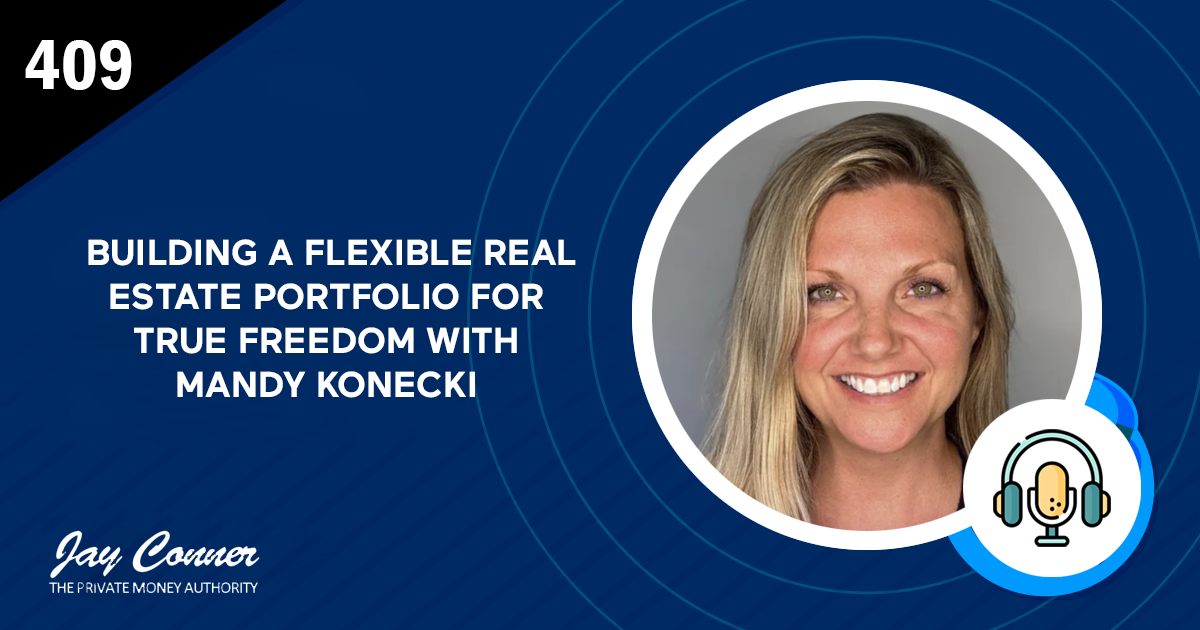
What if you could start investing in real estate—even if you didn’t have everything figured out? For many, this might sound intimidating or even impossible, but Mandy Konecki’s journey proves otherwise. On a recent episode of “Raising Private Money,” Mandy sat down with Jay Conner to share how she stumbled into real estate in 2017 with zero experience, and how the power of connection and community changed everything for her and her husband.
Starting Without All the Answers
Imagine buying your first investment property without ever seeing it in person. That’s exactly how Mandy jumped in, inspired by her husband Keith’s dream to flip houses and stay rooted in Jacksonville, Florida. “I didn’t see it. You said you wanted to stay in Florida and work on a house project, so I bought one,” Mandy recalled. It wasn’t a polished business plan—it was action, uncertainty, and a willingness to learn on the fly.
In those early days, Mandy worked a W-2 job to keep some stability while Keith leaped into entrepreneurship. It took a handful of deals before she realized the real magic wasn’t just about building a real estate portfolio—it was about building freedom and designing a life on their own terms.
Serving Others Through Creative Solutions
So how did Mandy and Keith find success where so many get stuck? According to Mandy, it was their refusal to take “no” for an answer and their commitment to helping others. “If I look at something and someone might say, ‘Oh, that doesn’t work because it won’t cash flow as a long-term rental,’ there’s always going to be a way to make it work,” Mandy shared.
Many of the property owners Mandy works with don’t have significant equity in their homes—a common hurdle. Instead of walking away, Mandy approaches each deal with creativity and empathy. Her favorite strategy? Buying properties “subject to” the existing mortgage. This allows her to take ownership while keeping the original debt in place—no new bank loan, no massive down payment.
From there, Mandy deploys a variety of exit strategies: lease options, long-term rentals, city-backed affordable housing, and even room rentals. The key is flexibility; by keeping multiple options open, she can tailor deals to fit both the seller’s needs and her own investment goals.
The Game-Changer: Other People’s Money
For many aspiring investors, the greatest hurdle isn’t finding deals—it’s finding the money. Mandy admitted she once believed that asking for help or partnering with others was a sign of weakness. But when she discovered OPM—other people’s money—her real estate business transformed overnight. “There are so many people wanting to get into real estate, but they don’t have the tools, the time, or the know-how. But they have money sitting in the bank making less than 1%,” she explained. By connecting with these individuals, Mandy helped them grow their wealth while funding her own deals—a true win-win.
Access to Private Money allowed Mandy and Keith to scale beyond their own means. Instead of being limited to one project at a time, waiting for each flip to free up cash, they now juggle multiple deals simultaneously, partnering with both lenders and equity-sharing partners.
The Power of Community
Mandy is adamant that real estate is a team sport. “You are not going to learn by reading a million books. You eventually just have to put your feet in and figure it out because that is the best way to learn—do the thing,” she emphasized. Her advice for anyone looking to get started? Plug into your local investor community, find a way to provide value, and start building relationships.
Failures and mistakes, what Mandy calls “tuition,” are inevitable—but they’re also what build true expertise and resilience. Whether you have money, skills, connections, or just the drive to learn, there’s a place for you, and a community ready to support your journey.
Final Thoughts
Mandy Konecki’s story is a testament to taking imperfect action, serving others, and embracing the power of connection. In real estate—and in life—freedom and opportunity often come from stepping out before you feel ready, and building a tribe along the way. If you’re waiting for the perfect moment or the perfect plan, Mandy’s journey is your invitation to start now, connect deeply, and create your own opportunities.
10 Discussion Questions from this Episode
- What motivated Mandy Konecki to initially get into real estate investing despite having no prior experience?
- How did Mandy and her husband Keith use real estate as a path to achieving freedom from their W-2 jobs?
- What role did community and networking play in Mandy and Keith’s learning and growth as real estate investors?
- How does Mandy approach properties with little to no equity, and what creative strategies does she use to make such deals work?
- Mandy mentions using “multiple exit strategies” for real estate deals. What are some examples she provides, and why are they important?
- What mindset shifts did Mandy experience regarding raising and using Private Money (OPM), and how did it change her approach to real estate investing?
- How has access to Private Money allowed Mandy to pursue larger or different kinds of deals compared to when she used only her own capital?
- What advice does Mandy give to someone who wants to get started in real estate but feels limited by lack of money, credit, or experience?
- Mandy talks about mistakes being “tuition.” What was one of her major early mistakes, and what did she learn from it?
- For those hesitant to start investing in real estate, what practical steps does Mandy recommend they take in the next 30 days to move forward?
Fun facts that were revealed in the episode:
- Jumped in Without Seeing the First Property: Mandy Konecki bought her first house for flipping sight unseen, just because her husband mentioned wanting to try real estate in Florida. She only discovered what she’d purchased when her husband checked it out and asked, “What were you thinking when you bought this thing?”
- Scaled From One Flip Per Year to Nine Simultaneous Projects: Initially, Mandy and her husband could only handle one real estate project at a time using their own funds. Once they embraced raising Private Money and creative financing, they scaled dramatically and were able to run nine projects at once—with no personal capital invested.
- “Tuition” Through Mistakes: Mandy calls the costly lessons they learned in real estate their “tuition.” One notable early error: she purchased a subject-to property from a friend without due diligence, only to discover surprise assignment fees, months of mortgage arrears, and an HOA that restricted her intended rental strategies—ultimately leading her to sell the property at a loss, but with invaluable experience gained.
Timestamps:
00:00 Mandy’s real estate journey
05:57 Finding solutions in real estate challenges
09:08 Subject-to and wrap mortgage strategy
11:38 Room rentals and affordable housing
15:23 Expanding real estate investment opportunities
17:47 Scaling up property investments
22:55 Using stories to build trust
24:56 Real estate investment challenges
27:33 Connect with Mandy Konecki
https://www.skool.com/real-estate-reimagined-8674/about
https://www.reilifestyle.com
28:24 Sharing Mandy’s insights on wealth
Connect With Jay Conner:
Private Money Academy Conference:
Free Report:
https://www.jayconner.com/MoneyReport
Join the Private Money Academy:
https://www.JayConner.com/trial/
Have you read Jay’s new book, Where to Get the Money Now?
It is available FREE (all you pay is the shipping and handling) at https://www.JayConner.com/Book
What is Private Money? Real Estate Investing with Jay Conner
http://www.JayConner.com/MoneyPodcast
Jay Conner is a proven real estate investment leader. Without using his own money or credit, Jay maximizes creative methods to buy and sell properties with profits averaging $67,000 per deal.
#RealEstate #RealEstateInvesting #RealEstateInvestingForBeginners #Foreclosures #FlippingHouses #PrivateMoney #RaisingPrivateMoney #JayConner
YouTube Channel
https://www.youtube.com/c/RealEstateInvestingWithJayConner
Apple Podcast:
Facebook:
https://www.facebook.com/jay.conner.marketing
Twitter:
https://twitter.com/JayConner01
Pinterest:
https://www.pinterest.com/JConner_PrivateMoneyAuthority
Building a Flexible Real Estate Portfolio for True Freedom with Mandy Konecki
Jay Conner [00:00:01]:
What if you could get into real estate without having it all figured out first? Because that’s exactly where today’s guest started. Mandy Konecki got into real estate back in 2017 with absolutely no idea what she was doing. And those are her words, by the way. And yet, fast-forward to today, she and her husband Keith have built a business around flipping houses, short-term rentals, long-term rentals, room rentals, wholesaling— my favorite topic— Private Money, private lending, and some very creative financing strategies. But here’s the part that really caught my attention. They didn’t build all of this just to build a bigger real estate portfolio. They used real estate to create something a whole lot more valuable. And what is that? Freedom.
Jay Conner [00:00:59]:
That’s right. Freedom to leave their W-2 careers, spend more time with their family, and design their lives around what actually matters to them. And in this episode, I’m going to unpack with Mandy exactly how they did it. In just a moment, you’re gonna meet my friend and colleague, Mandy Konecki, right after this.
Narrator [00:01:24]:
If you’re a real estate investor and are wondering how to raise and leverage Private Money to make more profit on every deal, then you’re in the right place. On Raising Private Money, we’ll speak with new and seasoned investors to dissect their deals and extract the best tips and strategies to help you get the money, because the money comes first. Now here’s your host, Jay Conner.
Jay Conner [00:01:52]:
Mandy, welcome to Raising Private Money.
Mandy Konecki [00:01:56]:
Thank you, Jay. I’m excited to be here.
Jay Conner [00:01:59]:
I’m excited to have you. Well, I want us to go back to your turning point. Take us back to 2017. What was going on in your life at that time? And what was it that made you say to yourself, I’m gonna get into real estate? Even though you really didn’t know what you were doing yet?
Mandy Konecki [00:02:22]:
That’s an interesting question. It feels like that was a decade ago, but it also feels like yesterday. So I have been living in Jacksonville, Florida, for about 20 years now. So back then, that was 10 years. I met my now-husband, who’s also my business partner, life partner, and all, all partners. While he was on a job in Jacksonville. Um, when his job ended, he was either going to be moving back to Ohio or another city or state because Florida didn’t pay as well as the unions did, um, for the contracting work that he was in. But he was super handy, and he had mentioned wanting to flip houses.
Mandy Konecki [00:03:01]:
So I had a HELOC on the house that I had owned,d and I bought a house sight unseen while he was out of town. Uh, so when he got back, he went to check this house out, and he was like, what were you thinking when you bought this thing? And my response was, I didn’t see it. You said you wanted to stay in Florida and work on a house project, so I bought one. Um, and that was how we got into that. It was primarily to give him something to do that could get him out of having to travel and leave Florida and stay here. And we kind of just figured it out from there.
Jay Conner [00:03:43]:
I love it. What a turning point. Well, uh, let’s talk about what I call the freedom question. Now, you and Keith, you eventually left your W-2 careers. Was there a specific moment when you realized, wait a minute, this real estate thing could actually replace our corporate income? And give us our lives back. What was it that happened?
Mandy Konecki [00:04:09]:
So Keith actually felt that and had that vision a lot sooner than I did. I grew up with corporate America. You, you know, the traditional, you go to school, you work, um, you have a job, you get your retirement, you work, work, work, work, work, you retire at 65 or whenever they allow you to, and hopefully you have enough money and health to survive. A couple of years, and enjoy it. He, on the other hand, had the vision that he wanted to be his own boss. He was handy; he could manage his people. He knew that the freedom was out there and that he could make just as much, if not more, money by himself than working for someone else’s dream. Um, so he started that out,t and I carried my W-2, so we did have A regular income.
Mandy Konecki [00:04:57]:
And that was also my stability of, you know, keeping a little bit of sanity and getting our feet wet in this new venture. Um, and then after a handful of houses and moving around and doing that, I realized that that is exactly what I wanted too. I wanted that freedom and being able to build a life together and make our own decisions and build our own, our own path.
Jay Conner [00:05:21]:
Well, one thing y’all have been smart about, and you’ve been smart about a lot of things in your real estate investing journey. One of which is that you and Keith haven’t been putting all your eggs in one basket. What I mean is, you do flips, you’ve done wholesaling, you’ve done short-term rentals, you do long-term rentals, you do room rentals, private lending, creative financing. So the question is, how did you learn to look at a property and decide Well, we should use this strategy for this property.
Mandy Konecki [00:05:57]:
So I just like— I don’t like the word no. I guess that’s probably where it starts. So if I look at something and someone might say, ” Oh, that doesn’t work because it won’t cash flow as a long-term rental, there’s always going to be a way to make it work. Um, I’m also a little bit bullheaded when it comes to that, so having different opportunities and solutions to work with other people, whether it’s a seller who doesn’t have equity in their house, you can’t just turn the— or shut the door on them and say, sorry, you’re on your own, your house is going to go to foreclosure, we’re not here to— here to do anything because there’s no money here for us to be made. Um, when you start looking at other opportunities and how you can help people and actually make it work for everyone, and not going in there and just selfishly saying, can I make a dime on here, can I make can I make a grand here? It’s like, how can you serve the community? Um, you can really make a difference. So there, especially in today’s market right now, there’s not— there are a lot of people out there that don’t have equity in their house because there was turbo inflation between 2020 and, like, say, 2022. And now we’re kind of in a reset period where if people need to sell, they’re going to have to come to the closing table with money. And most people don’t have money available in the bank to sell their house.
Mandy Konecki [00:07:17]:
Typically, you buy a house as one of your biggest investments, and you expect when you sell it to be at least getting some of that cash back. Um, so honestly, we learned everything just by talking to people and getting in different rooms. I would say that one of the most important pieces is community: people, getting around people who are doing what you want to do, learning their insights, sharing what you’re doing. Talking about your struggles, your successes, um, and building a community together that you can empower each other and really make a difference in the community, whether it’s helping sellers or helping people make money with their money or get into real estate and get out of their W-2. There are so many different ways to get in, get into it. Just depends on the avatar of the person.
Jay Conner [00:08:03]:
I love that. I mean, Mandy, you’re talking about serving other people, putting their interests first, meeting them where they are. Now, you said something just a moment ago that I’m sure piqued, uh, our listeners’ curiosity. And what you said was that some of the people you talked to, some of the sellers, they don’t have equity. They don’t have equity built up in their house. And you just don’t wanna say, well, sorry, you’re on your own, right? You know, lose your house to foreclosure, whatever. So I want our listeners to lean in as you answer this question. How can you creatively— how can we as real estate investors— how can you creatively buy a house, a property, and there’s no equity in it? In other words, they owe pretty much what the house is worth.
Jay Conner [00:08:56]:
I know we’ve got listeners here to this podcast, Raising Private Money, going, ” How in the world can you buy a property and owe as much as it’s worth? And you’re going to come out, and you can make money on that?
Mandy Konecki [00:09:08]:
So there are a couple of different ways, but my favorite strategy is called subject to the current mortgage. Um, that means you are taking the deed and ownership of that property, but subject to the current debt staying in place. So you are alleviating the current owner of the financial responsibility of that, and you’re taking over their payments. Um, another— people always say a red flag about that. The additional protection that I do is a wrap mortgage, so I end up putting a mortgage around that mortgage to protect the seller also. Everything’s done through title and, um, completely legal, recorded, recorded at the county records, etc. And then that’s where I can also bring in private partners if there is some sort of down payment, or I want to give them some money to move or different expenses to cover. Um, so they can actually walk away with money in their pocket rather than coming to the table with funds.
Jay Conner [00:10:09]:
Sure. So when you’re buying subject to the existing note, as you just said, you’re taking ownership of that property. Um, you are promising the seller you’re going to make their payments. The bank’s got nothing to do— that mortgage company’s got nothing to do with the approval process because you’re not assuming the note. It’s not an assumption. This is an agreement between you and the seller. And so when it comes to making money, I mean, let’s say you got, you know, a house that they owe $300,000 on it, and that’s what it’s worth. And then let’s say the monthly payment on that $300,000 is just, I don’t know, for example, $1,800 a month with their insurance and taxes.
Jay Conner [00:10:51]:
So here you are, you’ve bought the house subject to the existing note. Creative financing. You now own it. Now how you gonna make money?
Mandy Konecki [00:11:03]:
Another, another, um, bold thing where I say there’s lots of different options. So I do have a network here locally that wants to get into homeownership, but they might not be necessarily approved. So I can either put a lease option in there, so I give other people opportunities to make that their homestead. And they can have a down payment, and they’re responsible for the mortgage. And then potentially buy that, maybe when their credit’s improved or they have a better down payment. Could just do a long-term rental. So there are affordable housing grants and vouchers through the city. So we’ve done a handful of those too.
Mandy Konecki [00:11:38]:
So if it’s a bigger house, we’re able to provide a bigger family with a house that the government is assisting them with some of their payments. It depends on where it’s at. It could be a good short-term or midterm rental. The world has changed a lot in the last 20 years, and everybody is moving around country to country to country, city to city, etc. Job transfers, um, that. But my latest is room rentals again. Going back to the affordable housing crisis right now, where people can’t afford a traditional 3-bedroom apartment, but they need a place to live, they can rent a bedroom every week and not have to do a 12-month commitment, pay for their utilities, and things like that. So that also helps me as a landlord because I never have 100% vacancy. So if that 1,800-square-foot house has 4 bedrooms and I can put a couple more bedrooms in the living room and make it 6 or 7 bedrooms, then I’m giving 6 to 7 people a roof over their head, and I’m able to bring in enough money to pay the, pay the mortgage on that one.
Jay Conner [00:12:47]:
I love what you’re talking about because what you’re talking about is what we call multiple exit strategies. There’s, there’s never just one way to do a deal. Um, from, you know, as I talked about in the introduction, wholesaling, room rentals, long-term rental, uh, you know, back to you buying that property subject to the existing note. If you sell it on a lease purchase, well, my lands, you can collect that large non-refundable lease option deposit. $10,000, $20,000. And, um, you know, as long as you’ve got that positive cash flow between what you’re bringing in per month from your lease purchase buyer or your tenant buyer versus what that underlying debt is that you’re paying per month, then you’ve got a positive cash flow right there as well. So I love the way you look at this business, and you do this business with all the different kinds of, you know, exit strategies. Let’s talk about creative financing, which we’ve already started talking about, because I know my audience is going to love this.
Jay Conner [00:13:50]:
I mean, after all, the name of this show is Raising Private Money. The question is, what changed for you when you realized that you didn’t always have to buy a property the traditional way, like with a bank loan or a huge down payment? Or using your own money. How did that change the way you look at this business?
Mandy Konecki [00:14:13]:
Quite frankly, that is— OPM is what changed my entire world. OPM, other people’s money, for those of you who haven’t heard that abbreviation yet. I used to think asking for help of any sort was a sign of weakness and failure and embarrassing. Um, when we first started, I sourced our own deals. My husband did everything on the construction side, we paid for it with our own money or a HELOC or some sort of, some sort of money, a 0% credit card, etc. And then I was a listing agent for a for-sale-by-owner because I was not an agent at the time and did not want anybody to think that we couldn’t do this because then we would be considered a failure if we had to ask for help. When I switched my mindset, it was literally like a light bulb, and I realized that so many people want to get into real estate, but they don’t have the tools, they don’t have the time, they don’t have the know-how. But they have a self-directed IRA, they have a savings account, they had money inherited from here, they got a bonus check from there, they sold a house, and they don’t know what to do with it, and they have money sitting in the bank making less than 1% returns.
Mandy Konecki [00:15:23]:
And I was able to allow them to not only get into real estate and see and feel what it’s like, have the opportunity to walk the properties, feel the properties, talk about it, but also make a great return that’s backed by an asset. It was, it was game-changing. And then I just started— I was a little bit shy about it when I mentioned it a few times, and the attention that it got and how many people that were interested was overwhelming. And then I was like, what am I missing? I cannot believe that I have been selfish for so long and not giving other people the opportunity to get involved and also make money with their money. Um, so that being said, sorry, that was long-winded. It changed dramatically because when we were doing everything ourselves and using our own money, we were probably averaging one project or flip per year because we were completely maxed out on capital, and we had to wait for that project to sell, get our capital back, and then start hunting for the next one. So there was always a gap period too. Now, being able to use hard money lenders who underwrite the asset, not the borrower, and Private Money partners that will lend again-, typically it’s a relationship, relationship-based, or again, asset-based, depending on how juicy the deal is.
Mandy Konecki [00:16:42]:
I’ve been able to scale, and we’re currently doing 9 projects right now. None of our own money. So the scalability is great. And if you think about it, it’s so much more fun doing things together. Nobody wants to do anything by themselves. It was an isolated business. And now I have a whole community of people that are involved,d and it’s more exciting and more fun. Love sharing.
Jay Conner [00:17:07]:
I love it.
Jay Conner [00:17:07]:
I love it. Your story reminds me so much of my Private Money story when I started raising Private Money back in 2009. So you just said having Private Money— one thing that Private Money has changed in yours and Keith’s real estate investing business is being able to scale. There’s no limit to the amount of Private Money that you can borrow. There’s no limit to the number of private lenders you can have. How else has having access to Private Money changed the kind of deals you can pursue, or maybe even, as well, change the way you negotiate with sellers?
Mandy Konecki [00:17:47]:
Um, we’re actually doing larger deals now. So our average purchase is around $400,000 to $700,000 with an ARV, or after repair value, and what we tend to sell it for is between $800,000 and $1.5 million. So when we were doing things ourselves, we were trying to buy houses for $50,000 to maybe $150,000. And now we’re able to scale into nicer neighborhoods, nicer houses, things that don’t necessarily need as much work because they have newer pipes and, um, electric. But it has also brought us partnerships too. So on some of my rentals, like specifically these long-term hold ones, I will bring in a Private Money partner instead of a Private Money lender. It’s the same person; it’s just that my partner will have equity in the property and get returns on cash flow, take advantage of the appreciation and depreciation and tax benefits, and the equity that we’re establishing over time, rather than my Private Money lender just getting an agreed-upon return, et cetera. So there’s also different benefits to being able to have a lender or a partner, and that can go across anything.
Mandy Konecki [00:19:02]:
Condos, commercial land, etc.
Jay Conner [00:19:06]:
Sure. We’ve got people listening here to Raising Private Money Show right now, and I know some of them are saying to themselves, Mandy, you know, this sounds great, but I don’t have any money of my own, and my credit for sure is nowhere near perfect. What would you say to them?
Mandy Konecki [00:19:24]:
Well, credit does not matter when you are getting into creative finance. Because no seller has ever asked me for a credit report, bank statement, financial statement, asset, real estate asset owned, any of that. But there are several other ways depending on what you want to get into. But finding someone who’s doing the thing you want to do— go to a local networking event. There are so many different virtual communities— Facebook, Instagram, school communities— and just learning what other people are doing and partnering up. If you want to get into flipping houses, figure out what you can bring to the table. Do you have time? It could be because you don’t have money. Can you do some door knocking? Can you work on set? Can you put— install floors? What kind of service can you offer? Does your neighbor have money? Do your cousins, aunts, uncles? Can you be a connector and just bring the 2 people together so that they can work magic together, and then you can be in the learning seat for that opportunity too when that one comes.
Jay Conner [00:20:26]:
I love it.
Jay Conner [00:20:27]:
I love it. One thing you mentioned a few minutes ago is that your mindset shifted. Your mindset shifted. You thought originally that if you’re going to be talking about a private money opportunity that you may have for folks, that you’re really coming from a point of weakness where you’re asking, and you feel like you’re begging, and you feel like you’re chasing. And then that whole mindset shifted. And I experienced the same thing. It’s all about serving other people. And I mean, Carol Joy, my wife and I, we’ve received countless handwritten notes in the mail from our private lenders as to how we’ve been a— we’ve been a part of changing their retirement years.
Jay Conner [00:21:09]:
And they’re just so— they’re just so appreciative. And that leads me to this question. I love this question for people that have had a lot of success, such as you and Keith, on raising Private Money: uh, how do you bring it up in conversation to where it doesn’t sound like you’re needy? You’re not sounding like you’re even asking for money. Um, how do you, how do you bring it up and even start talking about your Private Money opportunities?
Mandy Konecki [00:21:37]:
Depending on how the conversation’s going, I usually use it as an example. So if I’m talking about, I just got this property under contract, I’m helping the seller. She wasn’t able to sell her house traditionally because she didn’t have any equity. This is how we’re converting it. Um, I have a partner that’s bringing in some capital, and they’re going to have ownership, and then we’re going to share this. And that, that already starts getting everybody thinking. They’re like, wait, you have a partner? Wait, she partners with people? Wait, someone’s bringing another tool? Doesn’tshet have all the tools that she needs herself? And then, then it kind of transpires from there. Um, because people are interested.
Mandy Konecki [00:22:13]:
Real estate is a humongous piece of our ecosystem and our economy. When you think about all the people that are selling roofing supplies, lumber, Home Depot, um, HVAC, your electrical services, it is such a large ecosystem of services and different companies and people that are involved that are supported by real estate that many, many, many people are interested in it. Um, so they’ll ask questions, and you can just talk about different opportunities or how people have gotten involved. Um, and they typically will offer to be partners without you having to ask.
Jay Conner [00:22:55]:
Yeah. Um, as you were sharing that, I was just reminded yesterdaythat I delivered a coaching session to a group of real estate investors, and the title of my talk and my coaching session was 11 Ways to Get People to Believe in You. And one of those 11 ways that I shared was the use of stories. Stories. That’s the way God created us. I mean, why, why, why did- why does Jesus- why did Jesus speak in parables? Right? The use of stories and what you just shared. I mean, that just nails it on the head right there. You’re just sharing a story of a deal you’ve got going on and how a private lender, you know, is involved or a Private Money partner, et cetera.
Jay Conner [00:23:42]:
So I love that. I love that. I heard someone say recently that success is a terrible teacher. Success is a terrible teacher. That it’s our failures, it’s our mistakes, where we really have the opportunity to learn. And I mean, you and Keith, y’all have learned a lot since 2017. Looking back over those lessons, what comes to mind when I ask the question, What was one of the biggest mistakes you all made early on that maybe cost you time, cost you money, maybe cost you opportunity? And what did that mistake teach you?
Mandy Konecki [00:24:21]:
It’s hard to actually pick because there are so many. Um, I call it tuition. So every lesson or loss, um, I’m like, that was just tuition. We won’t do that again. And now we went through it and learned. Um, I would probably say getting overly excited and not doing any due diligence. Just jumping in, not doing the research. So my first subject-to property, actually, I bought from a friend who I thought was this guru, and I thought I was going to be $0 in because there was no assignment fee.
Mandy Konecki [00:24:56]:
And when I got to the closing table, there was an assignment fee, and no one told me that they were 3 months behind on their mortgage. So I also had to bring up the arrears. It was about $15,000. I didn’t realize there was an HOA, so I was going to have a hard time renting that out to specific demographics, like room rentals or short-term rentals, etc. Um, long-term rentals didn’t cover, didn’t cover the mortgage, so I didn’t research that. And I only relied on doing a lease option, which I had never done before. Um, so I didn’t dedicate a ton of time to that and wasn’t sure. So I ended up putting it on MLS and sold it for a loss.
Mandy Konecki [00:25:38]:
But I learned so much about what I did not do right that now I’m like, oh man, all the next ones are going to be a breeze from here on.
Jay Conner [00:25:47]:
Yeah. You talk about tuition. Uh, I call it, um, I attend seminars sometimes that I did not plan on attending.
Mandy Konecki [00:25:57]:
Yeah.
Jay Conner [00:25:59]:
And look, you know what, Mandy? I mean, I’ve been doing this a long time. I’ve been full-time real estate investing since 2003. I’m still learning. I’m still learning. And I just, I think I just have an insatiable, um, you know, desire to just keep learning. Question, Mandy. Somebody is listening right now. Somebody is listening right now who’s been thinking about getting into real estate or getting more serious about it.
Jay Conner [00:26:26]:
But they keep waiting for the right time or more money or better credit or more knowledge. What would you tell that person to do in the next 30 days?
Mandy Konecki [00:26:37]:
Well, simple. There is never a right time. You will never feel ready. The best way to learn is to take action. Um, get into your local networking events. I have a school community that we can put in the chat right here that can help you connect there. But if you’re looking for something free, join a local event. Start listening to more podcasts.
Mandy Konecki [00:26:58]:
The people are listening here. You pick up on so many different things and just start taking action. You are not going to learn by reading a million books. You eventually just have to put your feet in and figure it out because that is the best way to learn is to do the thing.
Jay Conner [00:27:13]:
So what is— so I know you’ve got the school, your skool.com. Uh, we’ve got the link there. The— that, that link is going to be in the show notes as well, so people can connect with you. Um, in addition to the skool.com, S-K-O-O-L.com link, um, any other ways that people can connect with you, Mandy?
Mandy Konecki [00:27:36]:
Absolutely. Um, reilifestyles.com will bring you directly to our community as well. And then you can also follow me on Instagram @mandykanecki.
Jay Conner [00:27:48]:
I love it. Okay, let’s give out that URL for the, uh, the REI Lifestyle. That’s www— of course, all this is in the show notes, folks, but, uh, for easy remembering, uh, particularly if you’re driving right now, www.reilifestyle.com. reilifestyle.com. Mandy, thank you so much for Thank you so much.
Mandy Konecki [00:28:18]:
I love sharing the story and helping people find, find their path to freedom as well.
Jay Conner [00:28:24]:
I love it. Wow, folks, what an incredible conversation that we’ve had here with Mandy. Now, if you got even one, just one idea from this episode that made you think differently about real estate, creating wealth, creating, or just being financially independent, I want you to go to our website- financing, Private Money, or creating more freedom in your life. I want you to do something for me right now. Think about one person, one person you know who needs to hear this episode. Maybe it’s a real estate investor who is struggling to find their deals. Maybe it’s someone who’s stuck in a W-2 job who keeps saying, someday I’m gonna get into real estate. Or maybe It’s somebody who needs to hear that you don’t have to have everything figured out before you get started. Just like Mandy, send them this episode and don’t just send them the link.
Jay Conner [00:29:15]:
Tell them you need to listen to this conversation. And if you enjoyed this episode, take a second and subscribe right now to Raising Private Money. Leave me a review. Share this episode on social media and ring that bell if you’re watching on YouTube, because here’s the deal. The more people we can reach with real strategies, like you’ve heard in this episode for finding deals, funding deals, creating more freedom through real estate, the more lives we can impact. So don’t keep this episode to yourself. Share it with somebody who needs to hear it. And I’ll see you right here on the next episode of Raising Private Money.
.
Narrator [00:30:00]:
Are you feeling inspired by the knowledge you gained in this episode? Then head over to www.JayConner.com/MoneyGuide. That’s www.JayConner.com/MoneyGuide, and download your free guide that shares 7 reasons why Private Money will skyrocket your real estate investing business right now. Again, that’s www.JayConner.com/MoneyGuide to get your free guide. We’ll see you next time on Raising Private Money with Jay Conner.