
In the ever-evolving world of home services and small businesses, generating a steady stream of high-quality leads is key to scaling, maximizing revenue, and ultimately creating a sellable business asset. This challenge, however, trips up countless business owners, leaving them at the mercy of inconsistent work schedules and unpredictable growth.
The insights shared by Phil Risher, founder of Phlash Consulting, on the “Raising Private Money” podcast reveal the exact systems that have helped companies consistently fill their pipelines, triple profits, and achieve premium buyout multiples.
Phil Risher’s journey from paying off $30,000 in student loans and saving $60,000 by age 25, to leading a local duct cleaning company through explosive growth, and finally building a seven-figure digital marketing agency, provides invaluable lessons for service-based businesses.
His expertise has been acknowledged by outlets like Forbes, CNBC, and Business Insider, making his findings particularly noteworthy for anyone looking to scale their company.
At the heart of Phil’s approach is understanding that success is rarely tied to having the best product or the most talented team. It hinges on establishing robust systems for visibility, conversion, and follow-up.
Phil emphasizes that the most important growth levers for any home service company are: bringing in new customers, converting leads into paying clients, and retargeting past clients to maximize lifetime value. These three pillars are foundational for creating a business that is not only profitable but attractive to potential buyers and investors.
To start, getting new customers in the door is all about visibility. Most home service businesses rely heavily on Google searches, but being present in multiple search areas and advertising platforms is crucial. Many companies make the mistake of blindly spending money on digital ads without understanding their true return on investment.
Phil points out that without tracking the effectiveness of ad spend, businesses can throw away thousands each month, praying for leads rather than strategically cultivating them.
The second growth lever is conversion. Generating leads is just the beginning; converting those leads into actual sales requires a thoughtful and systematic approach. Phil’s team establishes lead nurture sequences that combine instant text and email follow-ups, turning cold website inquiries into engaged, warm prospects.
Automations like requesting a photo of the project or issue can immediately move the conversation forward and prompt action from the prospect, increasing booking rates dramatically. Data from Phil’s work suggests that setting up automated nurture sequences can boost booking rates from an industry average of 42% up to 62%, all without increasing spend on ads.
Retargeting is the third essential pillar and often the most overlooked. Businesses already possess a goldmine in their existing client database. These customers know, like, and trust the brand, making them ideal candidates for repeat business. Phil’s two-step email playbook involves monthly email newsletters tied to a seasonal content calendar, followed up by targeted offers to those who engage.
Coupled with occasional text message marketing, these tactics keep a business front-of-mind and drive extra revenue with minimal extra cost. In one case, a client implementing these strategies saw an additional $257,000 in revenue over a year, solely from email retargeting.
Beyond lead generation and conversion, Phil Risher highlights the importance of tracking key metrics: booking rate, close rate, average ticket size, and customer acquisition cost. For businesses aiming to double their sales, focusing on month-over-month improvements in these four areas provides clarity and direction. Phil recommends picking one metric each month to optimize, ensuring consistent progress and compounding growth.
Phil also underscores the importance of building systems that delegate responsibility away from the owner. Businesses in the $1-3 million revenue range often rely too heavily on the owner for sales and operations, increasing key man risk and decreasing the asset’s sellability. By establishing roles for admin, delivery, marketing, sales, and management—and backing these up with robust data tracking—a business becomes scalable and attractive to buyers seeking predictable, systemized operations.
For home service business owners feeling stuck with their growth, Phil’s advice is to determine where your target audience spends their time and ensure your brand is visible in those places, whether on Google, LinkedIn, YouTube, or elsewhere. Consistent, quality content production is essential for staying top-of-mind and building trust with both new and existing prospects.
Ultimately, Phil Risher’s blueprint for scaling a home service company revolves around practical, actionable systems for generating, converting, and nurturing leads. By prioritizing data-driven marketing, follow-up automation, and leveraging existing client relationships, businesses can transition from unpredictable growth to a fully booked, highly profitable, and sellable company.
10 Discussion Questions from this Episode:
- Phil Risher identified three major growth levers for home service businesses: generating leads, converting leads, and retargeting existing customers. Which of these do you think is the most challenging for business owners and why?
- Why do you think so many home service businesses fail to track their return on ad spend, and what impact does this have on their profitability, according to Phil Risher’s experience?
- Phil Risher shared a specific example of how monthly email newsletters and targeted follow-ups significantly increased revenue for an HVAC contractor. How can other industries adapt this strategy?
- What common mistakes did Phil Risher observe among home service businesses regarding their sales and marketing funnels, and how can business owners start to fix these?
- The episode mentions that many business owners believe they have a “lead problem” when in reality it’s a “follow-up problem.” Do you agree, and what follow-up techniques do you find most effective?
- Phil Risher recommends immediate text and email contact when a website lead comes in, even asking for a picture from prospects. What are the psychological benefits of this rapid engagement?
- How do systems and automation contribute to a business being “sellable” at a high multiple, as described by Phil Risher?
- The discussion covers tracking four key metrics: booking rate, close rate, average ticket, and customer acquisition cost. Which of these do you think is most often overlooked, and why is it important?
- Jay Conner talks about “buying back your time” and replacing yourself in key business roles. How critical is this transition for scaling a business beyond $1 million in revenue?
- Phil Risher credits his personal financial discipline and abundance mindset for his entrepreneurial success. In what ways can mindset shape business growth and client relationships?
Fun facts that were revealed in the episode:
- Phil Risher helped a duct cleaning company triple its profit in just one year, increasing revenue from $3 million to $4 million and profit from $300,000 to $900,000, which led to offers from private equity firms.
- Phil Risher recommends sending monthly email newsletters and follow-up texts to customers, which helped one HVAC contractor generate an extra $257,000 in revenue in a single year just by staying in touch consistently.
- Phil Risher founded Phlash Consulting after paying off $30,000 in student loans and saving $60,000 by age 25, turning his experience into a seven-figure marketing firm that serves clients all across North America.
Timestamps:
00:01 Mastering Business Growth Strategies
03:33 Scaling Revenue and Selling Companies
08:19 Fix Ads and Conversion Tracking
10:58 Lead Nurture Sequence Strategy
16:36 Scaling to $10M with Data
18:28 Team Building and Business Growth
23:21 Getting More Leads Simplified
26:40 Connect with Phil Risher:
https://www.PhlashConsulting.com
27:28 Scaling Strategies for Business Success
28:49 Free Guide: Private Money Tips
Connect With Jay Conner:
Private Money Academy Conference:
Free Report:
https://www.jayconner.com/MoneyReport
Join the Private Money Academy:
https://www.JayConner.com/trial/
Have you read Jay’s new book, Where to Get the Money Now?
It is available FREE (all you pay is the shipping and handling) at https://www.JayConner.com/Book
What is Private Money? Real Estate Investing with Jay Conner
http://www.JayConner.com/MoneyPodcast
Jay Conner is a proven real estate investment leader. Without using his own money or credit, Jay maximizes creative methods to buy and sell properties with profits averaging $67,000 per deal.
#RealEstate #RealEstateInvesting #RealEstateInvestingForBeginners #Foreclosures #FlippingHouses #PrivateMoney #RaisingPrivateMoney #JayConner
YouTube Channel
https://www.youtube.com/c/RealEstateInvestingWithJayConner
Apple Podcast:
Facebook:
https://www.facebook.com/jay.conner.marketing
Twitter:
https://twitter.com/JayConner01
Pinterest:
https://www.pinterest.com/JConner_PrivateMoneyAuthority
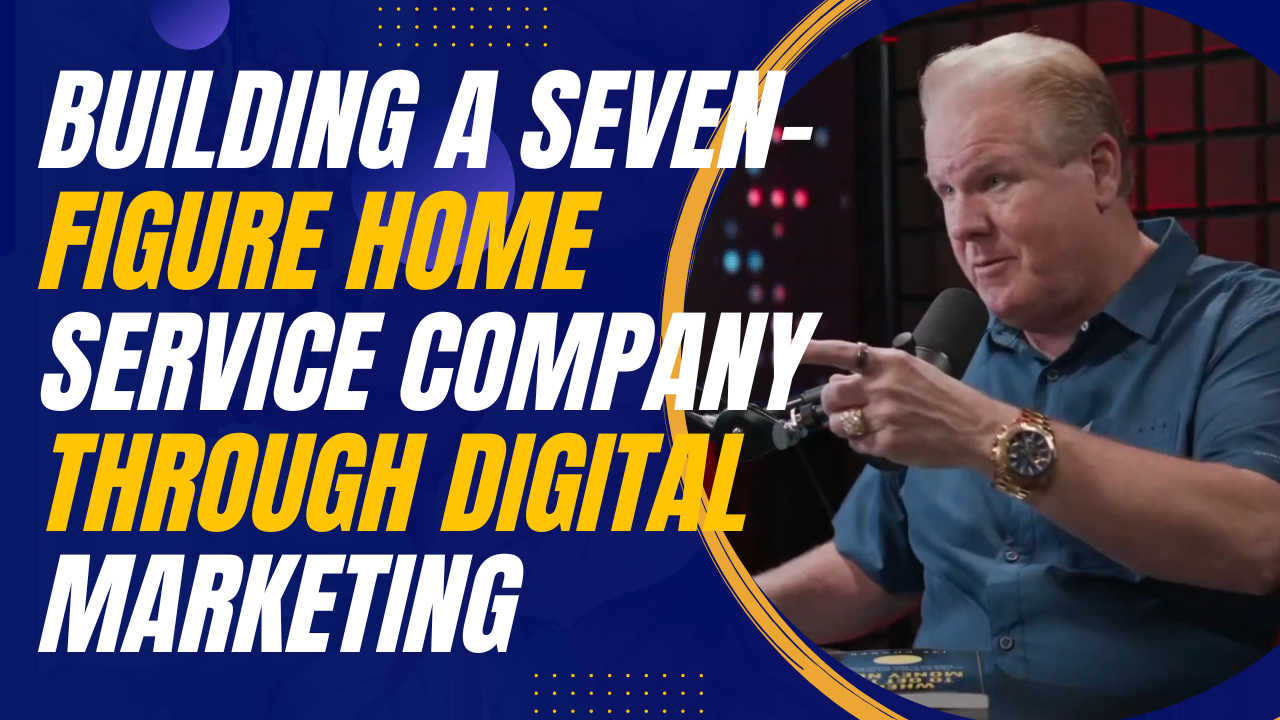
Building a Seven-Figure Home Service Company with Digital Marketing Expert Phil Risher
Jay Conner [00:00:01]:
Have you ever noticed how some businesses just print money while others can’t stay busy for more than a week at a time? And here’s the crazy part. Most of the time, it’s not the product, it’s not the people, it’s the pipeline, it’s the visibility, the conversions. It’s the follow-up. Well, today’s guest has mastered all three. Let me ask you a question. What if you could take a small home service company, say H vac plumbing, duct cleaning, and make it so booked, so busy, so dialed in, so profitable that it becomes a seven-figure asset someone would gladly pay five to ten times earnings for? Well, that’s exactly what Phil Richer does. You see, Phil is the founder of Flash Consulting. He went from paying off $30,000 in student loans and stacking and saving up $60,000 by the time he was 25 years old to leaving Enterprise Rent-A-Car, helping a local duck cleaning company triple their profit, and building a digital marketing firm that now drives millions in revenue for clients all across North America.
Jay Conner [00:01:22]:
Well, he’s been featured in Forbes, CNBC, Business Insider, Yahoo Finance, and he is here on the show today to break down the exact systems behind scaling, selling, and staying fully booked all the time. We’re talking about how to actually convert website leads into paying customers, the three growth levers every business has to pull, and the strategies home service companies are using right now to dominate their markets. So buckle up, because if you want to understand how real businesses scale, operate, and exist and exit at massive multiples, Phil is the guy to listen to here on this show. Well, welcome to Raising Private Money, the only podcast for real estate investors who want to fund their deals without relying on banks, credit, or using their own cash. I’m Jay Conner, the Private Money Authority, and I show you how to get private lenders begging to fund your next deal. Because every good deal starts with money. You’re going to meet Phil, my special guest, right after this.
Narrator [00:02:31]:
If you’re a real estate investor and are wondering how to raise and leverage private money to make more profit on every deal, then you’re in the right place.
Narrator [00:02:41]:
On raising private money. We’ll speak with new and seasoned investors to dissect their deals and extract the best tips and strategies to help you get the money. Because the money comes first. Now, here’s your host, Jay Conner.
Jay Conner [00:02:59]:
Phil, welcome to the show.
Phil Risher [00:03:01]:
Yeah, Jay, thanks so much for having me. I’m really excited to talk.
Jay Conner [00:03:04]:
Yes, I’m excited to have you on. Well, you have helped and consulted with many, many businesses, one of which is an example. You’ve helped a duct cleaning company triple its profits before you even launched your consulting company, Flash. So my question is, what were the exact levers you pulled that made that kind of jump happen so fast for the duct cleaning company?
Phil Risher [00:03:33]:
Yeah, I had to figure that out myself. And what ended up happening was I worked there for a year, and they went from 3 million to $4 million in revenue, 300,000 in profit, to 900,000 in profit. And we sat. He was being pursued by private equity companies to purchase the company. And we went to lunch, me, the owner, and then a search fund guy who was trying to buy the company. And we went to lunch, and he asked me three main questions, and these are the three things that we did. First, he asked me, How do you get new customers coming in the door? Second, how do you convert the leads into actual customers? And then third, how do you retarget your past prospects and customers to bring them back into the funnel? So those are the three things that we did for that business. And after that, we had another company, 3 million to 8 million, and then sold it to private equity.
Phil Risher [00:04:20]:
And now that’s what we do for home service businesses all across the country.
Jay Conner [00:04:25]:
Wow, amazing. So the exact levers that you pulled and helped increase again were the leads.
Phil Risher [00:04:36]:
Lead conversion, and then retargeting. So, taking their past prospects and customers and getting the most juice out of the squeeze. You can’t get lifetime value without a lifetime relationship. So how do you continue getting that lifetime value? That’s the third part.
Jay Conner [00:04:50]:
So what’s some advice that you can give on how to establish that relationship and create and transform that relationship into a lifetime relationship?
Phil Risher [00:05:01]:
Yeah, for sure. So out of those three levers, the retargeting one is very important. And when we talk, we work with private equity companies, and we work with normal mom and pop owners. The number one value in a business is the number of customers you have in your database. And if you have memberships, great. But the customers in your database, because they already know, like, a nd trust you. So what we recommend is two things. One, you need to be sending out an email newsletter every single month.
Phil Risher [00:05:27]:
And we have this playbook, it’s called a two-step revenue Email playbook. So you send out an email newsletter based on a content calendar. So if you’re an H Vac, for example, in the spring, you would say, Now is the time to get your spring tune-up. Then, after that first email goes out, anyone who opened that email, you want to send them a second email. That says we’re going to be in your area. This is the two-step revenue system. You don’t just send out one email and then see what comes in. You send them a second email that says, Hey, we’re going to be in your area, and do you want us to come by and do this? The second way to get retargeting coming in is through text message marketing.
Phil Risher [00:06:01]:
Text Message marketing gets 95% open rates, which is why you want to text your customers different offers throughout the year. Obviously, don’t be annoying, but like once or twice a year, with some type of an offer to bring people back in. We had an H Vac contractor. They were $1.5 million business in the first year. We sent out 12 emails, one every single month. And they generated $257,000 in additional revenue just by sending out those emails. This is one of the honey holes for most businesses that everyone misses out on.
Jay Conner [00:06:30]:
Wow. Do you help your clients actually like create or write those emails?
Phil Risher [00:06:37]:
Yep. So we’re actually a done-for-you model. So we get bolted onto businesses. So what we found is that specifically between 1 million and $10 million home service businesses, they can’t fully hire a chief marketing officer, they can’t hire a copywriter. They can usually hire a marketing person for like 50, $60,000, but they don’t really know what they’re doing. So what we do is we have, we have 18 people on the team, three consultants, and then a back-end pod team. We get bolted into their business, and we execute all these things as experts inside their business. So ours is completely done for you, and it’s a win-win for everyone.
Jay Conner [00:07:14]:
Wow, that’s amazing. So you focus on consulting with home service businesses, HVAC, plumbing, and electrical. What would you say are some of the biggest marketing mistakes that you see that keep these businesses from staying fully booked and really maximizing revenue?
Phil Risher [00:07:35]:
Yeah, there are two big ones. The first one is that they’re spending money on ads, but they don’t know the return on ad spend. So they’re just praying to the Google gods that they send them leads and just giving money to them, and they don’t know if it’s actually turning into revenue. So, at my home service business when I was working there, we were spending about $10,000 a month on ads, Yelp, Google search ads, Google local service ads, and Angie. And we didn’t know if that $10,000 was turning into $100,000 or $0. And most home service businesses just fly blind and just go off Gut feeling, they don’t have all the data dialed all the way through. And unfortunately, most marketing companies don’t go into their CRM and pull out the data. So everyone’s just kind of flying blind with numbers, but they don’t have the full scope.
Phil Risher [00:08:19]:
So the first thing is a big mistake is you’re spending money on a DS, but you don’t know if it’s actually working. The second thing is not focusing on that conversion funnel, which is the second pillar that I mentioned at my home service business. We would get a lot of leads coming in, you know, 8or 00 some leads every single month. But we weren’t tracking our booking rate. So we didn’t know that we got 800 leads, and we booked 60 jobs or whatever it was, or 600 jobs. And we didn’t know if we sent out this many estimates, how many you actually closed. So what we usually recommend doing is setting up a lead nurture sequence and an estimate nurture sequence to nurture your leads to help convert more jobs. One company, we set up a lead nurture sequence for a lead to come in, a nd then they have texts and emails that go out to get people to book.
Phil Risher [00:09:01]:
They went from a 41% booking rate to a 62% booking rate just by setting up a lead nurture sequence. So those are the big two mistakes that we see a lot of times that make sense.
Jay Conner [00:09:11]:
Well, most business owners, I believe, think they have a lead problem. But really,y what I’ve observed, I think you will agree based on what you’ve said so far, they really have a follow-up problem or don’t actually even have a follow-up strategy or process in place. So what are some more of the ways or the right ways to convert website leads into paying customers? You talked about retargeting, emailing, and texting. What are some other ways to convert those website leads?
Phil Risher [00:09:48]:
Yeah, I’ll give you the secret sauce. So first, most companies don’t have a lead problem; they have a lead management problem. They get leads that come in, and they’re one-and-done companies. One-night stands, basically, they get one call, one shot at it, and then it’s gone forever. So here’s how we help businesses. And if you’re listening to this, this is what you should do. When someone goes to your website and fills out a form to work with you, you need to text them and email them right away. Because when you call them at 10 am on Monday, and they don’t answer the leads, poof, gone forever.
Phil Risher [00:10:17]:
And you just paid money for this. When you text and email them right away. You can ask for a picture. So you text them and say, Hey, we’d love to start working on your gutter cleaning or your duct cleaning or get you scheduled for an H vac repair. Can you send over a picture to let us know what’s going on? This instantly moves the ball forward for people; it moves you closer to working with them. So that’s the first thing is get the text and the email set up right away. Then this was a big issue that I faced is we, my company did duck cleaning, and a lot of times it was just price shopping. So how much does it cost to do this? Our customer service representatives would get one shot at articulating the price, and then the lead was gone forever.
Phil Risher [00:10:58]:
So if you experience this, what you should be doing is having a lead nurture sequence. So that was when you talk to someone, and they say, How much does it cost? And you say, Hey, I’ll be happy to give you the price. We also put together a complete pricing guide. I can email that over to you. What’s the best email to send it to before I give you the price? Then you get their email information, and you send them an email. And now you can set up an email nurture sequence to follow up with them. It sounds basic for people that do like online businesses, but in the home service space, it’s pretty foreign because it’s so like call something, schedule it, book it; it’s not as much of a nurture sequence. This alone, if you fix this in your business, can generate millions of dollars because you don’t even have to spend any more on ads.
Phil Risher [00:11:40]:
All you have to do is just tighten up the bucket. So if you’re putting water into a bucket and you have holes all over the place, fill the holes before you put more water in, a nd you’re going to get more return.
Jay Conner [00:11:51]:
Well, that’s just so smart when it comes to marketing is getting the contact information so you can start to build that relationship.
Phil Risher [00:12:00]:
Exactly.
Jay Conner [00:12:00]:
And you know, since I am a coach consultant to real estate investors.
Jay Conner [00:12:07]:
It’s easy for us to think, well, this is like, who wouldn’t know this? But I understand what you’re saying. In the home service business, I guess most of their experience and world of communication is just picking up the phone and calling people.
Phil Risher [00:12:25]:
Exactly. It’s, it’s much different. What I would say for real estate investors, any business in general, like my business too, is that you have different tiers of leads that come in. So, a high-value content offer or some type of giveaway or some type of value where someone exchanges their email address for that information. That’s going to be a much colder lead than someone just booking on your Calendly link. And a lot of times in home service businesses, they’re just like, schedule now and just book my thing. But there’s a little bit more song and dance that has to go into it, and you have to work your way through this funnel of cold lead into automatic warm lead.
Jay Conner [00:13:02]:
Exactly. And I love the idea you just shared a minute ago about immediately right after the lead comes in, they get a text, they get an email, and you’re asking that lead to do something, take a picture, send us, text us back the picture of what you got going on. So now you actually have that lead taking action, getting engaged. And you’re already training them to follow instructions and to do what you tell them to do, right?
Phil Risher [00:13:36]:
Exactly. It’s your training them to do what you ask them to do, but also they’re moving the ball down the field and giving you more ammunition. So that way, when you go to close, you have pictures and all the stuff. I think, regardless of whether a home service or not, if you do not have a system in place to get the ball moving forward without a manual process, then you’re hindering your growth because you need to. It’s not even AI; it’s just automations inside of your process.
Jay Conner [00:14:03]:
Yeah, that makes a lot of sense. So you have helped companies, you’ve consulted with companies to actually get them to a point where their company is sellable. I’m thinking a lot of home service providers may not even think about it. They don’t even think about them having a sellable company. Like this is what I do. I’m going to do it until I don’t work anymore, and then you know, the show is over. So you’ve helped, you’ve helped companies grow enough to sell at 5-10x multiples.
Phil Risher [00:14:45]:
Yep.
Jay Conner [00:14:46]:
Of what the revenue is. So, from a sales and marketing standpoint, what would you say a business needs in place for that business to actually become sellable at that level or at some time?
Phil Risher [00:15:04]:
Yeah, for sure. So what we found is that between the 1 to $10 million home service businesses, what we serve, there are three main sections there’s 1 to 3 million, 3 to 5, a nd 5 to 10. These are the main sections that people fall into. So, in 1 to 3 million, usually the owner is the number one salesperson. They can go out and sell any job. They’re also probably like the lead tech or project manager who can go out and solve all the problems. This is a big bottleneck, and it also gives you key man risk. So it’s harder to sell your business if you’re the number one salesperson.
Phil Risher [00:15:36]:
The three questions that the private equity company asked me when we went to lunchweres how do you get customers coming in the door, how do you sell the product, and how do you retarget them? What they want to hear is that you have a system for each one of those. Not oh me, the owner has to go out and do X, Y, and Z. It’s here’s our system and playbook for this, here’s for this, here’s for this. So the first thing is like if you’re 1 to 3 millioyou’veyou got to buy back your time. And Dan Martell has a really good book on this called Buy Back Your Time. He has a five-rung replacement ladder. First is admin. So you need to have a CSR customer service representative, an admin, office manager. Second, you need to have a delivery point person.
Phil Risher [00:16:11]:
So you need to have technicians out in the field and also some type of project manager or operations manager. Third, you need to have marketing taken. This is where my company fits in. Outsourced marketing, that’s not your brainchild, but someone executing marketing to generate leads for the business. Fourth is sales. So you have to have a sales system in your business, usually around $3 million. This kind of caps out at the sales. And then the fifth is management.
Phil Risher [00:16:36]:
And that’s the system that you need to get you to like 3 or 4 million. Now, to go to like 4 to 5 million, you have to have good data. And this is what I did in the business was I was able to take all the data and make the best decisions. So that way, when we sit down with private equity, they’re like, What are you doing for this? And it’s like, here’s all the data we have, here’s all the systems that we put in place, and here’s what’s working, here’s what’s not. Here’s where you could probably come in and help fix these things. And the company that I worked at was doing 5 million top line, and EBITDA was around 1.5 million, and he sold for multiple times more than 5x because we had all this data dialed in and all of these people in place for the business. So he could literally just step out, someone else step in, execute a little bit Better, refine the process, and then grow the business. So those would be the main things that I would see specifically in the one to $10 million range is having those parts fixed.
Jay Conner [00:17:24]:
That makes a lot of sense. Now, your actual business, Flash consulting, your business has scaled to seven figures, serving clients all over North America. So from your perspective, your experience, what systems and processes did you put in place that allowed you to make that kind of big leap without everything falling apart?
Phil Risher [00:17:51]:
Yeah, for sure. So there’s a saying that up until $1 million, once you hit a million dollars, the hustler has to die and the leader has to be born. And for me, when I hit a million dollars, I was pretty much, you know, the number one salesperson. I was the ops person. I was doing a lot of these roles in the business, but it was capping the growth potential. And it’s very risky or scary for a lot of people because imagine you’re doing a million dollars and your profit is $200,000, 20%. Now you have to take that 20% profit and hire a bunch of people for 80, 100, $150,000, and the profit’s gone poof. Hopefully, this helps you grow your business.
Phil Risher [00:18:28]:
That was the biggest thing for me, getting over that hump, so that I could build out a team. And once I built out the team, my business doubled. And once I doubled, now I have the revenue coming in. So if the person’s not the right person, and at least I have the position and the allocated funds to bring someone else in, that would be the right fit for me. That was a big game-changer, I would say. The other thing would be those three levers in my business, which are how I get leads coming in. For me, it’s a lot about content. And then the second part of the conversion is our sales process. So, like, we have a weekly email newsletter that goes out that gets 50% open rates because it’s just tons of value.
Phil Risher [00:19:07]:
And then, inside our conversion process, what does our sales system look like? So it’s basically like those three things inside of your business. It’s a little different between B2B and B2C, B2B. But it’s all the same principles. You get leads coming in, you convert them through a sales process, and then you keep retargeting them and bring them back into the funnel.
Jay Conner [00:19:27]:
Excellent advice, Excellent advice. Now, let’s. Let’s say, let’s assume that you have a new client who comes on business owner, service company, and let’s say their primary goal is to double their sales in the next 12 months. Given your experience working with all these clients, where would you tell them to focus first and why?
Phil Risher [00:19:56]:
Yep, there are four numbers that they need to track. That’s it. There are a million distractions, but there are only four numbers. First is your booking rate. The booking rate means you got this many leads and you converted them into this many jobs. And for any other business out there, you got this many leads, and you converted them into this many sales opportunities. So, a booking rate number two is your close rate. You did this many estimates, a nd you closed this many, this many estimates, you closed this many.
Phil Risher [00:20:24]:
Third, average ticket, your average ticket is $2,000, or your average transaction value is whatever. Fourth is customer acquisition cost. How much does it actually cost to get a customer? Those four numbers, that’s all. You have to focus on everything else when you have the people in place. If you just focus on those numbers, you’re going to grow your business. For example, your booking rate should be for home service. The average is 42%. The good people do 62%.
Phil Risher [00:20:52]:
So if you don’t get any more leads, but you just increase your booking rate by 10%, you just increase everything else by 10%. Then, if you increase your conversion rate by another 10%, you get more returns, a nd you don’t even get any more leads, then you increase your average ticket from $1,000 to $2,000. You just doubled your revenue. So those four numbers will drive extreme growth if you focus on them. And what I recommend doing is every month, pick one of the four, and every month is just how can I get my customer acquisition cost to be better? How can I get my average ticket up? How can I get my booking rate up? And it comes down to knowing those four numbers and then getting better and better every single month at those numbers.
Jay Conner [00:21:32]:
So, when you work with your clients, in what kind of way do you coach them? Well, how, how, how do I, how do I increase my conversions? Right, you know, like I get my booking, but how do I, how do I increase the bookings? How do I increase the conversions? Do you work with them in detail on that?
Phil Risher [00:21:53]:
Yeah, great question. This was my biggest heartburn was there’s digital marketing companies floating out here, then there’s your CRM data in here, and then there’s automations over here. And most companies want all three to be talking and working together. So what we do is we actually go into their CRM, their client relationship manager, like a HubSpot or whatever. But for home service businesses, it’s Service Titan, Jobber, or Housecall Pro, the main ones. And we actually pull that data out every single month. Because as a marketing company, we could get you a bunch of leads, but if you don’t turn them into quotes or you get a bunch of quotes and you don’t turn them into sales, well, then we need to fix your sales process by either helping with automations, creating content, telling you don’t spend any more on ads until you fix this thing. But it’s all about growing the business, not just getting more leads coming into the funnel.
Jay Conner [00:22:47]:
That makes a lot of sense as well. So I’m sure we’ve got some small business owners here that are tuning into the show, and some of them are feeling stuck. They feel stuck. They got maybe decent revenue, but they really don’t have any kind of growth going on. When you diagnose a company or a business owner, what’s the first diagnostic step you or your team takes to figure out what’s really, truly holding them back?
Phil Risher [00:23:21]:
Yeah. So if someone’s feeling stuck, usually they feel like they’re stuck with leads. So I’m just going to speak directly to that one is like, how do I get more leads for my business? And there are a million things that we could talk about or ask them questions on, but let’s just focus on leads because probably that’s what people want to hear. So what we recommend, and I’ll speak to home service and just general businesses like my business as well. Home service, 80% of people are going to Google and searching H Vac Repair near me. So if we know that 80% of people are going there, then we need to show up there in the four different areas. So that’s what we do for home service businesses. First, are you in those four areas? And then how can we make sure that you’re in those areas and grow your business? For general people listening to this, even if you’re not a home service business owner, it’s like, where do your target audience hang out? Are they on LinkedIn? Are they on YouTube? Are they on podcasts? Do they read books? I’m sure you’re saying yes, yes, yes, yes. So naturally, you should do everything that you can to show up in those places effectively as much as possible, so that they can see you.
Phil Risher [00:24:23]:
So what does this mean? Creating content, more, better, different content in that order.
Jay Conner [00:24:31]:
That is really good advice, Phil. So I tell you, Phil, you’ve got a really unique background. You paid off debt at a young age, that’s like unheard of. Then you say you saved a lot of money, like very aggressively, by the time you were 25 years old. And then you jump from Enterprise Rent-A-Car into entrepreneurship. My question is, how did that mindset shape the way you scale companies today, if at all? It did.
Phil Risher [00:25:06]:
Yeah, for sure. I think for me, a lot of it came with, like, I’m a winner, and my team’s winners, and I kept stacking wins. So when we work with businesses, a lot of times they’re frustrated with marketing companies because they’re just doing one thing, and they feel like they don’t have a winning game plan. It’s more like a.
Jay Conner [00:25:26]:
It’s.
Phil Risher [00:25:26]:
It’s just a win for the, for the marketing company because they’re spending money and they’re getting leads, but it’s not a win, win, win situation because they’re not actually looking at your data. They’re just driving leads for you. So for me, when I look at situations like how can we stack more wins and get wins, wins, wins, that’s the first part. The other part is more of a philosophical thing, which is that personally, I’m very fortunate that I’m debt-free. I can come and show up from an abundance mindset. I can show up to give and not need anything in return. Maybe something comes of it. But my team, we can show up and give as much as possible.
Phil Risher [00:26:06]:
And I think that that’s a unique way of doing business. I’m not just, I don’t need to take, I can just give. And it’s just something that’s a core principle, like, how can I show up from an abundance mindset and just give? And if it makes sense to work together, great. If not, hopefully I gave you the recipe and sold the cookie.
Jay Conner [00:26:25]:
Well, Phil, you have dropped a lot of nuggets here in a short period of time. And I know we got business owners, service providers, actually, any. Any business owner who would be interested in reaching out to you. How can they get up with you?
Phil Risher [00:26:40]:
Yeah. So if you’re a home service business doing between 1 million and $10 million a year, we do marketing audits. We can hop on a call, show you all the stuff, and show you the recipe. If it makes sense, work together, great. And you can go to www.PhlashConsulting.com, and if you’re like, hey, Phil, you seem like a cool guy. I hang out on LinkedIn and Instagram. Those are the two places that you can hang out. With me.
Phil Risher [00:27:02]:
Yep. Phil richer on LinkedIn and phil richer on Instagram as well.
Jay Conner [00:27:05]:
All right, that URL again is www.flash consulting.com, spelled www.PhlashConsulting.com, and of course, all these links will be in the show notes as well. Bill, thank you so much for joining me here on Raising Private Money.
Phil Risher [00:27:26]:
Yeah, thanks so much for having me. I appreciate you.
Jay Conner [00:27:28]:
All right, everybody, that’s a wrap for today’s episode. Huge shout-out to Phil Richer for dropping absolute gold on how to scale, systemize, and actually make your business worth something when it comes time to sell the business. So if you’re a home service business owner, or honestly, as we were just talking about, a ny business owner, and you’re tired of guessing, tired of hoping that your phone is going to ring, tired of paying for marketing that really doesn’t do anything or move the needle, go back and re listen to this 30 minute episode. Phil has laid out the blueprint, visibility, conversions, and retargeting. That’s the game that he knows inside and out. So if you want help executing it, check out what Phil and his team at Flash Consulting are doing. As you just heard, this is not a theory. These are his exact strategies behind 7-figure companies with 5 to 10x exits.
Jay Conner [00:28:27]:
If you got value from this episode, share it with someone who needs to hear it. And as always, thank you for listening to Raising Private Money. Be sure to like, share, and subscribe. I’m Jay Conner, the Private Money Authority, and I’ll see you right here on the next episode of Raising Private Money.
Narrator [00:28:49]:
Are you feeling inspired by the knowledge you gained in this episode? Then head over to www.JayConner.com/MoneyGuide, that’s www.JayConner.com/MoneyGuide, and download your free guide that shares seven reasons why private money will skyrocket your real estate investing business. Right now. Again, that’s www.JayConner.com/MoneyGuide to get your free guide. We’ll see you next time on Raising Private Money with Jay Conner.