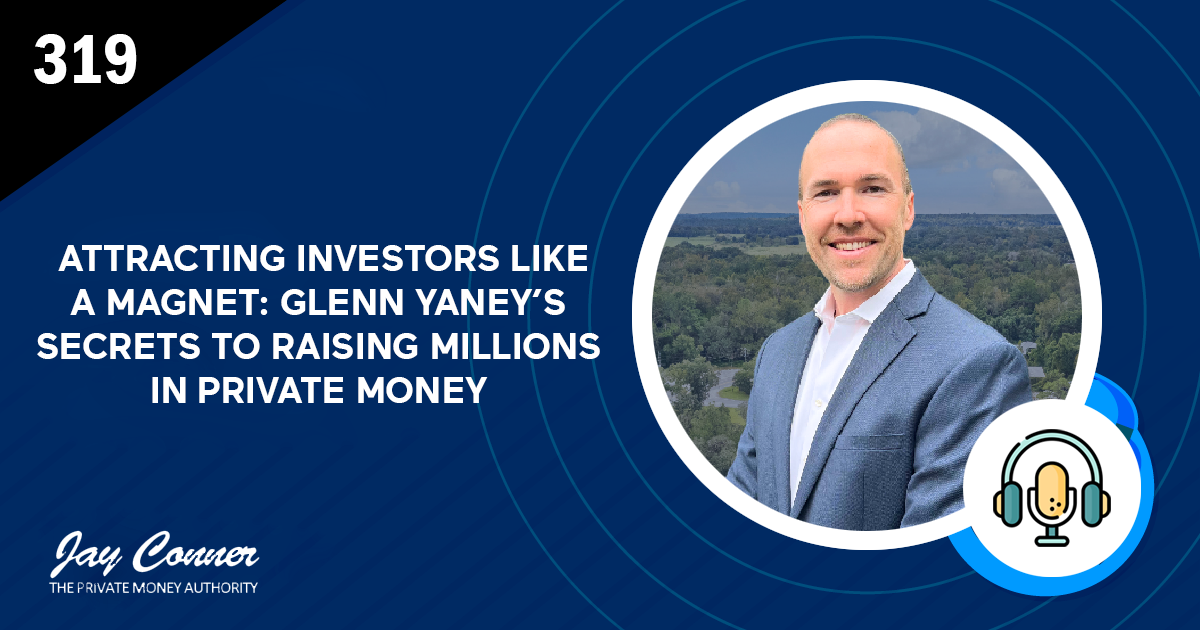
Few journeys in real estate are as inspiring as Glenn Yaney’s. On a recent episode of “Raising Private Money” with Jay Conner, Glenn shared the inside scoop on how he went from waiting tables at Red Lobster to becoming the co-founder and COO of Vertical Equity Partners, raising over $14 million in private capital. Glenn’s story is proof that where you start doesn’t determine where you end up—and that the right mindset, strategies, and relationships can change your life.
Finding the Turning Point
Glenn didn’t come from money, connections, or a prestigious background. In the words of Jay Conner, Glenn’s leap “from serving tables at Red Lobster to raising millions in private money” is, frankly, wild. So how did Glenn make the switch from restaurant shifts to real estate investments?
It all started with immersion. Glenn began working for a REIT (Real Estate Investment Trust), spending his days off shadowing real estate operators. “I watched what they do,” Glenn shared, “and I learned that those guys who were most successful were the ones who figured out how to buy real estate without the banks.” This key insight set Glenn on the path to financial independence.
The First Steps: Liquidity and Income-Producing Assets
Initially, Glenn made the same mistake many do: pouring money into retirement accounts like his 401 (k) and IRAs, making himself illiquid. The real shift came when he realized, “I needed to become more liquid and buy income-producing assets.” Within a year of refocusing his investments, Glenn achieved financial independence—thanks to just a couple of smart deals.
His first deal came from a local real estate investor with a three-unit mobile home park. Glenn looked up to this investor, and when he made an offer on the property, the only way the deal worked was if the seller became the lender. The terms were set by the seller, and Glenn agreed; just like that, he had his first private loan. Similarly, he bought a nine-unit mobile home park from the same investor, solidifying his footing in the industry.
Mindset Shifts and Overcoming Fear
Glenn admits those initial deals were nerve-wracking. “You start to realize that you’re actually going to make a little bit of money other than your W2,” he recalls. For years, Glenn studied real estate and investing before he ever made money. The breakthrough came not from saving more, but from finding down payment money outside his own funds—by leveraging other people’s money.
Scaling Up and Building Trust
It wasn’t long before Glenn started scaling his business. “Raising $14 million hasn’t happened by accident,” Jay noted. Glenn’s process is systematic and built on relationships. After each deal, Glenn would talk about it with others, demonstrating experience and building credibility. His secret? Consistent communication.
“I generally call [my investors] once a quarter at least to check in, see how they’re doing personally. They either have a referral, more money to invest, or questions about their investment. And by the end of the conversation, you know what you need to do better in the future.” Glenn also relies on solid software and a strong brand to make things easy for investors.
Honesty, Transparency, and Consistency
So what turns a one-time lender into a repeat investor? “Consistency and being very honest,” says Glenn. Investors know that in real estate, things can go wrong. But if you keep them informed—especially during rough patches—they’re more likely to trust you with more capital in the future.
Glenn shared the story of a mobile home park that went eight feet underwater during Hurricane Helene. “We had to communicate with the lender. It’s not like you could tell them the park was fine.” Through honest updates and transparency, Glenn maintained the relationship even through zero-revenue periods.
Structure and Win-Win Deals
When structuring deals, Glenn stresses transparency. “For limited partners, you have to kind of spell out what the fees are and not be afraid of them.” Whether it’s construction management fees or promissory notes, clarity is key—and different investors require different levels of communication.
Biggest Lessons Learned
Looking back, Glenn identifies miscommunication as his biggest mistake. One experience involved refinancing and buying partners out—a plan he hadn’t communicated upfront. “If that’s the plan, you should tell them at the front end.”
Action Steps for New Investors
For those hoping to raise their first $500k, Glenn advises: talk to people looking to invest, keep your structures straightforward, and never complicate things. “If they’re confused, they’re not doing it.”
Final Takeaway
Glenn Yaney’s journey highlights that raising private money isn’t about luck—it’s about building trust, communicating clearly, and offering opportunities that make sense for everyone. If you’re thinking about getting into real estate, take Glenn’s story to heart: Start building relationships, focus on communication, and pursue deals with courage and transparency.
10 Discussion Questions from this Episode:
- Glenn started his career as a server at Red Lobster. How did his humble beginnings influence his approach to raising private money and building relationships with investors?
- What were some key mindset shifts Glenn experienced when moving from traditional retirement savings to investing in income-producing real estate assets?
- Glenn emphasizes the importance of communication and transparency with private lenders. How can consistent, honest updates impact your relationship with investors, especially when things go wrong?
- In the episode, Glenn mentions aligning himself with more experienced investors when starting. What are some practical ways new investors can build credibility by leveraging the experience of others?
- Glenn and Jay discussed the value of “attracting” money versus “chasing” it. What strategies did Glenn use to position himself so that investors were interested in his deals, and how can others replicate that approach?
- Why is being straightforward and keeping deal structures simple important when pitching to potential private money lenders, according to Glenn’s experience?
- Glenn shared that some of his mistakes stemmed from miscommunication about refinancing and deal structure. What processes can investors put in place to ensure clarity from the outset with partners and lenders?
- How does Glenn’s process for scaling—consistent communication, transparent reporting, and using technology for investor updates—build trust and encourage repeat investment?
- Dealing with challenges, such as the mobile home park flooding, tested Glenn’s ability to communicate with lenders during a crisis. What can we learn from how he handled those difficult periods, and why is transparency crucial during setbacks?
- For someone wanting to raise their first $500,000 in 90 days, Glenn recommends avoiding complicated pitches and focusing on investor needs. How does understanding your investors’ goals influence the success of raising private capital?
Fun facts that were revealed in the episode:
- From Server to Syndicator: Glenn Yaney started as a server at Red Lobster before diving into real estate. Today, he’s the co-founder and COO of Vertical Equity Partners, having raised over $14 million in private money and built a portfolio of 650 units.
- First Deal Magic: Glenn’s very first private loan came from a real estate investor with a three-unit mobile home park. That investor became Glenn’s first lender, setting him off on his journey to financial independence—after just a couple of deals!
- Hurricane Challenge: Glenn once owned a mobile home park that went eight feet underwater for three weeks during Hurricane Helene. Even as the park had zero revenue for several months, Glenn kept his lenders updated and demonstrated how crucial consistent communication is, especially in tough times.
Timestamps:
00:01 Mastering Private Money Magnetism
03:25 Pay Yourself, Gain Liquidity
06:32 Mindset Shift: Using Others’ Money
12:23 Networking to Raise Investment Capital
14:45 Consistency and Honest Communication
18:56 Standing Strong in Tough Times
21:36 Managing Construction & Investments Explained
24:41 Unexpected Buyout Conflict
26:10 Simple, Clear Investment Pitch Tips
27:47 Connect with Glenn Yaney:
https://www.linkedin.com/in/glenn-yaney-83462461/
29:44 Free Private Money Guide
Connect With Jay Conner:
Private Money Academy Conference:
Free Report:
https://www.jayconner.com/MoneyReport
Join the Private Money Academy:
https://www.JayConner.com/trial/
Have you read Jay’s new book, Where to Get the Money Now?
It is available FREE (all you pay is the shipping and handling) at https://www.JayConner.com/Book
What is Private Money? Real Estate Investing with Jay Conner
http://www.JayConner.com/MoneyPodcast
Jay Conner is a proven real estate investment leader. Without using his own money or credit, Jay maximizes creative methods to buy and sell properties with profits averaging $67,000 per deal.
#RealEstate #RealEstateInvesting #RealEstateInvestingForBeginners #Foreclosures #FlippingHouses #PrivateMoney #RaisingPrivateMoney #JayConner
YouTube Channel
https://www.youtube.com/c/RealEstateInvestingWithJayConner
Apple Podcast:
Facebook:
https://www.facebook.com/jay.conner.marketing
Twitter:
https://twitter.com/JayConner01
Pinterest:
https://www.pinterest.com/JConner_PrivateMoneyAuthority
Attracting Investors Like a Magnet: Glenn Yaney’s Secrets to Raising Millions in Private Money
Jay Conner [00:00:03]:
Let me ask you something. What if you could raise $14 million of private money without begging or chasing, or convincing anyone? What if investors came to you because they trusted your process, your deal, and you?. Well, that’s exactly what today’s guest, Glenn Yaney, has done. Glenniss is the co-founder and COO of Vertical Equity Partners. He didn’t start with money, connections, or a fancy background. He actually started as a server at Red Lobster. Now fast forward, he’s raised over $14 million in private money, built a portfolio of 650 units, and mastered the art of attracting capital like a magnet. Now, in this episode, Glenn’s going to break it all down, the exact steps he used to raise private money.
Jay Conner [00:00:49]:
The words he’s used to share it with potential lenders, how he found his very first private lender, and all of that good stuff. So if you’ve ever wondered how to get people lining up to fund your deals, you’re going to want to take some notes. Welcome to Raising Private Money, the only podcast for real estate investors who want to fund their deals without relying on banks, credit, or using their own cash. I’m Jay Connor, the private money authority, and I’ll show you how to get private lenders begging to fund your next deal. Because every good deal starts with the money. You’ll get to meet Glenn Yaney, my special guest, right after this.
Narrator [00:01:29]:
If you’re a real estate investor and are wondering how to raise and leverage private money to make more profit on every deal, then you’re in the right place on Raising Private Money. We’ll speak with new and seasoned investors to dissect their deals and extract the best tips and strategies to help you get the money. Because the money comes first. Now, here’s your host, Jay Conner.
Jay Conner [00:01:58]:
Well, hey there, Glenn. Welcome to the show.
Glenn Yaney [00:02:00]:
Thanks so much for having me, Jay.
Jay Conner [00:02:02]:
Yes, and I loved being on your podcast not long ago as well. And so, Glenn, you know, I just love stories like yours because they prove that where you start doesn’t have to dictate where you end up. You went from serving tables at Red Lobster to raising millions in private money. I mean, that’s wild. Well, let’s start there. So you started as a server at Red Lobster. No money, no real estate background that I know of. What was the turning point where you realized you could actually do this real estate business and even start raising millions in private money?
Glenn Yaney [00:02:40]:
I mean, really ended up doing it, started working for a REIT, and just like, immerse myself in real estate, started on my days off, I would hang out with other real estate operators, and with those operators I’d watch what they do. And I learned that those, those guys that were most successful are the ones that figured out how to buy real estate without the banks, is really what happened.
Jay Conner [00:03:10]:
Well, that makes a lot of sense. Well, before you ever raised a dollar of private money, what was your first step? In other words, what did you do to get into the game when you didn’t have experience or the capital?
Glenn Yaney [00:03:25]:
I mean, really, what it comes down to is learning how to pay yourself first. I mean, there’s always money, like for any bill I ever have, I’ve always learned how to pay it. But to pay myself first was the first step. But I, you know, ow I think I went down in my opinion the wrong path when I started putting money in my 401k, maxing out my IRAs, and really making myself illiquid. And I think whenever I had the mental switch that I needed to become more liquid and income-producing assets, that’s when I became financially independent. Really, in a short period. It took me about a year of refocusing, where I put my money. And yeah, it did turn out to where I, my firstst my first private loan was from a real estate investor whohadthree-unitnit mobile home park.
Glenn Yaney [00:04:26]:
And then I bought a single-unit mobile home park from the same investor, had very little money to do, and it pretty much made me financially independent from just those two deals. And within a short period, I sold a house that I had as a rental. It really didn’t make that much money. It was just lia, a primary residence that I moved out of. I sold it, ha, about 100 grand went into my bank account. And then I left my W2 and started finding private capital to buy more real estate.
Jay Conner [00:04:58]:
I love it. Okay, so yoleapedap. You got the n business s real estate investing. But that first private money deal, that’s usually where everything starts to fall apart or change. So let’s talk about that. And you just mentioned your first private lender, but I want to dig into that a little bit more. Go back to your very first private money lender and deal. Do you recall how you found that first private, private loan, e,r and hid some of the conversation where they agreed to be your private lender?
Glenn Yaney [00:05:30]:
Yeah, so I, I don’t know, I don’t know if I had like a systematic way of finding this person, but I, I looked up to him. He had about 600 units of real estate, te would follow him on my days off. And he was, you know, getting to a point where he got very large. He ended up, he’s, he’s at about 1600 pad mobile home pads now. And I made an offer on a hithree-unitit deal, and the only way that I could buy it is if he were to be a lender. That’s really what happened, you know. And then he just came up with the terms that he thought were good for him,im and I agree, and we just moved forward with the deal.
Jay Conner [00:06:13]:
So when you were working on that first deal, he’s going to fund your deal. Did you have any kind of fear inside that you needed to overcome to put that deal together? And what kind of mindset shift changed everything for you?
Glenn Yaney [00:06:32]:
I mean, the mindset shift, it was nerve-wracking, you know, because you start to realize that you’re actually going to make a little bit of money other than your W2. And it’s. For me, I studied real estate and investing, and all this stuff for like five years before I even made any moneyItit was just likHowow do I come up with a down payment? And what I found is that the successful people were the ones who found the down payment outside of their own funds. You know, it’s like you. To buy real estate with your own money is a slower pace, I would say. And if you have a high income, you can do it, but if you don’t have one, you have to have an extremely high income to buy a lot of real estate. The key is to use other people’s money.
Glenn Yaney [00:07:25]:
Once I bought the first deal like it really took the second deal, that I, that I, it like made a switch where I was no longer motivated by my W2 job. And I decided that maybe I should put more effort into finding more of these deals is what happened.
Jay Conner [00:07:44]:
Yes, yes. Well, and you know, you mentioned the word down payment. In my world of private money for real estate, there is no down payment because I’m getting all the funding from the private lender for the purchase. If there is a renovation involved, I’m getting all that money up front. And like you and I have talked about before, when I purchase the property, I always bring home a check from the closing table at purchase instead of having to bring a down payment on my own. And that’s sort of a rule of thumb for,e o,r a double checkpoint when I’m buying a property with all cash, private mo, and there’s a renovation involved. If I can’t bring home A sizable check from that closing table. I’m paying too much for the property.
Jay Conner [00:08:33]:
That’s just a nice little double check. So you got that first deal. You mentioned the second deal. And as you start to scale your business, it’s about building a system, you know, something that is repeatable. So I want to introduce you to the process that you use now because raising $14 million in private money just has not happened by accident. So walk us through the process that you’ve used to scale and raise that amount of private money. How do you find or how did you find potential private lenders to get that much funding? How did you approach them? How do conversations go? How do you close the deal? Just that overall envelope.
Glenn Yaney [00:09:15]:
Yeah. So what I would saisrthathe, the partner who has given me the 14 million has been an investor. There are a few; there’s probably about 2 million lenders. Bhe, I would say the majority of them have been investors. We’ll figure out a structure that works best for them. And what I would say, the big, the, the biggest part that I’ve had very successful mentorful. He has about 20,000 dollars, and he told me, he sa, ys if you have a good deal, you’ll find the money. But I actually have found that that is not correct.
Jay Conner [00:09:53]:
Thank you very much.
Glenn Yaney [00:09:55]:
You find the deal, and then you’re like looking like a desperate person holding your hand out. And what I have found is that, as you and I talked about, this is you really have to find the people with the money to get confidence to make the offers on the bigger deals. So then, you know, we weren’t, we were buying, you know, where our deals were, funding around 5,000 at a time, like our first big syndication, which is a 25-unit apartment. It was, I think it was 700, 000 that we raised. And you know, the next deal was about 8,00 and then the next one was like a million. And what you’re, what we’re doing this whole time is we’re, we buy a deal and then we talk about it to other people. You know, so when you talk about it with other people, then you’re showing that you have the experience of buying, you know, buying real estate. And then, you know, you have to, what I would also add is consistent communication with my investors has been important to me.
Glenn Yaney [00:10:57]:
What I generally call them once a quarter at least to just check in, see how they’re doing personally. And then generally they either have a referral or they’ll have, you know, more money to invest, you know, or they’ll have questions about their investment. And then sometimes even in those conversations, as you question, are they upset or not upset? Then by the end of it, you kind of know where they’re at, and you know what to do better in the future. So,o like if you have that question, it’s like maybe it’s somewhere to improve. So it’s just constantly improving with communication. I like to have good software as well, to have a forward-facing brand, to have people be able to log in, pull up their K1s or 1099s, and haand, and hand something. The easier it is for the investor, the more likely they are to get more money.
Jay Conner [00:12:00]:
Sure, sure. Makes perfect sense. N, ow what advice would you give to someone that doesn’t have, you know, a track record yet in real estate investing? What are some ways that they could build credibility so quickly, you know, so potential private lenders might take them seriously?
Glenn Yaney [00:12:23]:
I mean, so what, did I align myself with people with more experience than me, a nd really what it started with was I would follow the,m and then when I started raising cap, ital I would, it was more of like introducing the capital person with the person I was following. So it turned into where it was kind of connecting them that way. And then what I continue to do is maintain those relationships, talk about the investment. Because what I can tell you is that there’s a limited amount of capital per person, of course, so you, and they can, they want to give you as much as they, they, they’re comfortable with. Of course, so, and also buying mobile home parks, ie, kind of like exciting. So,ike there’s a part of it that they want to hear about and from, my side, that they want to hear about the deal. Like they want to hear what they’re doing. They don’t want to go out there and knock on doors or post notices or talk to the contractors or get it, deal with the septic tanks that we deal with.
Glenn Yaney [00:13:33]:
But at the same time, they want to know what is happening, just because that’s why they gave you the money. I think that there’s some kind of interest in investing in real estate, and they want to know what’s happening. So I generally, you know, talk about the investment and, and, and, and not be afraid to kind of give a little bit more than what you would be afraid of telling somebody. Like, okay, well, is there something going wrong with the deal? Yeah, there’s a little bit of that happening. Ended up finding a $40,000 septic tank at this property, which we had to replace immediately. But we’re taking care of it. It’s working, you know, we’re working through it, and it’ll be resolved within a couple le months. You know, and that’s the reality ot, what was happening.
Glenn Yaney [00:14:15]:
You know, we, it’s, you know, just given details of the deal to let the investor feel a part of the journey as well.
Jay Conner [00:14:26]:
I love it. Well, you’ve raised millions and millions in private money. What are some of the secrets or strategies that you’ve used that turn a one-time private lender into repeat lenders wanting to give you more money to invest and ones they want to keep, you know, funding more deals?
Glenn Yaney [00:14:45]:
Yeah, I would say consistency and being, being very honest, like not being afraid to. What I can tell you is if somebody tells me that I’m that, that everything’s okay, and nothing ever goes wrong, it kind of puts up a meter like where I’m like, I’m not sure something is going wrong, and they’re not telling me what the problem is. I think being like communicating with them regularly, and you know, not daily, but at the same time, when you do talk to them, just say, Oh, this is what happens. And, you know, just communicating regularly, that’s been the one thing, you know, explaining the vision. Still, always having the goal of where you’re going with it has been a big one. You know, even if the deal is kind of going sideways, which has happened, it says, okay, we’ll, what did we buy this property for? You know, we bought this piece of real estate in a good location. It’s going to be good cash flow, low, and we’re going to, you know, we’re going to continuously improve it over time. We’re offering affordable housing.
Glenn Yaney [00:16:00]:
And what, what does that affordable housing do? It gives people clean, safe, functional places to live, and they, you know, you’re, you’re going back to the core reason of why you buy mobile home parks. You know, mobile home parks, yeah, they do have good cash flow, but they also have te, the portion of affordability. You know, you’re buying the land, or what we buy is pretty rough ass, etc., and we’re bringing them back to life for people to live in safely and comfortably in a clean home. You know, so that’s, that’s our main, our main objective.
Jay Conner [00:16:38]:
Sure, sure. So, regarding level home parks, have you used private money to buy mobile home parks, or most of the time is it owner financing or seller financing with a carryback?
Glenn Yaney [00:16:50]:
Yeah, I would say that if you’re not going to be doing anything unless you get to the larger mobile homes, but then it becomes very expensive, which we don’t buy those. We buy the very smallest unit counts 10 to 50 units. Private financing is the number one way to do it. You can’t do it without privacy. I think we have, we probably have about 20 million in loans, and I would say about 15 million of it is private lending. And the same story with those private lenders. The first lien lenders I have are those guys who write the bigger checks for us. They’re very familiar with real estate.
Glenn Yaney [00:17:31]:
It’s not like they, it’s not like they just started showing up and wanting to give us the money. So we talk about our deals regularly, and we have, like, we’ve had this one experience where a mobile home park, it’s. We finally got through it, but through Hurricane Helene, the mobile home park went eight feet underwater for three weeks.
Jay Conner [00:17:52]:
Oh, wow.
Glenn Yaney [00:17:53]:
And didn’t go back down. And terrible. It was, you know, we’d have like a park manager. And she said I would tell her, did you go to the park today? And she’s like, I went there yesterday and it was still the same, the same level. I was like, well then, go there today to tell me that it’s six inches lower. Like, just tell me it’s. Just tell me something’s happening differently. And.
Glenn Yaney [00:18:15]:
But, you know, that was. We had to communicate with the lender. Like, it’s not like we could tell the lender that the park was fine. You know, you’re. Well, it’s underwater right now, so we’re working through it and paying the mortgage payments, and we’re, you know, we’re back to stabilize. We had it, it was down to zero revenue for three to six months, and now we’re at 10,000 in revenue. You know, hat, that was something that had to happen. But communicating with the lender is how they continuously, like they remember the time that you had a bad experience, continue to pay them, and you communicated with them.
Glenn Yaney [00:18:56]:
I didn’t go in the dark. I didn’t like it, so I stopped answering his phone calls. I was calling him to tell him, hey, this is what’s going on. Send them an email, get some pictures of updates after we’ve, after the park, after the water receded, you know, even create good balance, you know, financials to be able to show them, you know, and I don’t know if single family home has to be that detailed, but you know, with something like this, it’s, it’s Something that it’s like you have to shine when times are not as good. You know, when you. When times are not good, you’re like, okay, well, let me show you how I’m going to handle this, because that’s the question that every investor has: as I, what’s going to happen when things are going sideways? Are you going to stand by taking care of the mon, ey or are you going to run the other direction and leave them high and dry, you know, or the opposi?e. Underwater. Eight feet underwater.
Jay Conner [00:19:47]:
Right.
Glenn Yaney [00:19:48]:
So, yeah, it was a learning experience, but you still have to communicate. The biggest thing is communication with your investors.
Jay Conner [00:19:57]:
Yeah, well, I couldn’t agree more. Particularly when it comes down to, you know, the communication, keeping them informed as to what’s going on. So you briefly mentioned it, but I’d like to dive into a little bit. How is it that you structure your deals so that they are a win for your private lenders and profitable for you as well?
Glenn Yaney [00:20:17]:
Yeah, so, I mean, for us, it could be numerous things. The way that I was able to leave my W2 job, I came from my property management background, nd because I left Red Lobster and then I went into property management for 10 years. But what I ended up doing was creating a property management company to manage it. And then there a multiple ways of doing it, but for some, there’s a fee structure. And it’s really just being honest with them,ike what the fees are. And you have to communicate that with your investors. It’s not like a secret because these are equity investors.
Glenn Yaney [00:20:56]:
Some of them are. Some are first lien investors, some are second lien. They don’t care too much about the fees. But when it comes to limited partners, you have to kind of spell out what those fees are and not be afraid of them. Because it’s like view, if you have to be transparent, and also, you know, it’s the reality. It’s like, okay, so if there’s a construction management fee, we charge about 7%. What’s the budget on the construction management and that, where does that cap off? You know, so it’s like, is it 100,000? Is it 500,000? Is that. And then that’s how much I spend on the property.
Glenn Yaney [00:21:36]:
And I plan on managing $500,000 worth of construction, which is 7% of that. So that could be a way to manage assigning the side. And when you explain it that way, they understand, like, if you’re managing $500,000 worth of construction, it’s not going to be a passive job. You have to have somebody out there to manage it. So that’s how we, how we, you know, we will make a little bit of money from, from limited partner investing. You know, they also take the downside. There could be a stop of payments if there’s, if there’s any kind of problems, you know, the reserves go below the balance of the idea of reserves where you want to be. But with those promissory note investors, those are the people that you pay no matter what.
Glenn Yaney [00:22:35]:
You don’t really have to. You might give them a little bit of information. Those are more of like an annual report that I give them for the promissory note because that’s what, that’s what they invested in. That’s what they want. They don’t want to hear about it. They don’t want to hear about toilets. They don’t, you know, the promissory note investors are, it’s a check. They’ll let you know if they don’t get paid on the 15th, you know, they’ll send you a message, hey, I didn’t get mine.
Glenn Yaney [00:23:00]:
And you forgot to hit the send button on your software. So you have, oh, my gosh. So you go back, you’re like, I’m far, I’m sorry, I missed the button. You know, I’ve had that happen one time. And, you know, they let you know, but it’s, but that there’s a different type of investor. First lien. Don’t really have to give too much information. Second lien, maybe like an annual report of what’s going on, you know, and then equity quarterly, you know.
Jay Conner [00:23:27]:
Well, Glenn, you have clearly figured this thing out, and as you mentioned.
Glenn Yaney [00:23:31]:
No, I have not.
Jay Conner [00:23:33]:
As you mentioned, it hasn’t always been smooth sailing. Right?
Glenn Yaney [00:23:38]:
Yeah. Yeah.
Jay Conner [00:23:39]:
So let’s, let’s pull out some lessons here that our listeners can actually use right now. So looking back, since you started raising private money until today, what are one or two of the biggest mistakes that you made early on when you started raising capital, or what did you learn that you could do better?
Glenn Yaney [00:24:00]:
Miscommunication. That’s the biggest thing I could tell you, that the number one thing with all investors is communication. I could tell you that there was a time when we were trying. We’re in a.. Because of the mobile homes. We weren’t; we didn’t understand that it’s very hard to refinance a mobile home park with mobile homes on the balance sheet. You’re trying to sell the mobile homes off. And we were told by a bank that it was better that we just buy the partners out to refinance because we weren’t big enough owners on the property.
Glenn Yaney [00:24:41]:
So instead of like, the owners or the equity owners were like, well, what? Why are you buying us out? We didn’t want to sell. You know, it’s like, well, the bank’s telling us that we have to do this. And it’s like, that wasn’t the plan when you. When we gave you the money, you know, so it was like. So then you go back and you. You’re trying to figure out the best way, and you’re. You’re making yourself look bad because you’re. You told them that you’re next to them, you’re working hand in hand with the limited partner, and you benefit when they benefit, but now you’re saying that you’re going to buy them out when it’s like, we never communicated that that’s what our plan was.
Glenn Yaney [00:25:16]:
If that’s the plan, you should tell them that in the front end, like, hey, my goal is to do. Money or get you to this number, and then I plan on refinancing and paying you off. That would be the answer. And you have to tell them that. If you don’t tell them that, then you’re not communicating clearly. And that’s. That was my mistake, on that is like, we didn’t. I mean, that wasn’t even our intention when we started, but we.
Glenn Yaney [00:25:38]:
We thought it was the answer, but we found that we had to sell the mobile homes to be able to get a good refinancing. This is really the short story, but sure.
Jay Conner [00:25:47]:
Well, Glenn, if someone’s listening and they want to raise their first $500,000, say, in the next 90 days, what are their first action steps that they need to take right now to start attracting that private money?
Glenn Yaney [00:26:03]:
I love you. Your book that you wrote. I don’t know what it’s called, but I’ve read it.
Jay Conner [00:26:08]:
Where to get the money now.
Glenn Yaney [00:26:10]:
Yeah, I’ve read that. And I would say that talking to people looking to invest, figuring out what they’re looking for, what they’re looking for might be different than what you’re looking for, is what I would say. And the other thing I would also add is just don’t make it complicated. You know, you’ve got to be straight. I have to. I have gone the route of complicated pitches, and when it’s complicated and people don’t understand, they don’t want to give you the money. So it’s very easy to say, you know, the good thing about debt ithat s it’s straightforward. How do you make it structured, red, and how is it safe for the investor? If you go into like a different level of misunderstanding that they don’t understand, they’re not going to give you the money, ey is really the answer.
Glenn Yaney [00:27:05]:
If they’re confused, they’re not doing it. Just don’t expect use.
Jay Conner [00:27:09]:
Mind does not take action.
Glenn Yaney [00:27:10]:
Exactly. Exactly.
Jay Conner [00:27:12]:
Well, since you mentioned my book, for those listening, you can pick up a free copy of my book, Where to Get the Money. Now. Just cover shipping and handling at www.jconner.com forward slash book. That’s J-A-Y-C-O-N-N-E-R.com forward slash book. Well, Glenn, this has been pure gold. The experiences and stories you’ve been able to share. You’ve shown that raising private money is not about luck. It’s about trust, it’s about systems, and it’s about doing the work.
Jay Conner [00:27:44]:
Glenn, thank you so much for breaking all this down. And how can people get in contact with you and continue the conversation with you?
Glenn Yaney [00:27:52]:
I have two places where my podcast is the Millionaire Journey podcast. We have lots of real estate operators on there. They’re usually a little bit higher than my level, wise. So I like to find people who are doing more than me to learn from. That’s why I get them on my podcast. And then I am also on LinkedIn, which is Glenn Yaney and LinkedIn.
Jay Conner [00:28:19]:
Nice, nice, Glenn. Thank you so much, and God bless you.
Glenn Yaney [00:28:23]:
All right, thank you.
Jay Conner [00:28:25]:
Well, folks, let’s be real. Most investors think raising private money is about asking. But what I do and what Glenn has shown us it’s not about asking. It’s about attracting, offering an opportunity instead of pitching. It’s about building trust. And Glenn said it a hundred times: communication, communicating clearly, and creating deals that make sense for everyone involved. That’s how you go from chasing money to having money chase you. Focus on getting the money lined up first.
Jay Conner [00:28:57]:
There’s always going to be deals. So if you’ve been waiting for the right time to raise private money, stop waiting. Start applying what you just heard today. Because the truth is, money is not the problem. In fact, there’s more money than there are deals. It’s belief and action that may be holding you back. Thank you for joining me here on the show, Raising Private Money with Jay Connor. I’m the private money authority, and I really appreciate likes and shares.
Jay Conner [00:29:25]:
Think of one person in your world that this episode would make a difference for, and please share it with them if you’re listening on this iTunes platform and et on. Be sure to follow me. I look forward to seeing you right here on the next episode of Raising Private Money.
Narrator [00:29:44]:
Are you feeling inspired by the knowledge you gained in this episode? Then head over to www.JayConner.com/MoneyGui,de that’s www.JayConner.com/MoneyGui,de and download your free guide that shares seven reasons why private money will skyrocket your real estate investing business. Right now. Again, that’s www.JayConner.com/MoneyGuide to get your free guide. We’ll see you next time on Raising Private Money with Jay Conner.