
In this path-breaking episode of ‘Raising Private Money,’ our host Jay Conner, also known as the Private Money Authority, delves into the crucible of real estate investing, not just as a transactional business, but as a pursuit of purpose. With our distinguished guest, Sam Wegert—a martial artist turned savvy real estate investor—this conversation leaps beyond the borders of ordinary real estate discourse, exploring how a martial arts mindset can help investors not only navigate, but conquer, the world of real estate.
Rise to Distraction Challenges: The Devil’s Favorite Tool
Sam kick-starts the conversation unveiling a riveting discussion on how distraction represents the devil’s favorite tool, used to lure us away from our true aspirations. In our increasingly fragmented world brimming with instant gratification, Sam drives home the critical need for long-term thinking and unwavering focus on one’s ultimate goals. The notion of ‘thinking in decades’ emerges as an antidote to the endemic short-termism plaguing many ambitious endeavors.
Teamwork and Growth: Pillars of Scaling Excellence
The journey of scaling his business, Sam reflects, was propelled by the wisdom of not treading the path alone. He attributes his acceleration to the bedrock of an amazing team, echoing the sentiment that collective efforts eclipse individual attempts. Sam speaks of growth through problems and targeting win-win opportunities for stakeholders as the linchpin of his real estate philosophy.
Co-Living Investment: A Strategic Future
Sam shares his sharp strategic acumen, revealing his transition from short-term rentals to co-living spaces, a decision borne of foresight into the growth potential in the upcoming years. His articulation on positioning his portfolio in anticipation of market movements underscores the requisite forward-looking mindset in real estate.
Black Belt Mindset: A Real Estate Virtue
The conversation takes an enlightening turn towards the black belt mindset—a philosophy culled from martial arts that symbolizes resilience and a strength-oriented approach to setbacks. Both Jay and Sam extend this analogy to real estate, illustrating it as essential for maintaining discipline and focus amid tumultuous situations.
Coaching and Mindset: Indispensable Real Estate Tools
Jay chimes in with his personal experience on the transformational impact of coaching in his real estate journey, ushering in the idea that the right mindset and guidance are sine qua nons for success. Sam discusses the transformative scope of ‘Uplevel Martial Arts’ and how the deployment of a hybrid training model, inspired by megachurch streaming, has bolstered the learning experience.
Conclusion: Breaking Through the Norms
In closing, Sam’s narrative—woven with insights on focus, the role of a black belt mindset in real estate, and the potent influence of quick action over perfect action—leaves listeners with actionable strategies to shatter their barriers. The episode clinches with a call to arms: to subscribe, follow, but most importantly, to embody the values and principles shared, ensuring that each investor steers their real estate voyage with the precision and poise of a martial master.
Aiming High and Embracing Failure:
“Falling short is somewhat normal as a human being, but we need to reach for the stars. We need to aim further through the goal.” – Sam Wegert
10 Lessons Learned From This Episode:
- “Distraction Dangers”:
- Understanding how distractions can sabotage your real estate dreams and hinder living your life purpose.
- “Black Belt Focus”:
- The analogy of martial arts focuses on real estate, emphasizing disciplined attention to goals for success.
- “Teamwork Triumph”:
- Leveraging a great team is crucial for scaling your business quickly rather than going it alone.
- “Persistent Growth”:
- The importance of consistent advancement through obstacles, and cultivating a growth mindset throughout challenges.
- “Strategic Positioning”:
- Selling properties ahead of market changes demonstrates the importance of strategic foresight in real estate.
- “Embracing Setbacks”:
- Cultivating resilience through the ‘black belt mindset’, involves handling obstacles and setbacks effectively.
- “Win-Win Deals”:
- Seeking opportunities that provide significant value and advantage to all parties involved in real estate transactions.
- “Action Over Perfection”:
- Encouraging taking imperfect action and refining processes along the way instead of waiting for perfection.
- “Anticipate, Don’t React”:
- The significance of anticipating market and life changes over mere reaction in leadership and investment strategy.
- “Create Urgency”:
- Highlighting the necessity of urgency in taking action, as it propels people forward and prevents stagnation.
Fun Facts:
- At the young age of 15, Sam Wegert took a $15,000 loan from his parents to buy his first martial arts school.
- Sam Wegert had his first-ever date with his wife at the Grove Park Inn, where he also got engaged, and both he and Jay Conner have special connections to that location.
- Sam Wegert positions his investments with anticipatory foresight, having strategically sold his short-term rental properties just as the market peaked before a downturn, and he is currently focusing on the niche asset class of co-living, which he believes will grow significantly in the next few years.
Timestamps:
00:01 – Raising Private Money Without Asking For It
08:42 – Martial arts training leads to unexpected opportunity.
15:08 – Block out distractions, and focus on the mission.
22:34 – Striving for success, learning to let go.
29:26 – Overcoming obstacles to reach potential.
32:40 – Embracing startup mentality, prioritizing growth, creating win-wins.
34:50 – Recognized declining short-term rental market; positioned strategically.
38:03 – I advise on co-living strategies for clients.
40:04 – Connect with Sam Wegert: https://www.instagram.com/samwegert/
40:24 – 5 Day Challenge: https://www.ScaleYourRealEstate.com
Connect With Jay Conner:
Private Money Academy Conference:
Free Report:
https://www.jayconner.com/MoneyReport
Join the Private Money Academy:
https://www.JayConner.com/trial/
Have you read Jay’s new book: Where to Get The Money Now?
It is available FREE (all you pay is the shipping and handling) at https://www.JayConner.com/Book
What is Private Money? Real Estate Investing with Jay Conner
http://www.JayConner.com/MoneyPodcast
Jay Conner is a proven real estate investment leader. Without using his own money or credit, Jay maximizes creative methods to buy and sell properties with profits averaging $67,000 per deal.
#RealEstate #PrivateMoney #FlipYourHouse #RealEstateInvestor
YouTube Channel
https://www.youtube.com/c/RealEstateInvestingWithJayConner
Apple Podcast:
Facebook:
https://www.facebook.com/jay.conner.marketing
Twitter:
https://twitter.com/JayConner01
Pinterest:
https://www.pinterest.com/JConner_PrivateMoneyAuthority

Discipline, Focus, and Resilience: Real Estate Lessons from a Black Belt, Sam Wegert
Jay Conner [00:00:01]:
Welcome to another amazing episode of Raising Private Money. I’m Jay Conner, your host, also known as the Private Money Authority, and this is the show where we talk about how to raise all the money you would want for your real estate deals without ever asking for money. And, of course, I usually have an amazing guest join me here on the show to talk about Private Money and also other aspects of real estate, and today is no exception. Well, my guest who’s joining us today, at the young age of only 15 years old, got a loan of $15,000 from his parents. When he was 15 years old with this money from his parents, he purchased his very first martial arts school and graduated from high school that same year after getting this business. So after doing that, over the next 15 years, from 15 years old to 30 years old, he expanded to 6 different brick-and-mortar locations. And then through COVID, he built an online program. Now his company is called Uplevel Martial Arts, and it now has over 1500 students.
Jay Conner [00:01:14]:
He and his team have trained more than 20,000 students in martial arts in 25 different states and 3 provinces all over Canada. So throughout my guest martial arts career, he joined this group, this company called GoBundance, as the youngest member of that back in 2,014. He began to invest in real estate through short-term rentals and also co-living properties. Now he partnered with his wife and now together they own 8 short-term rentals and 115 coliving bids. Now he’s a coach. He can give you a checkup from the NECA, get you thinking right, and help people identify and overcome obstacles. Those things that hold you back in their lives so they can pursue their passions. Now he’s got this cool ability to quickly figure out and diagnose the root of a problem and provide solutions that are tailored to your individual needs.
Jay Conner [00:02:20]:
Now, in addition to that, he’s got a book that he’s the co-author of, and the name of the book is The Modern Day Black Belt. So he and his father, share stories in this book on how their homeschooled family of 8 kids got involved in martial arts. Now the book describes the innovative training program called Uplift Martial Arts, and it’s strengthening families and preparing young people for life. So Uplevel, his company has trained over 15,000 students to become modern-day black belts across the US and worldwide. This book explains how they do it and how you can too. Now in just a moment, you’re going to meet my amazing guest. He’s gonna talk about what in the world martial arts has got to do with real estate investing. His name is Sam Wigert, and you’re gonna meet him right after this.
Narrator [00:03:15]:
If you’re a real estate investor and are wondering how to raise and leverage Private Money to make more profit on every deal, then you’re in the right place. On raising Private Money, we’ll speak with new and seasoned investors to dissect their deals and extract the best tips and strategies to help you get the money because the money comes first. Now here’s your host, Jay Conner.
Jay Conner [00:03:43]:
Welcome to the show, Sam. How are you today?
Sam Wegert [00:03:47]:
Jay, that was quite the intro, my friend. Thank you so much. I’m doing great. I’m honored to be on the show. Thank you so much for having me.
Jay Conner [00:03:54]:
Well, I’m honored to have you on the show in my lands. If you don’t have the backstory going on there, Sam I mean, first of all, you were, raised you were homeschooled. You and your siblings were homeschooled. You have 7 siblings. Right? I mean, there’s 8 of you. Right?
Sam Wegert [00:04:12]:
That’s right. 8 of us, 2 parents. Whew.
Jay Conner [00:04:15]:
Well, my wife, Carol Joy, she’s one of 7 and was raised in a house in Wichita Falls, Texas with 1,012 Square Feet. Can you imagine? Well, then I was living in
Sam Wegert [00:04:28]:
luxury because I had 1900 square feet with 10 people. So I wow. That’s crazy.
Jay Conner [00:04:33]:
I know it. I don’t. So I wanna go back to your beginning now. We’re gonna get into the subject, as I said in the intro, of what the world martial arts have got to do with real estate and and how all that mindset and discipline now now by and by the way, I wanna make sure we get this clear for our listeners. Doug, do our listeners have to become a black belt before they can start implementing your real estate strategies?
Sam Wegert [00:05:00]:
The short answer to that question, Jay, is no. They don’t have to, but, you know, black belt is a mindset. It’s a mentality. I’m sure we’ll talk about that today. So if they implement the black belt mindset and mentality, it will help them on their real estate journey.
Jay Conner [00:05:14]:
I love it. The black belt mindset mentality. Well, I’ll go ahead and share this with you. I wasn’t a black belt, but I became a brown belt in Taekwondo back at Wake Forest University. I remember those days, Sam. I could I could stand up next to the wall raise my leg and put my foot behind my head with my toes touching the wall. Let’s just say, that if you did that to me today, I just split in 2. That ain’t happening today for sure.
Sam Wegert [00:05:44]:
Jay, I think we gotta show some, flashback photos of that. I’d like to see that. That’s great.
Jay Conner [00:05:48]:
I hope I have that.
Jay Conner [00:05:49]:
But you know what? I still have my I can’t even remember what you call it. I still got my belts, and I still got my white outfit. Right?
Sam Wegert [00:05:57]:
Yeah. We call it a uniform or gi. Gi is the technical term.
Jay Conner [00:06:01]:
Yeah. That’s what it was. Well, I wanna go back. I wanna go back to the beginning before we get into this mindset and real estate and all that. So here you were in a household with 7 siblings your parents, you’re being homeschooled, and then for goodness sake, you’re only 15 years old; you get a loan of $15,000 from your parents to purchase your first martial arts school. Tell us that story, how in the world that came about.
Sam Wegert [00:06:36]:
Yeah. It’s it’s a crazy story. And, so I started my first martial arts school with a loan of $15,000 from my parents. And, you know, it’s funny because I was thinking about your intro, Jay, and you were saying how your show is about how to raise Private Money without even having to ask. And I was thinking that when I had that first loan, by the way, that was the first money, I guess, you could say that I ever raised. I was 15, and I raised $15. Now granted, it was from my mom and my dad, but I still technically raised it because they helped me buy this school, this martial arts school. But what I did is I delegated the asking.
Sam Wegert [00:07:10]:
I had my martial arts instructor who was the one who wanted to sell the school. I had him go ask my parents, so I did kinda fit your formula. I didn’t have to ask. I had my instructor ask, and my parents are the ones that gave me the loan. So that’s kind of interesting I don’t know. I thought about that when you were giving your intro.

Jay Conner [00:07:25]:
But Man, I love it. I learned. One of the secrets of success that I learned from my dad decades ago was how to be a 3D person. What in the world is a 3D person? Dictate, delegate, and disappear, and that’s what you did.
Sam Wegert [00:07:44]:
I’m I’m gonna jot that one down. I will use that one for sure. That’s great. Dictate, delegate, disappear. Use that one. Your story. The story is really simple. I mean, my mom put me in martial arts because I was a homeschooled kid who just needed confidence.
Sam Wegert [00:07:58]:
I was the typical kind of introverted kid. I didn’t fit in, like, the big five sports, you know, the soccer, the baseball, the basketball, the I didn’t fit in any of the big ones, and so I needed something a little bit more individualistic. And so my mom came across this, this guy one day. She was working at the library, and this guy said, hey, we teach martial arts, and we teach discipline and self-control. And then I’m like, did you say self-control? Because that’s what my son, Sam, needs. And so because I was just a little I was a little, you know, even though I was introverted, I had a lot of energy, and I was always breaking stuff and just getting into trouble. So my mom put me in martial arts, and martial arts was that thing for me that gave me focus. Right? It’s the same thing in the way you need to accomplish anything in life, whether that’s raising private capital or building a real estate portfolio.
Sam Wegert [00:08:42]:
And with that focus, my mom said train here hopefully that’ll give you the focus, and I developed my focus. My martial arts instructor became like a second father to me. He really kind of took me under his wing and helped me on this journey, and then he started to get burnt out in the business. And so finally, one day he comes to me, and just says, hey, I want to sell you the school. I was so young at the time, but he did the best thing that he could have done for me. He talked to my parents. My parents agreed, that they would loan me this money and that I could I could run this. He trained me up, and then right before he left to go fish professionally of all things, that was his dream, so he sold the school and went off and fished, he said, I’m gonna hire you a coach, and that’s gonna be my gift to you when I leave.
Sam Wegert [00:09:23]:
And without that coach, I wouldn’t be sitting here today. His name was, Master Arthur. Grandmaster Lawrence Arthur was his name. He was a martial arts coach, but he was also a business coach. And so he just helped me at this young age, understand business and marketing and sales and all of these different things that I needed to put together a business and be successful. And so long story short, I scaled that business. I opened up multiple locations across Virginia and then North Carolina, and then we moved into South Carolina. We opened up an online program that serves schools, and students in 25 different states all over Canada, and then we recently so I scaled it, and I recently just exited that entire business as of 1 month ago.
Sam Wegert [00:10:03]:
We just sold off all the schools and the business, and the brand called up a level, which was, which was a sad day, but that allowed me to transition fully into the real estate coaching world and the real estate, acquisition world, which I’m excited about.

Jay Conner [00:10:17]:
Yeah. Well, you just said an important word, and that’s the word coach. Unfortunately or fortunately, I mean, you know, everything that’s happened in the past got us to where we are today. But what we did in the past that got us here won’t necessarily get us there, if you know what I mean. We have to continue to be looking for better ways to grow. But coach I mean, I did not hire a coach to work with me in my real estate business, mindset, and all. And I was an avid book reader. I mean, my favorite book that changed my life when I was 24 years old is, titled The University of Success by Og Mandino.

Jay Conner [00:11:00]:
Amazing book. It’s still in print today. But, anyway, I didn’t start hiring, coaches until, 2003, or 2004 when I started in the real estate investing business. And, you know, that just breaks my mind. I mean, when a new real estate investor asked me, you know, what’s the best way to start? I tell him, well, the bet but the best way to start is to get your mindset right, and the best way to get your mindset right is to work with a coach and not make the messes and the losses of 100 and 100 of 1,000 of dollars that I did when I very, very start you know, you know, when I started at the very beginning. That’s right. So all these all these martial arts students that Uplevel Martial Arts had, I mean, 20 I’m training more than 20,000 students. I mean, that’s that’s that’s a that’s a lot of kids.
Jay Conner [00:11:53]:
Right? So was it all in person, like, in the brick-and-mortar schools that you had?
Sam Wegert [00:11:59]:
We did a lot of brick-and-mortar training. And then when COVID came out, we launched an online program that started teaching this hybrid model where it was, like, live instruction verse and video instruction.
Jay Conner [00:12:09]:
Okay.
Sam Wegert [00:12:09]:
And so you know, this was a this was something I took away from, I don’t know if anybody listening has ever been to a megachurch. And a megachurch, you know, a lot of the big megachurchs are right now. What they do is they’ll have a streaming location, and they’ll stream the pastor and the band out to a bunch of satellite campuses. So one day, I was sitting in church, and I just said, you know, this is a cool model. I bet you I could copy this exact model and apply it to the martial arts businesses. That’s exactly what we did. We’d make one location kind of the streaming location, and blast that out to the people’s computers and phones and all of the other brick-and-mortar locations we had. So we streamlined the experience instead of every instructor at every school doing it a little bit differently.
Sam Wegert [00:12:53]:
We installed these big drop-down screens. We had, you know, professional lighting, professional muse, sound systems. And I think in business, and Jay, I know you’ve done this in in a bunch of different ways, but in business, where you get these kinda exponential jumps is when you start combining things. You start thinking about things a little bit differently, kinda like you’re saying about the mindset. And so I took something that nobody had ever thought about doing in martial arts from the church world and said, well, let’s take this and stick it over here, and let’s see if it works. And it worked, and it worked beautifully, and that was kind of our secret to success. Frankly, is our secret to staying alive during COVID, because we were shut down, you know, forcibly for like almost 8 months. 7 7 to 8 months.
Sam Wegert [00:13:34]:
So, that kept us alive during that time.

Jay Conner [00:13:38]:
Yeah. Isn’t it amazing when the problem comes along that, it actually can be a huge blessing in disguise when you know you gotta find a better way and other ways to, you know, do what you have been doing? So you touched on it. I heard the word focus. But what do you mean by black belt mindset?

Sam Wegert [00:14:01]:
Yeah. I think the best example I could give of this, Jay would be in martial arts, you learn to break through boards. Right? And even if you progress far enough, you learn to break through literally cinder blocks. And so, you know, if you walk up to a cinder block and you throw your hand at it, you’re gonna break your hand. You aren’t gonna break the cinder block. Right? Like, to break a board to break a board, to break a cinder block, you have to be 100% focused on what you’re about to do. You have to relax through the movement, and you have to then tighten all of your muscles at the moment of impact. That’s kind of the that’s and, again, I could talk for an hour about how to break a board, and I’ll spare everybody all the details.

Sam Wegert [00:14:37]:
But, ultimately, it’s about where we’re looking. It’s about where we aim, and it’s about if we’re distracted. I mean, I remember during my first black belt test, I was a little distracted. I had just taken, like, 3 hours of cardio that they had tried to wear me out, and instead of breaking the board, I ended up breaking my toe, and it was because I was getting sloppy. Right? I didn’t have that focus. And you see that so much in real estate. You see that so much in life, in any area of life, whether it’s relationships or whether I know we’re talking about raising Private Money on this show or just acquiring a property. It’s so easy to get distracted.
Sam Wegert [00:15:08]:
It’s so easy to have other things kinda jump into our mindset, but when you can pinpoint this is my mission and block out other things, it allows you to achieve tremendous results. And so I think, you know, when it comes to a black belt mindset, there’s a 1,000,000 things we could talk about, but the focus of saying this is my goal. I’m not gonna stop even at one attempt. I’m gonna continue to attempt and continue to hone my focus until I do a breakthrough literally in martial arts, you’re breaking through literally, but in life more figuratively speaking. You know, that’s that’s really what it what it’s it’s it’s it’s going past, you know, the point of where you think you need to. You know, we would teach that when I would teach to break boards or cinder blocks. You know, you would never just aim at the board. You would always aim 3 to 5 inches through it.
Sam Wegert [00:15:53]:
Right? And so a lot of people, even my staff members, I’ll have to coach them on this right now. Be like, look. You’re you’re just trying you’re just you’re just reaching the goal. You’re just just hitting the goal. We have to go through the goal. Right? It’s the whole concept of, like, I just had this coaching session with one of my staff members the other day. I said, hey, man. The problem with you is you’re you’re trying to reach the goal and you’re falling short.

Sam Wegert [00:16:12]:
I said, falling short is somewhat normal as a human being, but we need to reach for the stars. We need to aim further through the goal. And then if we land on the moon, hey. We still landed on the moon. Right? Because this staff member, this particular staff member wasn’t creating big enough plans, wasn’t wasn’t anticipating enough that things might go wrong. So there’s a lot of analogies, and and and things that we could draw from martial arts, and pull it over here, but the focus is 1. Just a consistent positivity, you know, being a black belt is not about fighting or hurting people. It’s truly about understanding the power you have in front of you, and when you understand that you can, support other people, you can encourage other people on the same journey to becoming black, but you can even protect other people should you need to.
Sam Wegert [00:16:58]:
And so a lot of people kind of get that wrong about martial arts. I think, oh, it’s about that’s about fighting. I don’t want my kids to do that because they’re gonna learn to fight. Well, it’s when you learn to control the power you have inside of you. And so there’s a couple of analogies, and I could go further, but those are a couple of analogies of how a black belt mindset can really support you in in in in life and specifically real estate investing.
Jay Conner [00:17:19]:
Okay. So let’s pull it over now specifically to real estate investing. Think about how you’ve been successful in real estate investing. Think about what you’ve got going on in real estate. By the way, what’s your focus, and asset right now? I know you’ve got, short-term rentals. I know you’ve got co-living beds. Wanna talk about that a little bit because a lot of people haven’t even heard about that. Yeah.
Jay Conner [00:17:44]:
But what is your focus on your real estate asset class now?
Sam Wegert [00:17:48]:
Yeah. Almost 100% coliving right now. We’ve sold off some of our short-term rentals. We’re redeploying that into coliving, which is shared housing. Some people call it house hacking, but it’s an investment strategy that’s kind of an affordable housing strategy, that rents rooms in homes.
Jay Conner [00:18:05]:
Okay. So with that being said, let’s bring over those mindset characteristics that lend themselves to being successful in that asset class of real estate. So, yeah, focus. But focus on what? Right? Yeah. So dive a little deeper into that as to how that translates and comes over to actual things to do and actual things not to do when it comes to discipline, focus, etcetera.
Sam Wegert [00:18:40]:
Yeah. I’ll I’ll give a specific analogy, Jay. That’s such a great question, man. I think it’s like I think it was Rocky. Don’t quote me on this exact I think it was the Rocky movie that he said, you know, it’s not how many hits you can give, and I’m probably butchering the quote. He said it’s not how many are in a fight. It’s not how many hits you can give. It’s how many hits you can take and how you can keep going.
Sam Wegert [00:18:59]:
It’s how many hits you can take and not fall over. It’s how many hits you can take and not give up. Right? That was kinda like the Rocky saying. Right? And I’m butchering the quote. I wish I had it written down. I’d read it exactly. But I would say so let’s take an analogy of martial arts to co-living, which I feel is what you’re asking specifically. So martial arts, you do this thing called sparring, and you do get hit.
Sam Wegert [00:19:18]:
Like, you can opt out of it if you want. So I don’t want anybody to be like, what? You have to take these. You don’t have to you know, in our schools, we would never, like, throw you into the ring and just force you to fight. But if you have this ability to spar where you’re gonna get hits, and I would watch students, kids, or whatever, they’d get their first hit, and it wouldn’t even hurt. Like, it would be, like, the lightest tap, you know, and they’re wearing helmets and chest guards and cups and all the protective gear. Right? And they would just break down crying. Right? Or even adults. I’d see adults get a little hit and be, oh my gosh.
Sam Wegert [00:19:45]:
You know? And so what’s interesting is, you know, I could take a specific example of a situation in coliving where maybe, you know, a tenant is mad about something, or I have to evict somebody, or the house that I thought was gonna take $40,000 in rehab is gonna cost $80,000 in rehab. These are all
Jay Conner [00:20:06]:
little hits. Right? About that?
Sam Wegert [00:20:08]:
What was that?
Jay Conner [00:20:09]:
I said, what’s new about a $40,000 rehab taken it cost money?
Sam Wegert [00:20:14]:
Nothing unless you’re a new investor, and then that’s where it feels like it hurts. Right? Or maybe I should be at a certain occupancy. You know, right now, my company has grown so fast. We thought we were gonna be at 500 doors by the end of the year. My property manager called me up about a month ago and said, Sam, we’re gonna be at 500 doors by the end of March. And we started to look like, oh my gosh. We have all these rooms to fill. So our occupancy feels like a hit because I’ve got investors.
Sam Wegert [00:20:37]:
I’ve got my properties. So it feels like a hit, and I’ll be honest. I wanna curl up in the corner and just cry. Like like, that’s what we like, especially when it’s my reputation, and it’s everything I’m it’s my whole work. It’s 1,000,000 of 1,000,000 and 1,000,000 of dollars of real estate that I gotta stay full and all these things, or give you another example. And this is a short-term rental example. I know you asked about co-living, but most of my short-term rentals actually, all of my short-term rentals are in this town called Asheville, North Carolina. It’s a very popular tourist town on the East Coast.
Sam Wegert [00:21:06]:
They are getting ready to ban today. They might have gone through yesterday. They voted on it, I think, yesterday. Banned short-term rentals in the entire county. It was already banned in the city, but the county is all the county is where all my properties are. My point in saying that is, again, curled up in a ball in the corner crying my eyes out. That’s what I wanna do 90% of the time. But in martial arts, you learn, you take the hit, and you gotta keep on fighting.
Sam Wegert [00:21:29]:
You gotta keep on going and keep moving. And I think that that is what martial arts has taught me to do in a big way. Doesn’t mean I don’t cry every once in a while, I still keep going forward. Right? And so that’s the focus you just mentioned. That is the grit. It’s the ant one of my friends calls it being antifragile. It’s you know, it’s I just think it’s funny every time I say that, I think it’s funny because I think of fragile, but he calls it anti-fragile. And so that’s a specific analogy that I would draw to how being a martial artist or what I would call black belt mindset like you mentioned Jay at the beginning.
Sam Wegert [00:22:07]:
Hopes you show up to your real estate business in a more powerful way, or when someone just says no to you, You know, a banker just said no to me. Real life’s right. Just said, hey, I’m not gonna finance that deal. Like, come on, man. I need this to finance. You gave me this. Or at the last minute, they tell you it’s gonna be 20% more doubt, or you know, some crazy thing whatever. This happens all the time, and sometimes I fall into the trap, Jay, and I could prob you know, you’re a lot wiser than me, but I’m I’m still getting my feet under me, you know, in this.
Sam Wegert [00:22:34]:
I accomplished a lot of success, but I think sometimes I’m still working on my mindset, and, you know, know, sometimes I think that I can control everything. And sometimes I feel like I should be able to control everything, and I try to control everything. And in real estate in private capital raising and business, you can control a lot less than you think you can. And to be able to let that go and say, no matter what comes my way today, this week, this month, I’m showing up like a black belt, and a black belt would always give their best no matter what. I will always try my best. I will never give up. Right? I’ll step up. I’m gonna set new standards for myself and the people around me.
Sam Wegert [00:23:14]:
And by the way, those last few lines I just said are actually in our student o. So at the beginning of every class, we would yell that at the top of our lungs the entire class. Like, I will step up. I will never give up. You know? And just locking those mindsets in because you’re gonna wanna give up. I have never met a real estate investor. The World War Capital Razor that at one point in time was like, I think I wanna turn in and throw on the towel. So, yeah, man.
Sam Wegert [00:23:40]:
Those are some analogies of how martial arts and business can intersect.
Jay Conner [00:23:46]:
Well, there’s so many connections. By the way, Asheville, North Carolina you know, my wife, Carol Joy, and I, live in Eastern North Carolina down the coast, Morrish City, Atlantic Beach. Yeah. Out on the coast, we’re an hour and a half north of Wilmington, and 3 hours north of Myrtle Beach.
Sam Wegert [00:24:02]:
Yeah.
Jay Conner [00:24:03]:
You know, we live at the beach. We live at the beach.
Sam Wegert [00:24:05]:
Yeah.
Jay Conner [00:24:05]:
So if you live at the beach, where do you like to get away? You like to go to the mountains. Right? So Asheville, North Carolina is our favorite getaway spot on the planet, and here’s why. In addition to the weather and the mountains, our favorite getaway ever since oh, my lands. The early 2000, maybe 2,001, 2002, is the Grove Park Inn. It goes back to the early 1900, and the spa, my land is that spa that was put in there 20 years ago cost $31,000,000. Now there are waterfalls inside the mountain. So if you’re listening to the show and you’ve never been to the Grove Park Inn in Asheville, North Carolina, you for sure want to go. But yeah.
Jay Conner [00:24:47]:
And you and your wife and family, you all live in Charlotte now, don’t you?
Sam Wegert [00:24:51]:
I’m sitting in Charlotte right now, but I, you know, made that hand gesture when you said Grove Park because that was my first ever date with my wife. That was where I got engaged at Grove Park, and I was just there last week. I had a piece of cheesecake right there next to the big fireplace, and I’m not drinking alcohol till the 31st, but I had a mocktail as well. And it was it’s it truly is a magical place, man. You said it you said it well.
Jay Conner [00:25:14]:
And let me tell you something. When you stay on the concierge level in room 1836, you don’t go back down. Let me tell
Sam Wegert [00:25:22]:
you that. It’s amazing.
Jay Conner [00:25:25]:
So, anyway, back back to, real estate investing and and our our main topic here. So as you were talking about the analogy between martial arts and real estate investing, two words came to my mind. 3 words came to my mind. 1 was resilience, which is what you were talking about. Yeah. Being resilient against the obstacles that come your way. Being persistent no matter what. Always keeping your, you know, your hand on the wheel.
Jay Conner [00:25:56]:
And another, word came to my mind that I’d like for you to speak about a second, Sam, and that is distractions. You know, distractions or a distraction is the opposite of focus. And for all of us entrepreneurs, we’re smitten with this disease called shiny object syndrome. We’re all smitten with it, except maybe you, Sam, because you got all that focus. But, but, you know, and then and then managing or controlling your time and what you’re doing with your time. Speak to that about how distractions can get in the way and being very, very intentional and focused about how you’re using your time.
Sam Wegert [00:26:41]:
Yeah. Jay, that is such a good question, man. And I feel that I feel that this is one of the biggest things that we face in America, especially with my generation. So you call them millennials or the Gen Z generation. It does feel like distraction and, you know, the TikTok generation, the social media generation suffers from this a lot. And I’ll tell you where I first started to realize how big of a problem this was. I read a book that I highly recommend written by Napoleon Hill. So it’s the same guy who wrote Think and Grow Rich, which is a very popular personal development book.
Sam Wegert [00:27:19]:
And he wrote another book called Outwitting the Devil.
Jay Conner [00:27:23]:
I just got that book 3 years ago.
Sam Wegert [00:27:25]:
Really? Yeah. It’s one of my favorites. And if you listen to it on Audible, so what what the book is about is it’s a it’s a it’s an allegory, I think is the word. It’s like a story, like a fake made-up story, where Napoleon Hill has an audience with the devil, and he he makes a deal with the devil. I forget what he gives the devil, but he gets the devil. He forces the devil to tell him the truth. So he imagined having an audience with the devil. You can ask him any question you want, and he has to tell you the truth.
Sam Wegert [00:27:54]:
And in the audiobook as as an aside, in the audiobook, when the devil talks, it’s like this super cool, like, deep dark voice. So you gotta listen to the audiobook because it’s like a fun book to listen to. But one of the questions he asks the devil is he goes, tell me. Why are most men and women not successful in life? Why do they fail so much? What tactics do you use, devil? And the devil and, you know, it’s kind of a dramatic story as the devil’s like, no. I don’t wanna tell you. I’m gonna it’s coming to give away my secret sauce. And he’s like, hey. Don’t forget our deal.
Sam Wegert [00:28:27]:
You told me. You told me the truth. How do you keep so many people from living their purpose and from living everything they’re supposed to be in life? How do you do it, devil? And the devil’s like, alright. I promise to tell you the truth. So he’s like my number one tool is distraction. And he says, I realized this is the devil talking. He says, I realized that if I did that I don’t have to destroy people’s dreams. I just have to show them a bunch of other dreams.
Sam Wegert [00:28:53]:
And if I can do that, and he gets real sinister, he’s like, I’ll destroy all their dreams.
Sam Wegert [00:28:59]:
And I remember when I was reading this book, it hit me like a ton of bricks. I just, like, almost started crying because I was just, like, holy crap. Like, that’s what we get. We get you meant you said, Jay, you said shiny object syndrome, but it’s, like, so true, man. It’s, like, there’s this and there’s this and there’s this, and we sabotage ourselves. No one has to come in and destroy our dream. We do it ourselves. No one has to come in and destroy our dream of building a real estate portfolio or a dream of raising capital.
Sam Wegert [00:29:26]:
All the all the devil, you know, and I’m putting the devil in quotation marks. I’m I’m this is it’s not a religious book. It’s more about, like, who’s what’s this thing that keeps us from our potential is really what the book is about. And it’s all, you know, we do it to ourselves. We do real estate for 6 months a year. We take a course, and we say the course didn’t work because we tried it for a year. And I know a year sounds like a long time, but it’s not in the grand scheme of things. You know, some of the richest most wealthy 9-figure entrepreneurs that I know, they’ve told me they say, Sam, we think in terms of decades now.

Sam Wegert [00:29:56]:
We don’t think even in months. We don’t think in quarters. We don’t think in years. We think in decades. What’s my project for the decade? And I think if more people were to think like that because we all overestimate what we can do in a year or 2. All of it. Most of us, are very common, but we drastically underestimate what we can do in a decade or even a half-decade if we stay focused, but nobody stays focused, Jay. Yeah.
Sam Wegert [00:30:25]:
Yeah. That’s the key. So as soon as you ask that question, man, that story popped into my head, and it’s a powerful, powerful story and book. Highly recommend people read it to stay on target.
Jay Conner [00:30:35]:
Yeah. One thing that you are good at is not only scaling your own business but also working with other real estate entrepreneurs on how to scale their business. You mentioned a few minutes ago that you were looking to, you know, really scale by the end of this year. And, you know, your team member says, we’re gonna be at, you know, we’re gonna be at that number of rooms by the end of March. What are 1, 2, or 3, from your experience, you know, strategies, secret sauces, whatever, as to how you go about scaling your business so quickly?
Sam Wegert [00:31:14]:
Wow. That’s a good question, man. So many directions I could take that. So what are 1 or 2 things my secret sauces to scaling so quickly?
Jay Conner [00:31:26]:
My first guess would be you’re not doing it all by yourself.
Sam Wegert [00:31:30]:
Yeah. I am not doing it all by myself. That is a 100% true. I’ve got an amazing team that supports me. They’re just total badasses. So, yeah, aligning yourself. That lesson took me a long time to learn to try to delegate. I know to delegate, dictate, and disappear.
Sam Wegert [00:31:49]:
I’m gonna remember that because I’ve learned I’ve had to be good at that in some capacities because I will reach my capacity very quickly. You know, the first thing though that comes to my mind is just, you know, there’s this movie. I think it’s a thousand leagues under the sea or something. Anyway, there’s a line in the movie. It became very famous. The line the guy said, the guy was getting attacked. They were all in this submarine, and he said and they were starting to get attacked. He said, damn the torpedoes full steam ahead.
Sam Wegert [00:32:19]:
I might have butchered that, but that’s I think where it came from. And in this movie, he’s like, I know we’re getting attacked, but here’s where we need to go. Let’s keep going. So one of the things I’ve been good at is, hey, guys. We’re going to consistently grow through problems. And a lot of times, I think when people find a problem, they go, okay. We gotta fix this problem, fix this problem, fix this problem. I’m like, let’s fix the problem, but we’re gonna continue to grow.
Sam Wegert [00:32:40]:
It’s a little bit more of, like, the startup mentality of, like, we’re gonna build the plane as we’re flying. We’re gonna build we’re gonna jump off the cliff and then build this parachute. Now, that does have some horrendous endings sometimes, and I’m not recommending that for everybody, but if you’re asking kind of what have I done, I think it’s just because I have prioritized a lot of growth and moving forward at a rapid pace. And so, I think if you have a growth mindset, if you’re constantly moving forward, if you’re constantly looking for the edge, then I think growth kinda happens can happen very naturally. I think if you find a way, my second thing and I’ll kind of turn it back over to you after this, but I think my second thing would just be, I’m always looking for opportunities where there can be true win-wins. So right now I believe, like, for example, in the real estate market, I do co-living, so I do room rentals. And it’s truly like a win for investors because we’re tripling the cash flow on a co-living home versus renting it out as a single-family home. Okay? So we’re so investors are winning, but then guess who else is winning? The tenants, because we’re introducing lower price points into the rental market.
Sam Wegert [00:33:46]:
So I can rent a room for $800, whereas a studio in my town might go for 1500. So I’m introducing lower price points that didn’t even exist because a studio apartment is usually usually the cheapest thing in town. So I think if you can I think if you can think about your business and say, if I got to create something that’s a true win-win? It’s got to add tons of value, not a little bit of value. It’s got tons of value. If I can add more value, then I can I can scale faster. You know, I think when you try to find little wins, then those things sometimes scale slower. I think the reason we’ve grown so fast is because investors see it. They’re like, yeah, triple. And I had to get creative to figure out the Colony model.
Sam Wegert [00:34:25]:
It wasn’t like it just popped into my head. It took years, and I had to get very creative. So investors see it as a win, and tenants see it as a win. Okay. This is great. We can scale as much as we possibly can. Right? And I think that’s the key. I wanna say one more thing fast, and that is are you ahead? You know, I think it’s really important for people to kinda be thinking, like, maybe 2 to 5 years ahead.
Sam Wegert [00:34:50]:
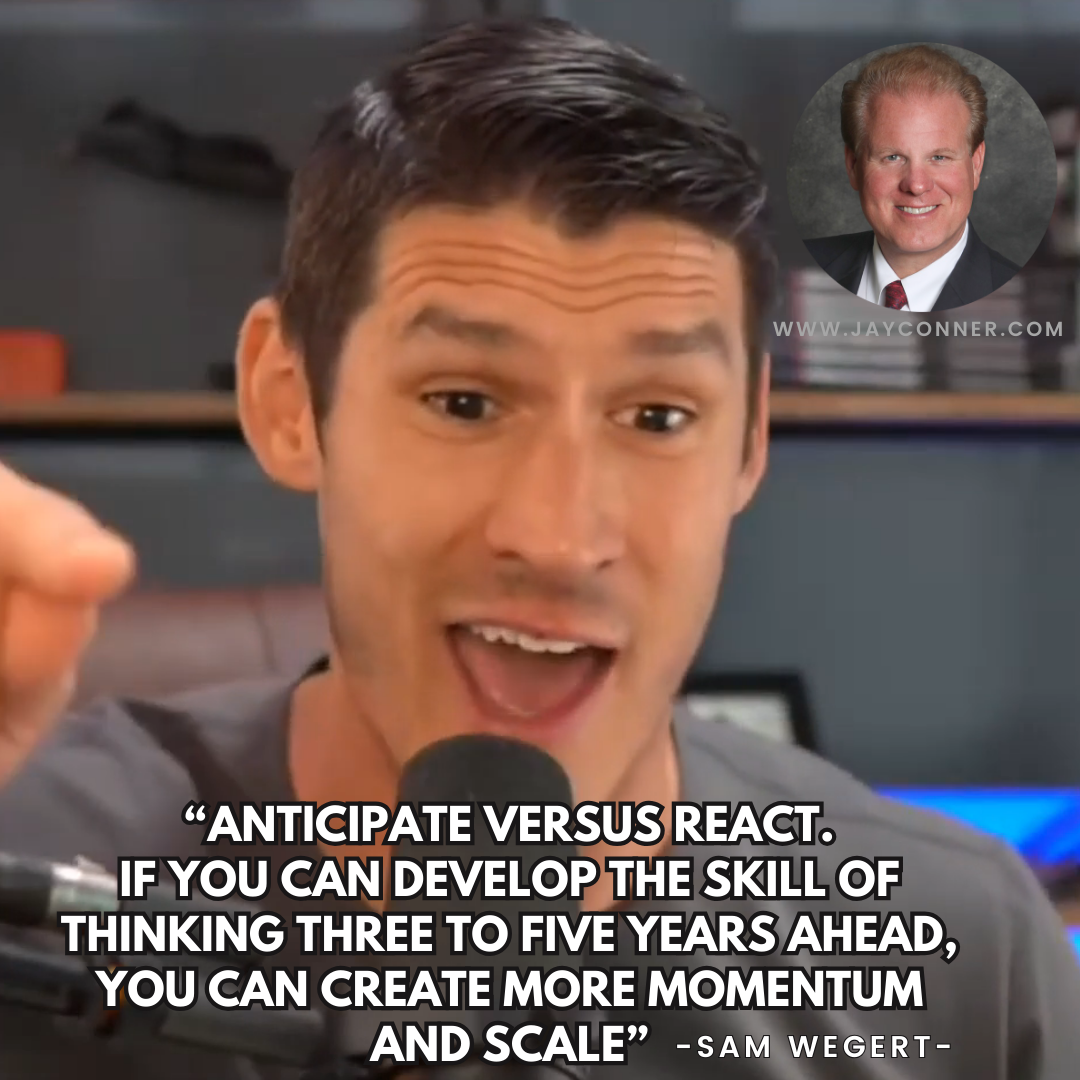
And I think that’s been a key to our success too. So I started to recognize that short-term rentals, still do well, but if you look at all the regulations coming down for short-term rentals, and you look at the average daily rates which have dropped, When you look at, occupancy which has dropped, I started to see, like, okay wait a minute. This is probably not where I wanna be positioned, and I was probably 2 years ahead of that. So we started selling off our portfolio. I had a friend come in the other day, and say, Sam, did you just sell like your 3 biggest properties? I was like, yeah. He’s like, how did you know that? You sold literally at the top of the market. Right before it came down, I was, like, I’ve been thinking about this for a long time, and now I’m positioning it into I’m positioning that money into something that I think will be big in 3 to 5 years. Co-living is not big now.
Sam Wegert [00:35:32]:
It’s a small niche asset class with a bunch of weirdos like me trying to make it popular. Right? But, like, that’s where it’s going, and so if you can anticipate, I think all leaders have to anticipate versus react. And so if you can you can develop that skill to be thinking 3 to 5 years ahead. I’m thinking about the economy. Okay. What’s 3 to 5 years in the economy? What’s 3 to 5 years in in where I’m gonna be as a person? Right? I’m always thinking ahead. Am I gonna wanna be taking more time off? I don’t have kids right now. So okay.

Sam Wegert [00:36:02]:
If you’re 3 to 5 years ahead always, you can create more momentum and scale. I think that’s I think anticipation has been a skill that’s truly helped me develop and scale.
Jay Conner [00:36:13]:
Very, very interesting. The last question before we wrap up, and this is a very important question. Oh, by the way, we got comments coming in from the livestream. We got, what they are saying informative. We got Gotronics saying, hey. What’s up, Jay? The name of that tune piano guy. That’s right. That’s right.
Jay Conner [00:36:31]:
We might play a little name that tunes at Family Mastermind next week. So, Sam, you work with real estate investors and entrepreneurs, and you help people become financially free. You help them get unstuck. You help them you help them stay focused. But from your coaching standpoint on working with entrepreneurs, what would you say is your superpower that you’re able to help your clients achieve by working with you?
Sam Wegert [00:37:03]:
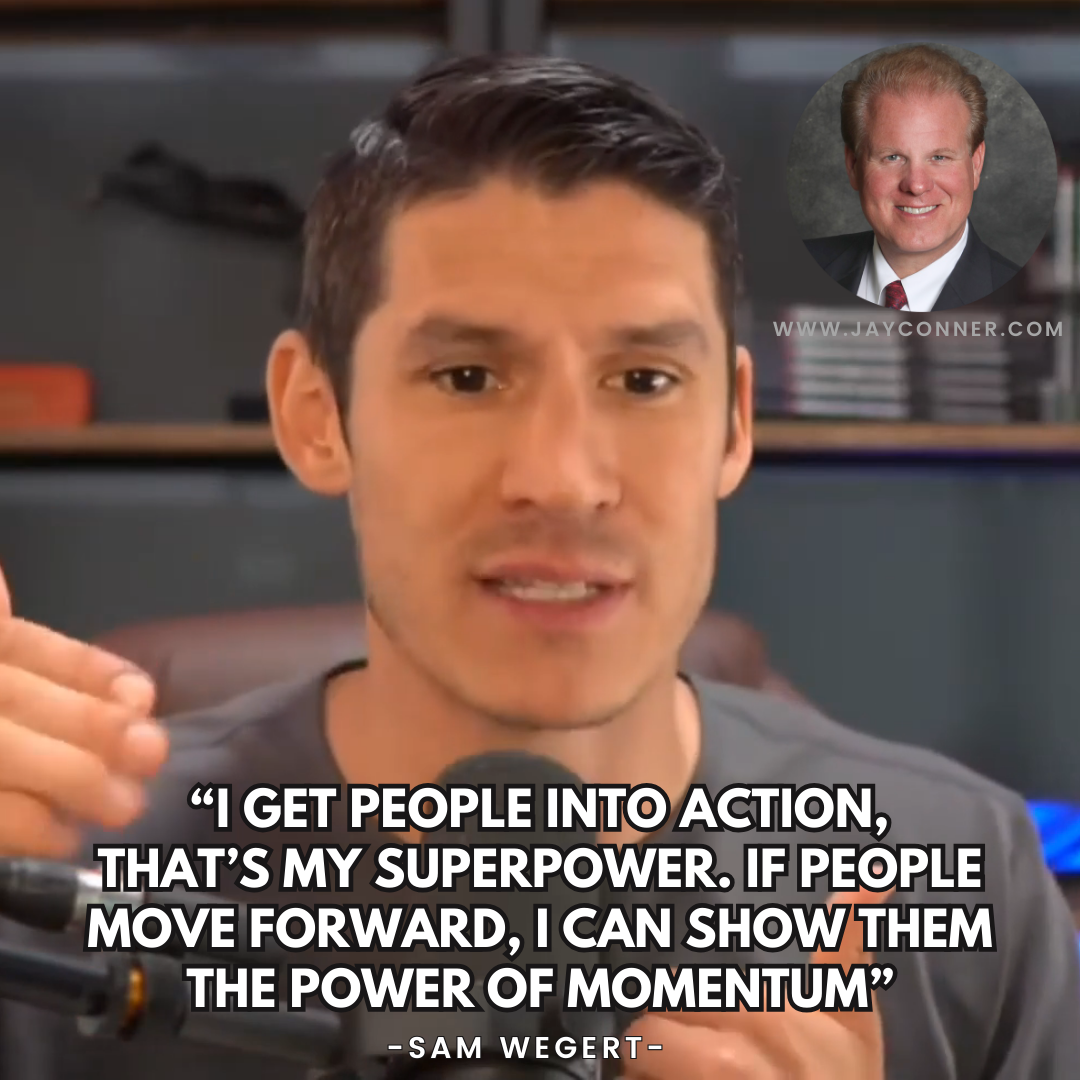
Yeah. Get getting getting people into action. You know, people buy courses that’s my superpower. I think people buy courses all the time. People hire coaches all the time. People say those courses don’t work all the time. People say those coaches don’t help them all the time. But what I’ve what I feel like I’ve done a good job of if if someone’s gonna coach with me, you’re gonna move forward.
Sam Wegert [00:37:24]:
And I’m not saying I, like, force anybody. I’m not, like I but I will playfully threaten to, send ninjas to their house. Right? But I but I understand the value of momentum. If I can get someone to take a little step forward, and then another little step, and another little step, now the ball, so to speak, the proverbial ball is rolling, and I can move that ball forward with that person. So I think so many people focus on perfect action, whereas I just flip those 2. Let’s take action and we’ll perfect it along the way. And, When people do that, they start to realize like, wait, life isn’t quite that scary. I can just take action.
Sam Wegert [00:38:03]:
I can mess up a little bit. It’s okay to do that. And so obviously, strategies are helping them with co-living, which I probably know more than almost anybody in this market right now because I’ve been doing it for a decade and a half, kind of unbeknownst I was doing it for a decade and a half. But I can help with strategies, help people support them, and make connections to guys like you who are the Private Money experts. Now I can do all of that for my clients, but, ultimately, I think being, like, you’re with me, we’re moving forward. And it’s why I got a bunch of flags, and I’ll end with this. You’ve been so generous with your time too, Jay. But, someone told me the other day, they said, hey.
Sam Wegert [00:38:37]:
Your program should have unlimited time. You know, the PACE Morbius program, you enroll in it, and it’s forever. You don’t ever have to renew. And this is just my perspective. I hope I’m not making anybody angry. I know PACE Morbius is a member of the family mastermind. But I was but I also was saying, like, I was, like, cool. That sounds like if there’s no sense of urgency, a lot of times people don’t take action.
Sam Wegert [00:38:57]:
And so for for a program when people enroll with me, I want it to be a sprint with me. Hey, we’re gonna go. We’re gonna learn. We’re gonna take action. We’re gonna get your first property. My whole promise in my program, like, the promise I make is that you will have your first property. It will be full by the end of the program of your first co-living property, And that’s my 0 to hero promise. That’s my 0 to hero guarantee, or they don’t pay another dime to continue in the program until we coach and coach until they are successful.
Sam Wegert [00:39:22]:
And so I say that to say, I want there to be that sense of urgency. Right? I want them to have that, okay? I gotta go. And that’s one of the things I think I’m good at.
Jay Conner [00:39:29]:
At. I love it. Our good friend, Tom Crowell, who is also a member of family mastermind
Sam Wegert [00:39:34]:
I know Tom.
Jay Conner [00:39:35]:
Yep. I love that guy. My lines, I love Tom Crowell. And I’ve heard him say it a 1000 times, massive imperfect action. Yeah. Massive imperfect action.
Sam Wegert [00:39:46]:
Yeah.
Jay Conner [00:39:46]:
So, Pam, I know we have people here who want to connect with you. I mean, you’ve got a magnetic personality Who would not want to hang around you? And to learn about this niche of co-living that hardly anybody else is doing or knows anything about, How do people connect with you and learn more?
Sam Wegert [00:40:07]:
Yeah, man. Thank you for the opportunity to be on the show, Jay. This is so fun going back and forth with you and getting to know you a little bit in Grove Park and the piano. We have some cool connections there. If people wanna follow me or just learn more about co-living, Instagram is probably best. It’s just, at https://www.instagram.com/samwegert/. There you go. They threw it up on the screen.
Sam Wegert [00:40:24]:
Sam, and then the last name is w e g e r t. And then, if people want to learn more about co-living, once a month or once every other month, I do these things called 5-day challenges, www.ScaleYourRealEstate.com, which is just it’s a free event where people can deep dive into co-living and see if they wanna add it to their real estate portfolio, convert their real estate portfolio, and see how they can double, triple or even sometimes quadruple their returns that they’re
Jay Conner [00:40:56]:
Sam, thank you so much for your time, and I can’t wait to see you in person next week at our family mastermind conference.
Sam Wegert [00:41:06]:
Me too, brother. Me too. Be great.
Jay Conner [00:41:08]:
Alright. God bless you, Sam. Thank you so much for joining me. And there you have it, another amazing episode of Raising Private Money with Jay Conner. We appreciate your comments. If you happen to be, listening on whatever your favorite platform is for podcast podcasts, be sure and follow me. If you happen to be watching on YouTube, be sure to subscribe so you don’t miss out. Hit that bell so you get notified of the next amazing Private Money, podcast that’s coming up.
Jay Conner [00:41:37]:
We do these twice a week on the podcast. Every Monday morning, we release it super early, and every Thursday morning, don’t miss out. I’m Jay Conner wishing you all the best. Here’s to taking your personal development and your business to the next level. I’ll see you right here on the next Raising Private Money with Jay Conner.
Narrator [00:42:01]:
Are you feeling inspired by the knowledge you gained in this episode? Then head over to www.JayConner.com/Moneyguide.
That’s www.JayConner.com/Moneyguide, and download your free guide that shares Seven Reasons Why Private Money Will Skyrocket Your Real Estate Investing Business right now. Again, that’s www.JayConner.com/MoneyGuide to get your free guide. We’ll see you next time on raising Private Money with Jay Conner.