
Achieving lifelong wealth is an aspiration shared by many, but very few actually manage to accomplish it in their lifetime. In the insightful discussion between Jay Conner and legendary wealth coach Robert Allen, listeners are treated to a masterclass on what it takes not just to build wealth but to ensure it lasts for generations.
So, what are the secrets to generating a lifetime of unlimited wealth? Let’s break down the essential lessons shared by Robert Allen in this illuminating conversation.
- Mindset is Everything
Robert Allen begins by emphasizing the power of mindset. According to Allen, building wealth starts from within. Many approach money with limiting beliefs, such as “money is hard to earn” or “only the lucky become wealthy.” These beliefs can sabotage efforts before they even begin.
Instead, Allen suggests adopting a mindset of abundance. Reframe your thinking to believe that opportunities are everywhere, and that you have the resources and ability to seize them. Allen claims: “If you don’t believe you can have unlimited wealth, then you’re right. But if you believe you can, then you’re also right.”
- The Power of Multiple Income Streams
One of Allen’s core philosophies is the importance of multiple income streams. Relying solely on one source—like a job—can put your financial future at risk. He advocates for creating three or more income streams, which can include rental properties, side businesses, investments, royalties, and more.
Jay Conner and Robert Allen discuss how real estate, in particular, can provide passive income that lasts for a lifetime. But Allen’s advice goes beyond real estate. He encourages people to explore digital businesses, dividend-paying stocks, or even writing a book for ongoing royalty payments.
- The Principle of Leverage
Wealth isn’t just about working harder; it’s about working smarter. Allen introduces the idea of leverage—using other people’s time, money, and skills to scale your wealth much faster. For example, in real estate investing, this might mean partnering with investors, leveraging mortgages, or using professional property managers to reduce your workload.
As Allen puts it: “You don’t need to do everything yourself. Find partners, use systems, or hire experts who can help you grow faster and more efficiently.”
- Fail Forward and Embrace Learning
Allen and Conner both agree: failure is inevitable on the road to wealth. What sets successful individuals apart is their ability to learn from setbacks and keep moving forward. Allen recounts his own challenges, including investments that didn’t go as planned. He calls these “tuition fees” for the school of wealth and growth.
Embrace these moments as opportunities to gain wisdom and resilience. Over time, these lessons compound, building your confidence and expertise.
- Action Beats Perfection
Finally, Robert Allen encourages listeners to take consistent action. Many people get stuck in endless research or planning phases, paralyzed by indecision.
According to Allen, those who act—imperfectly and repeatedly—are often the ones who build lasting wealth. Start with small steps, learn as you go, and adjust your strategies based on what you discover.
In Conclusion
The path to unlimited wealth isn’t reserved for the privileged few. As Robert Allen outlines in his engaging conversation with Jay Conner, it’s accessible to anyone willing to adopt the right mindset, build multiple income streams, leverage resources, welcome learning opportunities, and take consistent action.
Start today by reframing your beliefs about money, identifying new streams of income, and—most importantly—taking that first, imperfect step. Because, as Allen reminds us, your wealth journey begins the moment you decide it will.
10 Discussion Questions from this Episode:
- Robert Allen talks about “internal wealth” as the foundation for creating financial freedom. What does internal wealth mean to you, and how can it contribute to your success in business or investing?
- Allen shares his well-known $100 real estate challenge and emphasizes starting with little or no money. How does his story challenge the traditional view that you need money or credit to start building wealth?
- The episode highlights the importance of “multiple streams of income.” Why do you think this idea resonated with so many people, and do you believe diversification is essential for long-term financial security?
- Both Jay Conner and Robert Allen stress the significance of having the right mindset. What are some practical ways to cultivate a mindset geared toward wealth-building?
- Robert Allen points out that many people are taught to chase just one opportunity (“one rabbit”), but he encourages pursuing multiple income sources. Do you agree or disagree with this approach, and why?
- The concept of creating passive and preferably tax-free income is central to Allen’s philosophy. What are some of the strategies mentioned in the episode that support this goal?
- Both speakers discuss the power of credibility, especially when it comes to raising private money or securing deals. In what ways can writing a book or sharing your expertise help establish credibility in your field?
- Allen reflects on why some people succeed with his systems while others don’t, highlighting the difference between following your “true voice” versus your “critical voice.” How do you recognize and respond to these voices in your own decision-making?
- The episode critiques the traditional 401(k) and stock market approach to retirement. What are the main drawbacks mentioned, and do you think real estate offers a better path to financial independence?
- Robert Allen ends by discussing the bigger picture of life’s purpose, lessons, and making an impact. How do you integrate wealth-building and personal growth in your own definition of success?
Fun facts that were revealed in the episode:
- Robert Allen’s “Nothing Down” Real Estate Techniques: Robert Allen famously taught that you don’t need your own money to get started in real estate. In the recording, he shares stories and tactics on how he and his students purchased properties with little to no money down, proving that creative financing can lead to big opportunities.
- The Power of Multiple Income Streams: Throughout the conversation, Robert Allen emphasizes the importance of having several sources of income. He believes that building wealth isn’t just about one big win—it’s about strategically creating and maintaining various streams, such as real estate, investments, and business ventures.
- Mindset is the True Foundation: Allen discusses how a wealth-building mindset is just as crucial as any strategy. He shares exercises and anecdotes from his journey, highlighting that people who train their minds for abundance—and believe they can succeed—are far more likely to reach their financial goals.
Timestamps:
00:01 Robert Allen: Wealth-Building Guru
03:36 Building Wealth Without Cash
08:42 Emergency Funds & Passive Income Strategies
13:13 Real Estate Success and Challenges
16:19 Building Income Streams Through Books
17:10 Book Boosts Real Estate Credibility
21:56 Unexpected Financial Dilemma
24:07 Secrets to Successful Book Writing
28:40 Choosing True Voice Over Doubt
29:49 Systematic Success Over Personal Stories
31:06 Connect with Robert Allen:
34:57 Universe’s Origin: Divine or Spontaneous?
37:19 Farewell and Gratitude
Connect With Jay Conner:
Private Money Academy Conference:
Free Report:
https://www.jayconner.com/MoneyReport
Join the Private Money Academy:
https://www.JayConner.com/trial/
Have you read Jay’s new book, Where to Get the Money Now?
It is available FREE (all you pay is the shipping and handling) at https://www.JayConner.com/Book
What is Private Money? Real Estate Investing with Jay Conner
http://www.JayConner.com/MoneyPodcast
Jay Conner is a proven real estate investment leader. Without using his own money or credit, Jay maximizes creative methods to buy and sell properties with profits averaging $67,000 per deal.
#RealEstate #RealEstateInvesting #RealEstateInvestingForBeginners #Foreclosures #FlippingHouses #PrivateMoney #RaisingPrivateMoney #JayConner
YouTube Channel
https://www.youtube.com/c/RealEstateInvestingWithJayConner
Apple Podcast:
Facebook:
https://www.facebook.com/jay.conner.marketing
Twitter:
https://twitter.com/JayConner01
Pinterest:
https://www.pinterest.com/JConner_PrivateMoneyAuthority
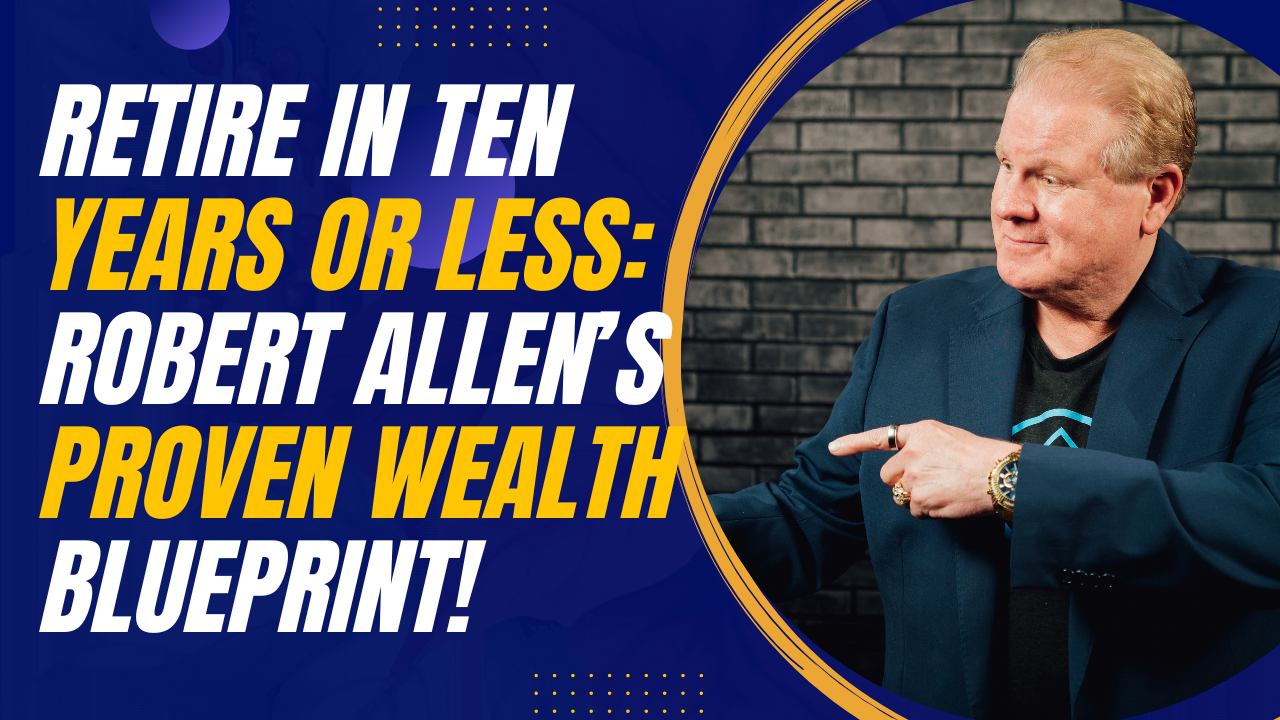
Retire in 10 Years or Less: Robert Allen’s Proven Wealth Blueprint
Jay Conner [00:00:02]:
What if you could build multiple streams of income from scratch? Or what if you could retire in 10 years or less and do it with a machine that spits out passive tax-free income for life? Well, today’s guest here on my show has been teaching people exactly how to do that for 50 years. His name is Robert Allen. And if you’ve been anywhere near the world of wealth, building real estate or financial freedom, you already know the impact that Robert Allen has had. He’s the guy who wrote nothing down, creating wealth, multiple streams of income, and the One Minute Millionaire books that have sold over 5 million copies worldwide and created literally thousands of millionaires. Now his work has been featured everywhere from Larry King and Oprah Winfrey to the Wall Street Journal. He’s spoken to audiences as big as 20,000 people and shared stages with names like Tony Robbins and Richard Branson. Now at the young age of 77, he’s still cranking out bestsellers, including Retire in 10 years or less and How You Can Become a Best-Selling Author in only 30 minutes a day. Robert Allen has marketed over a billion dollars’ worth of how-to information, and his students have generated billions more in wealth while giving back tens of millions to causes they believe in.
Jay Conner [00:01:29]:
This is going to be a master class on wealth, mindset, and legacy. Well, I want to welcome you to the Raising Private Money show, the only podcast for real estate investors who want to fund their deals without relying on banks, credit, or using their own cash. I’m Jay Connor, the private money authority, nd I’ll show you how to get private lenders begging to fund your next deal. Because every good deal starts with the money. In just a moment, you’re going to meet my friend and my mentor, Bob Allen, right after this.
Narrator [00:02:05]:
If you’re a real estate investor and are wondering how to raise and leverage private money to make more profit on every deal, then you’re in the right place to raise private money. We’ll speak with new and seasoned investors to dissect their deals and extract the best tips and strategies to help you get the money. Because the money comes first. Now, here’s your host, Jay Connor.
Jay Conner [00:02:32]:
Bob, welcome to the show.
Robert Allen [00:02:35]:
Hello Jay. Good to talk to you again. So excited to be here today.
Jay Conner [00:02:41]:
Yes, always great to talk with you, Bob. Before we get into the big picture, I want you to take us back. What was the moment that you realized financial freedom was painfully possible, and what was your first step towards creating financial freedom?
Robert Allen [00:03:00]:
So it starts with a book for me, and before I graduated from college, I found two books in my brother’s library. One was Think and Grow Rich. The other one was how I turned $1,000 into a million dollars in real estate in my spare time. This, of course, was almost 50 years ago. And I thought, well, I’ve got about $1,000, so I can think I’d do that. But I graduated from college and couldn’t find a job. And so I said, well, what the heck, I’m just going to take the thousand dollars my dad gave me for graduation president. And I bought my first property in about a month, and then I flipped it a few weeks later and turned the thousand into six thousand.
Robert Allen [00:03:36]:
And then I bought a seven-unit building, a 12-unit building, and a 40-unit building, another 12-unit building, and lots of single-family homes without a job, without any credit, without any cash flow, without any collateral. And that got me started. I bought, I made my first million in 3ish, 3, 4 years. And then I did this challenge that you some, some of you might have heard of. This crazy guy said, Send me to any city, take away my wallet, give me a hundred-dollar bill, and in 72 hours I’ll buy an excellent piece of real estate using none of my own money. That was me. They flew me to San Francisco, the LA Times challenged me, and flew me to San Francisco, took away my wallet, gave me $100 bill, and I bought seven properties in three days and gave the reporter $20 back in change. And so kind of put me on the map because you know, now Jay, you talk about how important it is to have money, and it is absolutely important.
Robert Allen [00:04:32]:
You gotta have, you gotta have mortgage money. A lot of times, you need to fix up money, you need a down payment, all of that. You’re the funder of all time. But what I was trying to prove for those people who maybe can’t even qualify to get the money or find the money is that it all starts with you. Inside your heart is where the wealth is. And you turn your thoughts, your dreams, your plans, your systems, your ideas, you turn that into external wealth. And that’s why I did that challenge. The banker wants cash, cash flow, credit, and collateral.
Robert Allen [00:05:06]:
I said that’s external wealth. Internal wealth always turns into external wealth if you have the other Cs, the Cs of creativity, commitment, credibility, and chutzpah, that’s a C word. And all these things happen inside all of us. So anybody’s watching now and says, well, I can’t do it because I don’t have any money, I don’t have any credit. Don’t have any cash flow. That’s a lie. You can start with absolutely nothing, and eventually you grow big enough so you have to go to J to be able to grow faster, to get money flowing in so you can do bigger and faster deals. Right, but some people don’t have any money to start with.
Robert Allen [00:05:49]:
So that’s what these books of mine have been about.
Jay Conner [00:05:52]:
That is powerful, Bob. And you know what’s wild is how many people your work has impacted ever since, all the way back to that very first one. I mean, your books have now sold over 5 million copies. You have been a part of creating thousands of millionaires. So why do you think your ideas, I mean, you know, there’s a million books out there being published all the time. And so why do you think your ideas hit such a nerve when they first came out, and why do they still work today?
Robert Allen [00:06:28]:
Well, the first book came out in 1980 as the baby boomers were just coming back into the market. So the interest rates are high, nobody can find, and nobody can buy any property. And so the perfect timing for the book came out. Perfect timing. But it’s been selling since 1980. Believe it or not. I get royalty checks twice a year from this crazy book that I wrote in 1980. We’ve refreshed it many years, many times.
Robert Allen [00:06:53]:
So it was the perfect timing for that message to come out. Then the next book was called Creating Wealth, also a number one New York Times bestseller. And that book had a really massive impact, frankly. I talk about, in Creating Wealth, you need to retire in 10 years or less. And how do you do it? Well, you just buy two single-family homes and hold onto them, rent them out. It’s hard to do, hard to find them, hard to finance them, but you just do it. And then 10 years later, just imagine what if you bought 20 houses from 1980 to 1990, from 1990 to 2000, from 2000 to 2010, in the year 2010. What if you bought any 10-year, pick any 10 years you want, a nd you buy two properties a year, you’d end up with lots of equity in it.
Robert Allen [00:07:43]:
And the book I’m releasing here this month is called Retire in 10 Years or Less, which is essentially an update of Creating Wealth, which came out in the year, you know, 1982. This has been a refreshed version and an updated version, which is a book you ought to get for retirement, retire in 10 years or less, unlock your passive income machine, and secure tax-free income for Life. So real estate is absolutely the vehicle. And 75% of the money in the United States, guess where it’s at, is in the stock market. It’s in 401 (k) s, it’s in mutual funds. It’s like, let’s put money away in a 401 (k) for 40 years and let it grow and compound. And 40 years from now, then we can retire. This is a really bad, bad idea because things happen in the markets that go up and down.
Robert Allen [00:08:42]:
You have emergencies in your life where you have to pull money out of your 401 (k) just to solve maybe your wife’s cancer or your son’s, you know, accident he had. You need to get it done in 10 years or less. And then you need a system that generates passive tax-free income. Now, most rich people, you know, they have income totally different than ordinary people. Ordinary people have active income, and that’s job income. They go to the job, they come back, they put the money in the 401k, they hang onto their job, they do it for 40 years, hopefully they can retire. Well, they pile up a whole bunch of money, and then when they retire, guess what happens? All that money, that chunk of money they’re pulling out of the market, or if they’re leaving the market, they’re pulling out money all the way until they die. And they just hope the money doesn’t run out until they die.
Robert Allen [00:09:36]:
And that’s the terror for most people who retire. They are terrified they’re going to run out of money. Well, they could have retired 30 years earlier. And with cash flow that flows in from their real estate properties, cash flow that’s managed by people who manage it properly, professionally, and have cash flow streams of income that are tax-free. Now, how does it become tax-free? Well, rich people, you know how they, you know, how is it that Jeff Bezos pays and Warren Buffett and all these rich people, these billionaires, why do they pay 6% in taxes when their secretary pays, you know, 14, 15, 20%? How is it, what is it, what is going on? You know how Bezos does it: he just borrows against his stock. And guess what? When you borrow money, the money flows into your life tax-free. You don’t even have to report it. So he lives on tax-free money.
Robert Allen [00:10:34]:
And so he’s got so much stock he could just keep borrowing against it. And he secures it by life insurance, strangely enough. So if he dies, you know what happens? All the loans are paid off. It’s crazy. And you know, most people don’t know this stuff because they are swimming in this idea about how you retire with a 401k, and you look at it for a long period of time, you know, your stockbroker, your advisor makes money whether the market goes up or down, but you don’t. When the market goes down, you lose money. And if they buy anything at that time, they still make commissions, and you don’t. And you know that’s the vast majority of the way it works for most people.
Robert Allen [00:11:18]:
So you have to think radically differently when it comes to your retirement. And I wish one of my students, Ryan Lee, who’s the co-author of this, had followed the exact plan in Creating Wealth. Twenty years ago, he retired, but he did it differently. And this book has some strategies, but he wanted something radically different. He says, Robert, I followed your plan. I started buying these real estate deals, and I started being a manager. I was a mid-level manager in a corporation. I was making six figures a year.
Robert Allen [00:11:57]:
I was working my tail off. And then I decided this thing was Robert. I’m going to do Robert Allen’s plan. And he started buying real estate and ended up with most. What most people do is they start buying property, and they try to manage it, but they don’t have the time to manage it. And then somebody, a toilet breaks, or somebody, you know, walks away without paying the rent, and therefore they have a second job. And that’s the last thing you want. You want to buy property where you don’t have to find it, you don’t have to fix it up, you don’t have to do anything with it. You buy a property that’s fully repaired and ready to go, and somebody buys it and rents it for you.
Robert Allen [00:12:39]:
That’s called a turnkey property person, a turnkey provider. And back when I wrote Creating Wealth, there were no turnkey providers. You had to do it all yourself. You had to find it, you had to fix it up, you had to manage it. And most people either one of those proper, one of those things, what they did wrong, they couldn’t find it. When they fix it up, they blow other expenses right out of the water. They had no idea what they were doing, they managed it for a tenant, and they got a soft heart. The tenant says, But I can’t make my motorcycle payment this month, please can I? And therefore they end up losing.
Robert Allen [00:13:13]:
And many people who’ve done real estate my way, frankly, I’ve lost a lot of money, and a lot of people have made millions. There’s no doubt that I’ve created Thousands of millionaires. But there are a lot of people who tried to do it and just couldn’t handle it because they weren’t doing it right. I used to say in my book, Creating Wealth, that I should buy a property that’s within a 550-mile radius of your own home. Well, what if you live in Los Angeles, what if you live in San Francisco, what if you live in New York, what if you live in Boston? What if you live in most properties, you can’t buy them enough for enough price to be able to rent them out, to be able to cover, and have a positive cash flow. It’s just almost impossible. So you need to buy them in the places in the country where the prices are low. And how can you do that? If you’re trying to do what I told you to do, which is invest 50 miles from your own home, you can’t do it.
Robert Allen [00:14:05]:
So you need to buy in a place you can’t visit very regularly. You have to buy a property where the price is right, the cash flow is great, and the opportunity for growth is fantastic. Anyway, I’m sharing the whole book here with you, but what I’m trying to say is there are lots of ways to create wealth, multiple streams of income, and my job is to help you. Now, Jay, you help people raise money for deals like that, don’t you?
Jay Conner [00:14:29]:
I do, I do, yep. Without ever asking for money, without ever applying for a mortgage. You know, one thing that you talked about at the beginning of the show here was having that internal wealth. Yeah, I love that phrase. I love that phrase. Because what I talk about all the time is one of the biggest mistakes I see people who are just starting, either in real estate in general or to raise private money, is that they have the wrong mindset. And so I tell people, they ask me all the time and say, Jay, how do I start? I say, I’ll tell you how you start. You start by owning the real estate between your ears.
Robert Allen [00:15:06]:
There you go.
Jay Conner [00:15:07]:
It’s where you start. And having the right outlet. Well, one of the biggest concepts, and I really believe you get credit for this. One of the biggest concepts that you introduced to the world was this idea of multiple streams of income. I mean, you’re the guy who made multiple streams of income right there.
Robert Allen [00:15:30]:
Yeah, there you go.
Jay Conner [00:15:31]:
A household phrase.
Robert Allen [00:15:33]:
I am, I am that guy.
Jay Conner [00:15:35]:
So what’s the biggest or one of the biggest misconceptions people still have about building multiple streams of income?
Robert Allen [00:15:45]:
Got to focus, that you gotta, you know, focus on one thing and, and make it work? That if you have too many things going on, too many balls in the air, that you. The man who chases two rabbits loses both. That’s the old phrase. And so they don’t want to chase two rabbits. I don’t want you to chase two rabbits. I want you to chase five or six, ten rabbits. I want you to chase lots of them. Because you need multiple streams of income, and that income needs to be passive.
Robert Allen [00:16:19]:
And so what multiple streams of income this book talks about is 10 ways of making multiple streams of income. And one of my favorite ways, frankly, obviously, real estate is right up there big time, but one of my favorite ways is information marketing, which is what Jay. Which is what you’re doing. Jay, a lot of very famous people have a book, and this is a book that came out on my birthday this year. Number one bestseller. How you can become a best-selling author in only 30 minutes a day. Now, what I just shared with you was how you can take whatever’s in your head and your heart, and you can turn it into a book. Why do that? Well, because if you have a business, you want to double your business, you need a book.
Robert Allen [00:17:10]:
If you’re a real estate investor, you need a book. You say, well, Robert, how do I write a book? Well, that book I just showed you is how you do it. But why would you write a book? Because it gives you credibility. And when you hand your book to an investor who you want to borrow money from, Jay’s going to help you find people like that. But when you have a book, you can say, Well, let me give you a copy of my book. It shares the system of how I make money in real estate. And therefore you talk about your system, how you learned it, how you improved it, how you made it work, and then you give it to your investor, or even you could give it to a seller, a seller who you want to buy a property from, they could realize that you are trying to work a win, win, proper opportunity with that seller. And the buyer is the person who partners with you.
Robert Allen [00:18:03]:
You need credibility, and a book gives you credibility faster than anything I have ever seen. I learned that myself when I wrote nothing down in 1980. People would come up to me and I’d say, Here’s my book. And immediately, they would look at me differently. This is what you guys really ought to understand. When you give somebody a copy of your book, you autograph it to them. They never throw it away. But if you give them your business card.
Robert Allen [00:18:31]:
That business card will go in the garbage can within hours because they won’t remember how they met you at the conference. And they can’t. Well, what was this guy? I forgot. Chuck it. Chuck it. I chucked one today. I got a, I got a card.
Robert Allen [00:18:47]:
It’s gone because I can’t remember how that person was. So the bottom line is, you need multiple streams of income. And obviously, the three main chapters in this book are about real estate. It has to form a major portion of your wealth, period, end of story. If your wealth is in the stock market, hoping that it’ll eventually keep going up for long periods of time, it probably will. But will that be inflation-protected like real estate is? No. When you sell any of it, do you have any tax possibilities for saving taxes from all the stocks you sell? No. But with real estate, you can trade it into another bigger property, tax-free.
Robert Allen [00:19:34]:
There are all kinds of ways that the government has made real estate the wealth creation tool of all time. So, yeah, you need that. And then obviously the other opportunity that I’m sharing with you is if you’re in business, any kind of business, you want to know what the best business is? It’s the information business. For example, one of my students, maybe 20 years ago, was a personal trainer, and he’s going around training with people in their houses, working out 100 an hour, 200 an hour. And I said, You’re selling the wrong thing. Don’t, don’t sell your time. That’s active income. You need passive income.
Robert Allen [00:20:18]:
He said, How do I do that? He said, What’s the biggest problem that your clients have? And they say, well, they’re always canceling because they have back pain. And I said, Then write a book about that. And so he was making $20,000 a year as a personal trainer. And a couple of years later, he’s making $200,000 a month because he has unlimited back pain in a world where he has limited time. And so you have to be in the kind of business where it’s digitally delivered. The cost of delivering information is almost zero, and the profit margins are massive. Right, Right, Jay?
Jay Conner [00:20:55]:
Absolutely. Absolutely. And one thing you just shared about having your own book is so true. I didn’t realize the power of having your own book until I wrote one of my books. Yeah. Called where to get the Money Now. And I remember, like it was yesterday, I met this guy at the local pharmacy, at seven o’clock at night. They had a little clinic on how to lose weight.
Jay Conner [00:21:25]:
And I wanted to lose some weight. And this guy I met, he needed to lose a lot more weight than I did. And so they were selling these female hormone drops at this little thing. And you, you put these female hormone drops underneath your tongue, and in 30 days you lose 30 pounds, and you eat all the Cheetos you want. I said, Sign me up. So I got my female hormone drops, and this guy was named Al. I never met Al before in my life. But I went out to, I went out, this was back when you had CDs.
Jay Conner [00:21:56]:
We don’t have CDs anymore. And I gave him a little CD called Stress Free Investing. I said, I bet this book will. I mean, this CD will really be interesting to you. I said, Give me a call if you like it. He called me up and we got together in my office that following Monday, and we sat down, a nd I had no idea what in the world this guy did for a living. I said,, What do you do? Come to find out he had a problem. He had over a million dollars in the bank, and he didn’t know what to do with it.
Jay Conner [00:22:23]:
He was in multi-level marketing.
Robert Allen [00:22:25]:
Yeah, yeah.
Jay Conner [00:22:26]:
Didn’t know what to do with his money. Of course, that’s my ethical responsibility to relieve him of that problem. And so we sat down and we visited about my private lending opportunity. And right before we sat down, I gave him my book. Just like you said, I gave him my book. As I said, let me give you a copy of my book, let me autograph it for you. And by the end of that conversation, he became my next. And I just met this guy a week earlier, and he became my next $650,000 private lender.
Jay Conner [00:22:57]:
He didn’t give me the whole million, but he gave me $650,000. And about a week after that, after we did our first deal, I said, Al, I’ve just got to know, why did you decide to become my private lender? He said, Well, first of all, what you offer in interest rate and how you secure the note, all that got my interest. It was important. He said, But do you know what sealed the deal? I said, No. He said, Your book sealed the deal, and gave me the confidence in your credibility.
Robert Allen [00:23:30]:
Exactly.
Jay Conner [00:23:31]:
That you never strum out.
Robert Allen [00:23:33]:
He might not have known who you are, but as soon as you gave him that book, his credibility went way up. Because in our society, an author is respected immediately when they’re an author. If you can say you’re an author, if you can say you’re a best-selling author, they look at you immediately. Immediately gives credibility. And they don’t check your credibility. They don’t check the letters after your name. They don’t. How long did you go to college? How long have you been in business? You give them your book. It’s easy, instant credibility.
Robert Allen [00:24:07]:
And so, you know, one of my little side things is I teach people how to write books. And it’s just so gratifying because everybody wants to write a book, and here’s the mistake they make. As a matter of fact, in the first chapter of this book, I talk about 12 stupid mistakes that authors make. And then I have this little summit I call the author summits.com, where I spend a couple of days teaching them. But the first mistake they make is that they tell their story as if people really cared. Nobody, nobody cares about you. Nobody cares unless you tell your story and the system you pulled out of your own life, and you created a system to make their story better, then they’ll read your story. But if you, if you’re the one, I open up any book, I can tell you whether it’ll be a bestseller, at least a seller, or whether it will never sell.
Robert Allen [00:24:59]:
And I’ll tell you the one secret word, the worst word I read. I, me, my, mine, and the best book, the best word I read to you, your, or ours. And if there are lots of you’s in that first chapter, it means I’m talking to you. I’m changing your life. I want you to be better. I want you to have more money, I want your life. And I have a story. But I’m here to teach you what I learned from my story.
Robert Allen [00:25:23]:
So your story can be better. If you have lots of use, then they know you’re talking to them because you know, what’s the famous, famous FM station? Wiifm?
Jay Conner [00:25:34]:
Yes.
Robert Allen [00:25:34]:
What’s in it for me? And if you say what’s in it for, if you say what’s in it for me? Like me, me, me, they don’t, they don’t care. Yeah, family. If you write a book like that, even your family won’t read it because you know, because you know they, they know you, right? They know most of that stuff is not true. So, Bob, you were, you were.
Jay Conner [00:25:57]:
Speaking on stage at one of the family mastermind conferences, you said something that I’ll never forget. And I’ve used it ever since. Clara, I had already published a couple of books that I had written. But one thing you said on stage is, you said, look, when you’ve got your Own book. I’m going to teach you how to change, how to introduce yourself to people.
Robert Allen [00:26:25]:
Yeah.
Jay Conner [00:26:26]:
And you said from that stage, you said, when somebody asks you what do you do and you’ve got your own book, you simply say, I’m an author and shut up. Yeah. And now they want to know, well, what do you write about? So now they’re asking you to talk about your stuff.
Robert Allen [00:26:46]:
Yeah, exactly.
Jay Conner [00:26:47]:
It’s beautiful. Well, you know, this ties in perfectly, Bob. I mean, you’ve taught thousands and thousands of people, and what you’ve done, really, you have helped ordinary people achieve extraordinary success. You’ve been, you’ve been teaching everyday people how to change their financial lives for over 50 years. So here’s the question. You’ve got a lot of experience in seeing people who make it and people who don’t make it. What do you see as one or two of the biggest differences between people who succeed with your system and those who don’t?
Robert Allen [00:27:25]:
Yeah, they’re sitting in the same seminar right next to each other, you know, and one of them takes what I tell them to do. They go out and do it. They make. Make a fortune. That person sitting right next to, in the same set, here’s the same things, same system, same ideas, and they don’t do anything. Well, obviously, most of the time, the person who does it is listening to their true voice. That means that voice is whispering to them and saying, Yeah, you can do this, you can do this. And when I wrote my books, when I write them, when you finish one of my books, I want you to go, I can do this.
Robert Allen [00:28:00]:
Because I try to make it simple so that a person believes it’s possible. Because if you believe it’s possible, you just go out and do it. The people who don’t do it listen to their critical voice. And the critical voice is that little voice up in your head, so, always nagging, always causing you to doubt, always causing you to fear in that little critical voice. It’s not your voice. I don’t know where it is. I don’t know what it is, frankly. I just know that everybody, as humans, has this little nagging voice.
Robert Allen [00:28:29]:
And they believe it’s them. They believe it’s themselves talking to themselves. Why would you, why would you talk to yourself like that? You know, you’re an idiot. You’re a fool. You’re. You don’t, you’re not good enough. You’re not smart enough. You, you don’t have enough.
Robert Allen [00:28:40]:
You don’t have enough money, you don’t have Friends, you know, you don’t have. And this critical voice is a liar. It’s not your friend. And if you listen to it, whatever you listen to, if it tells you to do something and you do it, you end up in a bad place. And, and so, oh, you know, you’re asking a real serious question there, Jay. The truth of the matter is everybody’s got the critical voice, but the ones who follow their true voice, even though the critical voice is trying to talk them out of it, they follow their true voice. Their true voice is saying, Yes, you can do this. And if you follow that true voice and just continue persisting, then eventually you’re going to get where you want to go.
Robert Allen [00:29:20]:
It’s not an easy road. There are all kinds of challenges. I’ve had lots of challenges in my life. You just continue to follow that true voice and follow systems. You know, most people start, and they don’t have a system. Yeah, I want to write a book, and they don’t have a system. And all they do is just get a copy of this crazy book or come to my summit, authorsummits.com, and let me teach you for free on how to do that. But most people don’t do that.
Robert Allen [00:29:49]:
They just say, Oh, I’m going to write a book. And they start sitting out and write a book, and they’re starting to write their story. It’s the classic stupid mistake. And they say, but it’s my story, it’s my life. And people are going to want to know what I learned about my life. And that truth is, nobody cares about your story unless your story makes their story better. And though, so you need a system and so multiple streams of income, 10 different systems, you know, it’s just, you need a system, you’ve got to follow a system. And you have to be persistent to follow your true heart until you get it.
Jay Conner [00:30:23]:
I love it. Bob, Bob, you’ve got so many different ways that you serve and teach people through your different books. But, from my experience, my personal experience with you, having the book has had, having my own book.
Robert Allen [00:30:40]:
Yeah.
Jay Conner [00:30:41]:
Has had such a major impact. So I believe people listening to this show now know how important it is for them to have their own book, and you can certainly show them how to do it. How could they find out about? Of course, you’ve got your book, right?. How to write a book, but how could they find out about personally reaching out to you and perhaps even working with you on writing their own book?
Robert Allen [00:31:04]:
Oh, well, thank you. Well, author summits.com is about once a month. I’m gonna spend two days, usually three hours for two days in a row. Three hours in one day, three hours, another three, four. Where I literally teach you the system, exactly how you do it, exactly how you find an idea, how you find the people that would love to buy it, how you. There’s. I have special ways of doing things. You don’t want to know why I’m a number one New York Times bestseller; it’s because I’ve. I’ve learned from my own mistakes.
Robert Allen [00:31:41]:
Some of my books were bestsellers, and some of my books were worst sellers. They were terrible. They were terrible. So I’ve learned the bad. The 12 stupid mistakes I talk about in the first chapter. Did I make them all right? And so, the Authorsummus.com is the best place to reach me because I get to talk to you directly. I get to teach you just like this. Obviously, you can get a copy of the number one bestseller on Amazon, and inside there’s going to be a QR code where I’ll send you all kinds of bonuses to teach you what to do.
Robert Allen [00:32:17]:
But I don’t want you to be on your own. You know, the problem is there’s nobody to ask questions to. You know, you, you, you need to. So, you know, that’s why the QR code’s there. Just let me teach you all you need to know. I like to give it away. I give this stuff away because 95% of the people I teach, I make no extra money. Most of the time, I don’t even make a royalty on my books.
Robert Allen [00:32:42]:
I just like to teach people. I want the word to go out around the world. And a few, you know, 4 or 5% of the people say, Robert, I want to work with you directly. You know, and there are ways of doing that, obviously, and there’s a little price attached to it. But I just love to teach. I love, I love your audience here, Jay. They’ve been following you for so many years. I remember you and I met for the first time at that event with Ron Legrand.
Jay Conner [00:33:08]:
I do remember over 10 years ago.
Robert Allen [00:33:11]:
Exactly. Ron was. Went to one of my seminars in 1982, and borrowed the $500 to go to it. Now he’s bought thousands of properties, and he’s helped thousands and thousands of people. So, I take a little bit of credit for that. But I’m just honored to be here to talk to your audience. I wish you all well and good. Good luck.
Robert Allen [00:33:32]:
God bless. You have a great future ahead of you. If you won’t listen to your critical voice. Your critical voice doesn’t want the next five years to be good at all. And the critical voice will cause you to see all the bad stuff in the world. You’ll say to yourself, How can there be a God when all this horrible stuff is going on all the time? And yet your true voices tend to tell you, look around, look around, what you see. Look at all the stuff you get from just being alive on this unbelievable, beautiful planet. This beautiful blue jewel dangling in the absolute middle of space, where there’s life here and there’s life, a trillion different species of life on this planet.
Robert Allen [00:34:14]:
And you look in the stars and you see there are a trillion trillion stars. Those stars are not little pinpoints of life. Those stars are suns, bigger than the sun that came up on your life this morning. And there are a trillion, trillion of them. Do you know how much a trillion is? Well, if you were to count to a million, it would take you 11 days. If you’re going to count to a billion, it would take you 30 to 32 years. If you want to count to a trillion at a second at a time without stopping, it would take you 32,000 years. And so a number, a trillion, is a number that only the government understands; you cannot comprehend it.
Robert Allen [00:34:57]:
The vastness of this universe, and I tell you, my opinion is that it did not start all by itself, spontaneously, out of nothing. That little beautiful singularity that started this entire universe was touched by the finger of God, and it exploded into the incredible universe we live in. And so your true voice will tell you that. They’ll say, Look around you at the magnificence. The miracles are happening every single day in your critical voice, that negative, nagging doubter inside, you say, Look at how horrible this place is. And you get to choose which one of those you believe. And I can tell you which one I believe. And I believe that if you believe in a higher power, great, wonderful, then why do you put him on your board of directors? And if you don’t believe in a higher power, if you believe this all started from nothing.
Robert Allen [00:35:50]:
If you don’t believe in a higher power, I want you to know that a higher power believes in you. Because you’re his son or daughter and he sent you here to learn lessons. And if you refuse to learn them, one day you’ll need him, and you’ll say, Oops, I just spent an entire lifetime not believing in you. And can we go back and have a redo? No redos. This is it. This is the only life you get. So I wish you well, my friends. I love you for your desire to listen to this class here with Jay constantly.
Robert Allen [00:36:21]:
He’s always sharing this powerful information with you. You’re a winner. You want to learn. You want to grow. My wish for you is that you grow into the purpose of your life here. What are the talents and the gifts you’ve been given, and magnify those, grow into those, and create some wealth along the way, internally and externally. Ray, I love your people. I love you, Jay.
Robert Allen [00:36:46]:
You’re awesome. Every time I say, look at this smile, look at the smile of this guy. You never see him without that smile. You know how wonderful that is? You know, Jay, I love you, brother. Love you.
Jay Conner [00:36:57]:
I love you too, Bob. And what an inspiration you are to me and to thousands. And again, visit Bob www.AuthorsSummits. That’s plural. www.AuthorsSummits. and that’s all on the show Notes. God bless your bible. Look forward to seeing you soon.
Robert Allen [00:37:17]:
Thank you, everybody. See ya.
Jay Conner [00:37:19]:
All right. Bye for now, and thank you for attending her and showing up for this amazing, truly amazing episode that we’ve had here with Robert Allen. What an inspiration, what a legacy he has. And look, he’s still cranking it out. Take advantage, take a chance on yourself. Reach out to Bob and let him show you an even better and higher way. I’m looking forward to seeing you right here on the next episode of Raising Private Money, and in the meantime, do me a favor so I can keep having more amazing guests on the show like Robert Allen.
Jay Conner [00:37:58]:
And that is, be sure to, like, share. Subscribe. Give me five stars. Follow me if you’re there on iTunes and click that bell if you’re watching on YouTube. I’ll see you right here on the next episode of Raising Private Money with Jay Connor.
Narrator [00:38:15]:
Are you feeling inspired by the knowledge you gained in this episode? Then head over to www.JayConnner.com/MoneyGuide, that’s www.JayConnner.com/MoneyGuide, and download your free guide that shares seven reasons why private money will skyrocket your real estate investing business right now. Again, that’s www.JayConnner.com/MoneyGuide to get your free guide. We’ll see you next time on raising private money with Jay Conner.