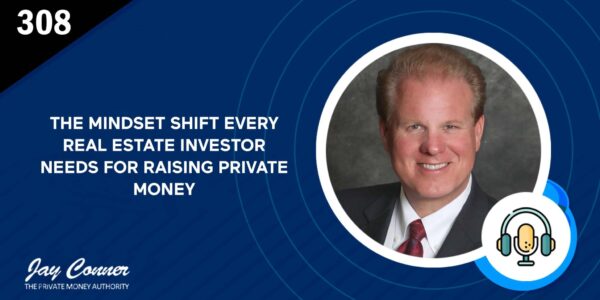
***Guest Appearance
Credits to:
https://www.youtube.com/@respectmyblueprintpodcast
“The Blueprint to Attracting Private Money for Real Estate | Jay Conner Interview (2025)”
https://www.youtube.com/watch?v=U8odG9ocVgs
One of the biggest challenges for real estate investors—new and seasoned alike—is securing funding for their deals. Many hopeful investors are turned away by banks, discouraged by strict credit requirements, or simply overwhelmed by the idea that hefty amounts of capital are needed to get started. But what if you could bypass the hoops, skip the hard money lenders, and line up the funds you need from regular people in your own community?
That’s exactly what Jay Conner, known as the “Private Money Authority,” has been doing since 2009. In his conversation with Wesley Paul on the Respect My Blueprint podcast, Jay laid out a practical and proven roadmap for leveraging private money—and why mindset is the key to unlocking this powerful strategy.
Flip the Script on Funding
Jay’s journey began in a small town in North Carolina, with a target market of only about 40,000 people. Despite this “small pond,” Jay has managed to dominate his market, buying and flipping over 500 houses and building an average profit per deal of $86,000.
He attributes much of his success to a simple but profound shift: instead of chasing after loans or groveling at the feet of the banks, he decided he would “offer a mortgage rather than ask for one.” In other words, Jay stopped asking for money and started offering people the opportunity to invest in his deals. By repositioning himself as a teacher, not a beggar, the dynamic shifted—and so did his results.
Teaching, Not Pitching
One of Jay’s golden rules is never to ask for money or pitch a deal directly. Instead, he leads with education. He explains to people in his network—church members, acquaintances, friends—what private lending is, how it works, and what protections and returns they can expect.
The trust inherent in these relationships is vital. “There’s a five-letter word that’s crucial in this business—trust,” Jay says. People are much more willing to move forward if they understand what they’re getting into and if they trust you to guide them.
Setting the Terms
Rather than letting lenders set the conditions, Jay established his own terms:
- Interest rate: He’s consistently offered 8% since 2009, a rate that outpaces what most people can get in a savings account or CD.
- Loan-to-value: Jay only borrows up to 75% of the after-repair value (ARV) of a property, mitigating risk for the lender.
- Security: Each lender receives a promissory note secured by a deed of trust (or mortgage), and they’re named as the mortgagee on the insurance policy.
- No desperation: Jay separates conversations about his program from discussions about individual deals. By educating first and only bringing deals to lenders after they’re comfortable and interested, he avoids the “desperation” that turns so many people off.
This approach works: Jay now has 47 private lenders—and more capital available than deals to put it into.
Who Can Be a Private Money Lender?
Jay’s experience has proven that just about anyone can be a private lender. From retired teachers and law enforcement officers to minor children who inherited money, private lending isn’t limited to the wealthy elite. If someone has either liquid capital or unused retirement funds, they can become a lender.
The Takeaway: Get the Money First
One of the most important lessons from Jay’s interview is this: line up your funding before chasing deals. Too often, investors scramble for money after they find a property, which can create stress and lead to poor decisions—or missed opportunities.
By operating as a trustworthy educator and structuring great terms for your lenders, you can get private money lined up—sometimes in as little as 30 days. This leaves you ready to pounce on opportunities when they arise, giving you a massive edge in a competitive market.
10 Discussion Questions from this Episode:
- Jay Conner emphasizes the importance of mindset before seeking private money. What are some limiting beliefs that may hold investors back from raising capital, and how can they shift their mindset?
- Jay never “asks” for money—instead, he offers the opportunity to invest. How does this approach reframe the relationship between investors and potential lenders? What are the psychological benefits for both parties?
- The episode mentions that trust is a crucial component in raising private money. What are some effective ways to establish and maintain trust with potential private lenders?
- Jay highlights separating the conversation about private lending from pitching a specific deal. Why is this distinction so important, and how does it affect the outcome of raising capital?
- For new investors, Jay suggests starting with people you already know. What are the potential challenges and advantages of this strategy?
- The conversation touches on the differences between funding single-family homes and larger syndications. What are the major risks and protections in each approach for both the investor and the lender?
- Jay maintains that you should “get the money lined up first” before acquiring a deal. How might this advice challenge common practices in real estate investing, and what are the practical steps to implement it?
- What are the typical criteria and safeguards Jay uses when structuring deals with private lenders, and how do these protect the lender’s interests?
- According to Jay, nearly anyone can become a private money lender, with examples ranging from retirees to children. What qualities or resources are actually essential for someone to start lending privately?
- In the episode, Jay offers specific scripts and approaches for starting conversations with potential lenders. How do tone, language, and timing influence the success of these conversations?
Fun facts that were revealed in the episode:
- Jay Conner Has Never Asked for Money: Despite being known as the “Private Money Authority,” Jay Conner has never actually asked anyone for money or pitched a specific deal when raising funds for real estate investments. Instead, he focuses on educating people about the opportunity to become a private lender, allowing the money to “chase him.”
- Small Town, Big Deals: Jay Conner operates almost exclusively in a small market—Morehead City, North Carolina, with a population of just 8,000 people. Yet, he has managed to rehab and flip over 500 houses, with average profits of $86,000 per deal, proving that you can dominate and thrive as a real estate investor even in a tiny market.
- First Big Private Lending Deal Came from Church: Jay secured his very first $500,000 in private money funding through a conversation with a fellow church member after a Bible study class. He didn’t pitch a deal but instead shared the opportunity, showing that strong personal connections and trust are key elements in raising private money.
Timestamps:
00:01 Blueprint: Real Estate Funding Secrets
04:27 Dominating Real Estate in Small Town
09:03 Wholesaler Success: Build Cash Buyers List
12:45 Private Lending Through Trust Building
14:40 Teaching Private Lending Basics
20:53 High Returns Investment Referral
22:53 Funding Success: The Good News Call
25:59 “Wesley Trusts Me with Deal”
28:47 Ordinary People as Private Lenders
32:17 Understanding Private Real Estate Financing
36:39 Raise Private Money Fast Guide
39:50 Leveraging Private Lending for Deals
44:21 Mindset and Education Key
46:02 Jay’s Investment Guidance & Resources
Connect With Jay Conner:
Private Money Academy Conference:
Free Report:
https://www.jayconner.com/MoneyReport
Join the Private Money Academy:
https://www.JayConner.com/trial/
Have you read Jay’s new book, Where to Get the Money Now?
It is available FREE (all you pay is the shipping and handling) at https://www.JayConner.com/Book
What is Private Money? Real Estate Investing with Jay Conner
http://www.JayConner.com/MoneyPodcast
Jay Conner is a proven real estate investment leader. Without using his own money or credit, Jay maximizes creative methods to buy and sell properties with profits averaging $67,000 per deal.
#RealEstate #RealEstateInvesting #RealEstateInvestingForBeginners #Foreclosures #FlippingHouses #PrivateMoney #RaisingPrivateMoney #JayConner
YouTube Channel
https://www.youtube.com/c/RealEstateInvestingWithJayConner
Apple Podcast:
Facebook:
https://www.facebook.com/jay.conner.marketing
Twitter:
https://twitter.com/JayConner01
Pinterest:
https://www.pinterest.com/JConner_PrivateMoneyAuthority

The Mindset Shift Every Real Estate Investor Needs for Raising Private Money
Jay Conner [00:00:00]:
Said, You know what, instead of asking for a mortgage, I’m offering a mortgage. Let me repeat that. Instead of asking to borrow money, I’m going to offer the opportunity for somebody to invest.
Narrator [00:00:14]:
If you’re a real estate investor and are wondering how to raise and leverage private money to make more profit on every deal, then you’re in the right place to raise private money. In raising private money, we’ll speak with new and seasoned investors to dissect their deals and extract the best tips and strategies to help you get the money, because the money comes first. Now here’s your host, Jay Conner.
Narrator [00:00:44]:
This conversation about building up your blueprint, it’s time to take it, cuz Thomas wasted. Go grind and chase it. Don’t lose it. This generation needs integration with information to move with an inclination that is abiding in entertaining improvement.
Wesley Paul [00:00:58]:
Hey, what’s going on, Blueprint Nation? Welcome to another dope episode of the Respect My Blueprint podcast, where we bring awesome guests on the show that give you the blueprint on how to do things around here. Okay? And today, all of my real estate investors or my viewers who are interested in real estate, I have a very, very special treat for you because I know one of the biggest obstacles when it comes to real estate investing is trying to source capital for your deal, right? You know, getting money for a real estate deal is typically the biggest hurdle, the biggest thing that a lot of people are facing. But what if I told you you can bypass the banks, you can go ahead and not experience the hardships, or break down some of the myths and misconceptions you may have as far as getting into your first investment property? What if I even tell you there are strategies out there you can get into real estate investing for little to no money? All right, so I know you, for my real estate investors out there, you’re going to be super excited about today’s show because we have an extraordinary expert in this field who’s going to go ahead and share with us some of these gems. And he doesn’t just beg big banks, okay? What he does, he bypasses them, like I said. All right? Known as the private Money Authority, my guest today has turned rejection into millions, raising $2 million in 90 days without any bank credit or hard money lender, believe it or not, ladies and gentlemen. So if you’re tired of deals, if you’re tired of watching deals slip away in your fingertips because of dealing with cash, well, guess what, this is your wake-up call today, as this is the episode we’re going to go ahead and break down some of these myths and barriers. My guest today is here to drop the real blueprint to funding freedom in your next real estate deal.
Wesley Paul [00:02:56]:
So without any further ado, let’s go ahead and welcome my guest today, Jay O. Connor. How are u doing today, Jay?
Jay Conner [00:03:02]:
Wesley, I’m doing fantastic, and thank you so much for inviting me to come along. Talk about my favorite topic that I’m so passionate about, and that’s private money. Private money for real estate funding. And the reason I’m so excited about it is because private monies had more of an impact on my real estate investing business than any other strategy I’ve employed. When I first started raising private money all the way back in February of 2009, my real estate investing business tripled in the midst of all those foreclosures, tripled in the midst of banks not loaning money, hard money, lenders not loaning money. But because of private money, my business tripled. And you know what, Wesley? Jay Connor has never missed out on a deal since that time for not having the money.
Wesley Paul [00:03:55]:
Listen, Jay, you have definitely, definitely grabbed the attention of the audience, even me. Right. Because we all know what happened back in 2008, 7, and 9, but the financial crisis and everything, that was a bad time right there. So we’re going to talk about that. But first things first, before we get into it, you’ve done, you’ve given them a little elevator pitch about yourself. But I was hoping if you could go ahead and, ah, share a little bit more about who Jay Connor is, you know, what’s his background? A little bit. And how did he even get into real estate investing?
Jay Conner [00:04:27]:
Yeah, so my wife Carol, Joy, and I live here in eastern North Carolina in a real small, teeny tiny town called Morehead City, North Carolina, population only 8,000 people. In Morehead City, our total target market that we invest in is only 40,000 people. But I’ve rehabbed and flipped over 500 houses now since being in real estate. We actually started way back in 2003, and our average profits right now are $86,000 per deal, profit per deal. And I don’t share that to brag at all, Wesley. I share that to make a point. And that is, there’s an argument to be made to be a big fish in a small pond. So this is a small market, but we dominate the market.
Jay Conner [00:05:16]:
We dominate the market with our marketing, finding motivated sellers of off-market houses that are not in the multiple listing service. I haven’t bought a house out of the multiple listing service since before COVID.
Wesley Paul [00:05:31]:
MLS at all. Right.
Jay Conner [00:05:32]:
Well, there’s nothing in there. There are no deals in there, and there’s no inventory, and there’s a whole lot more demand than there is supply. When we sell, all the houses that we buy are directly from for-sale-by-owner off-market houses. So yeah, we started all the way back in 2003. Before 2003, for decades, I was in the mobile home industry. Manufactured housing. My dad, Wallace Connor, is almost 92 years old right now, and he’s still a developer and building 350 houses at 91 1/2 years old. But yeah, I was in the mobile home business.
Jay Conner [00:06:09]:
I grew up in the industry of helping families be able to purchase affordable housing. And so the end twas that industry fell out of favor with Wall Street in the early 2000s, and the financing for the consumer went away. So I knew if I ever got out of mobile homes, I wanted to get into single-family houses and flip houses. This was before HGTV even existed back then. And so yeah, we’ve been buying and selling. No, we’ve been buying and selling houses since 2003. We’ve done hundreds and hundreds of deals. I have 47 private lenders right now, individuals who are funding our deals.
Jay Conner [00:06:51]:
And when I started, of course, I just started with one, right? And it grew from there. I got $500,000 from that private lender. But I’ll tell you what makes this world so different for me and the way I go about raising private money. You know what’s interesting, Wesley? I’ve never asked anybody for money. Ever since I started attracting money funding back in 2009. I’ve yet to ask anybody for money. And I’ve never pitched a deal.
Jay Conner [00:07:22]:
I’ve never pitched a deal. Hey, look, Wesley, I’m going to take a little risk right now, and I’m going to ask you a question. I think I know the answer to it, but I’m going to ask you anyway. Have you ever heard the guru stand up on stage, instructing real estate investors, and say something to this effect? Well, just get the deal under contract. The money will show up. I want the throw-up. That’s the stupidest thing I’ve ever heard in my life. I mean, you get a deal under contract, it’s like, is a box of money just going to fall out of the sky and land on your front door? The money’s going to show up, or has money got legs? Does it like go chase you around and say, Oh, you got a deal.
Jay Conner [00:08:04]:
Let me give you some money. That’s stupid. And so it only makes sense to me. The money comes first. Get the money lined up. There are always deals, there are always deals, there’s always going to be deals. And once you get the money lined up and Wesley, I’ll share with you and your audience how I never ask for money, how I never pitch a deal, and I have a big problem. I got more money, private money available, than I can use.
Jay Conner [00:08:28]:
And I’ll share how that works. But just think about how many more offers a real estate investor is going to make when they have money. Hundreds of thousands of dollars are burning a hole in your pocket, ready to make offers.
Wesley Paul [00:08:41]:
Now you’re talking our love language here, right? Okay. Yeah, absolutely. Now. Well, first of all, because you’re right, I’ve seen and you know who is very, very famous for that phrase that you mentioned, there are wholesalers. Right? Wholesalers will teach you that. Just get it under contract. You know, don’t worry about that. You could sell the contract and whatnot.
Jay Conner [00:09:03]:
But, but you, but you know what, Wesley? For a wholesaler to be successful, they, if they’re smart, do get the money lined up first by having a list of all cash buyers. Well, for a wholesaler, that’s where the money is. An all-cash buyer. And in a wholesaler that’s been trained correctly, they are taught that the first thing you do is build your buyer’s list. Build your all-cash buyers list. So then, when you get a deal under contract, you’ve got somewhere to assign that to. But, you know, this world of private money, speaking of wholesalers, Wesley, this world of private money gives the wholesaler the option to stay in a deal if they want to, right? They can, they can assign whatever contracts out they want to. But you know, if you’re listening to Wesley’s show here and you’re a wholesaler, and if you’ve done any deals, I can almost, you know, assign contracts.
Jay Conner [00:09:58]:
I can almost guarantee you you’ve done some deals that you thought to yourself, boy, I know this deal is going to profit 67, 60,000, 70,000, $80,000. And if I had the money to stay in this deal, I’d stay in the deal. Well, guess what? Private money gives you the option to do whatever you want to do.
Wesley Paul [00:10:19]:
Now you, you, okay, we both, we, we all have experienced the 2000, 8007 crisis, right, where, you know, foreclosures were going rampant through the subprime lending and everything. Banks, they’ve tightened their belts. They weren’t loaning out. Lehman Brothers collapsed and everything. So obviously, that was the moment that forced you to pivot into private money.
Jay Conner [00:10:46]:
Oh, yes, I remember the conversation like yesterday when my banker cut me off over the phone. I remember exactly that conversation. I remember what Wadd said. I remember what I said. But yes, I remember when it happened, what happened, the conversation, and then how that led me to private money. Yes.
Wesley Paul [00:11:06]:
So first of all, how difficult is it to obtain private money? Because this is an obscure world for a lot of individuals. So if you could sort of break that down a little bit, you know, because I want to, and by the end of this episode, to educate the audience that attracting or sourcing private money is really not that difficult, from what I’m understanding. Right.
Jay Conner [00:11:31]:
It’s super easy, super simple ever. It’s very difficult. And the real estate investor will never attract private money until they own the real estate between their ears first. So what am I talking about? I’m talking about mindset. I’m talking about mindset, right? I mean, you know, in this world of real estate investing, it’s 95% mindset anyway. I mean, you, yes, you got to know, you got to have the tools, you got to have the know-how. But there’s a bridge between knowledge and implementation, and that bridge is called the right mindset. So let me, let me first break that down.
Jay Conner [00:12:11]:
What I mean by that. When I was first getting ready to attract private money, I made a decision right up front. I’m not chasing, I’m not begging, I’m not selling, I’m not persuading anybody, I’m not going to try to talk anybody into anything as far as loaning me money. And I also decided I’m not going to pitch any deals. I want the money chasing me. So how in the world could I go about doing that? So here’s the first thing I did. The first thing I did was I said, You know what I’m going to do? I’m going to put on my teacher hat.
Wesley Paul [00:12:44]:
I got money, teachers. I like that.
Jay Conner [00:12:45]:
I’m going to put on my teacher hat and be a private money teacher. And I’m simply going to go about, first of all, the first category of private lenders. I’m going to first go about teaching, leading with a servant’s heart, and exposing the opportunity of being a private lender to, first of all, people in my own network, people that I go to church with, where, you know, there’s a five-letter word in this world of private money. That begins with a table, and that word is trust. So the trust factor, we call this relationship money. So the trust factor is huge. Who’s going to loan you money unless they trust you? The only reason somebody doesn’t loan you money on a deal is that they don’t think you’re going to pay them. Right? Or they think there’s a high risk that you’re not going to pay them.
Jay Conner [00:13:35]:
So trust is very, very important. So I decided, you know what, I’m going to share this opportunity with, first of all, people in my own network. And you know, the traditional way to borrow money for real estate or to borrow money for anything is the traditional mindset, the traditional mindset is whoever’s got the money to loan makes the rules. It is the right, puts the terms together. 99.9999% of people walking around think, and I call it stinking thinking, right? But they think that whoever’s going to loan the money makes the rules, the underwriter sets the interest rate, and the terms. So I turned that whole mentality upside down, and I said, You know what? Instead of asking for a mortgage, I’m offering a mortgage. Let me repeat that. Instead of asking to borrow money, I’m going to offer the opportunity for somebody to invest.
Jay Conner [00:14:40]:
So for that to happen, I had to first decide, well, what in the world am I going to teach? What am I going to teach? What am I going to offer? Now, a very, very important part of this is separating conversations. Don’t miss this. If you’re watching or listening to this show, separate the conversation with a potential private lender that’s never done this before. I mean, I got 47 private lenders and not one of them ever heard of or knew about private money or how they could use a retirement fund and move it over to a self-directed IRA company and then loan that money out as a private lender. None of them ever heard of that. None of them ever heard of that. Well, an important point to understand is to separate the conversation between teaching and talking about the opportunity and how private lending works, and then having a deal for them to fund. Here’s a writer downer.
Jay Conner [00:15:35]:
Desperation has a smell to it. Desperation has a smell to it. And if you’re talking with a potential private lender and you’re talking about a deal in the initial conversation, you already sound desperate by even bringing that deal up, right? So you see, when you’re teaching, you’re not chasing or begging. You’re. You’re teaching and you’re offering an opportunity as to what private lending is and how they could become a private lender. And it’s, it’s a, you know, if it doesn’t make sense to them, that’s fine because you’re not talking about deals. And look, you know, some people say that they are new to capital raising. They’ll say, Well, that fear of rejection, I just can’t handle a no, guess what? There is no rejection.
Jay Conner [00:16:20]:
There is zero rejection in this world. Because let me ask you a question. How can you be rejected if you’re not asking anybody for anything?
Wesley Paul [00:16:28]:
Oh yeah, 100% failure rate. If you’re not asking, of course.
Jay Conner [00:16:33]:
Yeah. So I’m teaching. So I had to first decide what I am going to teach and how I am going to go about this. So after getting my mindset right, I’m not chasing and begging; I’m going to be educating people on this opportunity. So I had to decide, well, what am I going to teach? Well, I had to put my program together, and I had to put my opportunity together as to what I was going to share with people. So I had to decide, okay, well, what interest rate am I going to pay people? Well, I decided 8%. I’ve been paying them 8% since February 2009 through all the volatility, with interest rates up and down. People say to me, they say, Jay, how in the world have you been paying your private lenders the same interest rate all this time with the market going up and down? It’s really simple.
Jay Conner [00:17:15]:
8% ever since 2009 is a whole lot more money than they can get in the local bank in a savings account or even a 7-month or 12-month CD. And since I started doing it, it’s going from below 3% all the way down to below 1% all the way up to 5% a year, a year and a half ago. Now it’s down below 3% again. Well, 8% is higher than all that. And secondly, I’m paying them the same thing since 2009 because I make the rules, not them. I make the rules, you make the rules. So I decided I was going to pay them 8%. I had to decide, well, how am I going to protect them? Right? How are we going to mitigate the risk? Well, I decided I’m not going to borrow more than 75% of the after-repaired value.
Jay Conner [00:18:00]:
I didn’t say 75% of the purchase price. 75% of the after-repaired value. That’s why I always bring home a big check when I buy a property. Who wants to get paid to buy properties and take none of their own Money to the closing table?. Right. So, the conservative loan-to-value is based on the after-repaired value. How else am I going to protect them? Well, I decided that I’m not going to borrow any unsecured money. They’re going to get a promissory note, and I’m going to collateralize that note with, here in North Carolina, a deed of trust.
Jay Conner [00:18:31]:
Most people call it a mortgage. So I’m not going to borrow unsecured money. I also decided I’m going to protect them by naming them as the mortgagee on the insurance policy. That gives them another layer of protection. So I want to give them all the same protection that a bank would get. So that’s what I did. I put my program together, my opportunity together. And let me tell you and share with Wesley, how I got my first $500,000 as an example, without asking for money.
Jay Conner [00:18:58]:
So here we go.
Wesley Paul [00:19:00]:
Let’s do it.
Jay Conner [00:19:01]:
Carol, Joy, and I have been going for years to church, to the Morehead City Church of Christ on Barber Road here in Morehead City. And a gentleman by the name of Wayne. Wayne and I had known each other for quite a while. And so we were going to Bible study on Wednesday night at 7:30. And I walked into the foyer, and I was looking for Wayne. And I, there he was. I walked up to Wayne and I said to Wayne, Wayne, I got something I want to talk with you about confidentially after Bible study. Have you got a few minutes? He said, Sure.
Jay Conner [00:19:33]:
So Bible study is over. We walk down to the nursery. We walk into the nursery and shut the door. Here’s exactly what I said to Wayne. This is exactly what I said to Wayne. I said, Wayne, you know everybody in this town. And he did. He was the original Zenith Television dealer in Morehead City, North Carolina.
Jay Conner [00:19:54]:
Now, if you don’t know who the Zenith Television dealer was in your town, that’s because you’re too young to remember life before Walmart came to town. What did you do back then? You went to the Zenith Television dealer, and he sold it to you. He financed it. He actually would come to your house and repair your TV instead of you throwing it in the trash and going back to Walmart and getting your next 64-inch screen for $299. So anyway, Wayne knew everybody. He was well involved in the Rotary Club. So, back to what I said to Wayne. I said, Wayne, you know everybody in this town.
Jay Conner [00:20:29]:
And then I said something right after. That is a very magical phrase. And then that’s when I said, Wayne, I need your help. There’s a writer downer. I mean, God created us to help people. Most people want to help other people. I said, Wayne, I need your help. I said, I’ve now opened up my real estate investing business by referral only to people that I know and trust.
Jay Conner [00:20:53]:
And here’s what I need your help with. When you run across somebody who is complaining about the low interest rates in the local bank and losing money in the stock market, would you refer them to me, and I’ll let them know how it is that they can earn insane high rates of return, because that’s what I’m now paying. Well, what do you think? Wayne said? Wayne looked at me and said, Well, now, brother Jay, what you got going on there? And I said, Well, are you saying that you and your wife might be interested in participating? He said, Well, I might. I said, Well, why is that? He said, because I’m losing money in the stock market, and I’m not making much money at the local bank. He said, Well, Wayne says, what kind of interest rate are you paying? And I said, well, Wayne, that sort of depends on the deal. I said, What sounds high to you? He said, Well, I’m making less than 3% in the local bank, and I’m losing money in the stock market. He says, I don’t know, maybe 5 or 6%. I said, Wayne, I can’t pay you 5 or 6%, but I can pay you 8%.
Jay Conner [00:21:57]:
He said, Put me down for $250,000. So the next day I went to him and his wife’s home, and I came figuratively with my teacher hat on my whole mindset. And I came there not to ask them for money. I came here to teach them what private money, private lending is, and the opportunity I have. And so they first of all understood when I told them. I said, a private lender like yourself is simply an individual who loans money from either your investment capital or your retirement funds. And I pay high rates of return safely and securely to my private lenders. So I taught them.
Jay Conner [00:22:37]:
I said, Here’s the interest rate I pay. Here’s how you can get your money back in case of an emergency, here’s how you’re protected as a lender, etc. And so. And I’m not bringing up any deals. I’m not talking about any deals.
Wesley Paul [00:22:50]:
I’ve just brought up any deals. You just.
Jay Conner [00:22:53]:
Right, no deals. And so by the end of that conversation and two cups of coffee, that took him $500,000, double what they wanted to invest, and so here’s what I told him. I said, y’, all, I said, I’m gonna put your money to work for you just as soon as possible. I’ll call you up when I get a deal for you. And they said, Okay. So about a week went by, and Wesley, you know what I did? I called them up with what I call the good news phone call. The good news phone call. Everybody likes good news, and like you say, they like, love language, right? So I’m going to share with you, Wesle, and your audience right now, the exact script as to what I say in the good news phone call that gets all my deals funded 100% of the time.
Jay Conner [00:23:50]:
So let’s do a little setup here. The best way I can illustrate this is for Wesley and me to do a little role play here. And so let me do the setup. Let me do the setup. Let’s say, hypothetically, that you and I go to church together. And let’s say, hypothetically, we’ve known each other for some time and we’ve hung out together, and you know, we have a relationship and we like each other. Let’s also hypothetically assume that you worked for an employer that you no longer work for. And let’s say you still have a 401 (k) with the plan administrator, that previous employer, and you’re not happy with the volatility.
Jay Conner [00:24:27]:
I mean, that 401 (k) s in the stock market, and you’re not happy with it.
Wesley Paul [00:24:31]:
And let’s also, I want something a little more stable.
Jay Conner [00:24:33]:
You want something stable. You know, you want to, you know, you want a reliable rate of return instead of the volatility. And let’s also hypothetically assume I’ve taught you about the private.
Wesley Paul [00:24:43]:
My.
Jay Conner [00:24:43]:
My opportunity, and you like it. You like the 8%, you like how you’re protected. And let’s also assume I have already introduced you to the Self-Directed IRA company I recommend. And let’s assume you’ve moved that $150,000 that you had in that 401 over to the Self-Directed IRA company, and you’re waiting for the good news phone call I told you I’d call you up with when I got a deal for you to fund. So I call you. So that’s the setup. That’s the setup. So I call you up, you answer the phone, we have a little chit chat, and then here’s exactly what I say in the good news phone call.
Jay Conner [00:25:21]:
I say, Wesley, I got great news for you. I can now put your money to work. I’ve got a house in Newport, North Carolina, under contract to purchase with an after-repair value of $200,000. Now the funding required for the deal matches up to what you have to invest. The funding requires $150,000. Now, closing is going to be next Thursday. I’ll need you to have your funds wired to my real estate attorney’s trust account by next Wednesday. I’m going to have my attorney email you the wiring instructions to their trust account.
Jay Conner [00:25:59]:
That’s the end of the conversation. The most stupid thing I could do is ask you, Do you want to fund the deal? Of course, you want to fund the deal. And here are three big reasons why Wesley wants to fund my deal. The number one reason Wesley wants to fund my deal in this example is because, for goodness’ sake, he trusted me to move his $150,000 over to the self-directed IRA company. He wouldn’t have done that, you know, unless he trusted me and he liked me and he liked my recommendation, right? So you see, in that initial conversation with Wesley, I became his trusted advisor as to how to get high rates of return to save and lend securities. So that’s the number one reason he trusted me. He moved the money over to the self-directed IRA company with no deal attached to it. Yet.
Jay Conner [00:26:46]:
The second reason Wesley wants to fund my deal is that he knows I’m not going to bring a deal for him to fund unless it matches the criteria of the opportunity that I already taught him. Did you hear the numbers that I said in the script? I told Wesley I’ve got a house under contract with an after-repaired value of $200,000. I told him the funding required for the deal is 150,000. That’s 75% of the after-repaired value. And the third reason Wesley is dying on the vine to fund my deal is because he’s not making any money until I put his money to work. I’m not paying him any interest until he is funding a deal with his retirement funds. Those are the three big reasons why Wesley cannot wait to wire those funds to my real estate attorney’s trust account.
Wesley Paul [00:27:40]:
Makes sense. And that’s absolutely, that’s that’s. And it makes sense. I love how you just simplify it. It’s not overcomplicated. You’re not saying, well, you know, we need to go ahead and speak with the escrow title, and XY, Z, go send this documentation. It’s literally the trustWellWe, first, like you said, the mindset, right? You educate, you inform, then you can go ahead and say, ” Heyy, listen, all right, when I find a deal, then I’m going to bring it to your attention, and then you find something that fits in the parameters.
Wesley Paul [00:28:17]:
It’s really a one, two, three-step blueprint. And I love that about that approach there. Right. So my next question is, wow, so these are. And can anybody be a private money lender? Is this somebody that, you know, like you said, Wayne from your church? Can it be Carol from your co-worker? Can it be, you know, your colleague, that you went to school with? Can it be typically anybody who could be a private money investor?
Jay Conner [00:28:47]:
Yeah, I’m glad you asked that question, and here’s why. At my live events, at my private money conferences, one of the sessions that I always do is I bring a dozen or so private lenders of mine and Carol Joyce to the event, and I interview them in front of the audience. And the biggest takeaway that the audience gets at my private money live events is that these are ordinary people. I mean, I mean, I’ve got, I mean, of the 47 private lenders, I’ve got, I’ve got retired school teachers, I’ve got law enforcement officers, I’ve got military people, I’ve got civil service workers, I’ve got an engineer. These are just ordinary, ordinary people who never heard of this opportunity until we exposed them to the opportunity by teaching it. And, you know, they were all looking for a higher rate of return that was safe and secure. S, in answer to your question, can anybody be a private lender? Well, guess what? I’ve even had two minor children be private lenders because they inherited money from their grandparents after their grandparents passed away. And the parents didn’t know what to do with that inheritance money and didn’t want to get just a little bit of money in the local bank.
Jay Conner [00:30:14]:
And so their parents knew that I had this private lending opportunity. So the minor children became private lenders. So yes, anybody who can fog a mirror that’s got either, you know, liquid assets or retirement funds that they’re not happy with can be a private lender.
Wesley Paul [00:30:35]:
Wow, that’s from. Okay, so this is great because this now lets the audience know, hey, if I want to become a private money lender, you know, there’s really no type of special education or formal training that needs to go. They would need to undertake this. Right. Okay, so now let’s go to the consumer side. Right? I’m somebody. And first of all, the private money, does this typically work for investment properties or more for properties that you’re looking to occupy as a, you know, to live in what’s the better fit there.
Jay Conner [00:31:12]:
Yeah, typically you’re not, you can, but typically you’re not going to be using private money for your primary residence because the length, the length of the note with a private lender is typically going to be in that two-year time frame.
Wesley Paul [00:31:29]:
Got it.
Jay Conner [00:31:30]:
And most of the time, I’m not going to even use the money for that long. Now you could use it for your primary residence, but you know, within time you would probably want to refinance that, pay off your private lender because, you know, I’m paying my private lenders 8%. I don’t want to pay 8% on my primary residence when even in today’s market, you know, I could get a mortgage in the high sixes or right around seven. And of course, you know, three years ago, with all the refinancing, you could get a mortgage for less than 3%. You know, so I wouldn’t want to pay 8% for a very, very long period of time, you know, to the private lender on my primary residence.
Wesley Paul [00:32:13]:
Right, okay. So this is typically for an investment.
Jay Conner [00:32:16]:
Yes.
Wesley Paul [00:32:17]:
Okay.
Jay Conner [00:32:17]:
So I’m looking, oh, and by the way, Wesley, since you brought that up, private money is not just for single-family houses. It’s for any kind of real estate. It’s for any kind of real estate. It’s for self, commercial, multifamily, and self-storage land. But the difference is how you structure the deal. Now with single-family houses, the SEC’s got nothing to do with what we do on raising money for single-family houses. And here’s why. Because everything that we borrow is asset-backed debt.
Jay Conner [00:32:51]:
Asset-backed debt. Which means I’m borrowing money on this single-family house. The lender’s not only getting a promissory note; we’re not borrowing unsecured money. The lender, the private lender, is getting a mortgage or a deed of trust. Well, in contrast to that, if you’re raising money for commercial property or apartments, etc. Then that’s called syndication. That’s called syndication. That’s where you’re going to get a.
Jay Conner [00:33:19]:
Yeah, that’s where you’re pulling money together, and you’re going to have a fund, right? You’ll have a fund for your private money. Investors. They’re investors at that point. They’re really not lenders; they’re investors. So they’re investing in that fund. So you’re going to have an SEC attorney draw up a private placement memorandum for those types of funds. But you know what? It’s all the same money. It’s all the same, you know, type of individuals that are in.
Jay Conner [00:33:46]:
Those who are investing. It just comes down to how you structure the deal.
Wesley Paul [00:33:48]:
Makes sense. Okay, so say I’m somebody that hypothetically, I want to. I want to go ahead. I see a triplex or duplex, or fourplex, right? That I want to invest in. Okay. Now, unfortunately, I’m tight on funds, but I have a golden opportunity, right? This is a needle-in-the-haystack opportunity that I’ve come across. Right.
Wesley Paul [00:34:14]:
Perfect terms. The. The seller wants to get out of this property for personal reasons. I need a private money lender, right? So I reach out to you. J.J., man, I need your help, brother. I need you to go ahead and make this thing happen. Happetoor me.
Wesley Paul [00:34:32]:
What’s my? What qualifications are needed on my part in order to be able to qualify for your private money program despite my being limited in funds and everything like that?
Jay Conner [00:34:43]:
So I’m a little confused. So ask me about a different war, or explain that I don’t have.
Wesley Paul [00:34:50]:
I want to invest.
Jay Conner [00:34:51]:
So you’re. So you’re a real estate investor, right, in this scenario, and you. And you found a deal, right? And you need funding for your deal.
Wesley Paul [00:35:00]:
Funding for my deal? Yes.
Jay Conner [00:35:01]:
Right. Well, there’s a problem, okay? The deal came first in your scenario, and not the money. The work. The worst time in the world to be raising money is when you need it for a deal. So don’t go. Get the deal under contract first. Get the money lined up. Get the money first, right? So you’ve already got a verbal pledge, a verbal commitment from your private money lender or private money lenders.
Jay Conner [00:35:30]:
Then you call them up with the good news phone call with that deal you’ve got under contract, right? So that’s a perfect example or question as to why you don’t want to be having a deal under contract. And now you’re looking for money. Because if you’re. If you’ve got a deal under contract and you’re looking for money, when you’re pitching the deal, right?
Wesley Paul [00:35:50]:
That’s when the desperation sets in.
Jay Conner [00:35:52]:
That’s where the desperation sets in, right? So that’s why we want to have the money verbally pledged, waiting for the good news phone call when you get that 4 plex under contract.
Wesley Paul [00:36:05]:
Because, like you said, the deals are always in abundance.
Jay Conner [00:36:08]:
You always, always, always deal. Get the money lined up first.
Wesley Paul [00:36:12]:
I see what you’re saying. Okay. All right. So that is the initial first step, getting the money lined up. And now let me ask you a question. So if I’m looking to get the money first, what’s the best strategy to do? So would I just come to Jay and his program unrolled in your mentorship and say, Hey, Jay, you are, you’re the one with experience on this. Can you help me go ahead and source private money?
Jay Conner [00:36:39]:
Yeah. A great way to learn how to raise private money very, very quickly. The way I do it is if you’re listening to this show and you want to start raising private money, what’s the first thing you should do? The first thing you should do is let me give you a gift. And what in the world is that gift? And the gift is I’d love to give you my best seller, my best-selling book, which is called Where to Get the Money Now. This is not an ebook. Downloadable. Yes. The post office is still in business.
Jay Conner [00:37:11]:
I’ll express mail this. This book is called Where to Get the Money Now, “a subtitle that explains how and where to get money for your real estate deals without relying on traditional lenders or hard money lenders. I’m going to include two tickets valued at $3,000 to my private money conference live event. I’ll include those two tickets, and the book is 20 bucks on Amazon. But don’t spend 20 bucks on Amazon. Let me just give you the book. You just cover shipping, and I’ll autograph the book. You can pick up my book at www.jconnor.
Jay Conner [00:37:46]:
And I’m an er, not an or so www.J-A-C-O-N-N-E-R.com forward slash book. Again, that’s J. Connor. J-a y C-O-N-N-E-R.com forward slash book. And of course, Wesley, I have that in the show notes as well.
Wesley Paul [00:38:05]:
Of course, of course. So, and of course, ladies and gentlemen, I definitely encourage you to pick up the book because, as you can see so far, Jay has dropped tremendous gems as far as being able to source private money. As you can see, he’s the guru when it comes to seeking private money. But I’ll have a couple of questions before we wrap up. Jay, so typically, how long does it take to line up private money for a deal? Because it is typically 30 days, 60 days, or 90 days? What’s the strategy on the timeline?
Jay Conner [00:38:37]:
Yeah, so the first thing to do is, and by the way, in my book, I lay out exactly what my program is, my opportunity is that I offer new private lenders. So all that is in the book. So the first thing you’ve got to do is learn what it is that you’re going to teach. Right. That you’re going to offer. Right. People have the opportunity. And I have many, many members in my private money community, my students, who raise hundreds of thousands of dollars in less than 30 days.
Jay Conner [00:39:09]:
As I shared my story with Wayne, I got $500,000 committed in less than 24 hours of even mentioning what this, you know, opportunity is. But you’ve got to know what it is that you’re going to, you know, what it is you’re going to teach. So realistically, 30 days. Ish.
Wesley Paul [00:39:27]:
30 days. Ish. Okay. And typically, the investment timeline for the loan is two years. This is not a long-term or did not attend 15 15-year conventional mortgage or anything.
Jay Conner [00:39:41]:
Two.
Wesley Paul [00:39:41]:
Two years. And after that, the investor is going to refinance out of the deal to something more conventional.
Jay Conner [00:39:50]:
Well, typically I don’t even use the money for two years now, by the way, you can do it for more than two years. I mean, whenever I have a private lender loaning me money on a deal and they’re using their retirement funds, I’ll just go ahead and set the term for five years on that. Because a lot of times, I’ll sell houses on lease, purchase, or rent to own. And I’ll help people and families get ready for a mortgage so they can cash me out. But if I’m doing a flip, typically I’m in and out of that, you know, within nine months or whatever. So I’ll pay the private lender off when I cash out of the deal, and then I’ll reinvest their private money in the next deal. So that’s one thing about it. Once you have a private lender, you get to use that money over and over and over and over again on deal after deal after deal.
Wesley Paul [00:40:39]:
Wow. So that 8% begins to compound. So that 8 turns into 16 and so on and so forth. Am I right?
Jay Conner [00:40:46]:
No, it’s an apr. It’s an apr. So it’s an annual percentage rate. However, you’re right, Wesley. They take that money, the interest, and they’ve earned a lot. Unless now I’ve got some private lenders that are living off of that interest income. It supplements their income. But other private lenders that are using their retirement funds, all the interest they earn goes back into their retirement account.
Jay Conner [00:41:10]:
Now they reinvest the principal amount plus the interest they’ve earned. So, yes, in that case, it is compounding for them.
Wesley Paul [00:41:18]:
So here’s another question. Now you mentioned that’s a strategy that has become very popular with a lot of real estate investors like Grant Cardone, which became very popular, happened under the Jobs Act under Obama, where he allowed for syndication. Right.
Jay Conner [00:41:36]:
So.
Wesley Paul [00:41:36]:
And you mentioned that when it comes to syndication, you are transitioning. Instead of a private money lender to your investors, you have a pool of investors. Which strategy is more beneficial or advantageous? Is it being a private money lender or an investor in a syndication deal?
Jay Conner [00:41:57]:
Well, as a private lender with single-family houses, the private lender has more protection.
Wesley Paul [00:42:03]:
Okay.
Jay Conner [00:42:03]:
Than an investor in a fund. Because if, if, if a private lender or when a private lender is loaning money on a house, if they don’t get the return, if the borrower, the real estate investor, doesn’t pay them, the house does. That’s their legal recourse.
Wesley Paul [00:42:19]:
The house is the collateral, right?
Jay Conner [00:42:21]:
Yeah, the house is the collateral. Right. So if they don’t get their money, then their legal recourses, they can foreclose just like a bank. That’s why we give them a deed of trust or mortgage, so they get, they get the property. In contrast to that, an investor who’s investing in a fund gets only a piece of paper with no guarantees.
Wesley Paul [00:42:39]:
I see what you’re saying. Okay. But the. So you would direct the average person, like we talked about, Wayne from the church or Alice from the coworker. And the best bet to start with is becoming a private money lender with a single-family. Does that give you the ultimate protection?
Jay Conner [00:43:01]:
Yes, yes. Particularly when you’re protecting your private lenders the way that I am. And all that’s in the book, all the protection that you give your private lenders, all that is laid out in the book. And of course, your real estate attorney draws up all the documents.
Wesley Paul [00:43:16]:
And now here’s a final question. Do you deal strictly with private? Do you deal with properties and strategies in your area in North Carolina, or are you nationwide with it?
Jay Conner [00:43:27]:
Yeah, the properties that I actually invest in are all right around here in our area.
Wesley Paul [00:43:32]:
Awesome, awesome, awesome. But this is a universal strategy. That doesn’t matter if you’re in California.
Jay Conner [00:43:39]:
California.
Wesley Paul [00:43:40]:
Or in Florida, from the East Coast to the West Coast. This is applicable anywhere in any market.
Jay Conner [00:43:45]:
Absolutely, absolutely. It works. It works wherever there are houses.
Wesley Paul [00:43:51]:
Okay, awesome, awesome. Well, listen, Jay, you have been phenomenal in educating the audience and everything like that. So before we wrap up, I want to ask you one last question before we go ahead and get into the final segment of the episode. If there’s one bit of advice, what is the one piece of advice you would share with them?
Jay Conner [00:44:12]:
And that would be for a real estate investor who wants to raise private money.
Wesley Paul [00:44:17]:
Exactly.
Jay Conner [00:44:18]:
Yes. Order my book and get educated.
Wesley Paul [00:44:21]:
That’s what I would say. Get educated, get the mindset. And that’s all it takes. Because obviously, when you’re educated, when you have the mindset, that puts you in a position to be able to educate others and to be able to start sourcing capital. And of course, like you said, get the money first before you start searching for the deal. Yes, that’s the biggest takeaway right there, I’ve taken away from today’s episode. So, Jay, listen, first of all, before we wrap up, I know you have a YouTube channel. You’re on LinkedIn as well.
Wesley Paul [00:44:52]:
So if you can share with the audience how they can find you, which I wasn’t even aware of, you have a conference coming up. So tell the audience how they can connect with you. I’m pretty sure they have a lot of questions. There’s a lot of interest right now from everybody who’s watching this episode. And I also, one final time, give them instructions on how they can get that signed, autographed copy of the book with the two tickets in it, share with the audience so they can go ahead and hear one more time.
Jay Conner [00:45:18]:
Sure, absolutely. So go to www.jconner j a y c o n n e r.com forward slash, book. And right there on that page, you’ll have my contact information as well. Include it. Be right there in the envelope with the book.
Wesley Paul [00:45:34]:
Oh, man. Listen, ladies and gentlemen, I’m going to grab me a copy. Make sure you grab a copy. Let’s show Jay all of the support, all of the love that he deserves. You know, thanks for having him on today’s show to educate us, because again, I know a lot of individuals out there who want to get into real estate investing. Probably was thinking, man, I’m having a tough time getting funding from banks. My credit is not too good. You know, I don’t have the financials or anything like that.
Wesley Paul [00:46:02]:
But guess what, there are ordinary folks out there who can help you find and fund your next deal. So it’s definitely good to know that there are options out there, and Jay has definitely provided a gem with that. But listen, if you want to be able. And of course, all of the book, the directions to be able to get Jay’s book will be in the show notes, as well as to be able to go ahead and connect with Jay, check out his YouTube, give him a follow on LinkedIn as well. Let’s go ahead and give him all of the love and support that he deserves. Jay, thanks for coming on today. You’ve been phenomenal. I appreciate you and always keep doing the right thing out there, as you know what you’re doing.
Wesley Paul [00:46:43]:
You’re doing the Lord’s work by being able to go ahead and help people earn a high return on their money, as well as providing housing for individuals out there. So keep doing the good work out there, my friend.
Jay Conner [00:46:55]:
Thank yyouoWesley. And by the way, I didn’t mention my podcast. If you’ve enjoyed this show, come over and check out my show. It’s on all the podcast platforms. Jusearchrch for Raising Private Money. I’m in my eighth year now, over 800 episodes, and twice a week, I interview real estate investors who have raised private money and how they’ve gone about raising private money as well. So come join me at that party. Just Search for Raising Private Money with Jay Connor. Wesley, God bless you.
Jay Conner [00:47:28]:
Thank you so much.
Wesley Paul [00:47:29]:
You’re very welcome, man. Jay, thank you so much. As well as ladies and gentlemen, check out the Respect by Blueprint podcast. Every Monday, Wednesday, and Friday at 8 p.m. and always, always, always be safe out there, ladies and gentlemen. Catch you on the flip side. Take care. Bye-bye.
Narrator [00:47:49]:
This conversation is about building up your blueprint. It’s time to take it cause you’re wasting time. Go grind and chase it. Don’t lose it. This generation needs integration with information to move with an inclination that is abiding in entertaining improvement.
Jay Conner [00:48:03]:
Yep.
Narrator [00:48:33]:
Are you feeling inspired by the knowledge you gained in this episode? Then head over to www.JayConnner.com/MoneyGuide, that’s www.JayConnner.com/MoneyGuid, and download your free guide that shares seven reasons why private money will skyrocket your real estate investing business right now. Again, that’s jconner.com moneyguide to get your free guide. We’ll see you next time on raising private money with Jay Connor.