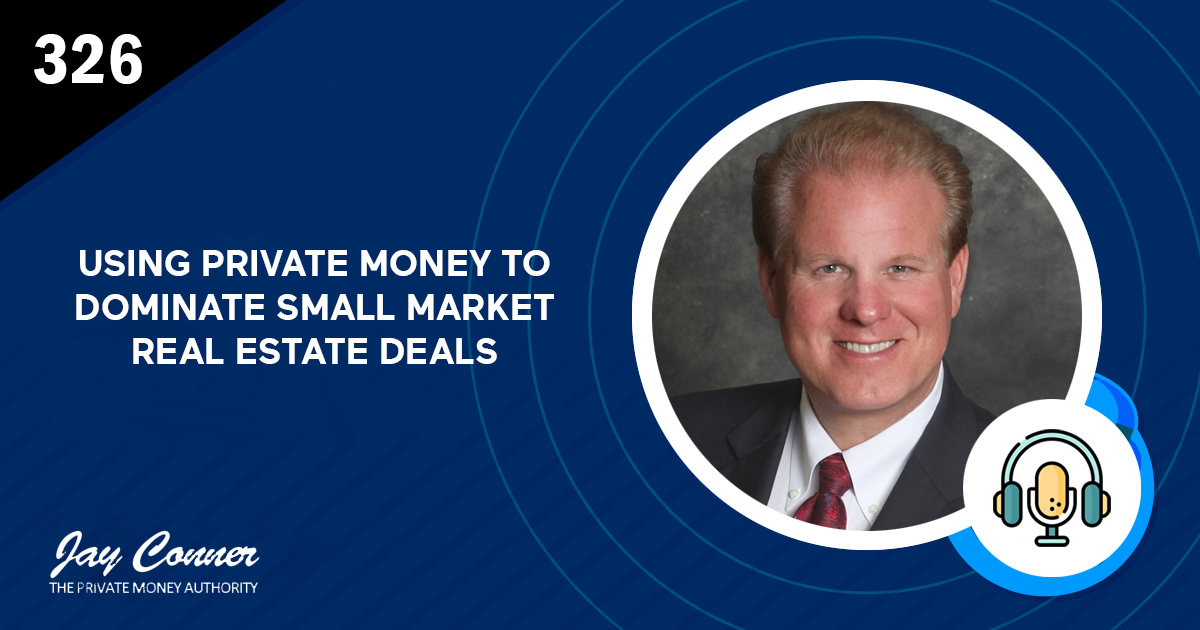
***Guest Appearance
Credits to:
https://www.youtube.com/@AdvantaIRA
“Episode 182: How Jay Conner Raises Millions in Private Money for Real Estate”
https://www.youtube.com/watch?v=oUGSDCB0r-I&t=580s
If you’re a real estate investor—or thinking about venturing into the world of property investing—there’s one question that always comes up: “Where do you get the money to fund your deals?” While banks, institutional lenders, and hard money sources are familiar options, they aren’t always ideal, especially if you plan to scale your business.
On a recent episode of the Raising Private Money podcast, Jay Conner, known as the “Private Money Authority,” sat down with Alex Perny to share his journey and pull back the curtain on the incredible world of private money.
From Banks to Private Lenders: A Game-Changing Shift
Like many investors, Jay Conner started his journey relying on traditional financing—local banks and mortgage companies. For six years, this method served him well, but everything changed in January 2009, when his longtime banker abruptly shut down his line of credit. This crisis sparked a pivotal question: “Who do you know that can help fix your problem?”
That moment led Jay Conner to discover private money: raising capital from individuals, not institutions. “Private money is the number one strategy that I implemented in my business in 2009 that’s had the biggest impact of any strategy that I have implemented,” he shared. Unlike hard money or institutional capital, private money comes from people—everyday individuals looking for better returns on their capital or retirement accounts.
The Three Categories of Private Lenders
So, where do you find these elusive private lenders? According to Jay Conner, private money lenders generally come from three categories:
- Your Own Network: There’s a direct relationship between your connections and your access to capital. Start by looking to friends, family, and acquaintances.
- Expanded Network: As you grow, you might exhaust your personal connections. That’s where networking groups, local organizations like Business Networking International (BNI), and community events come into play.
- Existing Private Lenders: These are individuals already lending to other real estate investors, often using self-directed IRAs. Here, it becomes more of a negotiation since they’re familiar with the process and terms.
How to Approach Potential Lenders
A crucial lesson Jay Conner learned early on is that “desperation has a smell to it.” He emphasizes the importance of separating the conversation about the opportunity from the deal itself. Rather than pitching a deal in your first conversation, focus on educating your contacts about private lending and the opportunity it presents. “I’m offering an opportunity, not asking for a loan,” Jay Conner said.
An example from his early days: He approached a well-connected acquaintance at his church, not by asking for money but by requesting help spreading the word about his real estate investment opportunities. This no-pressure approach naturally led to the first $250,000 commitment—and eventually, $500,000—from that single conversation.
Structuring the Deal: Protecting Lenders and Setting Terms
Private lenders in Jay Conner’s model are given a deed of trust or mortgage, are named on insurance policies, and enjoy flexible terms such as penalty-free early withdrawals. He keeps terms straightforward: 8% interest, two-year notes, and transparent communication. Notably, he includes a “minimum return” clause so lenders always receive at least six months of interest, even on quick turnaround deals.
Why Private Lenders Love Real Estate Investors
Private lenders, especially those using self-directed IRAs, are eager to keep their money working. Jay Conner describes how lenders often plead, “Can’t you just keep the money?” when a project is completed and paid off. Because of his volume of deals, he can cycle that capital from one project to the next, keeping both his business and his lenders’ portfolios thriving.
Final Takeaway: Simplicity and Education are Key
Real estate investing via private money doesn’t require rocket science. As Jay Conner puts it: “Don’t complicate this business. Keep it simple.” Education, a structured approach, and treating your lenders as valued partners are the cornerstones for long-term, repeatable success.
Want to dive deeper? Grab Jay Conner’s book “Where to Get the Money Now” or check out his podcast, Raising Private Money with Jay Conner, for actionable strategies and inspiration straight from the pros.
10 Discussion Questions from this Episode:
- What are the key differences between using private money and traditional bank financing when investing in real estate?
- How does changing your mindset from “asking for money” to “offering an opportunity” impact your ability to attract capital for real estate deals?
- Why is it important to separate the initial educational conversation from specific deal pitches when speaking with potential private lenders?
- What challenges might investors face when trying to use self-directed IRAs to fund real estate transactions, and how could they address those challenges?
- What are the pros and cons of borrowers setting loan terms rather than lenders, and how does this affect the relationship between the two parties?
- What steps can real estate investors take to expand their network of potential private lenders beyond their immediate personal contacts?
- How do market conditions and interest rates influence the decision to flip properties versus holding them as rentals or lease-to-own deals?
- What essential elements should be included in a presentation to potential private lenders to ensure clarity and build trust?
- How do regulatory considerations, such as SEC guidelines and asset-backed debt requirements, affect the structuring of private lending deals?
- What are some practical ways real estate investors can keep their business operations simple and avoid overcomplicating their investment strategies?
Fun facts that were revealed in the episode:
- Jay Conner was able to raise $2,150,000 in private money in less than 90 days after learning about private lending—without ever having to directly ask for money. He simply educated individuals about the opportunity, and they were eager to invest.
- Jay Conner’s very first private lender committed $250,000 after just a conversation at church, and then increased the amount to $500,000 following a coffee meeting where Jay explained the details of the program and how the funds would be secured.
- More than half of Jay Conner’s 47 private lenders use self-directed IRAs to fund his real estate deals, allowing them to earn high returns that are often either tax-deferred or tax-free, depending on the type of retirement account.
Timestamps:
00:01 Alternative Investing: Real Estate & Money
08:44 Discovering Private Money Solutions
14:07 Private Lending Approach Explained
16:47 High-Return Referral Opportunity
26:12 Rehab Strategy Lessons Learned
29:05 Private Lending Strategies Explained
35:00 Private Money Lending Sweet Spot
39:40 Realistic Investment Strategies Discussion
44:12 Real Estate Investment: Regional Challenges
53:55 Evaluating Real Estate Pricing Trends
56:16 Simplifying Real Estate Investment Decisions
01:00:09 Alternative Investing Advantage Podcast
Connect With Jay Conner:
Private Money Academy Conference:
Free Report:
https://www.jayconner.com/MoneyReport
Join the Private Money Academy:
https://www.JayConner.com/trial/
Have you read Jay’s new book, Where to Get the Money Now?
It is available FREE (all you pay is the shipping and handling) at https://www.JayConner.com/Book
What is Private Money? Real Estate Investing with Jay Conner
http://www.JayConner.com/MoneyPodcast
Jay Conner is a proven real estate investment leader. Without using his own money or credit, Jay maximizes creative methods to buy and sell properties with profits averaging $67,000 per deal.
#RealEstate #RealEstateInvesting #RealEstateInvestingForBeginners #Foreclosures #FlippingHouses #PrivateMoney #RaisingPrivateMoney #JayConner
YouTube Channel
https://www.youtube.com/c/RealEstateInvestingWithJayConner
Apple Podcast:
Facebook:
https://www.facebook.com/jay.conner.marketing
Twitter:
https://twitter.com/JayConner01
Pinterest:
https://www.pinterest.com/JConner_PrivateMoneyAuthority

Using Private Money to Dominate Small Market Real Estate Deals
Jay Conner [00:00:00]:
It depends on your network. It depends on your connections. There are three categories of private lenders. Where do you find them? I mean, where do you find these people? The three categories, where you find them, are, first of all, your own network, right? Direct correlation between your network and your net worth. The second category is what I call your expanded network. So if you want to grow your business, you’re going to run out of your own connections sooner or later, depending on how much you want to scale. And so I teach how to grow that network very, very quickly.
Narrator [00:00:37]:
If you’re a real estate investor and are wondering how to raise and leverage private money to make more profit on every deal, then you’re in the right place to raise private money. We’ll speak with new and seasoned investors to dissect their deals and extract the best tips and strategies to help you get the money, because the money comes first. Now here’s your host, Jay Connor.
Alex Perny [00:01:13]:
This is the Alternative Investing Advantage podcast from Advanta IRA, where we show you how to explore investments beyond Wall Street and open your eyes to new options for your portfolio. It’s to time time to take control and give yourself the freedom to choose where you invest your money. Hi, and welcome to another edition of the Alternative Investing Advantage podcast. As always, my name is Alex Perne,y and today we are very pleased to welcome Jay Conner, the Private Money authority. Now, kind of a core focus of what we do here on the podcast and extension by what we do@Advanta IRA is real estate or real estate related. And you can’t have real estate without looking at the other part of it, which is money, and where does it come from? So most of us are all kind of inherently familiar with having to borrow money to buy real estate. Now, if you’re doing it for your first time, you’re probably going down to your local bank, you’re going to Rocket Mortgage, you’re going to something, but you’re going to more of an institutional side of the thing. Now, once you try to attempt to scale that, you’ll learn real fast that bankers can be a bit arduous or almost, let’s say, impossible to deal with when it comes to actually scaling in a real estate investment portfolio.
Alex Perny [00:02:20]:
And that’s when you’re probably going to get your first exposure to private money, which can offer its own set of scary metrics that, if you’re not familiar with it or at least understand kind of how to navigate that aspect of real estate on the private money side of things, again, can scare some people off. Right? You know, we’re so used to the regimented, very paperwork-intensive, you know, takes a little bit of time to get it done with the banks. But, you know, we’re always, you know, all very familiar with how that works. Whether it’s, you know, one property just for your personal residence or a couple of investment pieces of property you’ll probably get, you know, you will, I should say, you will get to the point where you have to start looking at private money. So, Jay, really happy to have you on to kind of dig into this topic on how, you know, you successfully navigated it through your career and what you can kind of, you know, convey to other people that are, you know, getting into this and really making sure they can do it successfully. So if you wouldn’t mind, give us a little bit of background about yourself, and we’ll head off from there.
Jay Conner [00:03:13]:
Sure, Alex. Well, first of all, thank you so much for inviting me to come along on your show to talk about my favorite topic that I’m so passionate about, which is private money. And why in the world am I so excited about private money? I’ll tell you why. Because private money is the number one strategy that I implemented in my business in 2009, that’s had the biggest impact of any strategy that I have implemented since I started investing in 2003, when I started using private money. And by the way, when I say private money, I’m not talking hard money, I’m not talking brokers, I’m not talking institutional money. When I say private money, I’m talking about getting money from individuals, regular, ordinary people like you and me. These are not sophisticated people at all. I’ve got 47 private lenders funding my deals right now.
Jay Conner [00:04:11]:
And Alex, not one of them had ever heard of private money, private lending, until I did. What? Until I put on my teacher hat and taught them what private money was and how they could earn high rates of return safely and securely. None of them had ever heard about self-directed IRAs and how they can use retirement funds that they had to get better rates of return. So, yes, I’m talking about doing business with private lenders, individuals who are using their investment capital and or their retirement funds that they already have to make a high rate of return safely and securely. So, how in the world, Alex, did all this come about, and how did this start? Well, my wife, Carol, Jo, and I are here in eastern North Carolina in a really teeny, tiny town called Morehead City, North Carolina, population 8,000 people. And the total target market that we invest in for single-family houses is only about 65,000. And so we’re in a small market. We do two to three houses a month on average, which is not a lot.
Jay Conner [00:05:24]:
But when you’ve got an average profit of $86,000 per deal, that math works out okay. And I don’t share that to brag or come from a standpoint of ego at all. I share that to make a point. And that is, I’d rather be a big fish in a small pond and dominate a smaller market area than try to compete in the big cities. Nonetheless, our journey investing in single-family houses goes all the way back to 2003. October 2003 is when we started. And so, Alex, for the first six years, from 2003 until January of 2009, the only thing I knew to do to get my deals funded was what you just said a moment ago. The only thing I knew to do was go to the local bank or go to the mortgage company, get on my hands and knees, and say, Please fund my deal.
Jay Conner [00:06:18]:
And, you know, the banker or mortgage lender would make me pull up my skirt and show all my personal assets, and they pull credit scores and financial statements and do appraisals. And it took forever to get a deal funded. And that worked out okay for the first six years in this business. And then January of 2009, Alex, everything changed. Everything changed for me in January of 2009. Now, here’s what happened. I was sitting here at this very desk,sk and I called up my banker. His name was Steve.
Jay Conner [00:06:55]:
And Steve had been funding my deals for six years. We’ve done a lot of business together. I called up Steve, and we had a little chat, and I told him about these two houses that I had under contract to purchase. Well, Alex, you see, I thought I had a line of credit. I thought I still had a line of credit at the bank. It was BB&T at the time. They’d been bought out. And Steve says, Jayy, we’ve collapsed your line of credit.
Jay Conner [00:07:25]:
We’re not loaning money out to real estate investors anymore. I said, Steve, what in the world are you saying? You’re not loaning out. Are you not going to fund my deals? He said, Jayy, don’t you know there’s a global financial crisis going on right now? I said no, but you just gave me a financial crisis. I don’t have a way to fund my deals. He said, Sorry. So, Alex, I hung up the phoneand I sat here for a moment, and I thought right after that conversation, and I want to share with you and your audience. A very powerful question that I ask myself. In fact, the answer to this question totally changed the trajectory of my journey in real estate investing.
Jay Conner [00:08:10]:
I sat here after that conversation with Steve, my banker, learning I’d been shut off with no notice. And here’s the question I asked myself. I said, Jay, who do you know that can help fix your problem? Because you know, it’s not how, it’s who. I said, Who do you know that can help fix your problem? By the way, Alex, just as a side note, I hate these people running around saying, Oh, every problem is an opportunity. I didn’t have an opportunity. I had a problem. Right now. The problem became an opportunity because without that problem, you and I wouldn’t be having this visit today here on your show.
Jay Conner [00:08:44]:
But so I asked myself, who do you know that can help fix your problem? When I asked myself that question, I immediately thought of Jeff Blankenship, a dear friend. He lived in Greensboro, North Carolina, at the time, and he was investing in single-family houses. I called up Jeff, and I told him what had just happened with my banker and me. Jeff said, Well, Jay, welcome to the club. I said, Well, Jeff, I’m not sure I want to be a member of that club, but what club are you talking about? He said, Well, that’s the club of having your bank shut you down on your line of credit. He said, My bank shut me down last week. I said, Well, Jeff, how are you going to fund your real estate deals? He said, Well, Jay, have you ever heard of private money and private lending? I said, nNo I have no idea what that is. He says, Have you ever heard of self-directed IRAs and how individuals can use retirement funds that they currently have, move them over to a self-directed IRA company, and then lend that money out to us real estate investors, and the interest that we pay them is either tax-free or tax-deferred? I said, Jeff, you’re talking over my head.
Jay Conner [00:09:52]:
I said, I don’t have a clue what you’re talking about. I said, What is private money? He says, Well, I’m not exactly sure. He says, but there’s a gentleman down in Jacksonville, Florida, by the name of Ron Legrand who can tell us what private money is, and all about it. I said, Well, what is it? He said, I don’t know. But Ron says, we can get a lot of it really, really fast. So because of that scenario and that story, I went to my very first real estate investing conference down in Jacksonville, Florida, to learn about private money. And Alex, oh boy, did I Learn about private money. I learned about private money and how it works, and how I never have to ask anybody for money to get it.
Jay Conner [00:10:35]:
I learned and discovered a system and put together a system as to how I never have a pit, how to pitch a deal, and always get my deals funded. And I came back home without ever asking for money. And I still haven’t today. And I was able to raise $2,150,000 in less than 90 days. Now, that’s new funding. Again, I’m not saying that to brag. I’m saying once you learn what private money is and you change your mindset, because, you know, the traditional way to borrow money is the person or the entity that’s loaning the money traditionally makes trouble. Traditionally, the entity that’s loaning the money is the underwriter.
Jay Conner [00:11:19]:
Typically, they set the term, they set the length of the note, they set the maximum loan-to-value, they set the frequency of payments, and they set the interest rate. But in this world, we turn the tables on the banks. We don’t borrow money from the banks. We borrow money from individuals. And what do we do? We put on our teacher hats, and we teach ordinary people what this world is all about. So guess what, Alex? We get to make the rules, reset the interest rate.
Alex Perny [00:11:48]:
Fun spot to be. And so the place I always like to kind of start is the beginning. So, you know, you have the, you know, tale as old as time with, you know, people getting fed up with banks or the banks getting fed up with you, whichever happens first. Or maybe they happened at the same time, where I guarantee you, after that conversation, you’ll both be in the same place. But, you know, again, making that jump. Again, the big part of anything is education and trying to figure out, okay, how do we crack this nut, right? You know, there’s plenty of money out there. How do we kind of, you know, get it into our funnel of what we’re looking to do? So, you know, the first deal is always, you know, your intro to, you know, anything. It’s your first college class you take.
Alex Perny [00:12:21]:
And depending on, you know, how it goes, you know, it could be an expensive class, or it could be a very cheap one. So, you know, let’s kind of go through that first deal, right? You know, because, you know, the catalyst has to start somewhere. So what are some things that you kind of went through that were some really good learning experiences from closing those first few deals and kind of, and how did you go about it? Was it something where you focused on owner financing? Was it something where you focused on, you know, you know, the people in your network to lend on deals that you’ve kind of, you know, grown your network over time. What did those first few deals kind of look like for you when you really started to get into utilizing private money?
Jay Conner [00:12:56]:
Oops. Alex, you froze up on me.
Alex Perny [00:13:00]:
You’re looking fine on my side. Can you.
Jay Conner [00:13:03]:
Okay, yeah. You just froze up on my side. So you can see and hear me. Okay, Jujustine. Perfect. So that first deal using private money, I remember it like it was last night. It was at 7:30 on a Wednesday night. After I put my program together, I had to first decide what I was going to offer.
Jay Conner [00:13:25]:
See, there’s the key. Instead of applying for a mortgage, I’m offering an opportunity. Big mindset shift. And so one thing I knew I needed to do, Alex, is separate conversations with a new potential private lender as to teaching them, teaching them what private money is, and my opportunity, and having a deal for them to fund. Here’s a writer downer that I learned at the very beginning. Desperation has a smell to it. Desperation has a smell to it. And one big mistake that real estate investors make when they are first starting to raise capital for their deals.
Jay Conner [00:14:07]:
As they are talking about a deal in the initial conversation with a potential private lender, you’re already sounding desperate if you’re talking about your deal, right? And you’re teaching them about this opportunity. So here is a very, very critical lesson. Separate the conversations between offering the opportunity and then coming back and having a deal for them to fund. In fact, Alex, on this episode of your show, I’ll actually share with your audience the exact script I use to get my deals funded every time by my private lenders without ever pitching the deal. But first things first, that first scenario, that first private lender, it was at 7:30 on a Wednesday night. My wife, Carol Joy, and I are very active in the Morehead City Church of Christ here on Barber Road in Morehead City, North Carolina. We’ve been members there for a number of years. And so I walked into Bible study at 7:30 in the foyer that Wednesday evening, and I was looking for a gentleman named Wayne.
Jay Conner [00:15:14]:
Now, Wayne and I had known each other for some time. I walked up to Wayne. Here’s exactly what I said. I said, Wayne, I’d love to visit with you for a few minutes after Bible study tonight. Will you have a few minutes? I want to talk with you about something confidential. He said, Sure. So we had Bible study. Bible study is over.
Jay Conner [00:15:33]:
And so we get together afterwards. We go down to the nursery, and we shut the door. And Alex, here’s exactly what I said to Wayne. I said, Wayne, you know everybody in this town. And he did. He was the original Zenith Television dealer in Morehead City, North Carolina. Now, if you’re listening to this show and you don’t know what the Zenith Television dealer was, you’re too young to remember life before Walmart came to town. Before Walmart came to town, you went to the Zenith dealer, and you bought your TV, V, and they financed your TV, which actually came out to your house and repaired your TV.
Jay Conner [00:16:13]:
So Wayne had put a TV essentially in everybody’s house in this area over the years. He knew everybody. He was so well-connected in the Rotary Club, knew everybody in town. I said, Wayne, you know everybody in this town. And here’s the next phrase I said, Alex, that is so important to frame this conversation. After that, I said, Wayne, I need your help. Powerful phrase. God created all of us wanting to help other people, particularly if you’re talking with somebody you know and trust.
Jay Conner [00:16:47]:
And like I said, Wayne, I need your help. I said, Wayne, you see, I’ve now opened up to my real. I’ve opened up my real estate investing business by referral only, and I’m now paying insane high rates of return to people who invest with me in my deals. Wayne, when you run across somebody who’s complaining about a little bit of money they can make in the local bank, in a CD, or a money market, or if they’re sick and tired of the stock market and the volatility of the stock market, would you refer them to me, and I’ll tell them about my opportunity? Because this is by referral only. Notice I didn’t ask Wayne to talk to him. I asked him for his help to just help me spread the word that I now have a new opportunity for people to get high rates of return safely and securely. So after I asked Wayne for his help, what do you think? Wayne said, Wayne Well, now, Brother J, what you got going on there? I said, Well, what do you mean, Wayne? He said, Well, you say you’re paying insane high rates of return. What kind of rate of return are you paying? I said, Well, it sort of depends on the deal.
Jay Conner [00:17:58]:
I said, But are you saying you might be interested? He said, Well, I might be. I said, Well, why is that? He said, Well, we’re losing money in the stock market. Bear in mind, this was 2009. We’re losing money in the stock market, and I’m making less than 3% in the local bank. In a certificate of deposit. What kind of rate of return are you paying, Jay? I said, well,l again, it depends on the deal. But what sounds high to you? He said, Well, we’re making a little bit less than 3% in the local bank. He says, I don’t know, maybe 5 or 6% sounds pretty good to me.
Jay Conner [00:18:35]:
I said, Well, Wayne, I can’t pay you 5 or 6%, but I can pay you 8%. He said, Put me down for $250,000. And so the next day, Alex, I went to Wayne and his wife’s home here in Morehead City on a Thursday afternoon, and I sat down with him, and what did I do? I figuratively had my teacher hat on to teach him about this opportunity, the details of it, and how they’re protected. I’m not going to borrow unsecured funds. I’m going to give them a deed of trust, name them on the insurance policies of the mortgagee. I’m going to teach them how they can get their money back in case of an emergency with no penalty, maximum loan to value, length of the note, frequency of payments, and teach the program the opportunity without having a deal attached to it. And you know what, Alex? After two cups of coffee with Wayne and his wife, that $250,000 became $500,000, which they wanted to invest. And so here’s exactly what I told him, Alex, I saidWaynene, I said, I will put your money to work for you just as soon as possible.
Jay Conner [00:19:47]:
So I left their home, about a week went by, and then I called him up with the good news phone call, and here’s the script, Alex, here’s the script. I called them up with the good news phone call, and here’s exactly how I got my deal funded, and ever since then, without asking for money. I called him up, had a little chat. I said, Wayne, I said I got a house under contract here in Newport with an after-repaired value of $200,000. Now the funding required for the deal is $150,000. So I can’t use all of your 500, but I can put 150 to work right now. So the after-repair value is 200. The funding required is 150.
Jay Conner [00:20:32]:
Closing is going to be next Thursday, so you’ll need to wire your funds to my real estate attorney’s trust account by next Wednesday. And I’m going to have my real estate attorney send you the wiring instructions. That’s the end of the conversation. The most stupid thing I could do is say, Wayne, do you want to fund the Deal? Of course, he wants to fund the deal. He told me he’s got 500,000, I’m putting 150 work and he knows I’m not going to bring a deal to him that does not match the criteria of the program and opportunity that I already, that I already taught him. So that’s the script, the good news phone call. And of course, Wayne was sitting by the phone waiting for me to put his money to work.
Jay Conner [00:21:16]:
So there was my very first private lender. And let’s unpack that for a second. I taught him the, I asked for his help to spread the word, and he was interested. I came and went over the entire opportunity with him with no deal attached, called him back a week later with the good news phone call, and I told him four things: after the repaired value of the single-family house, the funding required closing date, and to send them the wiring instructions. That was it. I mean, it’s that simple. One of the mistakes I see new capital raisers make is that they talk too much. Right.
Jay Conner [00:21:55]:
It’s not, you know, you feel like you gotta sell the deal or pitch the deal. You don’t have the pitch for the deal. If you have prepared yourself up front. In separate conversations, after teaching the opportunity, they tell you how much they got to work with. And here’s another actionable item. Establish a relationship with a self-directed IRA company. Because over half of my private lenders are using their retirement funds. And you know, when, when, when I’m talking with a potential private lender, and they’ve got retirement funds that they’re not happy with, well, I need to be able to introduce them to a representative at a self-directed IRA company that can answer their questions and get their funds moved over.
Jay Conner [00:22:39]:
And now they can invest those funds, and I’m gonna pay them either interesttax-deferreded or tax-free income, depending on the type of account they’ve got. So it’s important to have that relationship in place as well. But that’s how my first private lender came about.
Alex Perny [00:22:56]:
Great. So looking at it, you know, private lending on real estate again is kind of, you know, there’s a large spectrum to kind of how those deals play out. But in general, basically, you are coming in as the person acquiring the property. Tell me a bit about kind of your focus in the real estate market. Right. So you’re going to be the owner, you’re acquiring debt from someone else, giving them a first position. I’m assuming, you know, a mortgage or deed of trust, depending on the state that you’re in. Now again, you work out the details of, hey, you know, here’s what the interest rate is.
Alex Perny [00:23:25]:
Here’s kind of, you know, explaining to them again, like your good news phone call that you mentioned, of kind of what they can expect right now from your perspective, what is kind of your general thesis on what your investments are. So like, are you going out and buying properties to rehab and flip? Are you rehabbing them to rent them out? It’s kind of a mixture and a blend of saying, Hey, his one would be better as a rental, this one would be better to kind of kick out what is generally your structure, you know, viewpoint on what you’re doing with this real estate.
Jay Conner [00:23:56]:
That’s an interesting question, Alex. And I’ll tell you why it’s interesting. Because of the market that we’re in, with where interest rates are right now, commercial interest rates. So prior to interest rates going up, I’m talking about institutional interest rates, which bear in mind, I’ve been paying my private, I don’t, I don’t want your audience to miss this point. I’ve been paying my private lenders 8% since January 2009. 8%. And people say, Well, Jay, how in the world are you still paying them 8% when the market has gone up? And you know, it’s like the interest rates are so much higher, you know, than they were in Covid. I mean, I mean, in 2020, the average CD at the local bank was only 0.17%, you know, and I said, it’s simple.
Jay Conner [00:24:46]:
I make the rules, I make the rules. I offer 8%. That’s the deal. Right. But anyway, so it’s an interesting question that you ask. Before interest rates and before institutional rates went up, I would use private money to invest and buy single-family houses, and I would flip them, sell them, and get out of the deal. And today I now have another option. And if you’re listening to this show, you’ve got another option if you’re using private money.
Jay Conner [00:25:24]:
I’m still paying my private lenders 8% as of two weeks ago. First Citizens Bank is right down the street here on Bridges Street, which, by the way, I do a lot of business with First Citizens, not in real estate, but I just park a lot of money with them. But anyway, they told me two weeks ago their commercial rate if a real estate investor wanted to invest in a long-term hold and be a landlord on a single-family house was 8.3% two weeks ago, 8.3% for good. And they got points in origination fees. Right. And, they make the rules. Right. So I can borrow at 8%.
Jay Conner [00:26:12]:
And so, but, but here’s the caveat, here’s the nuance. Don’t miss this because this is a very expensive lesson learned by yours truly, Jay Connor. In fact, the most important lessons I’ve learned are because I screwed it up terribly and had to learn how to fix it and get it right. So here’s, here’s the lesson. I no longer rehab a house and make it look brand new and rent it out because I don’t want that private money buried in a rehab. And then I got to come along and maybe rehab it again, right? So if I’m going to rehab a house and make it look brand new, I’m not going to rent it out unless it’s an Airbnb. That’s a whole different story. I’ve got a, I got, I got short-term rental property that I launched in January of this year.
Jay Conner [00:27:07]:
If I were just renting it out straight, rental it, bring in $2,200 a month as a short-term rental. I’m now tracking $100,000 in my first 12 months. So that’s the difference, like, you know, because I get so much more income off of it. But anyway, I’m sorry, I digress. So, on, on, on single, most single-family houses, if I’m going to rehab it, I’m going to flip it. I’m gonna, that’s pretty much what I’m gonna do. Excuse me, I’m gonna flip it. However, if I’m gonna buy it and I want to rent it out, well, first of all, I’m not gonna rent it out.
Jay Conner [00:27:47]:
I’m gonna sell it on rent-to-own or lease option, lease purchase. That way the buy the buy-to-own buyer, we call them tenant buyers. They’re responsible for all the repairs. So I am not an endorser of traditional landlording because I don’t like tenants and toilets, right? So I’ll sell it on rent-to-own, lease, or purchase. But here’s the caveat. I can use private money, pay 8%, no points, no fees, no origination fees, etc. That’s cheaper than 8.3% at the local bank. And you know, I got a couple of choices, but at 8% in today’s rates, I’ll rent it out.
Jay Conner [00:28:32]:
You know, there’s a difference between a renovation and a rent ovation. A difference between a renovation and a renovation. I might have to clean it up a little bit or whatever, but I’m not going to do a major rehab with the private money. And then just do a straight rental.
Alex Perny [00:28:48]:
Gotcha. So mainly you’re in the business, more or less. I mean, again, certain things are going to work better as a rental, whether that’s a, you know, Airbnb short-term rental kind of thing. But more or less, you’re in the fix-and-flip market space. I mean, as a painting with a broad brush. That’s not incorrect, right?
Jay Conner [00:29:03]:
Correct.
Alex Perny [00:29:05]:
So from the perspective of the lender, right. You know, again, people who operate in the private money space, right? You know, the longer the money is out and deployed, the better it is for the lender. You know, if you turn something around and repay it the next day, you didn’t make a whole lot of money, you, on your note there. So from the perspective of kind of how you, you know, pitch this to an investor if it’s something that’s going to be, you know, you’re trying to get out and then repay them again for, for your own perspective, like, it’s good for you to be bringing in this stuff so you can make the spread on the equity when you sell it. Are there any things that you kind of try to do for the, for the borrower that kind of makes this attractive from, you know, if you’re trying to turn these over real quick, you know, if you have a, you know, one year runoff, you know, 8% on the money that’s lent out, you know, it’s better for the lender on that perspective. So are there things where you maybe have equity participation? Do you, you know, package other different things depending on the trajectory of the property, or does the model kind of work from your perspective because you like to go out and continually just kind of get these things going at a higher clip? Like what’s kind of the strategy there from the perspective of what you’re offering the borrower and kind of melding that in with your investment strategy?
Jay Conner [00:30:13]:
That’s a great question, Alex, because private lenders don’t want the money back. They don’t want it back. Yeah, because in fact, I’ll have a new private lender and I’ll call them up and I’ll say, well, we’re getting ready to cash out this house, so you’re going to be getting a payoff on your principal loan amount along with any unpaid interim interest from, you know, the attorney’s office, and they’ll say, Jay, can’t you just keep the money? Can’t you keep the money? They don’t want the money back. If they get the money back, they’re not making money unless we have it deployed. So that’s why your question is a great question. So there are a few things we do to keep our private lenders happy, with keeping their money invested. The first thing we do is the length of the note is two years. Two years, right.
Jay Conner [00:31:07]:
And I’m typically not going to need the money for two years if I’m doing a flip, of course, but I’m doing just a year because, I mean, we do so many deals. I might have a house after I buy it, it might sit there for four months before the rehab even starts because we got so many other projects going on, and my contractors and my crew and whatever can’t even get to it. So we did the length of the note for two years. So to incentivize the private lender to do business with us and to keep them happy, the first thing we do is in all the promissory notes, we have a clause that’s called minimum return. And so what we put in the promissory note is that in the event we cash out in less than six months, we promise to pay a minimum of six months of interest. So if I only use the money for four months and we cash them out, I’m going to pay them six months’ worth of interest, which I don’t care about. Access to money is more important than the interest rate anyway. The second thing that we do to keep them happy is that we do a lot of substitutions of collateral.
Jay Conner [00:32:18]:
And a substitution of collateral is a type of loan modification. And so what we do is, Alex, let’s say you’re one of my private lenders and we’re getting ready to cash out and sell this property that you’ve loaned money on that you’ve secured. So we do a lot of substitutions of collateral for smaller amounts of money. Now, if you had loaned 250 or 300,000. $250,000 $300,000 on the deal that we’re cashing out, in all likelihood, we’re not going to do a substitution of collateral because of the size of the money. What is a substitution of collateral? It’s exactly what it sounds like. If you have a private lender that has a note that I’ve been paying them on, and that note is collateralized by Property A. I’m going to sell Property A.
Jay Conner [00:33:15]:
They want to keep their note in play. They don’t want their note paid off. So then I’ll have my attorney substitute the collateral. So now we’ll pay off Property A, but we’ll move the collateral that’s collateral or change the collateral of the property that’s collateralizing that note to Property B. Now, Property B still has to be in the criteria of maximum loan-to-value. We don’t want to over-leverage the property, etc. And so that way the private lender does not lose out on any of their, you know, any of their anticipated income on that interest. And then thirdly, when we do pay off a private lender, I put them in what’s called the queue.
Jay Conner [00:34:07]:
So we pay off a private lender, now they go in the queue, and they work their way up back to the top of that queue of other private lenders for me to use their money on the next deal. It depends on how much each private lender has available. The more private money that a private lender has available, the more likely I am to be able to use their money sooner for purchases. But we’ll use smaller amounts of money. My minimum is $50,000. I have to pay my real estate attorney the same amount of money to close on a $50,000 note as I do a $500,000 note as I do on a $ a 10,000 note. So on those smaller amounts of private money, we use those in junior lien positions, second lien positions for the rehab. And it’s much easier to substitute that collateral on those smaller notes than on the bigger notes.
Alex Perny [00:35:00]:
Gotcha. So, from the perspective of the market that you operate in, because again, people borrow billions of dollars left, right, and center every day, but you kind of have to have your general kind of aim point for this. So when it comes to private money and the deals that you like to put together, generally, again, you mentioned 500,000. I don’t know if that was arbitrary or not, but is there kind of a sweet spot that you feel at least for what you do, or maybe in general with private money that tends to work better than others?. Right. I’m assuming that’s kind of the lower end of the spectrum. Again, you have this reason, you have a basemen, to what you’ll accept, you know, $2,000, $3,000 really isn’t worth the time, the money it takes just to bring it in and secure it. And also, you know, if you’re dealing with stuff that’s maybe over the half-million dollar mark, again, it just doesn’t really work kind of for what you’re doing. So at least in the aspects of maybe what you teach and also what you actually go out and practice.
Alex Perny [00:35:55]:
Is there a kind of general Spectrum of where you say, okay, here’s kind of the most efficient way to operate with regards to how much capital you take in per deal? Or again, is it just really dependent on where you’re investing, or maybe where people that you teach are investing as well?
Jay Conner [00:36:10]:
That’s a great question. At my live private money conference events, I actually have all the attendees go through an exercise where they actually calculate the amount of private money they need to raise initially for their real estate investing business. So essentially, here’s how it works. Step number one: take the median price of houses in your market. Assuming it’s the median prices that you’re going to stick around. I always recommend keeping your real estate investing business primarily on single-family houses around the median price because that’s where the pool, that’s where the largest pool of buyers is, those first-time buyers. So the median price of a house that’s in excellent condition, I mean, totally rehabbed, beautiful, ready for Southern living magazine pictures. So there’s your median price of an after-repaired-value house that’s in beautiful condition, let’s say, like you’re in Morehead City, is $400,000.
Jay Conner [00:37:15]:
So $400,000 is the median price of a home that’s absolutely beautiful, smells new, looks brand new, been rehabbed to the hilt. We don’t borrow more than 75% of the after-repaired value. I did not say 75% of the purchase price. It’s very different than conventional financing. That’s why I always bring home a big check when I buy. I never take any of my own money to the closing table. Who wants to get paid to buy houses? And the reason that works is because the maximum of 75% is of the after-repaired value.
Jay Conner [00:37:56]:
For example, on that $400,000 house after repair value, I’ll buy that house all day long that needs a rehab for no more than $200,000. 50% of the after-repaired Valium. So I could come along and put a $75,000 rehab in that because I can borrow up to 75% of the after-repaired value. But back to your question, Alex. Take the after-repaired value of the median price, 400,000. The most you’re going to borrow is 75% of those median prices. In that case $300,000 on that particular house. Then simply multiply that $300,000 times the number of deals that you realistically anticipate doing within the next 12 months.
Jay Conner [00:38:44]:
So if you realistically anticipate doing three deals, then raise a million dollars; if you’re going to do one deal, raise 300,000. But don’t miss this point. Don’t miss this point. When you raise that money, you get to use it over and over and over and over again on deal after deal after deal without having to go, you know, raise more money. So let’s say you’d realistically anticipate flipping a house in six months. Well, if you’re going to flip a house in six months from start to finish, and you’re going to do four deals in your next 12 months, well, in that scenario, all you need to do is raise $600,000, because you can use the initial $600,000 twice on the next two deals or if you follow what I’m saying. So it depends on how long you anticipate, you know, having the money out.
Alex Perny [00:39:40]:
Gotcha. So from the perspective of, you know, again, timeline being probably, you know, the bigger of the factor here, figuring out, okay, what’s the realistic clip that I’m actually going to be operating at? How many properties, you know, do I get? You know, I think a lot of people, especially when I, you know, deal with them on the, on the IRA side too, I’m like, you know, understand what you want to do, what the expectation and what the reality is going to play out to, you know, be very conservative on what you think, because it’s a little bit easier to kind of go. It’s a little bit easier to go forward and then just to retract on a lot of things in life in general. But when you’re looking at, again, the general properties, right, are there some markets where private money just, again, is? Just doesn’t work too well, just because of the price of the homes? Like, is it typically going to be your smaller communities or just ones that have a certain price point that effectively works? Right. You know, once you get to a median home price of $800,000, does the private money start to just be a little bit of a tougher play to go out and operate in? Again, is there a kind of general, you know, ARV or initial acquisition price of these properties that kind of works the best for most people?
Jay Conner [00:40:51]:
It depends on your network. It depends on your connections. There are three categories of private lenders. Where do you find them? I mean, where do you find these people? The three categories where you find them are, first of all, your own network, right? Direct correlation between your network and your net worth. The second category is what I call your expanded network. So if you want to grow your business, you’re going to run out of your Own connections sooner or later, depending on how much you want to scale. And so I teach how to grow that network very, very quickly. For example, get involved in Business Networking International BNI.
Jay Conner [00:41:34]:
Every town, city, and pretty much the nation has a business networking international. If they don’t, there are networking groups, and you grow your connections, right? So you’re expanding your network. And then the third category is existing private lenders. These are individuals who are already loaning money out to real estate investors. But here’s the difference. With an existing private lender that’s already loaning money out, I’m talking individuals, most of them are using their retirement funds. You’re not going to put on your teacher hat and teach them about private money. They already know about private money.
Jay Conner [00:42:11]:
And did you know that 70% or more of account holders at self-directed IRA companies want to loan you money? Those individuals want to loan you money as a real estate investor. But here’s the catch. You’re not teaching them your program. It’s now a negotiation conversation because they already know the game. They already know what they’re accustomed to getting, right? And so a lot of them might be happy with 10%, 11% or 12%. And so again, it depends on your network. So let’s go to California. Maybe you’re in some area in California.
Jay Conner [00:42:50]:
Medium price is $800,000 after repair value. Well, you know, they’re right off the bat, Alex, you’re quicker on math than I am. What’s 75% of $800,000? 600. That about right? 2, 4, 6, 8. Yep, yep, 600,000. So you’re going to know right there off the bat, to do an $800,000 house, you’re going to need to have about $600,000 in private money to do a deal. So now the question is, what kind of network do you have that you can attract $600,000 on average per deal before you would pay that off, and then use that $600,000 to go do another deal? I’m interviewing one of my mastermind members this afternoon at 4:00 p.m. at my private Money Academy membership Live Zoom.
Jay Conner [00:43:44]:
And his name’s Willie. Well, he’s been in my mastermind group for about a year or so. He’s already got $2.3 million in private money that he’s raised and attracted. And he just uses that money over and over and over, you know, for the next deal and the next deal and the next deal, that 2.3 million. So again, it depends on your network. And have you grown your network if you need to?
Alex Perny [00:44:12]:
Gotcha. Now, you mentioned California. And it would be remiss if I didn’t bring up, you know, dealing with the other part of anything in the world, and that’s government. So when it comes to certain locales, I mean, you know, the southeast United States typically tends to be a little bit more friendly to real estate investors. You start getting closer to your larger population density centers, you’re still Chicago’s, your New York’s, your Houstons, your LAs, places like that. You know, you start having to deal with a lot more, you know, of the government, you know, sticking their head into what you’re doing. So when it comes to that, are there any things that you kind of generally guide people on saying, hey, look, you know, while, you know, you might see attractive prices or, you know, investing through your back door might just inherently be awesome, maybe looking outside or in different places just because of the headache that might come from being a private money borrower and doing these kind of deals just might otherwise make, you know, even an attractive something on paper, just not pencil out. Are there any different kinds of places, or, you know, maybe some I didn’t mention that just kind of are inherently less friendly to doing this type of model?
Jay Conner [00:45:19]:
So let me get a little clarification on your question, Alex. Are you asking from the standpoint of depending on where you’re investing in whatever state or whatever cities, are you saying that that, are you asking would have an impact on using private money? Or are you asking if that would have an impact on negotiating deals and having to deal with local municipalities on rehabbing and that type of thing, regardless of where the funding is coming from?
Alex Perny [00:45:48]:
Guess it’s a good way to bifurcate it. I mean, a little bit of both, right? You know, from the perspective of saying, hey, is there just by utilizing this model, are there places, like geographically, that are just more problematic? And then let’s say, you know, from the perspective also, hey, like, if you’re going to be doing something where you’re going to be rehabbing and flipping, are there places maybe they’re, you know, congruous with what, you know, the other ones are. But again, just, just in general, I guess, at a high level, just problematic places from a regulatory standpoint to operate a model like this.
Jay Conner [00:46:19]:
So let me answer it. First of all, from the standpoint of private money, it doesn’t matter where you are investing in single-family houses; as far as private money goes, there are no regulations that change from state to state on borrowing private money for single-family houses. So let me clarify that. One of the biggest common fears that a new real estate investor, a capital raiser who’s never raised private money before, is concerned about is the SEC. I hear it all the time. I say, well, Jay, you know, I’ve heard that, you know, you’ve got to have two or three touches with somebody before you can talk about private money. And, you know, I can’t openly solicit. I can only, you know, talk with people that I have some kind of relationship with.
Jay Conner [00:47:13]:
So let me tell you where all that comes from. Where all that comes from is syndication and raising money for a fund. Okay? So when we’re raising money for single-family houses, the SEC Security Exchange Commission’s got nothing to do with regulating that, except the following. Unsecured debt. If you borrow money for single-family houses from private lenders and it’s unsecured, the SEC will come visit you. If they find out about it, they don’t like that. But when you borrow money for single-family houses, and you secure and collateralize the note with a mortgage or a deed of trust, guess what? And then here’s a writer downer that’s called asset-backed debt. Asset-backed debt.
Jay Conner [00:48:15]:
An asset-backed debt does not come under the regulations of the SEC. SEC is involved when you’re syndicating, raising money for a fund, and the investors are going to invest in the fund. And so everything we do in this world of private money is called one-offs. Well, what in the world is a one-off? A one-off is there’s a single-family house. It could be a duplex, triplex, or quadplex and still qualify. But you got a single-family house, and now you got a private lender or maybe two or three that’s funding that one deal. Each one of them is going to have their own promissory note, their own mortgage or deed of trust collateralized on the note. That’s asset-backed debt.
Jay Conner [00:48:57]:
Right. So you’re good to go. It doesn’t matter where you are in the context of using private money. Now, in the other context of are you wanting to rehab houses? What do you want to do? No, I do not want to invest in the big cities. I do not because of all that regulation and permits and entanglements and everybody in the local government wants to get involved in your rehab deal and inspect this and inspect that from a rehabbing standpoint and where you want to invest, I want to go in the suburbs, I want to go in small towns, America, where I don’t have to deal with all that regulation.
Alex Perny [00:49:49]:
Yeah. And I would assume that also probably that maybe bleeds out, even if you do have small towns, you know, probably coastal communities, I’d imagine as well, can be a little bit problematic.
Jay Conner [00:49:59]:
Well, actually, I’m in a coastal town, Alex. I’m right here on the coast of Atlantic Beach, North Carolina. And yeah, I mean, my contractors pull permits when we’re going to do any kind of structural, any kind of H Vac, if we’re doing any rewiring, they’re going to pull those permits. But it’s, it’s, it’s easy peasy lemon squeezy. It really is our, in our local area, because we’re actually in rural North Carolin, which happens to be on the ocean. So, you know, we got a resort town across the high-rise bridge. We’re the, we’re at the southern tip of the Outer Banks.
Alex Perny [00:50:33]:
Okay, gotcha.
Jay Conner [00:50:33]:
Yeah.
Alex Perny [00:50:34]:
And again, it’s probably one of those things where there’s a spectrum too, right? I would say that’s probably insofar as educating people is kind of looking at what your market looks like before you kind of deploy a plan. Right. It’s all great and well to say, hey, get your network together, get all this money together, but if you didn’t realize that there is some type of crazy permitting process for the flips in the area that you want to do, then again, kind of making sure that you kind of understand the market that you want to play in first and foremost, I would imagine would probably be kind of something, you know, that you would want to identify earlier on in the process. Right. You know, where would you say kind of, you know, past kind of the systems that you’ve built out, which again, you know, understanding your network, understanding kind of how to talk to people about borrowing private money, being paramount in the process. Right. You know, if you can’t raise the money, your strategy kind of doesn’t matter how good the strategy is if you can’t get the capital.
Alex Perny [00:51:25]:
But you know, what kind of things do you tell people to really kind of focus on in their markets? Is it, you know, the velocity of days on market? Is it. There are some other kinds of competing factors that, you know, if someone really wants to be a real estate investor, some things to look for first in the market they first identify.
Jay Conner [00:51:42]:
Well, I would not recommend anybody investing in a single-family house that you’re looking to sell on the multiple listing service. Now if you’re looking to sell it creatively with, you know, rent, own, lease, purchase, that doesn’t matter. You’re always going to have a buyer for those houses. But if you’re looking to sell houses in the multiple listing service and you’re rehabbing or renovating them, then I would be sure and take a look at the average days on market. No more than six months. And here’s why. Realtor.com, the National Realtor Association, their definition of a seller’s market as having average days on market from one day to four months. That’s a seller’s market.
Jay Conner [00:52:26]:
Now, we got spoiled during COVID Spoiled. I mean, our average days on market here, at least my houses, I put a house on the market, and you know, that first weekend I got 20 showings and multiple offers, right? So we got spoiled on how fast houses would sell. But in a balanced, in a balanced market, the definition of a seller’s market is one day to four months. The definition of a balanced market is four to six months on the market. And the definition of a buyer’s market is an average days on market of more than six months. So if your average days on market for the median price, now be sure, hey, look, be careful about this. Don’t let your realtor in an area that you’re looking to invest in lump all those properties together. Because, for example, we’re here in a resort, in a vacation area.
Jay Conner [00:53:26]:
You go across the bridge here in Carteret County, and your median price over there is knocking on a million dollars, for those houses are on the market longer than our median price here on the mainland. So you want medium, you want, here’s the question. What is the average days on market in the multiple listing service for median-priced houses? If that is four months or less, that’s a green light for me.
Alex Perny [00:53:55]:
Gotcha. And then how much weight would you maybe give to looking at, you know, the recent sales comparison too? Because, you know, one thing we’ve kind of learned in the past few years is that the arbitrary pricing that some people utilize can kind of skew that number. Right? So, do you give much of a weight when kind of doing that examination to saying, hey, let’s take a trailing three months, you know, we see what the current stuff is, but let’s kind of see what it’s actually selling for. Right? You know, we’ve seen, you know, where I live down here in Pinellas County in Florida, we’re seeing a lot of price pressure, right? Seeing a lot of those things that maybe have been on the market, even still within that four-month range, I see a lot of price cuts. So seeing what stuff is actually, you know, getting pushed through the. Push through the door, as opposed to what people are asking for. When you kind of do your analysis, or you’re teaching people, you know, do you, do you like to go back and say, hey, look, here’s what they’re actually selling for, and here’s what people are asking for?
Jay Conner [00:54:51]:
Absolutely, absolutely. So not only days on market, but let’s take a look at what’s happening on the pricing. Right? Because if your average days on market, and I’m so glad you brought this point up, Alex, if your average days on market is right at four months, but the average sale price is 90% of list, you want to, you want to consider that as well.
Alex Perny [00:55:18]:
Yeah. Because it’s, it’s all well and good to see what someone wants, but where they get. Right. You know, having a very kind of strategic view of all this is important. Right. You know, it’s from the perspective of, you know, what I kind of like about what you do is that it’s, you know, simple, extremely simple for people to comprehend. Right. Implementations where the devil’s in the details, right? Making sure that you can follow through and that your systems can work.
Alex Perny [00:55:43]:
But the nice thing about real estate is conceptually, at a high level, it’s not something that you need a degree in rocket science for. Right. You have an asset that you need to acquire. It’s either going to be rented or sold, basically, is the kind of two different avenues you go with. And there’s a bunch of different stuff you can do with it. I’m just going at a very high level. These things bifurcate in a million different ways. But understanding the kind of need for capital, the acquisition, buy, right, sell, right, you know, all these kinds of concepts are very easy for people to wrap their heads around.
Alex Perny [00:56:16]:
And then getting systems that are, you know, proven, that can, you know, actually work and actually are simple enough to actually implement at scale over r long enough period of time is where the importance comes in. And again, understanding, again, the points you’re making, like, hey, here’s. Here’s what people are asking for, here’s what people are actually getting. You know, is it a buyer’s market? Is it a seller’s market? Do I want to invest here? Should I look outside of those things? Again, a lot of those things that kind of, you know, filter out of that are incredibly important questions to answer. But at the end of the day, again, they’re not the most complicated things to address. Right. The information’s out there, and getting to kind of a point where you can decide on the direction you want to go with your real estate investing career involves a lot. But again, the question, the answers to the questions aren’t necessarily the most complicated thing in the world.
Jay Conner [00:57:03]:
Well, I tell, I tell my, my mastermind members, my coaching clients all the time. I said Don’t complicate this business. Don’t complicate, really it’s simple. Now, do you need to know some stuff that’s very, that’s critically important? Of course. Right. But don’t complicate the business. Keep it simple.
Alex Perny [00:57:24]:
Yeah, and I think that’s, it’s a great place for us to kind of wrap this up, on is that real estate can be incredibly effective. It can bring a lot of great benefits to people. And at the end of the day, if you can keep it simple and understand the systems on how stuff works outside of the traditional financing model, there is an incredible amount of opportunity out there. I’ve seen it over the course of my career in IRAs over the past 14, 15 years play out to extremely successful and I’ve, at that point too, I’ve seen people lose their shirt. But more often than not, it’s the educated investor who can make these informed decisions. Understand where the systems need to be implemented, understanding those concepts of buy right, sell right, understanding what the market does, and just making sure that you are educated and understand what’s going on, which will drive the ultimate result that you are looking for, and go forward from there.
Jay Conner [00:58:15]:
I couldn’t agree more, Alex.
Alex Perny [00:58:17]:
Fantastic. Well, if people are interested in learning more about what you have going on and the educational opportunities that you have, what’s the best way they can reach out to you?
Jay Conner [00:58:24]:
JAY, well, the best way to reach out to me is to let me give your audience a gift, and that is my national best-selling book, which is called Where to Get the Money Now. Where to get the Money Now Subtitle: How and where to get money for your real estate deals without relying on traditional or hard money lenders. And this is a real book; this is not an ebook. You can get it on Amazon for 20 bucks, but let me give it to you for free. Just cover shipping and handling, which is only 695. I will express mail this through the United States Postal Service. Yeah, I’ll autograph it. Very easy to read, and it unpacks all the details of what I’ve been talking about. I’m also going to include two tickets to my private Money conference live event.
Jay Conner [00:59:14]:
Actually, the Next one is coming up in just the next few weeks, so I’ll include tickets for that. My contact information is in the book. All you have to do is go to www.JayConner.com/Book. Again, that’s www.JayConner.com/Book. I’ll rush it right out to you. In addition to that, I’m in the eighth year of my podcast, so if you want to hear more talk about pod about private money, come on over to my podcast. The name of my podcast is Raising Private Money with Jay Connor. Imagine that.
Jay Conner [00:59:52]:
Two shows a week interviewing other real estate investors twice a week, as to how they go about raising private money for all different asset classes of real estate. Raising Private Money with Jay Connor on all your favorite podcast platforms.
Alex Perny [01:00:09]:
Well, fantastic, Jay. I really appreciate you taking some time out of your day. The most valuable resource we all have is our time because no matter how good we are at investing, we can never make more time. So appreciate you coming out, taking an hour out of your day to come chat with us about your journey and the benefits that private money can offer people in real estate. This has been the Alternative Investing Advantage podcast. My name is Alex Perne, and we will see you at the next one. Thank you for tuning in to the Alternative Investing Advantage podcast. Tune in next week for more investing tips and strategies.
Alex Perny [01:00:41]:
Want to hear more episodes of the Alternative Investing Advantage search podcast@advantain.com and subscribe.
Narrator [01:00:54]:
Are you feeling inspired by the knowledge you gained in this episode? Then head over to www.JayConner.com,/MoneyGuide, that’s www.JayConner.com/MoneyGuide, and download your free guide that shares seven reasons why private money will skyrocket your real estate investing business right now. Again, that’s jconner.com moneyguide to get your free guide. We’ll see you next time on Raising Private Money with Jay Conner.