Welcome to another enlightening episode of “Raising Private Money” with Jay Conner, also known as the Private Money Authority. In today’s episode, we have a special guest, Angela Duncan, an expert in tax lien investing and the host of the highly-rated podcast “Empower Her Money.” Angela shares her journey from poverty and abuse to achieving financial success and happiness. This blog post will delve into Angela’s strategies for raising private money, shifting mindsets, and generating consistent returns through tax lien investing.
From Adversity to Success: Angela’s Remarkable Journey
Angela Duncan’s journey is nothing short of inspiring. Born into a life of poverty and abuse, Angela moved out at 18 and worked three jobs to change her circumstances. Her initial drive to escape poverty led her to excel in banking, financial advising, and real estate. Today, she is dedicated to helping others create wealth through passive investing. Angela emphasizes that shifting one’s mindset is crucial. “Understand that you have the power to choose. Once you become aware of your limiting beliefs, you can replace them with empowering ones,” says Angela.
The Power of Writing It Down
Angela highlights the importance of writing down thoughts and goals as a fundamental method for mindset transformation. “Many years of studies have shown that writing something down makes it more likely to stay in your mind,” Angela explains. She recommends using visual aids like a large whiteboard to continuously remind oneself of their goals and progress. This practice helps in consistently working on shifting the money mindset from a scarcity perspective to one of abundance.
Understanding Tax Liens and Tax Deeds
Angela chose tax liens as her focus in real estate investment due to their passive nature and reliability. A tax lien is essentially a lien on a property due to unpaid property taxes. Investors provide the needed tax amount to the government in exchange for interest when the property owner repays the tax. On the other hand, tax deeds involve buying the actual deed to the property, typically at auction, if the owner fails to pay the taxes. Both avenues offer lucrative opportunities for double-digit returns, but they come with different levels of risk and involvement.
Raising Private Money: The Strategy
Angela emphasizes that raising private money is not a sales process but a solution-providing one. Identifying the right target market is essential. For Angela, retirees looking for steady, conservative returns are ideal candidates. “Connect potential investors to the right vehicle to meet their financial needs,” she advises, underscoring the importance of education and understanding investors’ goals. By focusing on helping rather than selling, Angela successfully raised over $1,000,000 for her tax lien fund.
Achieving Consistent 22% Returns
One of the most compelling aspects of tax lien investing is the potential for high, consistent returns. In Florida, for example, tax liens can earn between 5% to 18%. Combining tax lien investments with tax deed investments can balance risk and reward, often leading to a blended, double-digit return on investment. “By diversifying among short-term notes and tax deeds, you can achieve higher returns while managing risk,” Angela suggests.
Creating Generational Wealth
Angela discusses how tax liens can be a vehicle for generational wealth, especially when combined with strategic life insurance planning. Flexible policies like Whole Life or Indexed Universal Life (IUL) can serve dual purposes. They provide life insurance while allowing investors to borrow against the policy for other high-return investments. “This strategy not only preserves capital for the next generation but also educates them on building and maintaining wealth,” Angela explains.
The Importance of Mentorship
Angela emphasizes the critical role of mentorship in achieving investment success. “Don’t be afraid to seek help or ask questions,” she advises. Mentors can provide invaluable insights and prevent costly mistakes. Jay Conner echoes this sentiment, sharing how a lack of mentorship led to significant losses early in his career. Both agree that the right guidance can fast-track your path to financial freedom.
Conclusion
Angela Duncan’s story and strategies underscore the transformative power of mindset, education, and strategic investing. She demonstrates that with the right tools and guidance, anyone can achieve financial independence and create lasting generational wealth. If you’re interested in learning more about tax lien investing, visit https://www.MoreWithAngela.com/Fire for a free eBook. Stay tuned for more insights and strategies from experts in the world of private money and real estate investing.
10 Lessons Learned in this Episode:
- Introduction and Host Overview
Jay Conner opens the episode by introducing the show’s focus on raising private money for real estate without direct solicitation. He highlights the expertise of the hosts, including Angela Duncan.
- Show Focus and Goals
The narrator explains the show’s purpose: teaching real estate investors how to raise and leverage private money to maximize profits on their deals without pitching directly.
- Angela Duncan’s Inspiring Journey
Angela Duncan shares her background of overcoming poverty and an abusive childhood, transforming her life through a mindset shift and effective investing strategies.
- Importance of Mindset Shifts
Angela discusses how her initial drive to escape poverty evolved into a mindset of deserving abundance, highlighting the importance of mindset in achieving financial success.
- Reframing Money Beliefs
Angela provides advice on identifying and changing the negative beliefs about money ingrained from childhood, emphasizing the importance of writing these down to effectively reframe them.
- Value of Writing Thoughts Down
Discusses the research-backed benefits of writing thoughts on paper versus digitally, which helps in visualizing, addressing, and shifting deep-seated beliefs about money.
- Beginning to Raise Private Money
Angela recounts her journey into raising over $1 million in private money for tax lien investments, detailing the motivation and needs that led her to this funding approach.
- Transitioning to Tax Lien Investing
Angela explains her shift from owning single-family properties to tax lien investing to achieve more passive and reliable returns without the hassles of property management.
- Understanding Tax Liens
A deep dive into tax liens, explaining that the government always seeks property taxes, securing the investments and ensuring the necessary funds are provided for public services.
- Finding and Working with Mentors
Angela emphasizes the necessity of partnering with experienced mentors and identifying the right target market to ensure successful investing and efficient capital raising.
Fun facts that were revealed in the episode:
- Angela Duncan, often referred to as the “queen of passive investing,” has impressively raised over $1,000,000 for her tax lien investing business, showcasing her expertise and success in the field.
- Angela is the host of the highly popular podcast “Empower Her Money,” which boasts over 1205 star ratings, highlighting its impact and the valuable insights it provides to listeners.
- Jay Conner, also known as the Private Money Authority, transitioned to raising private money as a solution to overcome challenges he faced in his real estate investing career, illustrating the versatility and resilience required in the industry.
Timestamps:
00:01 – Raising Private Money Without Asking For It.
06:01 – Addressing childhood beliefs and fears for success.
08:45 – Discussion on Raising Private Money and Investor Trends.
11:20 – The government relies on property tax for funding.
14:50 – Identify target market, match fund, and find connections.
17:48 – Explaining taxation and advising on investment vehicles.
22:03 – Life insurance advisor partnering to build wealth.
26:13 – Connect with Angela Duncan: https://www.MoreWithAngela.com/Fire
Connect With Jay Conner:
Private Money Academy Conference:
Free Report:
https://www.jayconner.com/MoneyReport
Join the Private Money Academy:
https://www.JayConner.com/trial/
Have you read Jay’s new book: Where to Get The Money Now?
It is available FREE (all you pay is the shipping and handling) at https://www.JayConner.com/Book
What is Private Money? Real Estate Investing with Jay Conner
http://www.JayConner.com/MoneyPodcast
Jay Conner is a proven real estate investment leader. Without using his own money or credit, Jay maximizes creative methods to buy and sell properties with profits averaging $67,000 per deal.
#RealEstate #RealEstateInvesting #RealEstateInvestingForBeginners #Foreclosures #FlippingHouses #PrivateMoney #RaisingPrivateMoney #JayConner
YouTube Channel
https://www.youtube.com/c/RealEstateInvestingWithJayConner
Apple Podcast:
Facebook:
https://www.facebook.com/jay.conner.marketing
Twitter:
https://twitter.com/JayConner01
Pinterest:
https://www.pinterest.com/JConner_PrivateMoneyAuthority
Securing Consistent High Return With Tax Liens and Tax Deeds Featuring Angela Duncan
Jay Conner [00:00:01]:
Welcome to another amazing episode of Raising Private Money. I’m Jay Conner, your host, also known as the Private Money Authority. And on this show, we talk about how to raise private money for your real estate deals without ever having to ask for money. In fact, we talk about how you can get your deals funded without ever even pitching a deal. Well, on today’s show, I’m so excited to have a very, very special guest, and she has actually raised over $1, 000, 000 in private money for her tax lien investing business. Well, she is known as the queen of passive investing, and she is a lady who has really defied all the odds and conquered, a childhood of abuse and of poverty and has just blossomed into a beautiful human being and has her own story and her own life. Well, she’s had a very, very diverse career. Her career has been in banking.
Jay Conner [00:01:02]:
It’s been in financial advising. And actually, she owns a top 10 REMAX office. She did that for over 5 straight years, and her REMAX office had over $2, 000, 000, 000 in sales. But now, she is really following her passion and she’s 100% dedicated, committed, and focused on helping individuals like you create wealth through passive investing and lending to where you can get double-digit returns on your money while you continue to have, know, the business life that you enjoy. Now, she’s also, like myself, she’s the host of a top-rated podcast. It’s called Empower Her Money, which has got over 1205 star ratings. Well, listen. In just a moment, you’re going to meet my friend and my special guest, Angela Duncan, right after this.
Narrator [00:02:02]:
If you’re a real estate investor and are wondering how to raise and leverage private money to make more profit on every deal, then you’re in the right place. On raising private money, we’ll speak with new and seasoned investors to dissect their deals and extract the best tips and strategies to help you get the money because the money comes first. Now here’s your host, Jay Conner.
Jay Conner [00:02:29]:
Well, hello there, Angela, and welcome to Raising Private Money.
Angela Duncan [00:02:34]:
Thank you, Jay. I’m so excited for our conversation today.
Jay Conner [00:02:38]:
I am so excited to have you here. You’ve got quite the background, particularly with where you started from to where you are today. And so, first, I want to talk about, before we talk about raising private money, I want us to talk about something even deeper within yourself. And that is, you know, you grew up in poverty. You had an abusive childhood experience. And, you know, there’s lots of people that have gone through that type of childhood. What is it about yourself? How is it that you were able to climb out of or get out of that type of background and experience to where here you are today, a very, very successful individual who is truly happy? You’re truly joyous.
Jay Conner [00:03:30]:
I can tell that about you. What kind of mindset does that take? How did you do that?
Angela Duncan [00:03:35]:
Yeah. Well, early on, I moved out of my house when I was 18. As soon as I could sign my own lease, I had 3 jobs at the time, I knew that the only way for me to change my circumstances was to take control of my environment. And so moving out of the house was the first thing. Early on in my career in investing was just running away from poverty. I didn’t want to be poor, and so that was a driving factor for me. And I knew that I didn’t have an education about money. Out mentors, and it took me a while to kinda shift from that I don’t wanna be poor to I deserve more.

Angela Duncan [00:04:14]:
I deserve abundance. It’s possible. And what I can do with that abundance and help impact and change the lives of other people that have come from similar circumstances, then I have a responsibility to become a better version of myself so that I can get to a place and give back to that community where I grew up in.
Jay Conner [00:04:32]:
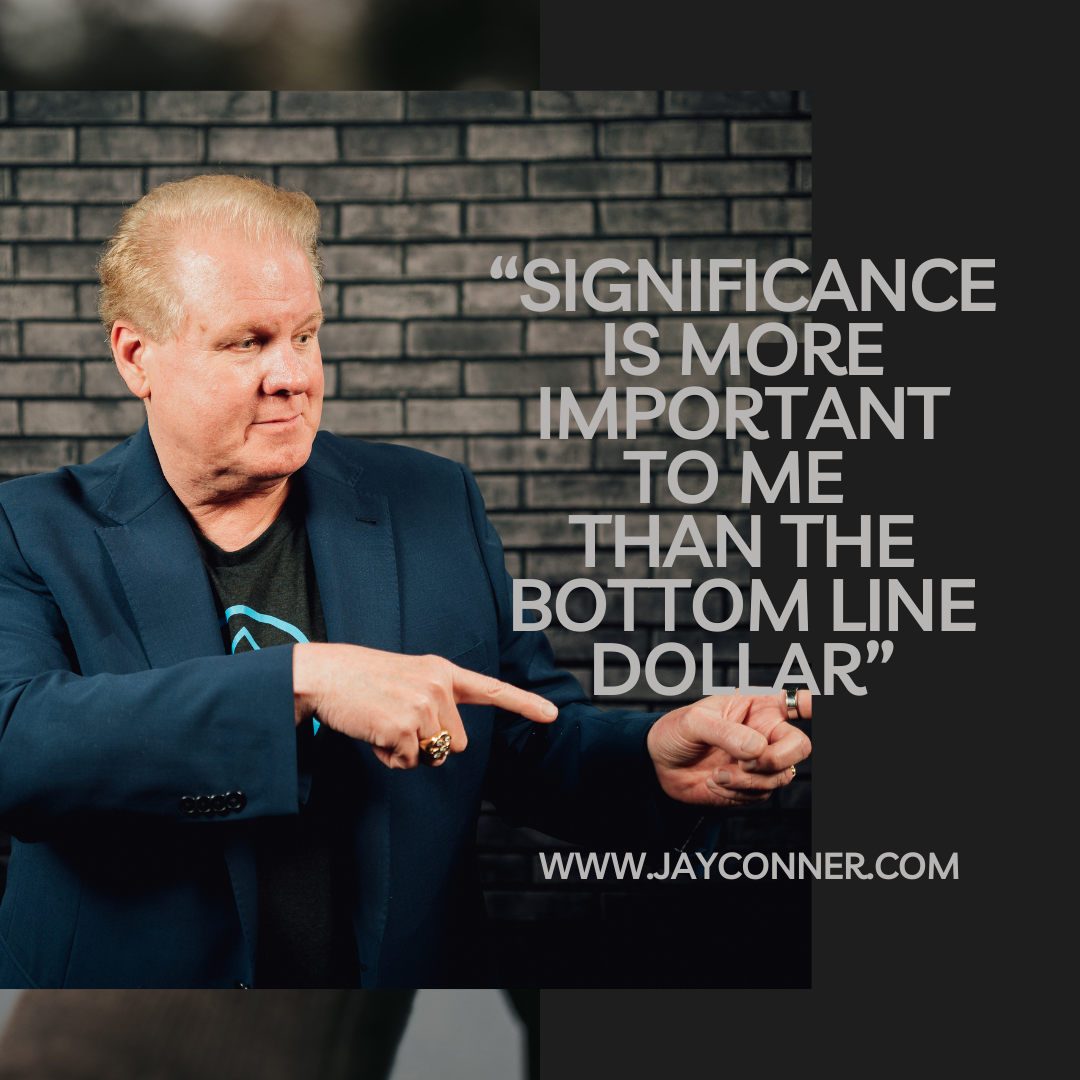
I love it. And that’s what I’m about as well. It’s all about giving back. It’s all about making an impact. It’s all about, you know, being in a stage of your life where significance is more important to me than the bottom line dollar, to tell you the truth. And it seems as though that’s exactly where you are. So shifting mindset, this is an area that you are an expert in. My question is, how does someone shift, their money mindset? You know, a lot of people have got an unhealthy relationship with money.
Jay Conner [00:05:11]:
They’ve, for whatever reason, their own experience growing up, they have a negative relationship with money. They may think money is a bad thing. So what kind of advice would you give on getting that changed, that type of mindset changed?

Angela Duncan [00:05:26]:
Yeah. So I take it with a very slow approach. You need to crawl before you walk. And the first thing that we take a look at is what was the truth for you as a child. What were you taught about money? And you can think about very early experiences. Right? Maybe you’re at the store and you want something and your parents say you don’t need that. Then you start thinking, well, I don’t need things, but you could have them. Right? So writing them down is very important for you to visualize and kind of download them from what you’re thinking about from that early childhood. Write it down, and let’s first review what was taught to you as a child.
Angela Duncan [00:06:01]:
And then we take a look at today because you’re still carrying that information in your brain. Whether you think you have or you haven’t, most likely, it’s still there because you haven’t dealt with it. You haven’t gone through the exercises to be able to deal with that. So when we write down what was our truth in childhood and we look at what that looks like today, we understand that that’s not my truth today. Okay? Well, if that’s not your truth today, what is your truth? What are you most fearful of, especially when it comes to money? And then we go through that exercise and I like to keep it visual. That’s why I want you to write down what you learned as a child and what you think you want to know today and what you’re what’s holding you back and where you want to go and keep it all visual for you. So I have a huge whiteboard in my office that’s, like, 6 feet, and I constantly am writing my thoughts down because I recognize that that’s gonna be the first thought. Whenever I’m conducting business or investing, that might be my first thought, but then I have a minute to change and remember that was then.
Angela Duncan [00:06:56]:
This is who I am now, and that’s how you work that muscle. For someone like me who grew up in the childhood that I did, I know I’m gonna be working this muscle for the rest of my life. It’s not something that I was able to fix. You know? I’m gonna be 46 this year. It happened a long time of those childhood fears. But I understand that they’re there, and I know it’s not my truth today. So I have to shift it, and I’ve gotta do the work to be able to do that.

Jay Conner [00:07:24]:
It sounds to me in your explanation there, Angela, that it comes down to 1 of the first things people need to know is that they have a choice to choose. They have the power of choice and can choose whatever it is that they want. Would you agree with that?
Angela Duncan [00:07:43]:
Yeah. Absolutely. And it’s the awareness factor. Until you are aware of what those early thoughts are, you don’t have a chance to change them because you don’t know that they exist. But once you become aware, and then you can choose to have a different story. You can change that story of who you are and what you think today.
Jay Conner [00:08:00]:
Do you think there’s something to the notion of actually writing something down versus, say, writing your thoughts on a Word document on your laptop?
Angela Duncan [00:08:10]:
Yeah. Absolutely. Many years of studies have been done, and this is why in the school system, they’re still asking you to take a paper test take paper notes, or turn in a paper. Because when you write something down, you’re more likely to, 1, keep it in the front of your brain and think about it. And 2, it makes it something so it’s more visual that you can have a tangible piece in your mind that you’re gonna change and shift that mindset. So it just brings more awareness to it, and it helps you keep focused on that so that you are continuously working on that mind’s mindset shift.
Jay Conner [00:08:45]:
Thank you for sharing that. Now the name of this show is Raising Private Money. So let’s talk a little bit about raising private money. You’ve got experience. You’ve raised over $1, 000, 000 Now, the strategy or the area of investing that you enjoy and that you do is investing in tax liens and you’ve raised private money for your tax lien investing business. Now it’s been my experience, Angela, as I have interviewed hundreds of people here on Raising Private Money, the trend that I have picked up on, and this may not relate to you, but we’ll find out. The trend I have picked up is that most of the time when an investor starts raising private money, there actually is a need. Something happened in their investing career that caused them to need a shift and find a different way to fund their deals.
Jay Conner [00:09:38]:
That was certainly the case for me and my story. So what was it that happened in your investing business that triggered you to start raising private money?
Angela Duncan [00:09:50]:
Yeah. So for me, I was a real estate investor. I’ve been in real estate 25 years, and I was tired of owning single-family properties, trying to find a property manager that would great you know, give great service, collect the rent, get a good tenant. I didn’t wanna get phone calls on Christmas about broken toilets. It wasn’t a passive investment for me. So that was my breaking point, and I happened to pick up a book called The 16 Percent Solution. Not my book, but it’s my journey. It was another option for me to invest in real estate and take advantage of the real estate market, but to do it in a more passive way where I didn’t have to deal with tenants.
Angela Duncan [00:10:29]:
I didn’t have to deal with property managers, and that piqued my interest. And so I started to become a student, and I found a mentor. And I learned more about this vehicle so that I can put some of my capital in it and and start to see what the results look like before I could teach or, you know, provide opportunity to other people.
Jay Conner [00:10:50]:
So with private money, you’ve raised that for tax liens. So there’s all kinds of real estate investing, as we know. I mean, there’s commercial, there’s single-family houses, there’s self-storage, there’s land, there’s apartments, and the list goes on and on and on and on and on. And you have chosen for your expertise and your focus to be on tax liens. So why tax liens?
Angela Duncan [00:11:20]:
Well, the government always gets paid. So we’ll break down. What is a tax lien? If you own a piece of property, just like anything you named, commercial property, houses, condos, vacant land, all of those have a property tax that is due. So that money has to go to the government, and they’re utilizing this money for different aspects of their own budget. Right? The government pays for so many things that they rely on that property tax from you to help fund their budget. This could be schools. This could be roads. You know, whatever it is that was in their budget, they’re counting on you as that property owner to pay them the tax that is due.
Angela Duncan [00:11:58]:
What happens, sometimes a property owner, either they, you know, had someone pass away in their family so they don’t have the income to pay property taxes, maybe they got injured or had an illness. You know, there are lots of reasons that a property owner might fall behind in paying their taxes, but the government still needs their money. So, of course, they found a way to get around this and bring in investors like myself who will come in and give them the money that they need for their property tax In exchange, the government is gonna tell me upfront exactly the interest rate I’m gonna earn on that money I’m letting them borrow.
Jay Conner [00:12:37]:
So these types of returns you’re talking about are paid by the local government. Right?
Angela Duncan [00:12:46]:
Once that property owner pays those taxes back to the government, they’re paying the interest rate in the form of penalties, and then the government turns around and gives that money to me.
Jay Conner [00:12:58]:
Right. So you hear people talk about tax liens, and then you also hear another investing vehicle that’s talked about called tax deeds. So what’s the difference between a tax deed and a tax lien?
Angela Duncan [00:13:10]:
Yeah. So a tax lien essentially is like a piece of paper. I’m giving my money to the government. They’re going to pay me back hopefully at some point in the future, and it’s just a lien on the property. I do not own the I don’t own the rights to the property. I just have given the government money to help fund their budget in the meantime before the client or the property owner pays back those taxes. Now a tax deed is the actual physical title to the property. So some states will offer both options.
Angela Duncan [00:13:41]:
Some will only do 1 or the other, but a tax deed typically means that the home is in the foreclosure process, and now you’re gonna obtain the actual deed to the property. And now you own that property. So that’s a different vehicle, but both of them can be a great, investment opportunity.
Jay Conner [00:13:59]:
So you’ve raised private money and quite a bit of it for your tax lien investing business. So when you started raising private money, how did you go about it and what are some of your favorite ways to raise private money?

Angela Duncan [00:14:14]:
Yeah. So for clarification, it wasn’t my fund. I did find a mentor and a partner, and they were more versed in the fund aspect. And so that’s number 1. When you’re looking at any type of vehicle, you need to find a mentor or coach, someone who’s in the business, who’s done the business, who has expertise that can teach you. Because, especially, if you’re taking in money from other people, you could potentially lose their money. Right? So I wanna put my best foot forward and as much education as possible. So I partnered with someone to help raise money for the fund that they had, and this was just an extremely great way for me to learn the entire process.
Angela Duncan [00:14:50]:
But what I found the best way for me to raise capital is to figure out who is the target market for this fund. In this example, they were telling the investors upfront how much they were going to be paid, so it was a set interest rate, and what the payment schedule would look like. So I’ve got a fund that’s paying out a percentage, and it’s on a payment schedule. Who is my target market for that? Retirees are someone who just wants passive income and wants to know upfront what they’re gonna make so they’re likely more conservative investors. And so when you think about who your target market is that you want to help, I’m coming from an aspect of helping that person. How can I match this fund to the right investment opportunity person and put them together so that is a win-win for both situations? So once you identify your target market, look around. Who’s in your sphere? You know, for me, I have people on my podcast. I have people at networking events.
Angela Duncan [00:15:49]:
And if I approach someone and say, you know, what is your investments doing for you now? What is it that you’re looking for? And when I hear people say, oh, I’m retired. I just need income, or I would like to be conservative and not earn too much but enough for me to pay my bills. You know, that’s kind of my target market. And then when you realize what that is and how you can help them achieve their goals, it’s no longer a sales process. It’s just you connecting them to the right vehicle to meet their financial needs.
Jay Conner [00:16:17]:
I’m so glad you said that Angela, because it’s not a sales process. Process. You know, we talk here on this podcast all the time. It’s not about asking. It’s not about selling, persuading, or trying to talk to anybody about a new thing. We’re providing a solution. In your case there, you’re talking about retired people. And, and, and I tell real estate investors who are looking to raise private money for their real estate deals, Talking with retired individuals is a great market and group of people to be talking with because if they’re retired, there’s a good chance they’ve got retirement funds.
Jay Conner [00:16:54]:
And if they’ve got those retirement funds invested today, there’s probably a good chance that they’re not very happy with the kind of returns or if they’re in the stock market, the volatility of that stock market. And that’s 1 thing that our private lenders absolutely love about doing business with us is that they don’t have to worry about the volatility or the value of their investment in contrast with the stock market. I mean, if they invest in the stock market and mutual funds or stock, then obviously the value of that can be less tomorrow than it is today. And what they love is that the value remains the same. And as you said just a moment ago, they know exactly what the return on that investment is gonna be. It’s just like putting the money in a certificate of deposit at the local bank, but they’re getting paid a whole lot more money.
Angela Duncan [00:17:48]:
Yeah, absolutely. And it’s taxed the same way too. So I love the education process. When I’m sitting with someone who could be a potential investor, explaining to them the difference between investing in this type of vehicle versus maybe a syndication or their own, you know, single-family homes, This is paid to you as interest, and interest income in the current market that we’re in is taxed at whatever your current tax rate is. So you also have to plan with that. So speaking with your CPA or tax adviser, letting them know that you’re gonna go into this type of vehicle and that you are gonna have taxable income at the end of the year so you can help plan accordingly. But the education process is so important because, as you said, this might be a great solution for them, but we wanna dive in a little bit deeper so that we can understand their whole situation, their whole financial goals so that we can help, you know, help them decide whether or not this is gonna be the right vehicle for them.
Jay Conner [00:18:43]:
Now, Angela, I know that you have experienced it, you still experience it, and you teach it as well as how people can go about getting returns like 22%. So the question is, how can someone consistently, and that’s a keyword right there, how can someone consistently earn 22% on their money, on their investment every single year by doing this vehicle of tax lien investing?
Angela Duncan [00:19:16]:
Yeah. So it’s gonna be a mix of the tax liens and the tax deeds because you wanna balance out your portfolio and your risk. Now here in Florida, if you buy a tax lien, the minimum you’ll earn is 5%. It can go up to 18%. So that’s a great way for you to have the double-digit returns in that vehicle. But if you wanna increase that and take a little bit more risk, then you’re gonna move into the tax deed, investing where you’re gonna foreclose and own the homes so that you can either turn it around and flip it. Maybe you’re gonna fix it and flip it. Maybe you turn it into a rental.
Angela Duncan [00:19:51]:
But then you’re combining those returns together so that you can earn more money on your investment and kinda diversify your risk a little bit, amongst 2 different vehicles but relatively in the same space so that some of it could be short term, some of it could be long term, but that helps even out those investments for you.
Jay Conner [00:20:11]:
Now, another way that you invest and that you also share with your community how to invest, and that is in short-term notes. So, first of all, define for us, if you would, what is your definition of actually a short-term note, and how is it that you’re able to go about and generate as much as 10% returns in only 90 days on those short-term notes?
Angela Duncan [00:20:40]:
Yeah. So there’s, you know, so many different investment vehicles out there. There’s businesses that need to have some short-term capital. Maybe they are off-season, but they still need to meet payroll. So, you know, we can charge them that type of interest rate when we’re doing a shorter-term note like that. There are commercial buildings that are being built, and maybe they just need some bridge funding, meaning funding from now until the completion of the project. Those are higher risk and so you’re charging them a higher interest rate. So There are lots of different opportunities that can come together to help you earn that higher return, but they are gonna be a little bit riskier.
Angela Duncan [00:21:15]:
Understand that this is not typical for the conservative investor. But if you’re willing to take a little bit more risk with your money, then you can also find other avenues in which to, allocate your funds and get a higher return, but you also take in a higher risk as well.
Jay Conner [00:21:33]:
Now, Angela, I know you talk about generational wealth and how it is that you can actually use tax liens to create generational wealth. So talk about that, for a little bit, if you will. I mean, you know, you’re talking about short-term returns that you just talked about. Well, that’s not generational. How can tax liens play into generational wealth? Because that sounds pretty long-term.
Angela Duncan [00:22:03]:
Yeah. Absolutely. And this is where your life insurance professional is gonna partner with me, and we’re gonna but we’re gonna build a plan for you because, you know, there’s many great books out there that talk about life insurance, specifically a whole life policy or an IUL policy. So we get the life insurance professional involved where we can put money into life insurance, which, you know, you speak with your CPA, not a tax adviser, but life insurance can pass to your state tax-free. It’s something that you can fund upfront, and when it passes to your heirs, it’s tax-free. So you can set it up to where perhaps, you know, your grandchildren want to purchase a house and they can, they can get a loan from your life insurance policy without getting too deep into the details and then pay it back. So it’s a great way for you to, 1, teach your children, teach your grandchildren about generational wealth and how to continue to build and pass it on tax-free. Another great thing about a whole life policy is that you can put the money into it and have the life insurance, but then you can borrow against it and put it into something that could create a double-digit return.
Angela Duncan [00:23:11]:
So not only do you have a fully funded life insurance policy to pass to your heirs, but now you’re borrowing against it and taking those funds and putting them somewhere else so that you can earn income in that avenue as well. And then you can pay the life insurance back upon, you know, your death so that it does pass your heirs tax-free. But it’s a way kind of to double dip, but these are strategies that a lot of people aren’t aware of because they don’t have the proper professionals on their team. So that’s 1 of the things that we like to teach is that not just about me, but we’re bringing in the CPA. We’re bringing in the life insurance agent so that we can build out the proper plan for you so that your hard-earned dollars today get to pass to the next generations, but also we can teach them how to keep that going as well.
Jay Conner [00:23:57]:
Angela, you’ve been blessed to work with a lot of new real estate investors and seasoned real estate investors. And since you’ve been exposed to so many of those in your coaching and your mentoring career, What have you noticed? What trends have you seen as far as common mistakes that new investors make when they start getting into this world of investing? And what advice would you give them to avoid those common mistakes?
Angela Duncan [00:24:30]:
Yeah. And I see this most often with my female investors, is that we don’t wanna ask for help. We don’t wanna seek out a coach or mentor. 1, we think maybe the investment of money is not worth it or we don’t wanna bother them, and it’s so funny to me because what I find is 1 of the most compelling traits of these successful, you know, entrepreneurs, business owners, investors is that they’re so willing to give back. Right? That’s why you and I are here right now because we wanna get back the information that we’ve learned. We want you to learn from your mistakes so that you don’t have to make the same mistakes and so that you can meet your goals that much quicker. So what I find, especially with the new investors, are they’re scared and they don’t wanna ask for questions and they don’t wanna find a mentor, but you have to. It is so important for you to become a student first and seek out that information so that you don’t lose money.

Angela Duncan [00:25:21]:
The more information you have, the better the mentor, the better the coach, the more likely you’re gonna be successful because that’s what we do. We teach you to be successful. So learn from our mistakes and the things that we’ve already been through so we can teach you not to do those, but it’ll just help you get to your financial goals that much quicker. But don’t be afraid. Get out there and find the information. Find a coach, find a mentor, and ask the questions that you need in order to feel comfortable.
Jay Conner [00:25:46]:
Angela, I so wish I had had that advice when I started out because the very first 6 years that I was in this business, I was relying on my own personal experience from previous careers, which was a huge mistake. As a result, I lost 100 of 1, 000 dollars by making mistakes that I would not have made if I had had that mentor or that coach when I started out. So I’m glad you shared that advice. Angela, I know my audience wants to stay connected with you and learn more about the ways that you can deliver impact and significance to them. So how can my audience continue the conversation with Angela Duncan and your team?
Angela Duncan [00:26:30]:
Yeah. So if you want go to https://www.MoreWithAngela.com/Fire, I’ve created a free ebook so that you can learn more about tax lien investing and figure out if is this a vehicle that you want to pursue. So that is definitely a freebie for you. I’m also on Facebook and LinkedIn as Angela Duncan is the best way to find me. But if you wanna learn more about the podcast on streaming platforms, Empower Her Money is the name of the podcast.
Jay Conner [00:26:56]:
I love it, Angela. Again, be sure and check out and visit Angela at https://www.MoreWithAngela.com/Fire Angela, what a pleasure it’s been to have you here on the show. And any parting comments or advice that you’d like to wrap up with?
Angela Duncan [00:27:18]:
Yeah. Take that first step. Get your research done, and see if this might be the best investment vehicle that you have uncovered.
Jay Conner [00:27:27]:
I love it. Angela, thank you so much for joining me.
Angela Duncan [00:27:29]:
Thank you.
Jay Conner [00:27:31]:
And there you have it, another amazing episode of Raising Private Money. I’m Jay Conner. I’m so thankful that you decided to join us here on the show, and I look forward to seeing you right here on the next episode of Raising Private Money.
Narrator [00:27:48]:
Are you feeling inspired by the knowledge you gained in this episode? Then head over to www.JayConner.com/Moneyguide. That’s www.JayConner.com/Moneyguide and download your free guide that shares 7 reasons why private money will skyrocket your real estate investing business right now. Again, that’s www.JayConner.com/Moneyguide to get your free guide. We’ll see you next time on raising private money with Jay Conner.