
Are you tired of seeking funding from banks and hard money lenders? My guest today is somebody who went through the same difficulties before successfully transitioning into using private money.
Mike Kaeding is the CEO of Norhart, a residential real estate builder and developer company. Their mission is to solve America’s housing shortage by improving how apartments are built and managed, ultimately improving how we all live.
For the longest time, Mike used construction or bank lending to fund his company’s projects before he realized how much better it is to work with private lenders. Tune in to the episode as we discuss his work and his company’s unique method for raising private money!
Key Takeaways:
- The difficulty of borrowing from traditional lenders, especially in today’s market.
- Private money is sourced from relationships you build with others.
- Advertising for private money, and how Mike and Norhart’s method of raising private money differs from Jay’s.
- Mike’s company, Norhart, and its strategies for lowering costs and increasing quality.
- Innovation through integrating ideas from other industries into your business.
- Norhart’s investment opportunities are still safe and secure.
- Norhart’s ideal lender.
Check out my book: 7 Reasons Why Private Money Will Skyrocket Your Real Estate Business and Help You Build Incredible Wealth!
Get it here for FREE: www.jayconner.com/moneyguide
Connect with Mike and Norhart:
Website: www.norhart.com
Instagram: https://www.instagram.com/norhartlife/
LinkedIn: https://www.linkedin.com/company/norhart/
Youtube: https://www.youtube.com/channel/UCqTrVU_Z1q2rcd8ejPstTgw
Facebook: https://www.facebook.com/norhart
Invest in Norhart: www.norhart.com/invest
Timestamps:
0:01 – Raising Private Money with Jay Conner
1:08 – Today’s Guest: Mike Kaeding
3:09 – The Pain Of Not Being In Control Of Your Own Business
6:25 – Private Money vs. Institutional money
7:30 – Jay’s Free Money Guide: https://www.JayConner.com/MoneyGuide
9:07 – Raised Private Money By Spending Money
11:09 – What is https://www.Norhart.com
13:10 – Lower Construction Costs But Higher Quality
16:30 – Construction Projects From 15 months Down To 6 months
18:47 – What Is Vertical Integration?
20:12 – The Best Innovation Is When You Take Ideas And Concepts From Other Groups Or Industries Then Tie It All Together – Mike Kaeding
21:17 -Invest In Norhart: https://www.Norhart.com/Invest
22:37 – We Offer People Opportunities
24:13 – What Is An Accredited Investor?
25:04 – Is It Safe And Secure To Invest In Norhart?
27:40 – Mike Kaeding’s Parting Comment: “ Jay, You Are A Master In Your Space”
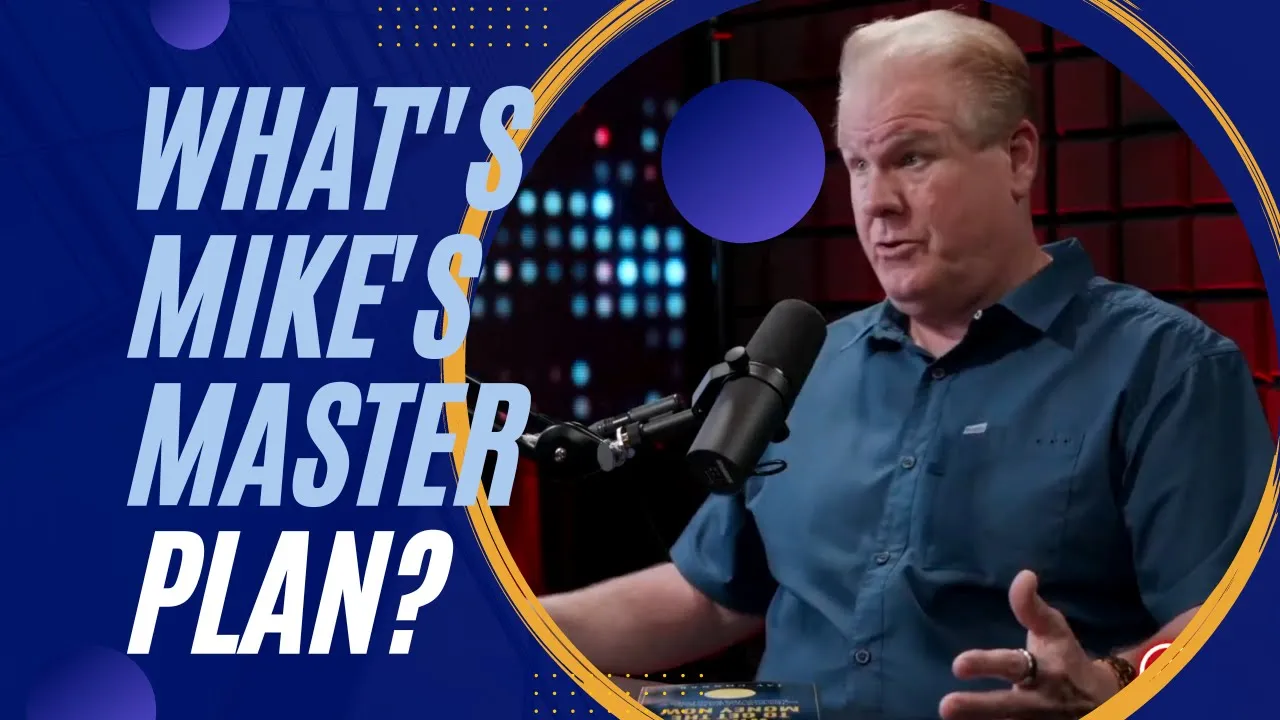
Discover Mike’s Master Plan to Drop New Apartment Costs Up to 50%
Mike Kaeding (00:00):
We are producing a new apartment every five hours. So every five hours, another apartment gets completed. In just doing that, breaking this into smaller batches. By working together, we can actually take a construction project that might be 15 months and drop it down to six.
Narrator (00:18):
If your real estate investor and are wondering how to raise and leverage private money to make more profit on every deal then you are in the right place on raising private money, we’ll speak with new end seasoned investors to dissect their deals and extract the best tips and strategies to help you get the money because the money comes first. Now, here’s your host, Jay Conner.
Jay Conner (00:57):
Are you struggling with growing your real estate business? Are you tired of begging the banks and hard money lenders to fund your real estate deals? Well, search no more. My guest today will reveal how he has transitioned from borrowing money from the banks to borrowing from private lenders, and he makes the rules, not the lenders. My guest, Mike Kading, uses private money for single-family and apartments as well. So if you want to get plugged into private money for your real estate deals, you’re at the right place right now. Let’s dive in.
Jay Conner (01:41):
Welcome to another episode of Raising Private Money. I’m so excited about the guests that I have on the show here with me today. First of all, he is on a mission to dominate yes, dominate the multi-family industry by delivering absolutely the best construction cost of value in the industry. I mean, he knows how to think outside the box. He knows how to analyze data, and quite frankly, he has some of the most innovative ideas of anybody around in the industry. In addition, I guess as a residential real estate builder and developer, he and his team are transforming really the way apartments are being built today. I mean, they have actually changed the way construction is done, and this has resulted in much higher-quality construction. And along with that lower cost projects, their mission in today’s market is to solve America’s housing shortage by transforming the way apartments are built and managed. And in doing so, they’re gonna be improving the way all of us live. We’re gonna be meeting my guest, Mike Catering right after this.
Jay Conner (03:04):
Well, Mike, I’m excited to have you on the show. You know, you and I have got a lot in common. First of all, you are going through and you have been going through the pain of borrowing money for your projects from somebody else that makes the rules instead of you making the rules, you’ve done a lot of research in this world of private money when it comes to how you can spend money on advertising to raise private money versus networking. And so really at this point in time, you are at the point of transitioning on where you’re getting your funding. So let’s go ahead and dive into that. Mike, what kinda a pain, well, first of all, let’s back up. So you’ve done residential, you do commercial, you do multifamily, you do apartments, you know, you do more than one asset class of real estate. Tell us about the kind of funding that you’ve been using for those classes of assets so far, and what have you experienced with that?
Mike Kaeding (04:11):
Yeah, thank you so much, Jay, for having me on your show. We traditionally use construction lending or just bank lending in general. And this has been pretty good for us because our cost to value, the cost that a cost actually builds the buildings is fairly low compared with the value when it’s complete. The challenges in the last, I dunno, six to nine months, we’ve seen banks go from being willing to provide a 75% loan to value all the way down to 55 to 60%. And so for us now we’re in a bit of a pickle. We need to bridge some of that gap in order to get the financing we need to build our projects.
Jay Conner (04:50):
Yeah. So would you say one of the biggest differences in today’s market with funding given the sources that you have, you know, been doing business with, is, is it the interest rate? Are the interest rates higher than you’re experiencing and or you just said you gotta bring more down payment to the table and, as they say, have more skin in the game?
Mike Kaeding (05:17):
Yeah, so as interest rates rise, there’s something called the debt service coverage ratio, which might be a bit technical, but basically, that ratio that banks use is a bit conservative in this kind of market, which basically drives down what they’re willing to give you for financing. So I think you mentioned in your book, having to go to banks and basically pleading with them, asking for those funds. It’s, it’s very true. Even a year or two ago, we had a project, it was a 60 million project. We went to banks and we went to 66 0 different banks calling them every single week, every single day for months on end trying to get some banks to work with us. And since learning about you and learning about your program, it’s just, it’s, it’s eye-opening to how much easier it can be using private lenders rather than the traditional banks.
Jay Conner (06:10):
Yeah, well, you know, the list is long as you have already learned. The list is very long as to why they use private money versus institutional money. So just to make sure everyone’s on the same page, how about going ahead and sharing from your perspective, I’m sure it matches up with mine now since you’ve been reading my book and following my podcast and all that what’s the difference that you now know what’s the difference between actual true private money and institutional money?
Mike Kaeding (06:49):
Its private money comes from individual investors. It’s people that you build relationships with where institutional money, there are gatekeepers and they’ve found their own investors, and you’re having to go to them and, and ask for those funds. It’s a, they’ve got a lot of rules. Some of our bank deals will take a year, a year to close, and the closing documents, I, I’ve been there, spent like four hours in closing documents and they’re a pile of paperwork this thick. It doesn’t have to be that way if you’ve got the right relationships directly with private lenders in your neighborhood.
Jay Conner (07:24):
Exactly. Well, I tell you what, let’s do, Mike, I know that we have got a lot of listeners that are thinking to themselves, well, where in the world do you find these individuals, and how in the world do you make the rules? And this is like, you know, when I first heard about this world, Mike, all the way back in January 2009, I never heard of this world until then. I thought to myself, wait a minute, this is a 180-degree shift in my thinking and in the way that I had been doing business. I relied on local banks to fund my deals from 2003 to 2009. So let’s go ahead and give our listeners a gift right now. And that is, I’m so excited. I just finished writing my Guide My Money Private Money Guide called Seven Reasons Why Private Money will Skyrocket Your Real Estate Business and Help you build Incredible Wealth.
Jay Conner (08:18):
And this guide will get you onto the fast track to getting private money the way Mike and I are talking about. And that is, you make the rules, you set the interest rate, you set the terms, and guess what? I never take any down payment to the closing table. I always bring home a big check when I buy a real estate project or property. And so if you wanna get on the fast track to private money and you be in control of your business in the driver’s seat, you can download this for free at www.JayConner.com/MoneyGuide to get on the fast track to private money. Now, Mike, you and I were talking and visiting previously before we started the show, about how you have researched that you can raise private money by actually spending money <laugh> to locate private lenders, get them, you know, finding you, by the way, I’ve never done that. But, tell, share with us, share with me the research that you have uncovered as to advertising for private money, which by the way is open solicitation and you can only borrow from accredited investors when you do that. Whereas the way I do private money, you can borrow from anybody. What’s the difference as far as what you’ve learned so far?
Mike Kaeding (09:48):
Yeah, it’s really interesting when getting into it. The s e c has probably a dozen or so exemptions to not having to file as a public company. And this lets you go raise money in different ways, including advertising, which you can’t traditionally do. So, that sounds advantageous, right? You have a bigger pool of people you can connect with. You are limited to accredited investors. There are some cases where you’re actually not, which is kind of interesting. The challenge though, that we’ve found is that it costs about 4% of the capital you’re raising in finding those investors. So if you’re raising a hundred thousand dollars, then you’re, you’re costing yourself about 2,500. If you’re raising 250,000, then it’s $10,000. One of the magic, one of the kinds of interesting powerful things about your approach, Jay, is you’re building relationships directly with people. And if you can build those relationships in a way that doesn’t cost you $10,000, this is a great approach. And that doesn’t even include all the costs with the s e c registration and filings and things that you have to do that just add on additional costs. It’s, it’s, it’s an amazing strategy that you’ve put together.
Jay Conner (11:00):
Yeah. Well, thank you, Mike. Well, I’m so glad we found each other and I’m so excited you’re not gonna have to spend those kinds of dollars to now raise private money. So tell us, Mike, about your business, your company, which is called Norhart. And we’re actually going to give my listeners here an opportunity to get a pretty nice return on their investment capital. Cause I know what your website is. But first of all, what is your heart and how did it come about?
Mike Kaeding (11:35):
Yeah, we design, build, and rent apartments and we’re really transforming the way this is done by incorporating technologies and techniques that have revolutionized other industries. And as a result, this drives down the cost and increases the quality of our projects. If you look at the past 60 years, manufacturing has improved by 760%. Agriculture, 1500% during that same time period. Construction has done nothing. Well, 10%, it’s essentially flat. That’s out to me. It’s a bit outrageous. And I think that we have been finding ways of driving down those costs. What’s really interesting is, my parents did start the business about 30 years ago or so, and about 15 years ago, or 10 years ago, my dad suddenly passed away, which is really tough. But in that moment, we had an opportunity, cause we started realizing that our lack of knowledge in the space, or my knowledge in the space was a bit of an asset because we started asking how we do things differently and apply lessons that other industries have done. And so we’ve seen success, sir, we’re about 20 to 30% lower construction costs in the very best we’ve seen. We think we can drive that down to 50% or lower. And imagine someday what that could do. That means someday your rent could be half or your mortgage could be half. It’d be amazing to work to solve that affordability crisis we face in America.
Jay Conner (13:09):
Well now, Mike, you have done a fantastic job rousing curiosity by mentioning, by mentioning lowering, you know, construction costs, 20%, 30%. There may even be ways to reduce the cost by 50% while at the same time maintaining or increasing the quality. And, you know, when you talk about being able to lower rents or, you know, sell houses you know, or have a mortgage le I mean, you never hear of mortgages, you know, and, and rents going down. So, so can you pull back the curtain just a little bit mm-hmm, and share with us what are, what are some of the techniques and strategies that you and your company Newhart are employing to achieve lower cost and increase quality? How do you do that in the world of construction?
Mike Kaeding (14:04):
Yeah, so one example is construction a very broken-up industry. You have the owner, which is typically different than your developer, which is maybe different than your general contractor who coordinates all of the construction, who can be different than your subcontractors, the people actually doing the work who can be different than your suppliers sourcing materials for you. And what’s, what’s really interesting is those different groups don’t work very well together. Always. In fact, I was meeting up with one of the unions not too long ago and they were interested in working with us. I said, okay, great. If we brought you in as a union for the plumbing, does that mean we can use the electrical union to source people? And they said, no, no, no, you can’t do that. I’m like, well guys, do you play well in the sandbox together? And, his response to me was, good fences make good neighbors.
Mike Kaeding (14:57):
This is not a recipe for creating a great efficient work process. I see it all the time. And we were faced with it decades ago where there’s fighting and challenges and difficulty that happens to that. Imagine if a construction company were to build cars, you would have a different company doing the windshield, a different company doing the steering wheel, a different company doing the door, and then of course the door company, they’d be a few days late, you would call them up and be like, ah, we’ll get there in a couple of days. And, then they would hear that you only want them to work on one car at a time. Just crazy to them. And they, they would say, no, I need a hundred cars before I’d even come out there in manufacturing. They look at us like, they were crazy. But just bringing in-house enables the level of cooperation you don’t normally get.
Mike Kaeding (15:47):
And then that unlocks really cool stuff for example, in manufacturing, Toyota produces a new car every 55 seconds in construction. We don’t have any such notion, me, maybe we’re completing a floor every couple of weeks or something like that. We are now, as our company, as, as we’re applying their techniques, we are producing a new apartment every five hours. So every five hours another apartment gets completed. In just doing that, breaking this into smaller batches, good every work working together, we can actually take a construction project that might be 15 months and drop it down to six.
Jay Conner (16:33):
So to bring a construction project, say for 15 months down to six months, are you using, the same labor force but you’re just Yeah. Arranging the relationship differently? How, how does that work
Mike Kaeding (16:49):
Exactly? I’ll give you one example. Drywallers hate, hate, hate it if anything is in their way. So they want an entire floor cleared out, everything is done so that they can put their drywall on super fast and leave. The downside with that is that means you have an entire floor not being worked on. If you take that floor and segment it down into one unit and get everyone coordinated, well, so they’re only working in their one unit, you never have an entire floor not being worked on. So you can work on the whole building at once. It’s kind of crazy if you go out and see our buildings on one end of the building, you have completed units that can be turned over and residents can be living in it. You look about 200 feet down the building and you see dirt cuz there’s nothing there yet. So you just condense that whole window down so you can produce at a faster rate.
Jay Conner (17:43):
So what would you say are the main factors that are driving the cost down? Obviously, if you can get cash flowing quicker, that reduces your carrying cost right before that becomes, but are, are there any other factors other than reducing, carrying cost?
Mike Kaeding (18:05):
Yeah, so another one is the supply chain. Most times we just buy, you know, construction people buy from the local suppliers or people they have relationships with. The reality is you can get better products at a lower price point going further down the supply chain. So we have staff who work and live in China. We have staff that works and live in Mexico and a lot of these products come from those sources. But if we can buy directly from those manufacturing sources, we cut out two or three levels of middleman in that process in gator and products just at the right time at a lower cost point. So that’s another example. There are probably about a dozen or so ways that we do this.
Jay Conner (18:46):
So does the phrase vertical integration play into this? And if it does, absolutely. Explain what, explain what vertical integration is.
Mike Kaeding (19:00):
Yeah. Vertical integration is when you bring a variety of disparate entities together to complete one task. And so for us, we are the owner, we’re the recorded all over the construction. We do all the subcontractor work. We have electrical, plumbing, H V A C, all in-house, and all those laborers in-house. We have the supply chain in-house. We have manufacturing facilities in some cases to com produce components for our buildings. And so going very deep like that is vertical integration. It’s scary, it’s hard. Most people like to stay in their niche, but we’re looking at this very disparate industry and say, how do we bring it together so that we can improve the efficiency in the way we do our work?
Jay Conner (19:47):
So you have done, you’ve employed this type of strategy with apartments, right? Does this apply at all to new construction for houses?
Mike Kaeding (19:59):
Absolutely. Yeah. You could do it for housing, you do commercial. In fact, I think housing would be one of the easier ways to do it, but certainly, you could do it throughout the industry. Yeah.
Jay Conner (20:10):
Would you say you’re an innovator of this idea?
Mike Kaeding (20:17):
Yes and no. I think the big thing we’ve done, I, I think the best innovations is when you take ideas and concepts from other groups, other industries, and you tie it all together, right? And, that is what we have done. And in that sense, we’re very much innovating in the sense that maybe it doesn’t feel like innovation is, we realize that we don’t know everything. So we fight very hard to find the world’s, literally the world’s best people, and bring them together to come up with these sorts of crazy concepts. We have people who, who are so good at what they’re doing, that they’re, they’re the best in the whole United States. They live in Florida and we actually fly them up every week to Minnesota. It’s like a three or four-hour flight every single week to work to fly ’em back. But in, but when you’re thinking at that kind of level as you’re finding the very best people, its doors unlock and it can create crazy new stuff.
Jay Conner (21:14):
Wow. That’s amazing. Now I know that you have an opportunity because one of your URLs is www.norheart.com/invest. Yeah. So talk, talk about what is the investment opportunity.
Mike Kaeding (21:34):
Yeah, so what we are doing, is a couple of different paths, but the primary one is we’re building an investment platform. And what this is, it’ll feel a little bit like a bank account. It’s not actually a bank account, but it’ll feel like that. It’s not F D I C insured, it’s actual investments in hard real estate. But you can put money in, you can take money out, you can put money in and lock it for a period of time and then take money out for a higher interest rate. So it’s, it’s a lot of taking your principles, Jay, of private money lending and trying to open it up more to the masses and make it more accessible to the masses. So actually, the way we’re approaching this is through something called a Reg A, which does not require accredited investors. We do have to be audited. We do have to go through the s e c, so it’s gonna take us another six months to build this out. But that’s sort of the primary avenue. And then we have a secondary avenue, which is very much following your course, your book, and your approach to raising capital.
Jay Conner (22:36):
That’s awesome. Well, I’m so glad that you were able to tell, and I tell people all the time, private money, whether it’s for single-family houses or whether it’s for commercial deals, it’s all the same money. It’s all the same money, it’s all the same, could be some of the same people. It’s just a matter of how you structure the deal, and how you structure the offering. And, you know, you said something towards the beginning of our visit here on the show is that you know, the traditional way in borrowing money is going to the bank and getting on your hands under these and putting your hands underneath your chin and going home. Please gimme a mortgage. Please gimme a mortgage, please. Lonely money. And, but in this world of the way we raise private money, and now the way that you’re raising private money you know, we’re not begging, we’re not asking, we’re not chasing, we are teaching people about this opportunity that they have.
Jay Conner (23:29):
And you know, they, the, I mean, they’re chasing us. I mean, prior to Covid, Mike, I don’t know if you have heard me say this statistic, but prior to Covid, there was 18 trillion in cash and just people’s retirement accounts. Sitting on the sideline, it wasn’t used. Now this side of covid 31 trillion in cash, right? Sitting on the sidelines. Wow. And they don’t know what to do with it. They don’t know what to do with it. So it’s your and my responsibility to relieve them of that problem and offer them opportunities to where they could get high rates safely and securely. So in your platform, and I’m, and I’m so glad you did the research to where in the platform that you have, it does not have to be an accredited investor, by the way. Why don’t you go ahead and share what is the definition of an accredited investor? And your investors don’t have to meet these criteria.
Mike Kaeding (24:26):
Yeah. And credited investors mean that you are making $200,000 a year as an individual or $300,000 a year as a partner or spouse, or that you have a million dollars of net assets excluding your home. So if you meet one of those two criteria, you’re an accredited investor, there are a few other ways. If you’re professional, you can also become an accredited investor. But that first one’s the main point.
Jay Conner (24:52):
And of course, a non-accredited investor is any investor that does not meet the criteria of an accredited investor. So with your, and so it’s your in. So how, so answer this question first then I got a follow-up question. So, would you say your investment opportunities with Newhart are safe and secure? And if so, how so?
Mike Kaeding (25:21):
Yeah, so it’s, it’s actually very similar to your approach. What we’re doing for us is, if you look at the capital stack, this is where money gets invested or where the money comes from for a project. Typically, our projects, they’re funded first with bank loans. And then after that, we put our own equity into the project. We’re basically, for this vehicle, we’re introducing a middle tier. So this middle tier is, is a little bit riskier than the bank cuz if we lose our money, the bank gets paid back first. But as the general partner, as the primary equity at the top, we’re taking most of the risk. And so we might have that first 25%, so the deal has to go down by 25% before the preferred equity ever gets touched. So that’s, that’s how we provide some safety to our investors.
Jay Conner (26:12):
That’s wonderful. So how would you describe your ideal investor and how can they find out more about the investment opportunity?
Mike Kaeding (26:23):
Yeah, the ideal investor is someone who wants a good rate of return that doesn’t wanna take on a tremendous amount of risk. Our goal is to reduce the risk in these things a lot as Jay has done through your, system, but to reduce that risk for people who are looking for a good r rate of return on that.
Jay Conner (26:45):
Wonderful. And then, well, Mike, our Go ahead, Mike.
Mike Kaeding (26:49):
Oh yeah. Go to our website nordt.com and clicking on, in on Invest. You can set up for our newsletter to get updates as updates come out with that platform.
Jay Conner (26:59):
Awesome. So that website for to learn even more about how to get high rates of return with Mike and his company. By the way, Mike is the CEO O of Nordt. Just so you’re talking to the guy that’s in charge website. To learn more about how to get those high rates of return go to www.Norhart.com/Invest. Mike, thank you so much for the time to for your time for coming on here to join me on the show and for any final words before we wrap this episode up.
Mike Kaeding (27:45):
Thank you so much for having me. And Jay, I, I really have to hand it to you. Your book, your classes, and your insight are really impressive. So for any of those that are interested in learning more, definitely engaged a lot with Jay, he is a master in his space.
Jay Conner (28:02):
Thank you so much, Mike. God bless you. And, thank you for coming on.
Mike Kaeding (28:06):
Thank you.
Jay Conner (28:08):
Well, there you have it my friend, another episode of Raising Private Money with Jay Conner, I’m so excited that you decided to join me here on the show. And I need your help. I need for you to just think of one person to share this episode with if you think they believe or you believe they would get value from it. And if you happen to be listed on iTunes in the upper right-hand corner, three dots, hit those dots and just tap follow so you don’t miss out. And in addition to that, if you happen to be watching or listening on YouTube, be sure and subscribe and click that bell so we get you a notification of when we go live on the next YouTube. I’m Jay Conner, The Private Money Authority. Wishing you all the best here’s to taking your business to the next level. And we’ll see you right here on the next episode of Raising Private Money.