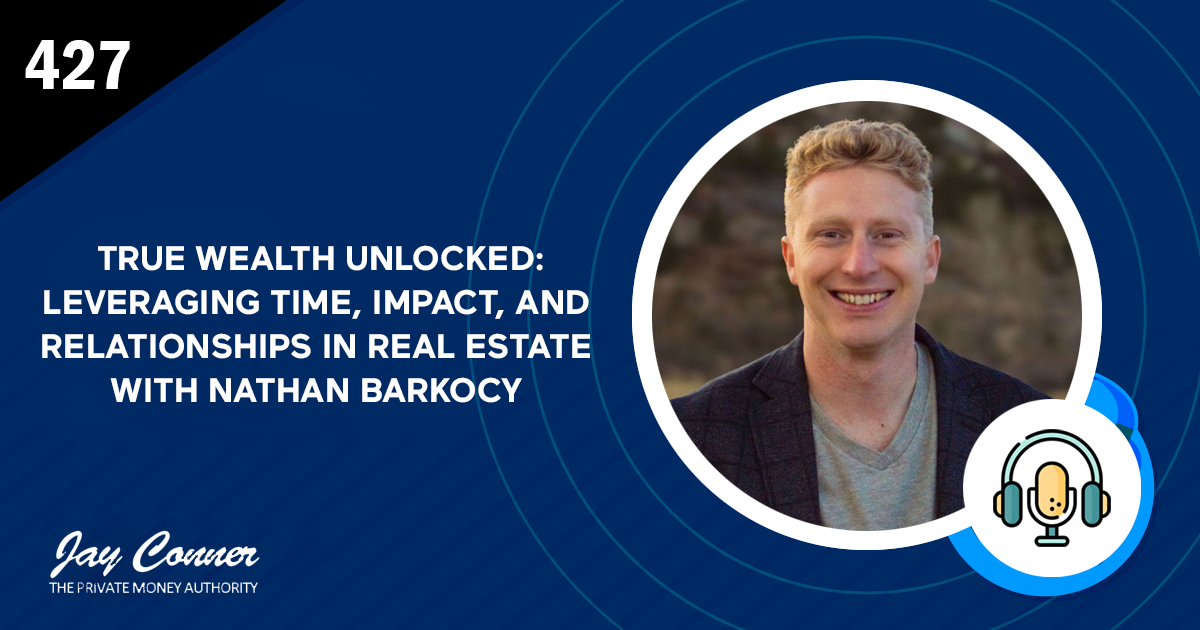
On a recent episode of the Raising Private Money podcast, the conversation focused on redefining what it means to build wealth—moving far beyond simply chasing dollars and closing deals. Several points were raised, centering on the true pillars of a fulfilling and prosperous life: time, impact, and legacy.
Time: The Most Valuable Asset
One concept discussed was the idea that time is our most valuable asset. The story shared about a nationally ranked cyclist whose Olympic trajectory was shattered by a life-threatening accident at just 16 years old was a powerful illustration. After being pronounced dead at the scene, spending weeks in a coma, and facing the monumental task of relearning basic functions, a profound mindset shift occurred. The discussion explored how, in the wake of such an experience, priorities are inevitably reordered: success becomes less about medals or accolades and more about reclaiming and cherishing moments—taking that first step again, spending precious time with loved ones, and making every day count.
A key theme that emerged was the need for entrepreneurs and investors to structure their businesses so they serve their lives, rather than consume them. The conversation highlighted how too many successful people make more money each year only to find themselves with less time, increased stress, and reduced freedom. The solution suggested was clear: design business systems that buy back your time, not just add to your to-do list.
Impact: Relationships and Contribution
The discussion turned to building and leveraging relationships as a foundation for both financial and personal success. A major takeaway was that money flows to trust, and trust is built through authentic stories, credibility, and relationships. Building a quality network is essential—opportunities and funding often come from the strength of your connections, not just the deals you present.
One of the most practical insights offered was about how to start conversations around raising Private Money. Instead of feeling desperate or asking for a handout, the advice was to approach relationships with confidence, offer solutions to real problems, and naturally segue into investment opportunities as part of serving the needs of your network. The key is to ask the right questions and let investors close themselves through their own discovery and self-identified needs.
Moreover, the episode highlighted the importance of mentorship. Access to wisdom, built through lived experience rather than just book knowledge, accelerates learning and empowers emerging entrepreneurs. This led to the creation of the True Wealth Community, a platform aimed at providing mentorship and community for driven entrepreneurs who want to gain ownership of their time, build impactful businesses, and grow their wealth while supporting one another.
Legacy: Building for Others
The discussion explored the difference between old wealth and true wealth—true wealth being defined not just by what you accumulate, but by what you build for others and pass on. The conversation emphasized that legacy grows out of the impact you have on people: your team, your clients, your family, and your community. Suffering or struggles aren’t deadweights that hold you back; they are the fuel that can propel you forward and allow you to help others on their journey.
Transformation, Not Just Information
A striking observation was made about today’s world: we are drowning in information, yet starving for truth and transformation. The True Wealth Community exists to close this gap, focusing on accountability, mentorship, and actionable guidance instead of just more content. Community members receive personal, experience-driven mentorship to move past knowledge and step into action.
Building a Win-Win-Win
The conversation ended with practical insights about scaling a business beyond a single individual’s efforts: hiring the right people, leveraging new technology, but always focusing on the unique value and honesty that only humans can bring. True wealth, it was concluded, is a win-win-win—when you, your team, and your clients all benefit, and you create a lasting, positive impact.
This episode serves as a reminder to all entrepreneurs: build your life and your business around the pillars of time, impact, and legacy, and wealth will follow not just to you, but through you—infusing meaning into every step.
10 Discussion Questions from this Episode
- The conversation focused on the idea that money is a tool and true wealth goes beyond just financial success. How do you define true wealth in your own life, and what pillars are most important to you?
- One concept discussed was the importance of controlling your time as part of building wealth. What strategies have you used, or would you consider using, to gain more control over your time?
- The discussion explored the pivotal role of storytelling in raising private capital. Why do you think sharing personal stories and building trust are so effective in investor relationships?
- Several points were raised, including the idea that communication is foundational when seeking investment partners. What communication mistakes have you observed or made when discussing investment opportunities?
- A key theme that emerged was the abundance versus scarcity mindset. How does your mindset impact the way you approach raising capital or building your business?
- The episode touched on building and leveraging strong networks to grow your business. What are the most effective ways you’ve found to network in your industry?
- The conversation highlighted the transformative experience of surviving a major accident and how it reshaped ideas about success and legacy. Have you had a life-changing experience that altered your view of wealth or success?
- The discussion explored the limitations of formal education in teaching entrepreneurship and wealth-building. What resources outside of traditional education have been most valuable to your business journey?
- Several points were raised about the changing landscape with AI and the importance of human skills that can’t be automated. Which parts of your business or career do you believe are irreplaceable by technology?
- A key theme was the importance of building a business that serves your life, not consumes it. What boundaries or practices do you put in place to ensure your business supports your desired lifestyle and legacy?
Fun facts that were revealed in the episode:
- From Olympic Aspiration to Real Estate Success
The conversation focused on an incredible personal journey: after being a nationally ranked cyclist with Olympic dreams, a life-altering accident at age 16 led to a two-week coma and a long recovery process — but that adversity became the catalyst for building a multi-million-dollar real estate portfolio and launching multiple successful businesses. - Trust Before Numbers in Raising Capital
One concept discussed was the idea that investors are more likely to fund your deals not solely because of the numbers, but because they trust you as a person and are inspired by your story. Building genuine relationships was emphasized as the “unfair advantage” in Private Money success. - Too Much Information, Not Enough Transformation
A key theme that emerged was the observation that people today are “drowning in content but starving for truth.” The discussion explored how mentorship and real community—not just more information—are essential for entrepreneurs seeking both wealth and meaningful transformation.
Timestamps:
00:00 Nathan’s journey and real estate success
06:04 Building networks and relationships
08:11 Building the True Wealth community
11:37 Investing surplus money wisely
15:42 Nathan’s life-changing accident at 16
17:48 Recovering from a life-changing accident
23:03 Finding mentorship as an entrepreneur
24:35 Building a supportive entrepreneur community
30:06 Overcoming challenges with first hire
31:35 Honesty and learning from failures
35:54 Key takeaways from Nathan Barkocy
38:02 Free real estate investing guide
Private Money Academy Conference:
Free Report:
https://www.jayconner.com/MoneyReport
Join the Private Money Academy:
https://www.JayConner.com/trial/
Have you read Jay’s new book, Where to Get the Money Now?
It is available FREE (all you pay is the shipping and handling) at https://www.JayConner.com/Book
What is Private Money? Real Estate Investing with Jay Conner
http://www.JayConner.com/MoneyPodcast
Jay Conner is a proven real estate investment leader. Without using his own money or credit, Jay maximizes creative methods to buy and sell properties with profits averaging $67,000 per deal.
#RealEstate #RealEstateInvesting #RealEstateInvestingForBeginners #Foreclosures #FlippingHouses #PrivateMoney #RaisingPrivateMoney #JayConner
YouTube Channel
https://www.youtube.com/c/RealEstateInvestingWithJayConner
Apple Podcast:
Facebook:
https://www.facebook.com/jay.conner.marketing
Twitter:
https://twitter.com/JayConner01
Pinterest:
https://www.pinterest.com/JConner_PrivateMoneyAuthority
True Wealth Unlocked: Leveraging Time, Impact, and Relationships in Real Estate with Nathan Barkocy
Jay Conner [00:00:01]:
What if you could build a multimillion-dollar real estate portfolio, raise hundreds of thousands of dollars in private money, and create a business that gives you back your most valuable asset? And what is that? Your time. And what if the experiences that nearly took your life ended up changing the way you think about wealth and success? And what really matters? Well, my guest today has an incredible story, and if you’re a real estate investor looking for new ways to fund your deals and build lasting wealth, you’re not going to want to miss a second. You’re going to want to stick around for this entire conversation. Now, at just 16 years old, Nathan, my guest, was a nationally ranked cyclist with Olympic aspirations. Then a car hit him at 60 miles per hour. He was pronounced dead at the scene, spent 2 weeks in a coma, and had to relearn how to walk, talk, and eat. But Nathan fought his way back. He went on to build a multi-million dollar real estate portfolio through Testament Real Estate, launched multiple businesses, and successfully exited a company.
Jay Conner [00:01:16]:
And here’s something especially important for you listening to this episode. Nathan’s already raised $750,000 in private money. That’s one of the reasons I’m excited to have him on Raising Private Money. We’re going to explore his real estate journey, his experience raising private capital, and what real estate investors can learn from Nathan’s approach to building wealth. Nathan’s also the founder of the True Wealth Community. He’s a TEDx speaker. Co-author of Old Wealth, New Wealth, True Wealth, written with Sharon Lechter, co-author of Rich Dad Poor Dad. Now today, Nelson, uh, Nathan helps entrepreneurs and investors build wealth that buys back their time.
Jay Conner [00:02:02]:
His philosophy is simple but very powerful. Money is a tool. True wealth is having control over your time, making a meaningful impact, and building a legacy that lasts. And I want you to pay close attention to this conversation because we’re going beyond just making money. We’re talking about how to think differently about wealth, how to fund your real estate investments, and how to build a business that serves your life instead of consuming your life. If you’ve ever wondered how to grow your real estate portfolio without sacrificing everything else that matters, stay with us till the end. You’re not gonna wanna miss a second. of this episode.
Jay Conner [00:02:42]:
You’re going to meet my guest Nathan, right after this.
Narrator [00:02:48]:
If you’re a real estate investor and are wondering how to raise and leverage private money to make more profit on every deal, then you’re in the right place. On Raising Private Money, we’ll speak with new and seasoned investors to dissect their deals and extract the best tips and strategies to help you get the money because the money comes first. Now here’s your host, Jay Conner.
Jay Conner [00:03:16]:
Welcome to Raising Private Money, Nathan.
Nathan Barkocy [00:03:20]:
Jay, thank you so much for having me. I’m excited to be with you today.
Jay Conner [00:03:24]:
I’m excited to have you, Nathan. Let’s start with something that my listeners really want to know. So you’ve raised $750,000 in private money, maybe a little bit more than that since we talked last. How did you find the people who were willing to invest with you? How did you approach them? And what gave them the confidence to trust you with their money? Take us inside that process because I want our listeners to understand how you actually made it happen.
Nathan Barkocy [00:03:53]:
Well, and this is such a good question, Jay. This is the biggest focus of why we’re talking today. Uh, this is something that actually one of my mentors and business coaches, Marcin Drozd, really taught me. He talked about what he calls the unfair advantage. And so the whole purpose of this is realizing that Investors should be and ought to be ready to write you a check regardless of the deal. You know, the numbers always do need to make sense, of course, you know, especially for high net worth investors. But in reality, we’ve seen this time and time again: having an investor who’s ready to write the check to your name, no matter what the deal is, just because they trust you, because you have a story that they can relate to, that they are inspired by, and they place their trust in you. So it’s not just placing their capital with you, placing their capital in your deal; it’s them placing their trust in you.
Nathan Barkocy [00:04:45]:
And trust is a byproduct— well, money is a byproduct of trust, right? So whatever we rely on, whatever we trust in, whatever we lean into, that’s where our money will go. And of course, investors will be the same. So of course, my main message to anyone who’s raising capital right now is ensuring that you build up your story. And that story is what will allow you to become more trustworthy to a larger number of investors.
Jay Conner [00:05:14]:
So, where do you find these people?
Nathan Barkocy [00:05:16]:
So, I find these people through incredible networking. This all started, and I’m excited to dive into the whole story with you, Jay, as this podcast continues. But my business career really started off when I was in college. I was working with Josh McCallen up in New Jersey. He’s the owner of Accountable Equity and the large podcast that I helped him produce. And what I really realized while I was working with him is that the number one thing you can do, you know, as a syndicator, you know, as a capital raiser, is build your network. So, as a senior in college, I was networking with monumental figures in the real estate syndication industry. And, you know, networking as much as I could, I became a limited partner and a general partner in a couple of projects.
Nathan Barkocy [00:06:04]:
And I saw how it all came together. And I leveraged my time by working with Rosh on his Capital Hacking podcast to, you know, you know, ask questions of his guests that I was, that I was bringing on to his podcast. One of those guests was Robert Kiyosaki, right? Some of these guests were very large figures in the real estate sector. And so I would ask them questions and learn how to build my network. And the number one thing, so I’m in my True Wealth, which is a book that I wrote with Sharon Lechter, who’s the co-author of Rich Dad Poor Dad. We’ll get into all this, Jay, but I built a system where capital raisers and business owners can leverage this system- the step-by-step process to become an effective, you know, capital raiser or an effective business owner, a true capitalist. And that second pillar right here in the word true is relationships, because relationships are the foundation of how you can become a successful entrepreneur, a successful business owner, an operator, and of course, a capital raiser.
Jay Conner [00:07:05]:
I couldn’t agree with you more, Nathan. There’s a direct correlation, as we know, between the quality of your network and your net worth, right? And, uh, yes, so true. The R in TRUE stands for relationships. I mean, it’s so foundational. One of the most common questions, one of the biggest challenges that I see real estate investors, um, is they know, they know people have money, right? They’ve got a network. But they really don’t know how to start a conversation or bring it up in conversation about private money and investing, that type of thing. So, you know, they don’t want to sound desperate, and they certainly don’t want to come across as asking for a handout. I mean, I’ve been raising private money since 2009.
Jay Conner [00:07:55]:
I’ve never asked anybody for money. But Nathan, how do you approach that conversation? What would you say to a real estate investor on this topic of beginning conversations who has never raised private money before?
Nathan Barkocy [00:08:11]:
This, I mean, this is a great question, and I think it’s pivotal for anyone who’s raising capital. This is actually my answer to this question: it will be less about raising capital and more about relationships, because this is how I learned it. Um, the True Wealth community that I have built is a community for, you know, a lot of driven entrepreneurs, um, who want to gain ownership of their time. Going so far beyond just the money. The mentors in that community, um, we have 24 high performers who have been able to provide one-on-one mentorship to the members of my community. Uh, we have 3 billionaires. We have, I mean, 24 ultra-high performers like Sharon Lechter, you know, people that are doing 9-,10-0, 11-figure businesses, um, that are giving their wisdom because Wisdom is something that cannot be read in a book, right? It has to be learned through experience. And then, en of course,rse that experience can be passed along to you through, you know, the transfer of wisdom by, you know, in-person conversations, you know, asking a lot of questions.
Nathan Barkocy [00:09:14]:
The key is to ask good questions. So my answer to your question in this regard is the fact that some people would get— they’d get so spooked. They’re like, whoa, I’m talking to a billionaire. What is, how am I supposed to do this? Well, the key is that when your network is that established, right? When my network, when I’m texting, you know, large, successful, you know, names like Mark Victor Hansen, like Sharon Lechter, like Jay Conner. I mean, this is the opportunity where you don’t get nervous, you don’t become timid, you don’t step back. You have to move forward in confidence, be bold, and realize that the key here is having an abundance mindset, because what keeps so many capital raisers trapped is their scarcity mindset. This is the same. I’ve given a lot of coaching on how to raise money for nonprofits.
Nathan Barkocy [00:10:10]:
It’s the same for nonprofits as it is for for-profit, you know, for syndications, for real estate. It’s all about, you know, the presentation and moving forward with that confidence and being able to build that relationship, you know, with those, with those people who are really wanting to lean into the person that you are and the confidence that you can bring.
Jay Conner [00:10:32]:
Yeah. So let’s say you’re having a casual conversation, you’re having a visit with someone, and you want to bring up the topic of private money. How would you introduce that? Would you ask a couple of questions? Would you do a by-the-way segue? Yeah. How would you bring it up? Of course, it may depend as well on who it is that you’re visiting with and who you’re talking with.
Nathan Barkocy [00:10:54]:
Yeah. And I think this is an equation that we need to put all of the variables into. As you said, it depends on who you’re talking to, what the setting is, what any of this is. But I think a common denominator across all of those would be just how natural it feels. So, if you’re talking to someone who’s operating at a very high level and they have a lot of capital that’s ready to invest, you don’t want to, like you just said, Jay, you don’t want to go out looking for handouts. You know, you’re not, you’re not begging; you’re not sitting on the street begging, right? You’re actually giving them a solution to one of their problems. This is something that I learned particularly when I was raising capital with family offices. The family office has a necessity.
Nathan Barkocy [00:11:37]:
They have a problem. They have a lot of money, and they need to know what to do with that money. They need to put it into tax-advantaged investments that give them, obviously,y the tax advantage, you know, the write-offs, while also providing a consistent, promised return that’s guaranteed, and the word guarantee gets a little tricky sometimes because a lot of the syndications that I’ve invested in, you know, have halted my cash-on-cash returns, or they have not given me what they guaranteed they would give me. So what can be guaranteed is the person that you’re investing with, the syndicator that you are trusting with these deals. So, in answer to your question about how you bring it up with each of the people you’re speaking with, it changes,ges of course, across. Every conversation that you have. But the, the main denominator, as I said, is making sure that it is natural, making sure that it’s just consistent and it’s, it’s easygoing. You know, it’s not, it’s not forced, it’s not uncomfortable.
Nathan Barkocy [00:12:36]:
You’re just having a conversation. So some of these, you know, some investors that I’ve spoken with, we’re just sitting down and having a conversation. There’s, there’s, of course, the closing calls that you get where, the first time you’re speaking to, you know, a 506 type of investor, it’s the first time you’re speaking with them, and they are not sure about you and all this. So really what you have to do is lean into allowing them to trust you. And when you’re in person with people, just, you know, just have a fun conversation. Ask them. Jay, you said the right thing there. You said ask them questions.
Nathan Barkocy [00:13:10]:
The key to closing any deal or any sale ever is to ask the right questions. Let the investor close themselves on your deal. Let the client of yours close themselves on your program. Let whomever you’re speaking to close themselves. You don’t even have to do the closing. You just ask the right questions, and those right questions will be able to have the, you know, the person that you’re speaking with really deliver to you what they’re looking for and how you will be able to help them solve that problem.
Jay Conner [00:13:41]:
Yeah, Nathan, you’ve built businesses, uh, invested in real estate, you’ve raised private capital. From your experience, what would you say is the biggest, um, mistake that real estate investors make when they’re trying to find someone to fund a deal? Is it the way they present the opportunity? Is it their mindset? Is it their communication? Or is it something else?
Nathan Barkocy [00:14:08]:
Yeah, this is a tricky question, uh, because I think it’s the same thing. There are a lot of variables that go into this, but I would say if I’m choosing from that multiple-choice answer, it would be the communication, because that’s exactly what we’re saying, Jay. Communication is exactly how everything is built. It’s, it’s the foundation. And when I say communication, this is the same as, you know, as a keynote speaker, um, and as a TEDx speaker. I’ve, I’ve gone out; I’ve spoken on a TED stage, you know, I’ve spoken in front of thousands of people, you know, listening to my message. And instead of just preaching to them, like just throwing my words out at them and hoping that it sticks. I would rather call it, instead of a speech, a talk, right? Because I’m wanting to have a conversation with these people.
Nathan Barkocy [00:14:55]:
That’s the same as a sale. That’s the same as a closing call. That’s the same as raising investor capital. It’s having a conversation with these people, having, you know, not just a monologue, but actually conversing with these people, asking the right questions, as I said before. So in answer to your question, the most pivotal thing to focus on is communication. And then,n of course, how, you know, a first-time capital raiser is really losing, you know, losing out on opportunities is, I mean, the presentation’s important, but the most pivotal part is that communication where you’re genuinely having a back-and-forth conversation with the capital, with the investor that’s on the other side or with the potential client that’s on the other side.
Jay Conner [00:15:42]:
Yeah. Um, and one word you said a few minutes ago was natural. So, you know, having the right mindset— I say all the time, you got to own the real estate between your ears first. You got to have the right mindset,t so you’re not trying to talk anybody into anything. You’re not being salesy. As you said a moment ago, you’re coming along with a possible solution to perhaps a problem that they’ve got, and that is: what are they going to do with their investment capital, or, you know, what are they going to do with those retirement funds, and, you know, keep their investment safe and secure. Nathan, I want to dive now into your core foundational story. At 16 years old, you were a nationally ranked cyclist, uh, heading your way to the Olympics. You were hit by a car going 60 miles an hour, pronounced dead on the scene, and you faced the incredible challenge of having to learn all over again how to walk, how to talk, how to eat.
Jay Conner [00:16:48]:
When you came through this experience, what changed inside you? Did it change the way you view success? Did it change the way you view money?
Nathan Barkocy [00:17:06]:
Uh, yes to all of those questions. This— and this is a, this is a very miraculous story that I’m grateful to be able to testify to myself. Um, and, and actually, this ties in with what you were saying right before you asked the question, which is the, the natural part, right? The true part. This is why I wrote my book with Sharon Lechter. Um, this is why we’re doing what we’re doing, because I understand the value of our time. Yeah. And I understand the value of our lives. Now, I don’t, I don’t want anyone who’s listening to this podcast to ever be hit by a car at 60 miles an hour, to have their lifeless body lying on the ground, um, uh, after being hit by a car and to be rushed to the ICU, declared dead on the scene.
Nathan Barkocy [00:17:48]:
I don’t want anyone to have to go through that. That’s why I’m witnessing, I’m testifying to, uh, you know, the truth that tomorrow is never promised, right? So we need to make the most of our time today. And if time is truly our most valuable asset, then how are we leveraging our time to build the relationships, to gain understanding, to properly express that into the world so that we can build our businesses, we can build our families, we can build our legacy? This is a monumental story that, you know, Jay, I’m grateful we can talk about today. And we can, of course, get into more details. But in answer to your first question right here, the mindset shift that I really had when I was lying in the hospital bed at Craig Hospital: I had been in the ICU for a month down at the University of New Mexico Hospital in Albuquerque, which is where I was born and raised, and they put me on a medical flight up to Craig Hospital. Those are my first memories. So the ability to answer this question would come to me when I first began to have memory after being hit, when I was lying in bed at Craig Hospital knowing in my mind that I was still nationally ranked. I was top 10 in the nation as a 16-year-old.
Nathan Barkocy [00:19:05]:
I was the youngest to ever win the Tour of the Gila. I was on my way to the Olympics. I was state champion of New Mexico. I knew in my mind that that’s who I was, but I also knew that I was in a position where I had to struggle just to lean over to press a button in the morning to have a nurse roll me out of bed into my wheelchair just to go to the restroom in the morning. And so the mindset shift that I really had was no longer the Olympics. It was no longer about first place, about the top ten in the nation. To the gold medal, it was: How can I take my first step again? And so that mindset shift is what has held me throughout. I mean, throughout the time, it’s been coming up on 11 years since I was hit.
Nathan Barkocy [00:19:52]:
It was January of 2016. So you know, as we’re recording this in November of 2026, it’s been 10 years plus since I was hit. And since then, you know, I’ve become an international best-selling author, a nd I’ve gotten on a TED stage, and I’ve built my own communities. I’ve created a multi-million dollar luxury real estate portfolio. I’ve started my family. That to me is true wealth, having, having 2 young boys and my beautiful wife and, um, you know, our 3rd on the way and being able to create freedom of time so that I can raise the next generation of leaders in my 2, in my 2 boys. That to me is true wealth.
Nathan Barkocy [00:20:31]:
And so my mindset, in answer to your question, the main mindset shift was no longer, you know, the Olympic mindset. It was transferring that same sort of mindset to simply just taking another step again. And then,,n as a result, you know, it’s a domino effect. What can I do while I’m in college to build my first business? What can I do while I’m a young entrepreneur to be able to provide for my family while also leveraging my relationships, which can help me build a business that will now create true wealth for so many others? Because true wealth is not what you just keep for yourself. It’s what you build for others.
Jay Conner [00:21:08]:
Beautiful, beautiful, beautiful. Nathan, I’m getting ready to ask your favorite question. Uh, at least I understand this is your favorite question. And I want to allow you to really dig into it. Tell us what you have built at the True Wealth Community. What is it? Who is it? Designed to help? What makes it different from other communities focused on entrepreneurship, investing, wealth building, that kind of thing? And then after you answer that, I especially want to understand the why. What did you see missing in the world that made you feel compelled to build this community? What do you want its members to achieve? And, you know, what would it mean to you personally if you accomplished the mission that you set out to fulfill? So, first part, I’ll repeat that. What is the community? Who’s it designed to help? What makes it different from other communities?
Nathan Barkocy [00:22:13]:
All right. I’m going to dive in headfirst because there are a lot of questions there, but they all relate to the True Wealth Community. Um, the reason I started this community is that, as you know, as a young entrepreneur, there was a lot of necessary mentorship and guidance that is, of course,e required. When I was a college student, I was sitting in classes thinking, they’re not teaching me how to start a business. They’re not teaching me how to become an investor. They’re not teaching me how to raise capital or become successful on my own. They’re teaching me how to be a good employee, which is great for a lot of people. You know, I think a lot of people need to be good employees, and I need my employees to be excellent, right? This is why I’m very grateful for the team that I’ve built because they are excellent.
Nathan Barkocy [00:23:03]:
But I wanted to do, I wanted to move into the ownership, into the entrepreneurial mindset. And they weren’t really teaching that to me in the classroom. And so it’s because of the mentors that I was able to, I mean, leverage their wisdom. That’s how I was able to get into this space where I became a capital raiser, and I invested in my first townhome portfolio. It’s because of the guidance that I had from Josh McCallum, my, you know, my, the CEO of the business that I was working for, as well as all of the people that he connected me with as a result. And it was at that point that I launched everything moving forward. So why did I build the True Wealth Community? I wanted other entrepreneurs to have access to the same sort of mentorship that I was so blessed to have. My co-author, Sharon Lechter, is the co-author of Rich Dad Poor Dad, the founder of the Rich Dad brand alongside Robert Kiyosaki.
Nathan Barkocy [00:23:57]:
I mean, she’s my mentor, and Josh McCallum was my first mentor in the real estate sector. My father-in-law has helped, you know, coach me up on how to move forward with real estate. He himself is a syndicator. Um, and then, of course,e all of the mentors in the True Wealth community who have poured into me. I really wanted to be able to, be able to provide that wisdom to a younger generation who is starting to understand that actually the classroom may not be where they’re going to learn how to be an entrepreneur. And becoming an entrepreneur is not for everyone. And so I would not recommend it to the faint-hearted people. You have to be ready to go.
Nathan Barkocy [00:24:35]:
You have to be courageous and bold and ready to move forward because it’s not for the faint-hearted. You have to, you have to have a desire to continue pushing forward even amidst colossal trials, which is the reason why I wrote this. Old Wealth, New Wealth, True Wealth is really— true wealth is foundational because we all encounter suffering in some regard, in some capacity, but we shouldn’t use that as dead weight to hold us back. We should use it as fuel to launch us forward. So, I built this community in a time when community is scarce. There are a lot of masterminds out there that, you know, are led by some very successful people, and it’s cool because you’re in a mastermind with other people, but are they really your community? And there’s a lot of, you know, programs that you can buy into that teach you how to become a, you know, successful entrepreneur, and they teach you how to do this stuff. Well, let me tell you something, Jay. In this modern time, you can learn anything anywhere, anytime, at any rate that you want to because we have the wonderful gift of AI. And so the content is not what we need anymore.
Nathan Barkocy [00:25:46]:
We have a generation that’s drowning in content, but they’re starving for truth. They’re starving for truth, which is why I built the True Wealth Community, right? Redefining wealth and building truth for, you know, a younger generation in particular. But as I built that, Jay, I started to see the holes in so many businesses. I myself am the founder of a service-based business in Fort Worth, DFW Metroplex. I saw the holes in, you know, the sector for service-based businesses. I started a real estate restoration business and saw exactly where that business was failing and where others were failing as well. So I thought, okay, instead of operating this, you know, this service-based business, I would rather create something that could help these other businesses excel. So I, I really, I really dove into the True Wealth Community.
Nathan Barkocy [00:26:37]:
Now it’s focused on helping other successful service-based businesses replace the work that can be done in the backend with these AI agents and allow them to put their hands on more properties, do the actual licensed trade work that they can do, which is the most valuable use of their time. Because AI is not replacing, you know, licensed plumbing work. You know, an algorithm isn’t going to come in and fix the wet drywall in your house or repair the leaky plumbing in your crawl space. At 2 in the morning. That’s what a licensed, you know, plumber is going to do, or a roofing specialist, or an HVAC specialist. Using your hands, at least at this point in the AI build-out, is not going to be replaced by AI and robotics. And so at this time especially, what is crucial, and what I discovered while I was building this True Wealth Community,y is that we need to help those businesses become far more successful, scale to the nth degree, because we’re able to help build agents that allow them to use their hands, which is the most valuable use of their time.
Jay Conner [00:27:44]:
Wow. What you just said resonated with me so much, Nathan, because just the week before last, Carol Joy, my wife, and I were at a mastermind meeting and Robert Allen, Bob Allen, Robert Allen, No Money Down. I mean, he’s, he has sold millions and millions and millions of books. And, um, he gave a talk, and what he said essentially was what you just said. And he said, we don’t need any more information. We’re, we’re drowning in information. What people want is transformation.
Jay Conner [00:28:22]:
That’s what they want. They want transformation, right? And, uh, so, you know, that’s what we do. As, uh, coaches working with people, we have the information. Yes, they need the information, but what we do is hold their hand, hold them accountable. Everybody needs a kick in the butt now and then, right? And, uh, keep people on their path. Nathan, your message is that money’s a tool. True wealth is about owning your time, your impact, and your legacy. Yet I see entrepreneurs, and you do too, and real estate investors who make more money every year but have less time, more stress, and less freedom.
Jay Conner [00:29:08]:
Why does that happen, right? How can real estate investors build wealth without creating a business that controls every minute of their lives?
Nathan Barkocy [00:29:20]:
Yeah, and this is a great question. I think there are multiple answers to stack on top of this, um, for this question. The first is the mindset for the money, right? So if we’re raising capital, I go back to the abundance mindset because if you have that scarcity mindset, it will keep you held back. You can’t even raise the dollars to help you accomplish the, you know, the abundance of creation and impact that you’re able to create. And then at a certain point, Jay, when you are an entrepreneur or when you are a capital raiser, you hit a ceiling at a certain point. You know, there’s only so much that one person can do. And I mean, I know this personally because, first of all, I do— I mean, I have a very crippling disability from a traumatic brain injury. I mean, I deal with a lot of mental fatigue.
Nathan Barkocy [00:30:06]:
I have some memory issues, and it’s not easy for me to be a business owner with a traumatic brain injury. So I hit a ceiling pretty early on, and a lot of entrepreneurs, even if their ceiling is way up here and mine was down here, a lot of them hit that ceiling at a certain point. There’s only so much that you can do. And so that’s why, of course, AI is very important right now to be able to create agents that can work for you. But the key here too is that your, your agents through AI can only do what you’re able to allow them to do, or what your, what your team that you’re paying to build them out for is, can produce for you. What actually has to happen is you build your real teams around you. And so I heard I hit a certain point in my business, you know, formation where I was just, I just could not break past my ceiling. So that’s when I finally took the big, wild, courageous step to hire my first employee.
Nathan Barkocy [00:30:59]:
And then that hired my second employee,e and that hired my third employee. And now the team is growing, ng and we’re scaling. And you, when you hire these people, you’re leaning into their expertise in the field. Maybe it’s outreach, maybe it’s, I mean, of course, like accounting, maybe they’re taking the weight off of your shoulders as a business owner, as an entrepreneur, as a capital raiser, so that you can focus on what holds the most value, which is getting on these closing calls. Maybe you even hire closers for you because that’s their expertise. Well, now you’re the face of the brand. And so you need to make sure that your face that is in the public is, of course, you know, exactly what it needs to be.
Nathan Barkocy [00:31:35]:
It is truthful. And that is actually going to be the most— I mean, the most highly leverageable currency that we have in the near future is just honesty and trustworthiness, you know, having so many robots coming in and, you know, taking jobs or taking opportunities. What you have to do is be able to present yourself as a unique individual that provides so much value to so many people, which is exactly— I mean, I’m speaking to you right now, Jay, because I have made a lot of mistakes in my business career, you know, as a young entrepreneur. And I want to have any other entrepreneur or capital raiser learn from the mistakes that I made so that they don’t have to lose out on— I mean, I lost, I lost over half a million dollars in different projects because of just really tricky stuff that we don’t have the time to get into. And I wouldn’t want to get into all that negative energy, but being able to learn from people that have made the mistakes before you, you know, being able to understand how to build a business, that is so crucial right now. And you can’t learn that through AI. You know, you can’t even, you can’t even deploy your AI agents, um, even if you build them up to establish your business. If it were that easy, then everyone would be an entrepreneur.
Nathan Barkocy [00:32:53]:
You have to be able to train them. You have to be able to train your employees. And when you hit that ceiling that I was referencing, you have to be able to understand how to expand your team, how to expand your reach, how to expand your, you know, your impact so that you can create true wealth for so many people. And true wealth then would be a win-win-win situation, right? If you win by bringing in new— well, if your employees win by bringing in new clients and you can close them or your team can close them, then, you know, your employees win, you win, and now your clients get to win because you’re providing the service that your clients need. So there’s a win-win-win situation there.
Jay Conner [00:33:34]:
Awesome, Nathan. Nathan, how can my audience continue the conversation with you and learn more about, uh, perhaps becoming a part of your community?
Nathan Barkocy [00:33:43]:
Of course. So the best way to learn more about the True Wealth Community is to go to truewealth. community, particularly truewealth.community/vault, because on that website you’re able to get some, get some, uh, downloadable gifts from my team that we put together for a lot of entrepreneurs. So truewealth .community is the best place to learn about the community. For anyone interested in just learning more about what I’m doing, the mission that I have, the impact that we’re creating with the True Wealth Community and with all of my content, uh, feel free to go to nathanbarcosi.com. At that website, you’ll be able to see my TED Talk where I talk all about true wealth. You’ll be able to access my book, Old Wealth, New Wealth, True Wealth, co-authored with Sharon Lechter. I would recommend that everyone download the audiobook on Amazon because there are 9 characters in the book, so we have 10 voice actors, and we bring this book to life. And I know personally, I would rather listen to an audiobook.
Nathan Barkocy [00:34:45]:
Um, you know, as a 27-year-old, I’d rather listen to an audiobook than sit down and commit hours to reading a real book. That’s kind of how our generation is shifting right now. So go download that audiobook on Audible or Amazon. Go look at nathanbarcosi.com if you want to learn more about what I’m putting together. And then truewealth.community is where you can learn more, and you can, you can access a lot of information from truewealth.community. You can join my webinars live, and then you can download free content for you right here. I put it all together for you guys: free content at truewealth.community/vault.
Jay Conner [00:35:24]:
Thank you so much, Nathan. Again, his personal website is www.nathanbarkosy.com. And of course, we’ll have all this in the show notes. Nathan, what a blessing to have you on. God bless you and thank you so much for joining me.
Nathan Barkocy [00:35:45]:
Jay, I’m so grateful for the time today. Thank you for, thank you for, um, asking me such incredible questions. And here’s to your true wealth, Jay, and all of your audience as well.
Jay Conner [00:35:54]:
Thank you. What an incredible conversation with Nathan Barcos. See, if there’s one thing I hope you take away from today’s episode, it’s this. Building wealth isn’t just about finding the next deal or making more money. It’s about learning how to fund your opportunities, building relationships with the right people, and creating a life where you control your time instead of your time controlling you. Nathan’s experience— he’s raised hundreds of thousands of dollars in private money— is a great reminder that the right relationships can open doors you might never be able to open on your own. Now I’ve got a favor to ask of you. If you got even one idea from this episode that could help you raise private money, grow your real estate business, create more freedom in your life, don’t keep it to yourself.
Jay Conner [00:36:45]:
Think about one real estate investor you know who’s struggling to maybe find the money to fund their next deal. Maybe they’ve got a great opportunity sitting right there in front of them, but they can’t figure out where the funding’s going to come from. Send them this episode. And here’s what I’d really love for you to do. Share this episode on your social media, text it to a fellow investor, send it to someone who needs to hear Nathan’s message about building true wealth. And if you haven’t already, make sure you subscribe, like, and share to Raising Private Money so you don’t miss out on future episodes. We’re bringing you real investors. Real strategies, real-world ways to fund your real estate deals.
Jay Conner [00:37:30]:
Remember, you don’t have to have all the money yourself to build a successful real estate business. You need to know how to find the opportunities, build the relationships, and put the right funding in place. I’m Jay Conner, the Private Money Authority. Thank you for listening to Raising Private Money. And until next time, keep building those relationships, keep funding those deals, and keep creating the freedom you deserve. We’ll see you right here on the next Raising Private Money episode.
Narrator [00:38:02]:
Are you feeling inspired by the knowledge you gained in this episode? Then head over to www.JayConner.com/MoneyGuide. That’s www.JayConner.com/MoneyGuide, and download your free guide that shares 7 reasons why private money will skyrocket your real estate investing business right now. Again, that’s www.JayConner.com/MoneyGuide to get your free guide. We’ll see you next time on Raising Private Money with Jay Conner.