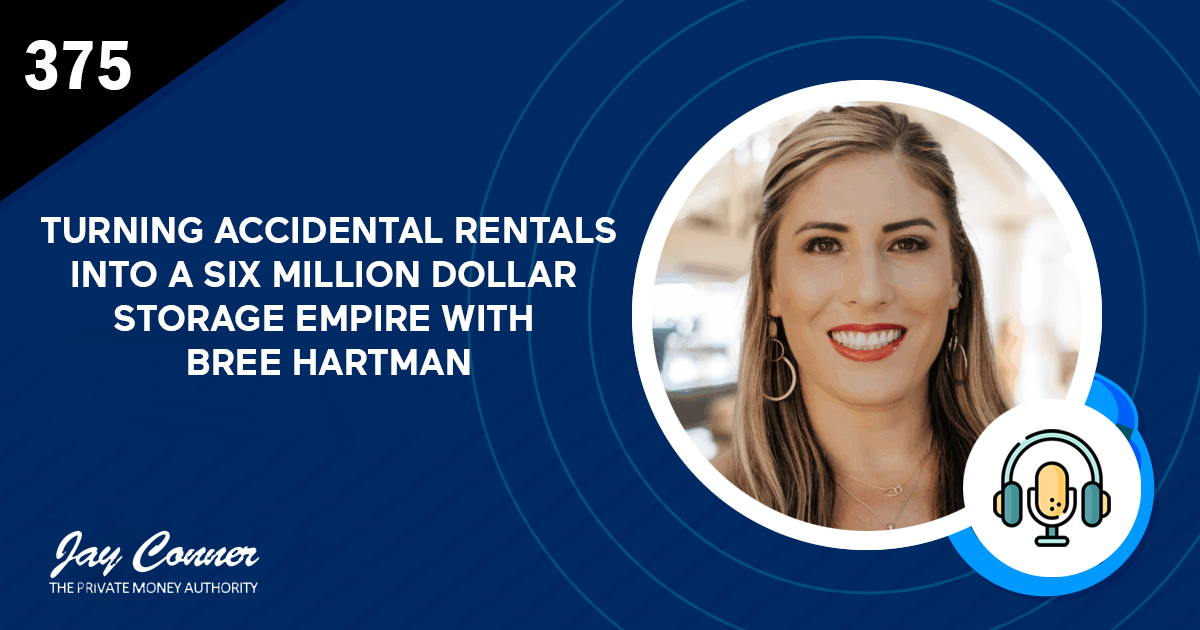
On the “Raising Private Money” podcast, Jay Conner sat down with self-storage entrepreneur Bree Hartman for a deep dive into how everyday investors can break into the lucrative world of self-storage. Bree’s journey from an accidental landlord to managing a $6 million storage portfolio is both inspiring and practical — filled with actionable steps anyone can follow to succeed in this overlooked real estate niche.
From Accidental Rental to Storage Empire
Bree Hartman didn’t start out aiming for a real estate empire. Like many, she worked a regular W2 job and initially stumbled into real estate by renting out her first home. This standard entry led to all-too-common headaches — from tenant troubles to property damage — making her realize traditional rentals didn’t offer the lifestyle freedom she wanted.
The turning point came when Bree learned about self-storage through podcasts. What caught her attention was its simplicity: no toilets, no tenants, fewer hassles. Motivated, she attended a self-storage conference in Las Vegas while pregnant, determined to find and buy her first facility before her baby arrived. It took about nine months, but her persistence paid off with a successful acquisition in Louisiana, despite being a completely remote market for her.
Early Lessons and Avoiding Landmines
One of the biggest hurdles Bree faced was dealing with imposter syndrome and financial limitations. She teamed up with two partners she met at a conference to purchase their first $3 million property using a Small Business Administration (SBA) loan. This maneuver required only 10% down, making large deals accessible without deep pockets.
Bree emphasizes that careful, thoughtful partnerships are essential. Clarity around responsibilities, risk, and tough contingencies such as death, divorce, bankruptcy, or unfulfilled duties ensures longevity and mutual trust within the partnership. She and her partners spent months with an attorney crafting these agreements, a decision she credits for the successful, ongoing nature of their professional relationship.
The Storage Freedom Formula
A frequent question Bree receives is how she manages facilities across various states while working from home. Her answer is the “Storage Freedom Formula,” which revolves around smart operations and systems management. She describes three operational models:
- DIY Approach: Some owners, like a firefighter she mentions, self-manage their properties remotely, spending just a handful of hours each week.
- Hybrid Model: This is Bree’s preferred method and what she teaches her students. It involves a local “boots on the ground” person for physical tasks, combined with a remote call center trained to handle sales and tenant interactions. The result is near-hands-off management while ensuring quality service.
- Third-Party Management: Suitable for larger facilities, this approach uses professional property managers but still requires oversight to maintain standards and profitability.
Technology is central to successful remote management. Prospective tenants can rent and pay online, receive instant gate and unit access codes, and move in without on-site staff. Even rental offices are repurposed for additional income streams, such as leasing to local businesses.
Multiple Revenue Streams and Value Adds
Self-storage is more than just renting units. Bree highlights how creativity and attention to detail can unlock multiple revenue streams: climate-controlled and non-climate units, RV and boat storage, cell towers, tenant insurance, billboards, U-Haul partnerships, and dynamic pricing based on demand. These add-ons not only increase monthly income but also significantly boost the facility’s value. Her approach often leads to rapid appreciation and opportunities to refinance or sell for substantial profits.
Finding Deals Others Miss
While many investors focus on listings and brokers, Bree is a fierce advocate for crafting custom off-market deal lists. She and her students scour Google, Secretary of State filings, and white pages to directly contact mom-and-pop owners in overlooked secondary or tertiary markets. Consistently reaching out and building relationships with these owners opens doors to seller financing and creative deal structures.
One success story involved a student landing a 10,000 square-foot Texas facility with just $9,000 down using seller financing, adding value through billboards and U-Haul rentals, and setting themselves up for a significant equity gain within a few years.
Is It Too Late for Self-Storage? Absolutely Not.
Despite a boom in new builds in some metropolitan areas, Bree notes that opportunity abounds in smaller markets with steady demand and less competition from giant REITs. The “four Ds” — death, divorce, downsizing, and disaster — drive resilient, recession-resistant demand for storage. Plus, the ongoing wave of retiring baby boomer owners means motivated sellers who may prefer passive income via seller financing.
Taking Action: The Real Difference-Maker
Ultimately, Bree Hartman’s most powerful advice is simple: learn quickly, take action, make offers, and follow up relentlessly. She notes that consistent action — even if imperfect — beats endless research and overthinking. Deals are not won by those who wait, but by those who actively put themselves out there, offer solutions, and build relationships.
For anyone looking to get started in self-storage, the key is to leverage partnerships, master remote operations, and pursue creative off-market deals. With the right mindset and systems, a lucrative and flexible investing business is within reach.
10 Discussion Questions from this Episode:
- How did Bree Hartman’s accidental entry into real estate investing shape her approach to building a self-storage portfolio?
- What are the advantages and disadvantages of partnering with others on your first commercial real estate deal, according to Bree Hartman’s experience?
- How does seller financing work in self-storage acquisitions, and why does Bree Hartman believe it creates win-win outcomes?
- What systems and frameworks make it possible to manage storage facilities remotely, as described in Bree Hartman’s “storage freedom formula”?
- Discuss the various revenue streams in self-storage that Bree Hartman mentioned. Which do you think has the most potential for scalability?
- Why does Bree Hartman focus on third and fourth-tier markets instead of competing with large REITs in major metropolitan areas?
- How does Bree Hartman find off-market deals, and why does she believe creating a custom owner list is more effective than relying on brokers or listed properties?
- What are the psychological or mindset barriers Bree Hartman described when moving from residential to commercial storage facilities, and how did she overcome them?
- Why does Bree Hartman stress the importance of making offers—even low ones—to storage facility owners?
- According to the episode, what separates action-takers from those who remain stuck when trying to buy their first storage facility?
Fun facts that were revealed in the episode:
- Accidental Empire
Bree Hartman started her real estate journey by accident—she simply rented out her first home, which opened the door to building a self-storage portfolio now worth over $6 million. - Remote Control
Bree Hartman successfully manages storage facilities across several states—including Louisiana, the Carolinas, Tennessee, and Texas—all while living in Sacramento, California. Thanks to smart systems and the “hybrid model,” she can run her business from home and spend more time with her daughter. - Eight Ways to Make Money
Self-storage isn’t just about renting out simple lockers. Bree Hartman revealed that her facilities have as many as eight different revenue streams—ranging from traditional storage units to cell towers, office rentals, U-Haul partnerships, and tenant insurance upsells.
Timestamps:
00:00 Bree Hartman’s real estate journey
04:55 Learning to finance deals
08:46 Learning through action and questions
11:01 Managing multiple remote facilities
13:55 Automated storage unit systems
18:22 Finding off-market storage deals
20:31 Real estate investment strategy
23:41 Predicting future market opportunities
27:52 Encouraging persistent follow-ups
30:44 Securing a property in Texas
33:56 Connect with Bree Hartman:
916-579-7209
Self-Storage Calculator:
https://www.selfstorageschool.com/calculator
34:46 Taking Action in Real Estate
Connect With Jay Conner:
Private Money Academy Conference:
Free Report:
https://www.jayconner.com/MoneyReport
Join the Private Money Academy:
https://www.JayConner.com/trial/
Have you read Jay’s new book, Where to Get the Money Now?
It is available FREE (all you pay is the shipping and handling) at https://www.JayConner.com/Book
What is Private Money? Real Estate Investing with Jay Conner
http://www.JayConner.com/MoneyPodcast
Jay Conner is a proven real estate investment leader. Without using his own money or credit, Jay maximizes creative methods to buy and sell properties with profits averaging $67,000 per deal.
#RealEstate #RealEstateInvesting #RealEstateInvestingForBeginners #Foreclosures #FlippingHouses #PrivateMoney #RaisingPrivateMoney #JayConner
YouTube Channel
https://www.youtube.com/c/RealEstateInvestingWithJayConner
Apple Podcast:
Facebook:
https://www.facebook.com/jay.conner.marketing
Twitter:
https://twitter.com/JayConner01
Pinterest:
https://www.pinterest.com/JConner_PrivateMoneyAuthority
Turning Accidental Rentals Into a Six Million Dollar Storage Empire with Bree Hartman
Jay Conner [00:00:01]:
Let me ask you something. What if your first real estate deal was an accident and it turned into a $6 million portfolio? What if you didn’t need big banks, didn’t need perfect timing, and didn’t even need a ton of your own money to get started? And what if the niche everyone’s ignoring right now is quietly producing consistent cash flow month after month? Well, today’s guest is proof of all that. My fellow Coaching Inc. Mastermind member, Bree Hartman. She didn’t set out to build a self-storage empire. She started with one accidental rental and turned it into over 100,000 square ft and a $6 million plus portfolio. She’s cracked the code on finding off-market mom and pop storage facilities, structuring seller financing deals that actually get accepted, and creating true win-win outcomes in markets that most investors overlook. And get this, she’s done it while raising nearly half a million dollars in private money and building a life where she’s fully present with her daughter.
Jay Conner [00:01:15]:
Now, if you’re a real estate investor, especially if you’ve got a W2 job and you’ve been wondering how to get your first cash-flowing deal without risking everything, this episode is going to show you exactly what’s possible. I’m Jay Conner, the private Money authority, and this is Raising Private Money. We’re going to meet my guest and friend Bree right after this.
Jay Conner [00:01:42]:
If you’re a real estate investor and are wondering how to raise and leverage private money to make more profit on every deal, then you’re in the right place on Raising Private Money. We’ll speak with new and seasoned investors to dissect their deals and extract the best tips and strategies to help you get the money. Because the money comes first. Now here’s your host, Jay Conner.
Jay Conner [00:02:10]:
Bree, welcome to the show.
Bree Hartman [00:02:12]:
Oh, I’m so excited to be here. This is awesome.
Jay Conner [00:02:15]:
Yes, I’m excited to have you. Well, Bree, let’s go ahead and dive in. You went from one accidental rental. I gotta hear the story on what made that accidental one accidental rental to a six-million-dollar self-storage portfolio. Here’s my first question. What did you figure out early that most real estate investors completely miss?
Bree Hartman [00:02:42]:
Yes, I, I, you know, for that question,n I’m like gosh, I would say the deal hunting. Um, so that my quick story is I was a W2 employee. Just like a lot of people, I worked for the state for Fish and Wildlife in California for seven years,s and just knew, you know, I was like I’m meant for more. And so I actually went back to school, got my nutritionist degree, and from there opened up a gym where I learned all the lessons the hard way. You know, as a solopreneur, I do it the wrong way, which they call my busy business. And then when I got pregnant, it was kind of like, hey, like, what else is out there? So I always say, like an accidental rental where I rented my house, I bought a primary house, and I rented out the first house I ever owned. And I was like, this is going to be it. Like, this is the vehicle.
Bree Hartman [00:03:30]:
And then I learned there are like toilets, service dogs, and like $7,000 of baseboard damage. And I’m like, oh my gosh, this is ridiculous. I don’t want to do another busy job, right? So, um, that was when I listened to a podcast just like this. And like, I heard, you know, no toilets, no tenants, no employees, fewer problems, like self-storage. And I’m like, that’s my asset class. So that’s how I jumped in, it was really like the joke in the family was I was 10 weeks pregnant, went to a conference in Las Vegas, learned about storage, came back, and I’m like, I’m going to find one. Like, is it going? Is the baby going to come first, or is the storage facility going to come first? So that really was the start of this. And it took me about nine, nine months to find that deal, which was our first deal in Louisiana, like out of all the places.
Bree Hartman [00:04:16]:
And so I got really good at deal hunting and talking to owners, building relationships. And that was really, I think, what, you know, stood out was, you know, I think also being female, one of the only females in storage, but doing it differently. You know, doing empathy, long-term relationships, and then building partnerships that really last. So that’s how, you know, that’s how I kind of got into self-storage.
Jay Conner [00:04:42]:
That’s an amazing story, Bree. So when you got into the self-storage, what were some of those early lessons or mistakes that you learned as you were starting?
Bree Hartman [00:04:55]:
I got so many. The mistakes, Gosh, I guess the mistakes are when you’re underwriting a deal, you know, it’s like how, how do you underwrite a deal, like correctly? And how do you take down a deal that is, you know, a million or $3 million? Like our first property was $3 million, so we just had like one more zero from residential. Like, my first house was like 305,000. And so learning how to partner, right? Like, I didn’t come from money, so I actually met two other partners at a conference,e and we really, like, complemented each other, like, different skill sets, and we’re like, hey, let’s go get an SBA loan. So we got a Small Business Administration loan, where you only have to put 10% down. And then we divided that between three people in that partnership for that deal. And so that was, I would say, you know, one of the biggest lessons is that I think your mind does tricks on you, you know, where it’s like, you know, can I, you know, this person who’s pregnant and, you know, who owned a gym, can I buy a storage facility? And I think that is one of the biggest limiting beliefs is that two things actually, is that it takes a lot of money, you have to own a lot of money to own a storage facility. And number two, you know, it’s also about, like, can I buy one and can I operate it right from, you know, across the country remotely? So those are the two biggest things I think I had to jump over from a hurdle standpoint to actually make it happen and say yes to that deal.
Jay Conner [00:06:24]:
Now, you mentioned in your origin story that you had two other partners, and so there were three of you on that first deal. Y’ all divided the down payment that. That 10%. What advice would you give from your experience about what to do and what not to do when it comes to having a partner in your deal?
Bree Hartman [00:06:49]:
Yes. Yeah. So this was, you know, I think just as a partnership, we took about a good, like, two months to really walk through with an attorney, like the operating agreement. And so we, I think we did it in a great way because we are still partners to this day. We buy more facilities from each other. And I always say that, you know, I have my partners back and they have mine, and they all know, we all know what happens, right? So we talked about, you know, death, divorce, and if someone goes bankrupt. And we talked about, you know, hey, in five years, if someone does not do their duties, what happens? And I think these are the hard conversations that a lot of people don’t think about or don’t have before you come into a real, you know, commercial partnership, that it’s going to last five to 10 years. And the same thing with a real relationship.
Bree Hartman [00:07:40]:
Like, you’re married, right, to that partnership, and your business is only going to do as well as you do as a team. So it’s actually, you know, I think a lot of people, you know, it’s very interesting. Some people are like, I do not like to partner. And other people are like, I do like to partner. And I would say I’m kind of in the middle of that spectrum. I always say, explore a good partnership that makes sense. And normally in self-storage or commercial real estate, you’re looking at, you know, who brings the deal. Number two is like, who’s going to bring the money? And then number three is who’s going to operate it. And then number four, who’s going to take the risk?
Bree Hartman [00:08:13]:
So if you look at a full commercial real estate deal, self-storage or anything else, you have to look at all four of those departments and then see how you can divide and conquer and make that deal happen, you know, together and do it well. Right. So I think that’s kind of the, I think people don’t think about that from a long-term perspective.
Jay Conner [00:08:33]:
Well, that’s some great advice right there. What year did you do this very first self-storage deal this year?
Bree Hartman [00:08:43]:
Gosh, 2021.
Jay Conner [00:08:45]:
Okay.
Bree Hartman [00:08:46]:
So, you know, I’m definitely newer, I would say, like on the blocd. But I always like to say my mom’s like, you are not an average learner. And so I don’t take no, you know, for an answer. And I think learning, it’s, it’s, it’s really like, how do you do purposeful learning and then how do you ask good questions and then go out and apply it? Because all these people can learn, learn, learn. You know, like years I’ve talked to so many people that, you know, I definitely am ahead of 10 spaces above them, and they just have ruminated in analysis. Paralysis on I need to learn everything versus I was taught just like, hey, go put spaghetti on a wall and then go find the people to surround yourselves and ask those good questions like insert yourself and then go bet on yourself because why not, right? You got one life. And it was really very, it was just very, I think, very interesting. I was on the playground with my little girl, just at a park, local park, and someone’s like, wow, you’re doing self-storage and all these things, and your kiddo, she’s like, what’s one thing that, you know, you wish your younger self, you know, heard? And I said, you know, I wish I had heard.
Bree Hartman [00:09:45]:
Just go bet on yourself more. Like, go cause big problems and go find people to ask those questions to, and then bet on yourself because if, if, no, if you’re not going to do it, that other person next door is going to do it too. So I just think that was, that’s something I have to remind myself of because I’m in the trenches. I say this with my students. You know, I’m actively buying storage facilities, negotiating deals with them. I’m still cold calling, and you’re just doing hot, you know, conversations with self-storage owners and then operating. And so my goal, you know, in the next like four or five years is to own another 15 to 20 facilities and to, you know, operate them all remotely and have a little bit more time freedom. But I’m in the trenches.
Bree Hartman [00:10:28]:
Like I said, like I’m, I call them. I’m young, and I’m hungry and I’m, and I’m ready to go. So. Yeah, it’s exciting right now.
Jay Conner [00:10:35]:
It sounds exciting now. One thing you talk about in your work with students, and one thing you’re known for, is you talk about the storage freedom formula. The storage freedom formula. What is it? What is the formula, a, and how are people actually running profitable storage businesses from home?
Bree Hartman [00:11:01]:
Yes, I love it. S, I always like the storage, you know, freedom formula is really thought about in operations, right? Because a lot of people are like, ” Help, Bree, how are you like remotely managing, you know, two facilities in Louisiana, some in Carolinas, one in Tennessee, and then we just bought one with a student in Texas. And so it gets to be easy when you put in the right systems. And so how we look at operations,s and I’ll show you from a. a. This is kind of like the three-part framework is you get to choose, right? So how you structure the deal matters, and how you’re going to cash flow it. And then also, you know, how you look at it from an underwriting perspective. So you can either do the three parts to this framework, number one, you can do it all yourself. We have a firefighter who bought two facilities, and he does it all from his phone.
Bree Hartman [00:11:46]:
And I asked him, I was like, ” Hey, how much time does this take you? And he’s like, breathe, three to five hours a week, big tops. So you can do it yourself by taking the calls, looking at all the leases, and collecting the money. Or the third one, which we, or the second one, which we mostly do a lot more teaching of, is called a hybrid method. And so this is where you have, you know, it might be out of state, but you have someone who calls it boots on the ground. And so they’re the ones that are actively doing like the lock checks, the auctions, the making sure the, you know, the facility is nice and clean. And then the other part is a call center. So we have a call center that students use, and it’s trained to, you know, their storage facility,y so they can sell well. Right.
Bree Hartman [00:12:26]:
And then this person is the boots on the ground, who makes it and upkeeps it. So that’s the HyBreed model, the second model, and then the third model. If you get a facility that’s normally over 35,000 square feet, a little bit on the larger side, you can have a third party. And so we have a couple of these facilities that we have a third party, but we have to manage the third party. You can’t just be an absentee owner because self-storage is a back-to-business, and then it’s commercial real estate. So from all these three different parts of frameworks, you get to have an easier lifestyle. And so I just wanted to share with you this component. And then the third thing, the question that you asked me is like, cool, Bree, like how does this really work? And so, you know, I’m here, Sacramento, California.
Bree Hartman [00:13:09]:
I love working from home because I get more time with my daughter. And so how this works is, you know, all our facilities are remotely managed from another state. And so we have the hyBreed model, which is if you have a call center and we have boots on the ground for each facility. And so with that, you know, say a tenant finds their website normally within a 10-mile radius of their home. They go on Google Maps, and they go to the website. I want to rent a 10 by 10 unit. They pay, you know, $158 for that unit. As soon as they make that payment, it asks you on your phone to take a picture of your driver’s license back in front, and then sign the lease, which is a month-to-month lease. And then once that is executed, a workflow happens where they get an instant custom gate code to their phone, a text, and an email.
Bree Hartman [00:13:55]:
And then they also get a customized digital lock code. And so they pull up to the gate, put their code in, come to their units, put that lock code in, you know, take our lock off, put their stuff in, move it all in, and then they put their own lock on, drop our lock off, where they get a $50 charge, and we have QR codes around the whole premise. And so no one has to be there. Likewise,e we still have good customer service, but really no one’s twiddling their thumbs in the office because we already rented that office out for a thousand dollars a month, which gave us a hundred, ed and I think it was like $65,000 of of equity by just filling that office up with another business. So it gets to be easy, you know, so these are the systems that you put in place, but you still have to monitor, right? Like how many ins and outs, how’s the insulation doing?. There are a couple of other things that we do as operators, but you don’t have to be there, which is the best part.
Jay Conner [00:14:50]:
It really does sound like, at least geographically, it can be a hands-off operation. But as far as managing, of course, it’s still hands-on. You can’t set it and forget it. But that’s a brilliant idea. Taking over a storage facility that’s already got an office in place, but you don’t need the office. You can turn that into cash flow, just like you’ve got the individual storage units being rented out.
Bree Hartman [00:15:16]:
And I want to point out that this is something a lot of people don’t think about it but because I love that storage, it is a sexy business in the sense that it’s boring. And we have eight different revenue streams that people don’t think about. We’ve got climate-controlled, we’ve got a drive-up that’s non-climate-controlled. We have an RV and a boat inside and outside. We put on our first facility, 68 RB, and the boat just drives up units right away within the first eight weeks. We have a cell tower that gives us money monthly. And then we also, well, we do tenant protection plans, which is tenant insurance. And so everyone needs to either show us their, you know, tenant home or renter tenant insurance,e or they have to purchase ours automatically for $12, right? And so that’s an upsell.
Bree Hartman [00:16:04]:
Think about that. Over 200 or 400 units, right? Like that’s a very large piece of that pie. And there are a lot of other things that you can upsell, like each month. Dynamic pricing things based on demand. Like we just hit 95%. I was so funny. I’m like mad about this, and I’m like, our prices are too low. We need to raise our prices.
Bree Hartman [00:16:24]:
We should only be at like 80, you know, 88% occupied with our climate control because we have to have product, right? We have to have a product. And our market is showing that ours is too cheap because ours are filling up too fast. So you know, there are a lot of different pieces that you can manage. But the goal with this is to constantly, you know, add your revenue every single, you know, every single month, every single year, so that your NOI goes up, which means your purchase price goes up. So right now, you know, this facility is worth 4.7, $4.7 million. And this was about four. Gosh, what are we at now? Almost gosh, like four, four years, five years ago. And so we increased our prices by 67% from when we purchased it.
Bree Hartman [00:17:08]:
And that’s just that one facility. But I just wanted to share with you, you know, how a facility can really change your life when you’re creative, when you can see revenue in a different position. Right. Instead of just a boring business that people need, you know, every single month to make sure that they’re living and moving and doing all the right things. Process. So I don’t know if that was helpful. I went deep. I.
Bree Hartman [00:17:33]:
It is, it’s. To me,e it is exciting. Like I’m like how do you, how do you make lemonade out of lemons? Which is a. Literally, you guys’ storage is, we rent space. It’s a cinder block building, roll-up doors, and no toilets and no lights. You know, like we rent space, which is really kind of neat to kind of even think about on a subscription-based business.
Jay Conner [00:17:53]:
I love it. A lot of real estate investors chase deals in the multiple listing service, or even if they’re on commercia,l they’, ll you know, do business with brokers. But you do things differently. What are your top three ways that you’re finding off-market storage deals that other people are really missing out on, or they’re just not seeing those opportunities that you and your students are?
Bree Hartman [00:18:22]:
Yeah. So there are so many different creative ways but I’m, but I’m a big component of creating your own list. So off-market deals. And so we teach this in the self-storage school. But it’s like, how do you create your own off-market list from Google My Business, and we have people look at these markets, and we’re like,e hee, we’re going to go on Google My Business, and we’re going to look at all the storage facilities, and we’re going to scrape them. Right. Find the facility number,r, and then we’re going to actually take it one step further. Open up the Secretary of State, or white page,s or a couple of other resources, and find that storage owner’s cell phone number and then their phone number, their email addresses,s and then maybe a social media account.
Bree Hartman [00:19:01]:
And so we’re able to create this. We challenge our students to call. You know it’s 25 people every single week, right? For four weeks. So that’s 100 calls. And so that’s how we’re getting right now, you know, or even like owners to raise their hand. And it’s a very simple conversation. Like, I think people like I cold call for two hours just so my students can watch me.
Bree Hartman [00:19:22]:
Because this is the number one thing that people don’t want to do. I’m like, I challenge you to call a hundred storage owners, and you know, if and if you did this and had someone to raise their hand, you would get a million dollars, right? Most people, when they hear this,s would be like, oh, I’ll do it, I’ll do it. And then they don’t. And so we had a student do this, and they just bought. It’s a smaller deal, but really cool how this was structured. He got an owner to raise their hand just by calling. And he was able to purchase a 10,000 square foot facility in Texas on seller financing. He only had to put 10% down, $9,000 down.
Bree Hartman [00:20:01]:
And so what is so cool about this is that he beautifully added revenue. So $9,000 down on this 10,000 square foot property that he did. And he’s at. He added. I think it was 70% when he bought it. He’s now at 85% filled. The second strategy he did was to add four billboards, which is $400 a month that they pay him to advertise on, you know, his property. And then he added 3U haul, you know, and they do a split revenue between a U-Haul truck that’s parked out, and people confront it.
Bree Hartman [00:20:31]:
And so very, very interesting. This facility will be worth it in 24 to 36 months. You know, if he’s a slower operator, it’ll be worth about $315,000, $9,000 that he put down. And so then, in three years, you can do two things, right? You can refinance, take 150 out, and go do it again. And don’t kill the pig, right? Keep that storage facility. Or number two, you can sell it, you know, 315,000 at an eight and a half cap, and you can go 1031 to buy something bigger. And that’s how you snowball and create net worth, by thinking about these different processes and improving and adding that value to create your lemonade. And then you don’t pay Uncle Sam, you’re gonna go 1031 to go get something bigger, hopefully at a million dollars, so that you can then add more value and more cash flow, you know, to that property.
Bree Hartman [00:21:21]:
So just wanted to give you an example of, you know, and it really showed me and excited me. I was like, hey. He’s like, Breee, you taught me this. I’m like, yeah, I did, hands down. So, you know, right now we’re excited to see. We’ve been seeing more acquisitions we’ve seen in the past four months than we’ve seen in 18 months. So I think people are on the sidelines right now, which is interesting because they’re not quite sure what to do. And these baby boomers, just say it how it is, are nervous, and they’re like, hey, I want to retire.
Bree Hartman [00:21:51]:
I’ve been waiting for five years, and why not do it now? And I can get seller financing, right? I can get monthly mailbox money sent to my, you know, my home without having to be a storage operator. So that’s the problem that my students fix is being that person that says, ” Hey, I’ll pay you money, and I’ll operate your facility 10x better in the community.
Jay Conner [00:22:12]:
Wow, that is fantastic. Now, I don’t know about elsewhere, but I can tell you right here in eastern North Carolina, in the last couple of years, I’ve never seen so many self-storage buildings being built. And it’s like it’s exploded around here. And I’m thinking a lot of people might be thinking, ” Bree, I’m too late. I’m too late to get in on this. So. So tell it to them straight, Breee. Is it too late to get into self-storage right now?
Bree Hartman [00:22:43]:
Absolutely not. So I’m going to bust this myth because a lot of people, you know, they live in larger MSAs, so metropolitan areas like Raleigh, North Carolina, or a couple of other areas, or Charlotte, and they. Yeah. Public storage, Cube Smart. What else? Life storage. Those are all REITs. Those are big players that come in, and those are all the big ones. They’re building all these buildings, they’re building multi-story buildings, which I think is ridiculous.
Bree Hartman [00:23:09]:
No one wants to go up in an elevator versus just pull up to their, you know, your unit at this point. But what I like to do and how I specialize, and I think it’s different, is we’re not competing with them. Right. Like we’re going to third or fourth tier markets, which means that we’re looking at markets that have a population of 3,000 people all the way up to 150,000. And that’s it. Right? So I mean, there’s obviously gray areas, but that’s a beautiful thing. And then we cold call, we reach out to these owners because REITs, you know, they’re like, oh, those are too small. Well, they’re too small.
Bree Hartman [00:23:41]:
Now, in five to seven years, these are going to be the areas where development and data centers are going in. Right? And so people always need storage. And the reason for this is making sure that the market isn’t oversupplied. Because, yes, you’re right. In some of these other big markets that grew really fast, lots of storage came in, lots of construction loans that were built at 3% happened. And then guess what, we’re buying these facilities now because they were dentists or you know, contractors that didn’t even look at the supply and demand or feasibility of that are, and they can’t fill them up. Right? And so there it is. An interesting part of this is that the people who are looking at these outskirts are going to be the ones to get these still value-added facilities that have not been milked or juiced or purchased yet, and then sell them at these rates that then are going to come in five to seven years later.
Bree Hartman [00:24:34]:
And so I wanted to like show people this because I get kind of sassy on it. But people always need storage. We call it the four Ds. And so the biggest business part that people use self-storage for is moving, right? So when people buy homes, it also helps with storage, but sadly, death. I know this is, it’s like a sad part, but it’s true. And death with family members. You put things into estates, and then you can put them in the storage number two we have, it’s like death, divorce, and then decluttering. And then the other one is a disaster, like natural disasters.
Bree Hartman [00:25:08]:
So in bad times, you know, people use storage and then downsizing, right? Like my mom, you know, very much retired, and she’s like, Bree, my word of 2026 is downsizing, downsizing. I’m downsizing to make things simple. And that’s exactly what baby boomers are doing. They’re, they’re selling their homes or you know, they’re giving them to their kids, and then they’re downsizing. And the same thing is going to be happening right now. We see it, the price of oil is going up. You know, businesses are cutting fat, and people are going to be downsizing, right? And we get to utilize that in self-storage for our advantage. And then the second component is that we have a lot of business-to-business.
Bree Hartman [00:25:49]:
The library rents out eight climate-controlled units for its very important documents. We’ve got other businesses, like pharmaceutical reps, that also use our storage facilities. We’ve got contractors who put a lot of their marble right into our storage. You see, Facebook market, lots of people who are doing these trades inside businesses use our storage facilities. So I just wanted to give you guys a perspective of, you know, there are myths of that,t and I say continue to listen to those people. Well, I want to be the, I want to be the, the wolf that goes the other way and makes a lot of money, right? In a good way, so that you can double down and look at these advantages. So yeah, that’s my thoughts on that.
Jay Conner [00:26:32]:
Well, Bree, you’ve helped students close deals, these self-storage deals with little to no money, and make hundreds of thousands of dollars. What separates your students from those who actually pull it off? From the ones that stay stuck?
Bree Hartman [00:26:49]:
Yes. So I, I see a big differentiation right here is, you know, we love action takers, and that’s what we very much attract. But what I think is very different than a lot of other businesses that help people buy these facilities is that we do have an accelerated six-week program that teaches the self-storage foundations. So we get them really good in six weeks to underwriting deals, looking at supply and demand, and then putting in offers. Right. And keeping all the other sorry BS and fluff out of it. And then by week six, you’re submitting your first offer. Right.
Bree Hartman [00:27:24]:
And then that is the most important, you can actually get access to our off-market pipeline until you submit your first offer, and you get feedback. Right. And so urgency, I think, really creates helpful understanding instead of just being someone who is, I say there’s a, you know, learning. Passive is learning. Learning is passive. It’s fun. It’s really something that we’re comfortable with, as, you know, people in the education sector who went through schooling in the U.S., taking action is uncomfortable.
Bree Hartman [00:27:52]:
And so we really push rewards into, you know, getting out there and taking action. And that is why I think our students buy a lot of the first facilities 10 times faster than a lot of programs out there, because we really push that in the sense of putting good offers in, but still put an offer in. Even if you know, the broker’s like, it’s worth 1.5, and that’s what he put it as, and it’s really worth 1.2. Put that offer out because I bet you in four months he’s going to come back to you and say, ” Hey, I got lots of low-ball offers, and I like you because you followed up with me for four months, and I want to take your offer. So that happens very much, very regularly,y right now, the people aren’t following up and building that relationship over time, even when they submitted the offer. So, I will leave you. I loved this saying because I, I heard it from someone who was a mentor, and they said an owner can’t say yes to something that they don’t want to, or an offer that they can’t physically have in their hand. So let me say it one more time.
Bree Hartman [00:28:50]:
An owner can’t say yes to an offer that they do not have physically in their hands. And that is something that is so important. And what I stress to my students, you know, is that you need to be taking shots. You need to be taking shots and don’t feel like you’re lowballing. Tell them what it’s like, tell them what it’s really worth, and why you think its value is X so that they can then go educate the seller and maybe come back to you and get a yes. SI, that really changed my perspective when I first got into storage. And then ever since I heard that, I’m like, I want to submit some offers, like let’s take some shots. Because that’s what it’s all about: consistency over time will help you become a millionaire.
Bree Hartman [00:29:31]:
Right? And it’s very true.
Jay Conner [00:29:33]:
Well, I’m so glad you’re emphasizing make offers, make offers, make offers. Because you know what, I never bought any real estate that I didn’t make an offer on. And another thing, another thing that I have learned over the years is that a seller of a property, really, no matter what they say, they really don’t know what offer they’re going to accept until it’s in their hand. I don’t know how many times. Of course, Carol Joy, my wife, and I have had the same acquisitionist for decades, over 20 years. And my acquisitionist, of course, I’m in a single-family home; you’re in self-storage. And, the seller of that property will say I’m not taking a penny less than X. And then I make the offer and justify the offer through my acquisition.
Jay Conner [00:30:21]:
And, it’s just amazing how many times they will end up accepting the offer, saying they would not take less than whatever. And another thing that changes,s too, is time and circumstances. I mean that offer that you make today, which is denied and rejected today, might be accepted in a month or two or three for sure.
Bree Hartman [00:30:44]:
I have a really good example. We just had a student close near Flint, Texas, and this deal was an off-market property, and they had been in contract at $1.8 million, and it fell out of contract at the very, very end. And so this owner is sad, you know, as it was, it was like his wife had cancer. He was trying to sell his facility so that they could pay for her chemo and her procedure, and just really enjoy life, like go to Hawaii and do some really good things with the rest of their time together. And we came, you know, saying like, hey, you know, this facility is really worth 1,5 and we can close, and here’s the proof. And we walked him through, you know, that process and that deal and met them, shook their hands, and they said, ” Hey, we’ll do this deal. They wanted 1.6, and we were able to kind of be like, hey, this is really what it’s worth and where we see it at. And this is why we would be the best, you know, the best operator and the best owner for this deal. So it’s just very interesting.
Bree Hartman [00:31:43]:
It’s not always about price, but it’s also about whether you can close and do what you say you’re going to do, which is core values. And then number three, you know, it’s being able to operate it well. Right. And come in and not retrade because that is time, you know, time is money. Speed kills deals. And it’s very true. So we, yeah, were able to close on this property at 1.5 million. And you know, from that situation, never, never, never submit an offer because.
Bree Hartman [00:32:13]:
And you just wanted to make sure that you can share why you’re the best person to be picked, and that this is the part in our market right now that I think is missing, with the people being like, I can do fast offers and cash and all these things. Cool. No one cares about that anymore. Back in the day, they did. It’s like, no, how can you show up? How do you say what you’re going to do,o and then how can you close and be the best person to inherit that asset?
Jay Conner [00:32:34]:
Yes. Well, Bree, what’s the best way for our audience to reach out to you and learn about how they could explore being a student of yours and learn about self-storage?
Bree Hartman [00:32:47]:
Absolutely. Yes. So we’re owners of the self-storage school, and so this is our 12-month program where we really help people like find, buy, put offers, and operate their first storage facility. And so our cohort actually is open right now, and so you can, if you’re interested in joining, you can send me just the word school to 916-579-7209. And then also I wanted to give like your listeners because a lot of big questions are like how do I find a good deal and how do I underwrite it? So we have a really awesome offer storage offer calculator that you can use, and I tcan rain my VAs and everyone really fast. Do a really quick back-of-the-napkin. So if you also want that, I’ll give you the link below. But just send me a message, if you want to send me a message, just my business phone, and just say calculator.
Bree Hartman [00:33:36]:
I’ll send you that bundle as well. So that’s important to take a look at because, you know, it’s, you know, is this owner realistic or are they out of this world? And that’s what’s important to get started, is understanding what that even looks like and what that threshold is.
Jay Conner [00:33:51]:
And let’s give out that phone number one more time, Bree.
Bree Hartman [00:33:55]:
Yep. So it’s 9169-165795-79720 97209.
Jay Conner [00:34:05]:
And again, what’s that? That. What do they need to do? What do they text?
Bree Hartman [00:34:09]:
Just send me the word either school if you’re interested in learning a little bit more, or just send me the word calc or calculator, and just tell me where you found us. Just on the podcast, and then I’ll send that out to you. And it’s actually a really awesome bundle, and I wanted to share that with just your guys, you know, so that you can look at deals and understand them, and just get started because that’s the whole point.
Jay Conner [00:34:28]:
That is great. Bree. Thank you so much for offering those tools to use. And of course,e that phone number, it’ll be down in the show notes as well, along with the instructions. Bree, thank you so much for joining me here on raising private money.
Bree Hartman [00:34:44]:
This is awesome. Thank you so much.
Jay Conner [00:34:46]:
You got it. Well, there you have it. From one accidental rental to a six-million-dollar self-storage portfolio, Bree just showed you what’s possible when you stop overcomplicating this business. And what did she say? Start taking action. So here’s my question to you. Who do you know right now that needs to hear this? Who is stuck? Who’s overthinking? Who’s waiting for the perfect time when this episode just proved you don’t need perfect, you just need to start and start taking action. Do them a Favor, take just 10 seconds right now. Share this episode with them, text it to them, email it to them, post it on your social media.
Jay Conner [00:35:33]:
Because here’s the truth. The more you teach what you’re learning, the faster you grow and listen. If you got value from this episode, make sure you subscribe, leave me a review, and let me know what hit you today and made a difference. I’m Jay Conner, the private money authority. This is raising private money, and I’ll see you right here on the next episode.
Jay Conner [00:35:58]:
Are you feeling inspired by the knowledge you gained in this episode? Then head over to www.JayConner.com/MoneyGuide. That’s www.JayConner.com/MoneyGuide and download your free guide that shares seven reasons why private money will skyrocket your real estate investing business right now. Again, that’s www.JayConner.com/MoneyGuide to get your free guide. We’ll see you next time on Raising Private Money with Jay Conner.