In the latest episode of Raising Private Money with Jay Conner, our esteemed guest Scott Aaron, a seasoned entrepreneur and LinkedIn expert, shares his inspiring resilience journey and the transformative power of leveraging LinkedIn for business success. Scott’s story is a compelling testament to the power of mindset, community, and strategic action in overcoming life’s toughest challenges.
The Art of Resiliency: Scott Aaron’s Journey
Scott Aaron’s journey is not just about entrepreneurial success but about mastering the art of resilience. Jay Conner introduces Scott’s story, noting his initial triumph in selling his first business for a million dollars and his subsequent challenges, including facing a multimillion-dollar liability debt. Despite these setbacks, Scott never viewed them as failures but as the foundations of his comeback story.
Growing up, Scott was thrust into leadership at a young age when his father, also an entrepreneur, was incarcerated. Taking over the family fitness business, Scott navigated significant personal and professional challenges. His father’s advice to be his person rather than trying to emulate someone else was pivotal in shaping Scott’s resilient mindset.
Key Lessons in Overcoming Adversity
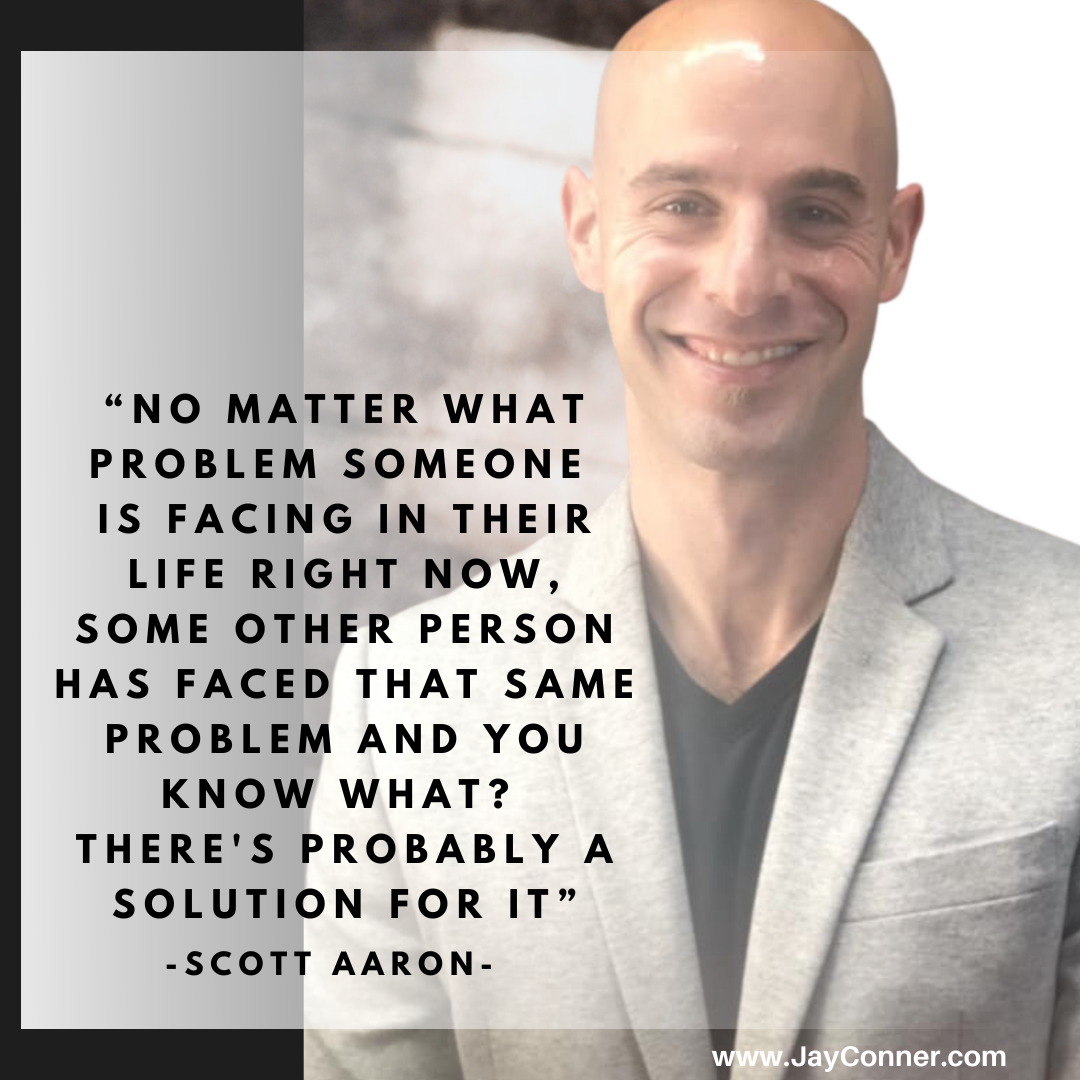
Scott emphasizes two key lessons from his experiences. Firstly, maintaining a positive outlook and focusing on solutions rather than problems. He believes that no matter what problem someone is facing, there is likely a solution for it. This mindset helped him to constantly find solutions and move forward.
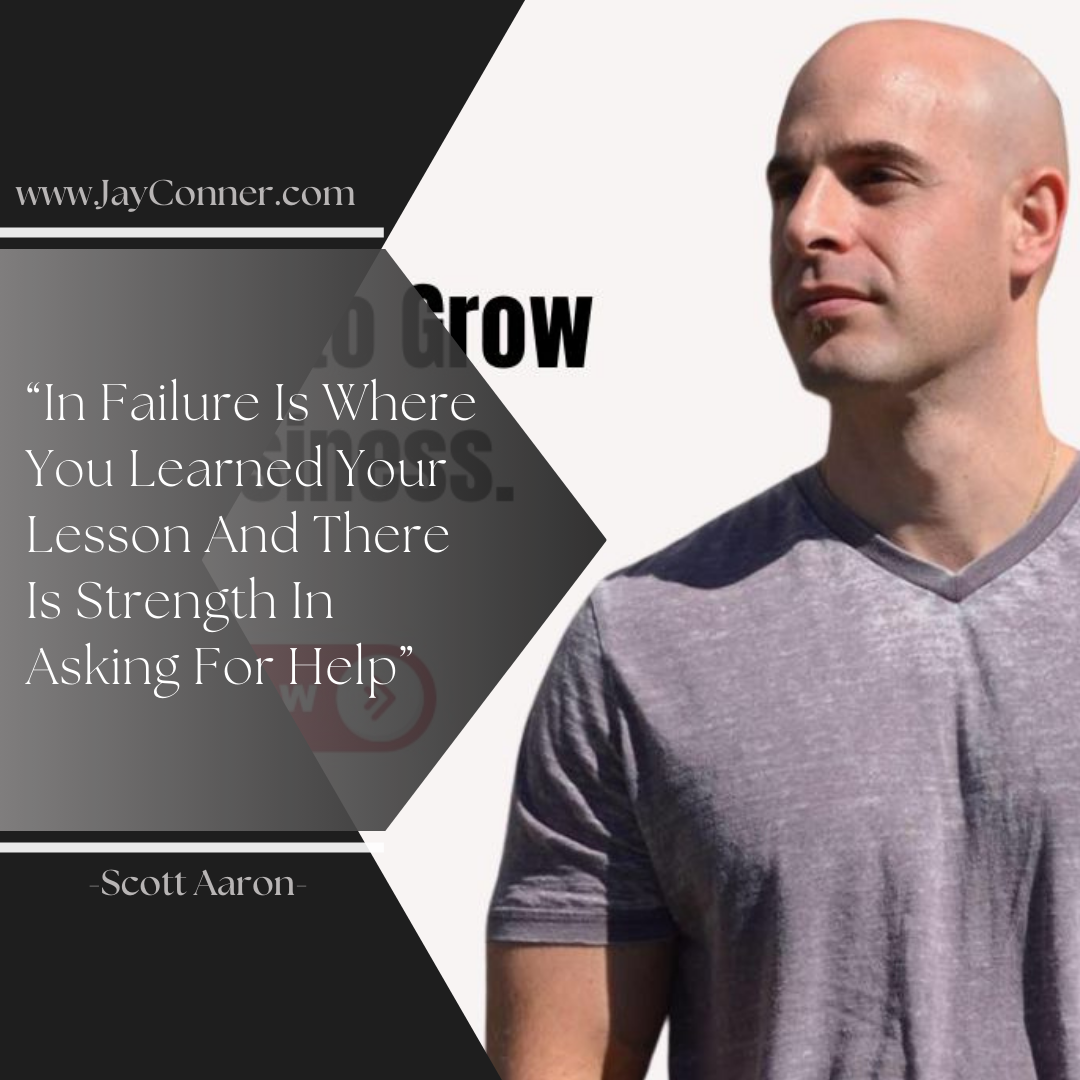
Secondly, Scott highlights the importance of putting pride aside and not being afraid to ask for help. He recalls a crucial turning point when a friend’s question about his business sustainability prompted him to seek new opportunities. This openness to seeking help and learning from others was instrumental in his transition from the fitness industry to leveraging LinkedIn for professional growth.
LinkedIn: From Personal Struggle to Business Triumph
Scott’s shift to LinkedIn began out of necessity. Realizing that his in-person fitness training model wasn’t sustainable for a fulfilling family life, he sought ways to reach his clientele online. Identifying LinkedIn as the ideal platform, he started connecting with business professionals and, within six months, matched his in-person earnings through online coaching.
This success led to the realization that LinkedIn could solve a significant problem for others in his industry. Encouraged by a friend’s feedback, Scott developed a business model around teaching others his LinkedIn strategies, which has since grown into a thriving enterprise. Together with his wife, Scott now runs multiple companies, all leveraging the power of LinkedIn to enhance business growth.
Tips for Leveraging LinkedIn Effectively
Scott shares valuable insights on how to maximize LinkedIn for business growth. He emphasizes the importance of optimizing your LinkedIn profile with relevant keywords, professional descriptions, and showcasing testimonials. Here are some key takeaways:
- Profile Optimization: Ensure your LinkedIn profile is fully optimized with keywords that your ideal client or business partner might search for. This includes a detailed headline, a comprehensive about section, and a well-presented experience section.
- Networking Over Selling: Focus on building relationships rather than selling. Avoid spamming potential connections with generic, sales-focused messages. Personalize your communication to build genuine connections.
- Social Proof: Gather and display recommendations and testimonials on your profile. These serve as powerful social proof of your expertise and credibility.
- Continuous Engagement: Stay active by creating valuable content, engaging with your network’s posts, and consistently connecting with new potential clients or partners.
Transforming Your Work-Life Balance
One of the most remarkable transformations in Scott’s journey is his shift from working 70-80 hours a week to a balanced 15-hour work week alongside his wife. This significant change was facilitated by the systems and strategies they implemented through their businesses. They aim to help others achieve a business model that supports a fulfilling life, as detailed in their book, “The Feel-Good Business Model.”
In conclusion, Scott Aaron’s story is a powerful reminder that resilience, a positive mindset, and strategic use of tools like LinkedIn can transform challenges into opportunities for growth. For anyone looking to leverage LinkedIn for business success, Scott’s insights provide a valuable roadmap to follow. Visit his website at www.ScottAaron.net or connect with him on LinkedIn to learn more about his proven strategies.
Stay tuned for more inspiring stories and practical tips on Raising Private Money, and don’t forget to subscribe, share, and leave a review to keep the insights flowing.
10 Discussion Questions from this Episode:
- Scott Aaron emphasizes the importance of being authentic to oneself. How do you think authenticity impacts long-term business success?
- What lessons can entrepreneurs take from Scott Aaron’s journey from selling gyms for a million dollars to experiencing financial difficulties and accumulating debt?
- Scott mentioned the significance of asking for help and seeing failure as a teacher. How can these viewpoints change the approach to entrepreneurship?
- LinkedIn played a pivotal role in Scott Aaron’s career pivot. What strategies did Scott implement on LinkedIn that were key to his success as a coach and consultant?
- During the episode, Scott Aaron discussed the role of resilience in overcoming setbacks. Can you share an example of when you had to rely on resilience in your career?
- How did Scott Aaron’s personal experience with bankruptcy and financial challenges shape his professional approach and philosophy?
- Scott emphasizes maintaining a positive outlook and living in solutions rather than problems. How can this mindset shift be practically applied in everyday business operations?
- What are the potential benefits and drawbacks of transitioning a business focus to an online platform, as Scott did with LinkedIn?
- Scott Aaron advises against aggressive sales pitches on LinkedIn, recommending relationship-building instead. Why do you think relationship-building is more effective in the long run?
- Scott and his wife have designed a balanced work-life integration model. How can entrepreneurs implement similar strategies to maintain harmony between their professional and personal lives?
Fun facts that were revealed in the episode:
- At just 24 years old, Scott Aaron achieved an impressive milestone by selling his first business for $1,000,000, demonstrating his entrepreneurial acumen early on.
- Remarkably, within six months of strategically using LinkedIn, Scott Aaron was able to match his in-person earnings by offering virtual workouts and nutrition plans online, dramatically transforming his business model.
- Scott Aaron has garnered significant social proof on LinkedIn, boasting over 500 written recommendations that underscore his expertise and success in helping others leverage the platform.
Timestamps:
00:01 Raising Private Money Without Asking For It
03:35 Resilience is key to an entrepreneurial success mindset.
08:21 Dad encouraged individuality, not filling his shoes.
12:47 Maintain positivity, humility, and openness to help.
13:51 Failure teaches; asking for help shows strength.
17:23 Gut punch led to self-reflection and change.
20:35 Teaching LinkedIn strategies led to a successful business.
23:53 Connect with Scott Aaron: https://www.ScottAaron.net
https://www.linkedin.com/in/scottaaroncoach/
26:31 Optimize your LinkedIn: clarity, keywords, recommendations
Connect With Jay Conner:
Private Money Academy Conference:
Free Report:
https://www.jayconner.com/MoneyReport
Join the Private Money Academy:
https://www.JayConner.com/trial/
Have you read Jay’s new book: Where to Get The Money Now?
It is available FREE (all you pay is the shipping and handling) at https://www.JayConner.com/Book
What is Private Money? Real Estate Investing with Jay Conner
http://www.JayConner.com/MoneyPodcast
Jay Conner is a proven real estate investment leader. Without using his own money or credit, Jay maximizes creative methods to buy and sell properties with profits averaging $67,000 per deal.
#RealEstate #RealEstateInvesting #RealEstateInvestingForBeginners #Foreclosures #FlippingHouses #PrivateMoney #RaisingPrivateMoney #JayConner
YouTube Channel
https://www.youtube.com/c/RealEstateInvestingWithJayConner
Apple Podcast:
Facebook:
https://www.facebook.com/jay.conner.marketing
Twitter:
https://twitter.com/JayConner01
Pinterest:
https://www.pinterest.com/JConner_PrivateMoneyAuthority
Building Success on LinkedIn: Scott Aaron’s Inspiring Story of Resilience and Growth
Jay Conner [00:00:01]:
Welcome to another amazing episode of Raising Private Money. I’m Jay Conner, the Private Money Authority. This is the podcast where we normally talk about how to raise private money for your real estate deals, but we’re going to take a little detour today and talk about a very, very hot topic, and that is LinkedIn. How you can use LinkedIn to, grow your wealth, and your connections, and make a lot of money to tell you the truth. Well, my guest today, if you were actually to ask him what is his superpower, my best guess would be, that he’d be saying being resilient. He knows how to get back up after being knocked down. And I tell you, he has been through the wringer, as they say on multiple occasions. He’s experienced the high of highs by selling his very first business a few years ago for $1,000,000.
Jay Conner [00:00:56]:
And then shortly after that, becoming $1,500,000 in liability debt, only 6 years later. And so going through all that, he lost a house in the process of reinventing himself, if you will. And then to, as they say, clean the slate, he had no other choice, but to finalize a personal bankruptcy back in 2016. So here’s the here’s the thing about my guest. He never saw any of these experiences as setbacks. Instead, he saw them and looked at them as the foundations of his comeback story. Well, what’s his comeback story? Well, it’s got a lot to do with LinkedIn. LinkedIn became his outlet for moving himself and his business forward because he was seeking and looking for 3 things.
Jay Conner [00:01:45]:
He was looking for a connection. He was looking for community, and he was looking for impact. And as it’s turned out, he found all 3 with LinkedIn, and his life and business have never been the same since. And with his very strategic approach and systematic ways of using LinkedIn, when you do it his way, your life and business will never be the same as well. Well, he is passionate about showing people how to grow their wealth through the means of LinkedIn. And one of his accomplishments, he’s an award-winning online marketer. He’s a 3 times best-selling author and, top podcaster. I was on his podcast very, very recently.
Jay Conner [00:02:28]:
He’s a speaker as well. He is the go-to specialist when it comes to converting traffic, establishing connections, creating income, and building personal brands on LinkedIn. You see, he has helped 1,000 experience explosive business and monetary growth. In just a moment, you’re gonna meet my very, very special guest, mister Scott Aderun right after this.
Narrator [00:02:55]:
If you’re a real estate investor and are wondering how to raise and leverage private money to make more profit on every deal, then you’re in the right place. On raising private money, we’ll speak with new and seasoned investors to dissect their deals and extract the best tips and strategies to help you get the money because the money comes first. Now here’s your host, Jay Conner.
Jay Conner [00:03:22]:
Well, hello there, Scott. Welcome to the show.
Scott Aaron [00:03:25]:
Hey, Jay. With that intro, I better deliver today because that was, those seem like some big shoes that I need to fill, but I’m gonna do my best to do so.
Jay Conner [00:03:35]:
Well, I know you can fill them because I was on your podcast not long ago and I enjoyed being on there. And it was because of that, I said, Scott, I gotta get you on raising private money. Even though we’re not gonna talk much about private money, I know your topic is very, very interesting, very intriguing. You hear people out there talk about using LinkedIn, but you just don’t really, or I don’t talk to that many people that have, you know, got the kind of experience and the success. And, you know, when I said there at the beginning of being resilient, I would probably say that is probably, one of the top traits or character traits that someone needs to be an entrepreneur, period. Not just in real estate investing, but being any kind of entrepreneur because you are gonna be, you know, kicked around and you’re going and you’re gonna fall. So first, I wanna speak to your mindset. How is it? What advice can you give on sharing with the audience? How do you get how do you have the mindset to keep that positive outlook and, you know, just, you know, when tough times come along and you, you know, how do you keep yourself from just going over in the corner and, you know, taking a box of tissues and sitting in a puddle?
Scott Aaron [00:04:56]:
Well, the I’ve I’ve done that. I’ve taken that box of tissues into a corner because sometimes you get knocked down. And I think for me, resiliency is something that’s in my DNA. It’s something that I experienced at a very young age, and a lot of the things that I went through, I don’t I don’t wish them upon people, but I think every single person goes through life and will have to face adversities. And it’s from those adversities, no matter how big or how small, it’s about the comeback story. I always tell people that any successful person that you follow, that you’re engaged with, that you look up to, I can guarantee you every single one of those people has had pitfalls in their life. They’ve had obstacles they’ve had to overcome. They’ve had u-turns and divots on the fairway, so to speak, that they’ve had to work through.
Scott Aaron [00:05:59]:
That’s just the way that life is. You know, Darren Hardy, who’s one of my favorite authors, he’s most famous for the book The Compound Effect, but one of his other best books is called The Entrepreneur Roller Coaster. And he talks about that that’s what entrepreneurship is. It’s a roller coaster ride. When you get to that amusement park and you’re waiting in line for that roller coaster and it’s your turn, what’s the first thing that you do when you sit down? You grab that safety harness and you pull it down and lock it in because there’s gonna be twists, there’s gonna be turns, you’re gonna be shot out of a cannon, you’re gonna be coming to a screeching halt, you may even go backward or flipped upside down. And for me, where resiliency came into place, you know, I’ve been an entrepreneur my entire life, so I jokingly tell people I’ve been psychologically unemployable since day 1. I started in the fitness industry back in 1998, beginning of 1999, though, I would say, a not-so-pleasant family issue. My father, also a seasoned entrepreneur, still is to this day, made some bad business decisions and it landed him in federal prison for two and a half years.
Scott Aaron [00:07:11]:
And this is when I was a sophomore in college. I was 19 years old. My dad still is a big fitness buff. And in the 6 months between, being convicted and getting sentenced, he had to leave something to the family, namely myself, my mother, and my sister, as a means of revenue and income so we could survive. But unbeknownst to me, this fitness club that he took over and bought was gonna be turned over to me when he went away 6 months later. Now, when that situation arose, I was handed the keys as a teenager. My dad said you’re the man in the house now. You’ve gotta take the baton and you gotta run with it.
Scott Aaron [00:07:51]:
I didn’t see that as being dealt a bad hand. I just saw it as what it was. My dad’s in federal prison. I need to support my mom and my sister. I gotta envelope myself in this fitness industry and become what this is, but I learned a lot along the way. I learned about being resilient. I learned about being myself and I’ll I still have the letter to this day. My father gave me this about a year ago.
Scott Aaron [00:08:21]:
He gave me a letter, that I wrote him because I had the first letter. And, basically, in the letter I wrote him, I was upset because I felt like I could not fill his shoes. His shoes were too big. I could not be him, and I couldn’t do the things that he was able to do. And you know, he gave me the letter that he wrote me. And this letter, I mean, it still brings a tear to my eye when I read it because, in the letter, my dad wrote, he goes, in my years of being your father, he goes, I’ve always told you to always be your person and never try to be anyone else other than yourself. And he goes, and that’s what this situation calls for. He goes, I don’t want you to be me.
Scott Aaron [00:09:05]:
I don’t want you to try to be me. He goes, I want you to be Scott and Scott only. And I think that was the reassurance that I needed at that time to give me the confidence that I could do this. And again, as you mentioned in your intro, there were a lot of ups and downs. We had 2 gyms. I sold them for $1,000,000 when I was 24 years old. But, you know, 6 years later when I was just about to turn 30, I was now, you know, $1,500,000 in liability debt. You know, my father and I, had a falling out.
Scott Aaron [00:09:35]:
It is led to that. It was the culmination. We didn’t talk for nearly a year and a half when I asked him to leave the gym so I could take it over myself. And to your point, Jay, yeah, I had to file for personal bankruptcy just about 9 years ago. But I remember walking down the hallway with my business attorney and thank God LinkedIn came into my life when it did in 2013 because I had a growing coaching and consulting practice outside of the gym. And I’ll never forget, I was standing, in the Philadelphia courthouse. The paperwork was signed. I got the stamp of approval that I was approved for personal bankruptcy, and this was July 2016.
Scott Aaron [00:10:16]:
It would take about 2 and a half to 3 months to go through officially, which was October. And I’m walking down this long hallway, and my attorney puts his arm around me, and he says, now you can go live your life. It was such a freeing moment for me because not only was I living in the shadow of my father’s dream of the fitness industry, but I was living in the shadow of all of the things that followed him that ended up on my shoulders because of this. So I think all of those things culminated in understanding that resiliency comes along with entrepreneurship. And I love sharing my story because I want people to understand that you are gonna get knocked down. And Les Brown says this all the time. He goes, it doesn’t matter how many times you get knocked down.
Scott Aaron [00:11:03]:
He said, if you can look up, you can get up. And no matter how many times I’ve been knocked down, I’ve been able to see the blue sky above me, which had given me permission to stand back up and keep moving forward.
Jay Conner [00:11:15]:
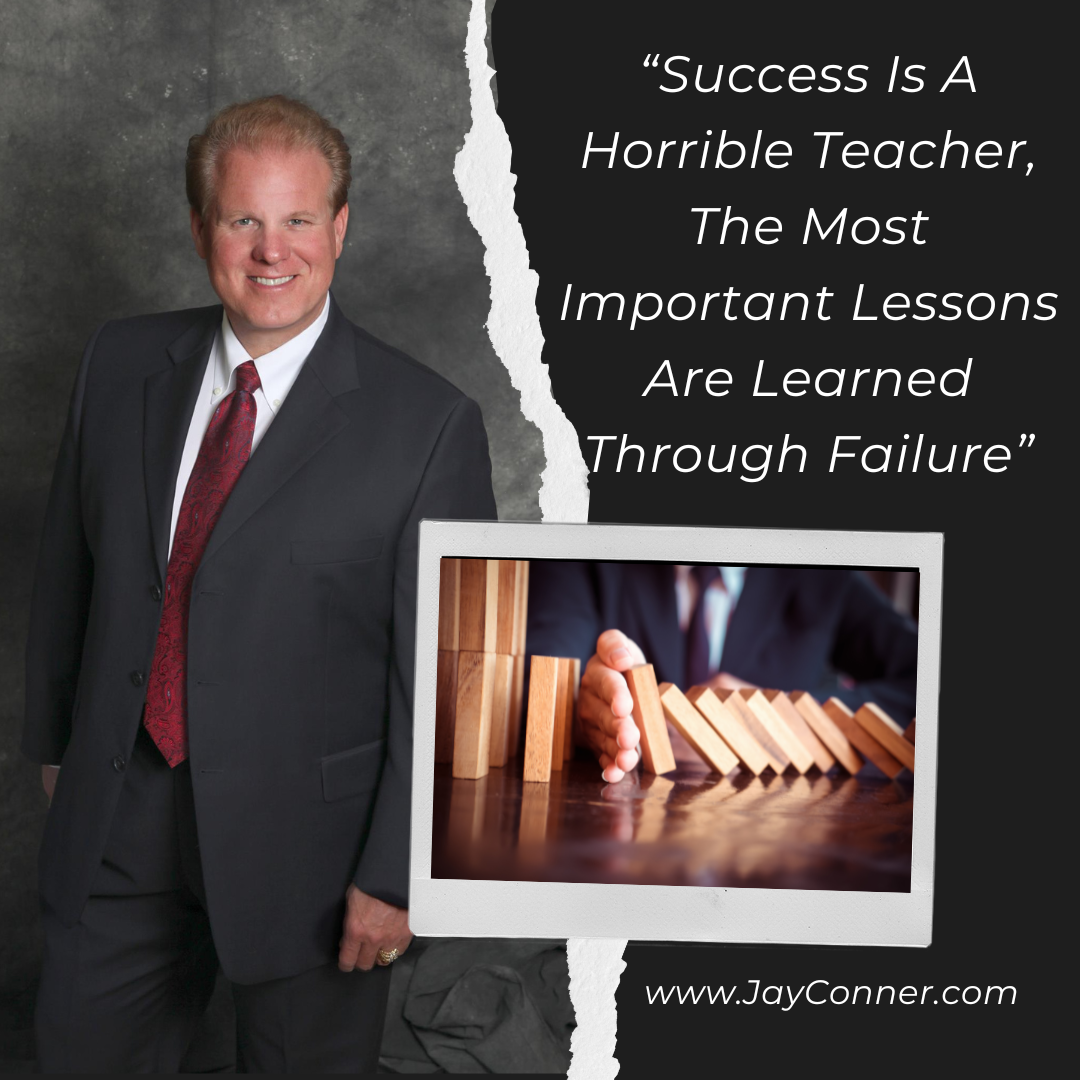
As you are sharing your story there, Scott, I’m reminded of the quote, success is a horrible teacher. Success is a horrible teacher. We learned those important lessons in the low of lows if you will. So, yes, you’ve been resilient. That’s in your DNA. But when you were, you know, really going through some of these difficulties, what are some of the big takeaways and lessons learned that you know, you got out of those experiences?
Scott Aaron [00:11:50]:
Well, I would say the big thing is having a positive outlook. So I’ve always been a glass-half-full type of person, but the other thing that I would say is that I live in the solution, but I don’t live in the problem. What I found was if I chose the route of living in the problem, I would be drowning in my sorrows, I would be keeping the car in neutral, and I wouldn’t be able to move forward. But if I focused on this concept of, alright, this is what’s going on. Here’s the problem. There’s gotta be a solution for it. And, Jay, there is. And I can positively affirm that no matter what problem someone is facing in their life right now, some other person has faced that same problem and you know what? There’s probably a solution for it.
Scott Aaron [00:12:47]:
So no matter what was kinda thrown my way, I had to maintain that positive outlook and that positive mindset that there is a solution to every problem. Now, there’s a secondary mindset shift that I had to make. I also had to put my pride aside. A lot of people will let their ego get in the way of getting to the next level of their business. And I remember one of my business coaches told me very early on, he goes, Scott, you never want your ego to be so big that you can’t fit in in front of a doorway or you can’t fit through a doorway. So I always made sure that I always checked my ego at the door before I walked through because here’s the thing, one of the things that helped me most mindset-wise is understanding that it’s okay to ask for help. So many people wear this badge of honor of, you know, prideful that, you know, I’m gonna grind it out, and I’m gonna do it myself, and I’m gonna figure this out on my own no matter how long it takes me. Now, I love your quote because, you know, success is not the best teacher.
Scott Aaron [00:13:51]:
Failure is. Failure is where you learn the lessons, but I also found myself never hesitating to ask for help because there’s strength in that. And I think people have this mindset that if they reach out to someone for help right? Think about all the people that attend your seminars, all the people that read your book and come to work with you. They’re not afraid to ask for help because you know what? They’re seeing Jay as the successful person that he’s that he is and the business that he’s running. You know what? Why am I gonna spend all these hours, days, weeks, months, years trying to figure it out and continue to fail and not fail quick enough when you know what? I can trim the fat and I can reach out for some help and I can find exactly what needs to get done. So for me, it was having that mindset shift of understanding that there was a solution to every single problem that I was having and never being afraid to reach out for help.
Jay Conner [00:14:48]:
It’s amazing how much we have in common, Scott. One of which is, I remember sharing my story on your show, when I was cut off from the banks. And the first thing I asked myself was, who do I know that can help me with my problem? Right? So, I can relate to exactly what you’re what you’re saying. So, you were handed the keys to the business that your dad had there, and then you went through the difficulty of times. You grew from that, and then you got into LinkedIn. How where and how did the LinkedIn thing start and come across where you come today to be the LinkedIn expert?
Scott Aaron [00:15:36]:
So after we sold the first two gyms, we spent about a year and that was in 2003. 2004, opened the last gym, and that’s the gym that kind of took me from millionaire to negative millionaire, so to speak. And I was your prototypical personal trainer, sports nutritionist, if I wasn’t working I wasn’t earning and I was working every hour that I could. I was working 6 and a half days a week, I was doing about 70 to 80 hours. Now I was making 6 figures as a personal trainer, but that’s not to say much because that meant the more money I made, the less time I had. It wasn’t until 2012, in all honesty, when my son was born, he’s 12 now, that things kinda shifted for me perspective-wise because I realized that it wasn’t just about me anymore. And I always remembered my father was so present in my life. You know, he worked very, very hard, but my mom had certain ground rules in the house.
Scott Aaron [00:16:37]:
We would sit down and have dinner together every single night. And my dad was my coach in sports. He was at all my sporting events even if he wasn’t the coach. And I wanted to be that for my son. I wanted to learn and take that and then obviously be that for my son. And when I kinda took a look in the mirror and I looked at my life, the way that it was set up, it wasn’t gonna be set up for that because if I wasn’t working, I wasn’t earning. And I’ll never forget, Jay, a a good friend of mine asked me one of the most poignant questions that I’ve ever been asked. He said, Scott, if you get sick or injured and you can’t physically train people and you can’t physically work, how are you gonna earn a living? And Jay, it scared me to death.
Scott Aaron [00:17:23]:
Like I remember the feeling, of the the pit in the stomach type of feeling where I’m like, man, that was a gut punch. But it’s exactly what I needed to hear at the exact time that this happened because it forced me to turn the mirror around and take a good look at myself and say, where am I going with this? You know, I’m I’m 33 years old. Like, I can’t do this for the rest of my life. It’s I’ve been doing this for 15 years. I need to go to the next level. So I started to think to myself. I sat down one day, and I started looking at the demographics of the clientele that I had in person. All of the clients that I worked with from a personal training standpoint were business professionals who saw me on their way to work early in the morning, on their lunch break, or on their way home from work.
Scott Aaron [00:18:18]:
And I said, okay. If all of these business professionals are willing to take the time out of their day to come to see me, whether it’s before or after work or during their lunch break, They have to be all over the country. They’re not just in the Philadelphia area where my gym was. They have to be online somewhere. And that’s when I asked myself the secondary question. What social media platform would most easily allow me to find these people? Wasn’t Facebook? It wasn’t YouTube. It wasn’t Instagram.
Scott Aaron [00:18:49]:
It wasn’t TikTok because it didn’t exist. It was LinkedIn. So I went on to LinkedIn. I changed my profile around, and this is now, the beginning of 2013. Changed my profile, and updated my banner. I started connecting with business professionals, messaging, creating content, and all this stuff. And within 6 months, I was able to match what I was making in person online by doing these virtual workouts and nutrition plans for people. And I was blown away, and I wasn’t doing anything special.
Scott Aaron [00:19:27]:
I was it was the law of numbers. It was connecting with the right people. It was hearing people’s stories. It was me sharing how I can help them in the capacity that they may be struggling in and with. Now, this was never intended to be a business. But, Jay, what I can tell you is some of the best businesses are created on the backs of those that need what you have most. When there is a gap in the marketplace, when there is a need for a problem that people are looking to solve and you have the solution to that problem, you could have a business. So here’s what transpired.
Scott Aaron [00:20:05]:
As I was getting these results, I reached out to a couple of friends of mine who were also in coaching and consulting because that’s what I was doing. And I said I think I found something here with LinkedIn. We were all using Facebook and it was not getting the type of results that we wanted. I said you should try this strategy. And I taught him what I was doing. And one friend in particular, after about 2 weeks, he got back to me. He shot me a text message and I’ll never forget. His text said, dude, call me.
Scott Aaron [00:20:35]:
So I called him and I said, what’s up? And he goes, listen. He goes, I don’t know what you figured out with this whole LinkedIn platform thing, but he goes, I have 14 appointments booked this week. Qualified appointments booked this week. He goes, you should be teaching other people how to do this. I said, what do you mean I should be teaching people how to do this? He goes, listen, you teach people right now how to build healthy bodies, start teaching people how to build a healthy business using Linkedin. And that was it. That was all I needed to hear. That is what allowed me to put the pieces together between this problem that people were having with the solution that I created with Linkedin, and that was the birthplace of not only how I was leveraging Linkedin, but the company that I was able to start, and now my wife and I run 3 companies together, all leveraged around in some capacity, some way, shape, or form, how to leverage LinkedIn to grow their business, their brand, and their bank accounts.
Jay Conner [00:21:41]:
Now you mentioned a moment ago that when you were there at the fitness center, you were working 70, 80 hours a week, 6 and a half days a week. What does your work day, and work week look like now compared and contrasted to that?
Scott Aaron [00:21:56]:
It’s a great question. So my wife and I are very blessed. You know, we’ve worked very hard to get to where we’re at right now. And over the past 7 years of growing our companies, we’re now working 3 days a week. We work Mondays, Tuesdays, and Thursdays. Wednesday and Friday are our flex days. It could be for podcasting or just general appointments. It could be just us going out to lunch.
Scott Aaron [00:22:22]:
And the days that we do work, we work from 11 to 4. So we work about 15 hours a week. We have a COO now. We have a CMO. We’re in talks of bringing a CEO to help with one of our businesses, and we have 7 other team members that we now have on our team. So, it’s been slow and steady. It’s that whole tortoise and the hare. We treat our business like a 401 k or an IRA.
Scott Aaron [00:22:47]:
It’s the compounded effect, and that’s why we wrote our book, The Feel Good Business Model, which was our newest release back in February of last year. We wanna share with people the things and the actions that we took to create the business that we have because we want people to have a business that they love, a life that they love, and that work-life integration that they deserve.
Jay Conner [00:23:09]:
Which, by the way, I wanna let everybody know I ordered your book since being on your podcast, the Feel Good Business Model, Feel Good. I’m about halfway through the book. It’s a phenomenal book. I recommend it, to everyone, particularly if you want to start a business or you’re running a business and your business is running you instead of you running your business. I highly recommend the Feel Good book. So how can people learn about your LinkedIn strategies? And you got to tease us with just one tip. Maybe that tip is by sharing one of the most common mistakes that people that are trying to leverage linked up, how they screw it up.
Scott Aaron [00:23:50]:
Yeah. So I’ll say, you know, I have, you know, my website. People can find me at scottairin.net. Also going to my LinkedIn profile, you can find me on LinkedIn. It’s the easiest place to find me. And on my LinkedIn profile, you can take, a free assessment. It’s called the LinkedIn scorecard assessment. You just click on it and you can take it.
Scott Aaron [00:24:14]:
It takes about 2 minutes. But here’s what I’ll say. I wanna give you a place to start but also talk about the things that you shouldn’t do. And I’m gonna start with the do-not. So the miss the biggest mistake the biggest mistake that people make on LinkedIn is they focus more on selling and pitching instead of building relationships. Now if any of you watching this or listening to this have ever spent any time on LinkedIn, you’ve probably received one of those 18-paragraph long drunk-a-log verbal vomit messages when someone’s trying to pitch you and sell you. We call it pitch slapping in the sales industry, and that doesn’t feel good. No one wants to be pitch-slapped, but everybody wants to be connected with.
Scott Aaron [00:25:03]:
So if you’re that person that, you know, you’re just literally spraying and praying and just trying to send as many sales messages out as you can, stop. Think about this my wife and I talk about something called the smell test. If you’re crafting a message on LinkedIn and you reread it and it stinks, don’t send it. Never send a message that you wouldn’t personally respond to. So I’ll leave that. That’s one of the biggest no no’s. Now, where can someone start? The easiest place for someone to start is optimizing your LinkedIn profile. One of the biggest benefits of LinkedIn right now is number 1, it’s a giant search engine.
Scott Aaron [00:25:46]:
So basically, everything is keyworded. Now, if anyone visits my website, there’s a gift for anyone who visits. It’s scottairn.net. It’s my 6 steps to a perfect LinkedIn profile. So basically, you click on it. It’s gonna give you this beautiful 6-page PDF, which is gonna help you understand the core foundations of how you should optimize your LinkedIn profile because here’s the benefit of doing this. When you have your LinkedIn profile set up the right way, meaning your headline section is full of keywords that your ideal target client or business ally would be searching for that would then allow you to be visible in that search result that would drive more people to your LinkedIn profile. It’s gonna give you that increased visibility.
Scott Aaron [00:26:31]:
When you can have that about section written the right way, where you’re sharing with people what it is that you do, how you do it, who you serve, and what makes you different, but also having that specific call to action. How can people learn more? One of the biggest mistakes that people make on their LinkedIn profile, is not taking people on that customer journey. So leave your website in the About section. Leave your business email if you want people to email you there. But more importantly than all of that, make sure that you think about what those keywords that people are gonna be searching for, and not only do you wanna put them in the headline section, you wanna flutter them throughout your LinkedIn profile, in the about section, in your experience section, and finally, within your LinkedIn profile, there’s a section called personal recommendations. These are testimonials. This is social proof. If you want the words of others to speak for you, so you don’t have to, you want to gather as many recommendations as possible.
Scott Aaron [00:27:37]:
And it’s very simple. You just have to ask. You have to a s k to g e t. You have to ask to get it. So if you want people to write you those written recommendations, you have to ask. So you ask people that you know, like, and trust. You ask current clients, past clients, current employees, past employees, and business allies, and, again, you can see this little certificate right back here for people who are watching. My wife made that for me.
Scott Aaron [00:28:04]:
I now have over 500 written recommendations on my LinkedIn profile, and I don’t say that out of ego. I say that out of confidence that I know anyone that’s looking to take their business, their brand and their presence on LinkedIn to the next level, you can read through the words of nearly 520 people who have said that that is exactly what I did for them. So not to overwhelm people, if you wanna get started on LinkedIn, number 1, don’t spam message people. Be authentic in everything that you do. But more importantly, get that profile optimized because the more visible you are on LinkedIn, the more visible your business will be on LinkedIn.
Jay Conner [00:28:42]:
Great advice, Scott. Fantastic advice. And just one more time, let’s share with everyone how they can connect with you. That’s on your website. Scott Aaron, that’s with 2 t’s, I think, s c o t t.
Scott Aaron [00:28:57]:
Yep.
Jay Conner [00:28:58]:
And do a’s, aar0n.net. That’s a dot net, not a dot com. And on your LinkedIn profile. Scott, thank you so much for taking the time to share your story. Thank you so much for being transparent with your story and for sharing your experience with my amazing audience.
Scott Aaron [00:29:18]:
Jay, thank you. Honor and a privilege and just, obviously grateful to be here today and share my story with your audience. Hopefully, it impacts one person to not give up on their dream to continue moving forward, and to be resilient. So thank you again.
Jay Conner [00:29:31]:
You got it. God bless you. There you have it. Another amazing episode of Raising Private Money. I’m Jay Conner, the Private Money Authority, wishing you all the best. And so that we can continue to have more amazing guests like Scott Aaron, we appreciate you liking, sharing, and subscribing. If you happen to be watching on YouTube, click that bell so you don’t miss out on upcoming episodes. And most importantly, really appreciate the 5-star ratings and reviews.
Jay Conner [00:29:59]:
I look forward to seeing you right here on the next episode of Raising Private Money.
Narrator [00:30:07]:
Are you feeling inspired by the knowledge you gained in this episode? Then head over to www.JayConner.com/MoneyGuide. That’s www.JayConner.com/MoneyGuide and download your free guide that shares seven reasons why private money will skyrocket your real estate investing business right now. Again, that’s www.JayConner.com/MoneyGuide to get your free guide. We’ll see you next time on raising private money with Jay Conner.