***Guest Appearance
Credits to:
https://www.youtube.com/@Randy_Dyck
“The Secrets of Private Money with Jay Conner: A Real Estate Investor’s Journey”
https://www.youtube.com/watch?v=k3uM93KSb1g
In a recent episode of the Raising Private Money podcast, Jay Conner and Randy Dyck dive into the profound and transformative journey of leveraging private money in real estate investing. This discussion lights up key strategies and valuable life lessons drawn from years of real estate experience and personal growth. This blog post will outline the podcast’s rich content, providing an extensive overview for those eager to succeed in real estate investing.
David’s Resilience: Embracing the E+R=O Formula
Learning from Hardship: The Foundation of Resilience
David’s story begins with a challenging upbringing in Kentucky, losing his father at a tender age. This early adversity seemed to predetermine a life of struggle for David. However, a transformative lesson came when he learned about the E+R=O formula, which stands for Event + Response = Outcome. This revelation helped David realize that while he couldn’t control the events in his life, he had complete control over his responses. This lesson of owning one’s response to life’s events underpins the greater discussion of resilience in real estate, as echoed by Jay Conner and Randy Dyck.
Jay Conner’s Journey: From Bank Reliance to Private Money
Pivoting in Crisis: Facing the 2008 Market Collapse
Jay Conner faced a significant turning point during the 2008 financial crisis when traditional bank financing dried up. This unexpected challenge could have derailed his real estate business. Instead, Jay turned to private money—a strategy that fundamentally altered the trajectory of his success. Unlike conventional loans, private money involves borrowing from individuals with available capital under terms set by the borrower. This strategy not only revitalized Jay’s business but tripled its size, illustrating the power of resilience and adaptability.
The Importance of a Supportive Community
Surrounding Yourself with Positive Influences
Jay Conner emphasizes the notion that one’s “vibration” or energy is significantly influenced by the people around them. This idea aligns with Jim Rohn’s wisdom that individuals are the average of the five people they spend the most time with. By building a network of positive, like-minded individuals, investors can maintain high energy and motivation, which is crucial in navigating the ups and downs of real estate.
Trust, Vulnerability, and Resilience in Real Estate
Building the Foundations of Success
Randy Dyck introduces a powerful analogy of trust and resilience in real estate, likening them to a house’s structural components. Trust forms the foundation, hope, and vulnerability of the walls, and the resilience of the roof. Jay Conner agrees with this analogy, adding that spiritual trust also plays a pivotal role. For real estate investors, establishing a strong foundation of trust can protect against inevitable market volatility and ensure long-term success.
Strategy and Mindset: Key Ingredients to Real Estate Success
Maximizing Returns in Property Investment
Jay Conner’s real estate strategy involves precise calculations to determine the worth of an investment. Using private money, he typically offers up to 50% of a property’s after-repaired value (ARV), which allows for purchasing and rehabbing properties without tapping into personal finances. For instance, for a property with an ARV of $200,000, Jay might offer $100,000 and borrow up to $150,000. This approach ensures that funds are available for unexpected expenses and repairs, emphasizing the necessity of a calculated and disciplined strategy in real estate.
Transitioning from Success to Significance
A New Chapter in Personal and Professional Growth
Jay Conner is currently in a reflective phase of transitioning from success to significance. His journey is not just about financial gains but about impacting others positively and leaving a lasting legacy. He stresses the importance of consistent personal development, recommending books like “The Go-Giver” by Bob Berg and “The University of Success” by Og Mandino, and daily routines like reading 10 pages of nonfiction to spur continuous growth.
The Transformative Power of Visualization and Focus
Avoiding Distractions and Sharpening the Mind
Maintaining a clear focus is critical in a field full of distractions, often referred to as “shiny object syndrome.” Jay Conner employs visualization techniques and listens to theta wave music to foster creativity and maintain concentration on his goals. This disciplined approach helps in mitigating distractions and ensuring sustained progress in his real estate ventures.
Conclusion
Inspiration and Resources for Aspiring Investors
The conversation between Jay Conner and Randy Dyck provides a treasure trove of insights for anyone involved in real estate investing or personal development. From leveraging private money to the importance of resilience and supportive communities, these lessons are invaluable guides for navigating the uncertain waters of real estate. For those looking to delve deeper, Jay Conner offers a free copy of his book, “Where to Get the Money Now,” available through his website, providing further tools and strategies to elevate their real estate investing journey.
10 Discussion Questions from this Episode:
- David’s Transformation: How did the “Event + Response = Outcome” formula change David’s perspective on his life’s challenges after losing his father at a young age?
- Banking Experience: What can real estate investors learn from Jay Conner’s experience with losing his line of credit from banks, and how did he use resilience to find alternative funding sources?
- Resilience in Real Estate: Why do Randy Dyck and Jay Conner consider resilience a “superpower” for real estate investors? Can you think of any other traits or skills that might be equally important?
- Trust and Resilience: How does Randy’s analogy of trust as the foundation of a house, with hope and vulnerability as walls and resilience as the roof, resonate with your own experiences in personal or professional life?
- Power of Community: Jay Conner emphasizes the impact of surrounding oneself with positive, like-minded individuals. How has this principle influenced your personal growth or professional success?
- Private Money Concept: What is private money according to Jay Conner, and how does it differ from traditional institutional funding? How can real estate investors benefit from this approach?
- Mindset and Market Cycles: How has Jay Conner navigated through various market cycles in real estate, especially during the 2008 financial crisis? What strategies did he employ to maintain and grow his business?
- Impact of Mentorship: Jay Conner discusses influential figures like Zig Ziglar in his life. How important do you think mentorship and motivational figures are in achieving success in real estate or any other field?
- Reading and Personal Development: Jay recommends reading 10 pages of nonfiction daily. How can this practice influence personal growth and success? Are there any books that have significantly impacted your life or career?
- Transition from Success to Significance: Jay Conner is exploring a transition from success to significance in his life journey. What does this transition mean to you, and how can one strive to make an impact beyond personal achievements?
Fun facts that were revealed in the episode:
- Jay Conner’s Encounter with Glenn Campbell: Jay Conner shared a memorable experience from his senior year of college when he met country music star Glenn Campbell and played the piano for his rendition of “Have Yourself A Merry Little Christmas.”
- Jay’s Wife and Church Music: Jay and his wife, Carol Joy, are actively involved in their church’s music scene, composing songs and planning a significant event called Singing by the Sea.
- Zig Ziglar’s Influence: Jay highlighted the major influence of motivational speaker Zig Ziglar on his life, having met him twice and been deeply impacted by Ziglar’s book “See You at the Top.”
Timestamps:
00:01 Raising Private Money Without Asking For It
04:51 Line of credit closed due to crisis.
09:06 Private money: Borrowers set the investment rules.
10:40 Educate, separate, and refer for private funding.
13:09 Mindset is key to leveraging private money.
17:55 Offer 50% after-repair value, borrow 75%.
21:40 Loss led to the discovery of a new funding strategy.
23:39 Excess money available outweighs investment deals.
27:13 David overcame his limiting belief system formula.
30:21 Resilience is a primal power, an essential trait.
35:22 Listening genuinely is a powerful gift.
37:46 “University of Success”: Short chapters on happiness-success balance.
42:34 “Shine” by Gino Wickman: Fear vs. Love
45:19 Mentor Zig Ziglar’s lasting impact on me.
48:41 Stay focused; avoid shiny object distractions.
50:37 Focused on single-family homes since 2003.
54:07 Download the free guide on private money investing.
Connect With Jay Conner:
Private Money Academy Conference:
Free Report:
https://www.jayconner.com/MoneyReport
Join the Private Money Academy:
https://www.JayConner.com/trial/
Have you read Jay’s new book: Where to Get The Money Now?
It is available FREE (all you pay is the shipping and handling) at https://www.JayConner.com/Book
What is Private Money? Real Estate Investing with Jay Conner
http://www.JayConner.com/MoneyPodcast
Jay Conner is a proven real estate investment leader. Without using his own money or credit, Jay maximizes creative methods to buy and sell properties with profits averaging $67,000 per deal.
#RealEstate #RealEstateInvesting #RealEstateInvestingForBeginners #Foreclosures #FlippingHouses #PrivateMoney #RaisingPrivateMoney #JayConner
YouTube Channel
https://www.youtube.com/c/RealEstateInvestingWithJayConner
Apple Podcast:
Facebook:
https://www.facebook.com/jay.conner.marketing
Twitter:
https://twitter.com/JayConner01
Pinterest:
https://www.pinterest.com/JConner_PrivateMoneyAuthority
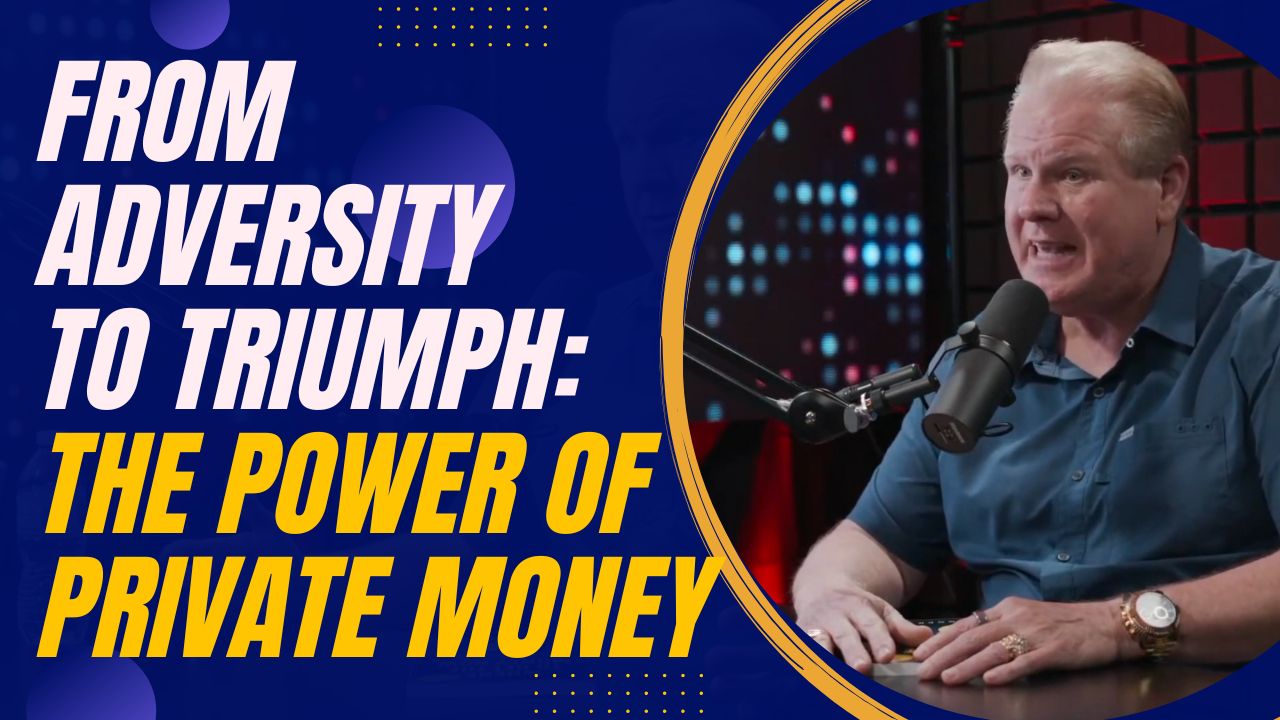
From Adversity to Triumph: The Power of Private Money and Resilience in Real Estate Jay Conner & Randy Dyck
Narrator [00:00:01]:
If you’re a real estate investor and are wondering how to raise and leverage private money to make more profit on every deal, then you’re in the right place. On raising private money, we’ll speak with new and seasoned investors to dissect their deals and extract the best tips and strategies to help you get the money because the money comes first. Now here’s your host, Jay Conner.
Jay Conner [00:00:28]:
I’m gonna share the question that I ask myself sitting here at this very desk. I ask myself this question. And this question, if you’re listening to this podcast, this question will help you solve any problem you’ve got in your life. Talk about a return to life. I don’t care if it’s personal, financial, health, relationship, or career. I don’t care what your problem is. This question will help you quickly solve your problem.
Randy Dyck [00:00:55]:
I used to chase the ROI all the time, return on investment. And over time, that has evolved into what I call a return to life. Welcome, everyone. This is Randy Dick here, and I am so excited about today’s guest on the Return on Life podcast. And if you’ve not been listening and this is your first time, listen up. This is not about the return on investment, not the ROI, but about the ROL, return on life. And our guest today is one of the best, I think, in really helping us understand the return on life. I’ve got Jay Connor with me today, and he’s living in a smaller town on the North Carolina coast called Moorhead, a port town, kind of a recreational area.
Randy Dyck [00:01:44]:
And I’m excited to hear what he has to say about the town, but also what he’s doing to make life work. And, we’ve got such an exciting podcast for you. Just a couple of things about Jay. He’s not new to this game. And so a lot of these people that, come on the show are fairly new to the game, and maybe they’ve made it in the last 2, 3, 5 years, but Jay’s been around for a lot of years. Back in 2003, he started his game and fought through the 2009 crash and came out the other side even in better shape. At least that’s what I believe. And we’re gonna hear about that.
Randy Dyck [00:02:24]:
Jay’s rehab is well over 500 homes. Yes. 500 homes. 100 and 100 of 1,000,000 dollars of transactions. And so welcome here, Jay. Why don’t you share that for yourself?
Jay Conner [00:02:38]:
Randy, thank you so much for inviting me to come along and be on your podcast and talk about my most favorite and passionate topic, that is private money. And, also, I’m gonna love to talk about return on life, but I’m so passionate about private money, funding your deal, your real estate deals, because private monies have the biggest impact on our business of anything that we have implemented in our business.
Randy Dyck [00:03:04]:
You know, I see that everywhere. So I’m up here in Vancouver. You’re on North you’re in North Carolina on the East Coast. I don’t think it matters where you are in North America. Private money is driving business today, especially when it comes to real estate. And so you learned this early, early on. Tell us a story about where you started back in 2003 and what it took, or how you fell into it, or how you made it happen.
Jay Conner [00:03:32]:
Well, as you said, my wife and I, Carol Joy and I, here in Eastern North Carolina, have been full-time investing in real estate. Our focus has been on single-family houses. However, we’ve done all kinds of deals. We’ve built a shopping center from the ground up. We’ve done condominium developments from the ground up, etcetera. But most of our focus has been on single-family houses. Well, from 2003 until 2009, January 2009 to be exact, those first 6 years that we were investing in single-family houses here in our small area of only 40,000 people, that’s our total target market. All I knew to do, Randy, all I knew to do was to go to the local bank, get on my hands and knees, put my hands underneath my chin, and let them pull my skirt up so they could look at my financial statements and show all my personal, you know, assets, and say, please fund my deal.
Jay Conner [00:04:32]:
Please fund my deal. That’s all I need to do. Well, something changed big time in January 2009. I mean, I had done a ton of deals those 1st 6 years. Steve was my banker. We had a great working relationship. Well, I called up Steve. I was sitting here at my desk.
Jay Conner [00:04:51]:
Randy, you may find it hard to believe, but here in North Carolina, we still have handsets and cords attached to what’s called a landline. Right? So I called picked up the phone and I called Steve, my banker. And I told him about these two houses that I had under contract to purchase. They represented over $100,000 in profit on these two deals. And so I’m talking with Steve on the phone, and I learned on that telephone conversation, Randy, like that, that my line of credit at the bank, where I’ve been having my line of credit for 6 years, was shut down, closed, nothing I mean, it’s no way to fund my deals. And so I’m, like, in shock. And I’m talking to Steve, and I said, Steve, what in the world are you talking about? You’ve shut down my line of credit. He says, Jay, don’t you know there’s a global financial crisis going on right now, globally? I said, no.
Jay Conner [00:05:47]:
But now you’ve just given me a global financial crisis because I have no way to fund these two deals. So I hung up the phone, and I sat there for a moment. And here’s a rider downer. I’m gonna share the question, and that’s where the power is. I’m gonna share the question that I ask myself sitting here at this very desk. I ask myself this question. And this question, if you’re listening to this podcast, this question will help you solve any problem you’ve got in your life. Talk about a return to life.
Jay Conner [00:06:23]:
I don’t care if it’s personal, financial, health, relationship, or career. I don’t care what your problem is. This question will help you quickly solve your problem. And by the way, Randy, these people going around saying, oh, every problem is an opportunity. I wanna throw up. I didn’t have an opportunity. I had a problem. Right? And so here’s the question.
Jay Conner [00:06:46]:
Who do I know that can help me with my problem?
Jay Conner [00:06:57]:
You see, so many of us, we, you know, we got this ego thing that we need we gotta particularly if you’re a guy, you just gotta fit you just gotta fix your stuff. Right? Wrong. Who do I know that can help me with my problem? And so in fact, there’s a great book out. I’m sure you’re familiar with it, Randy. Who, not how.
Randy Dyck [00:07:16]:
It’s an awesome book.
Jay Conner [00:07:17]:
Yeah. Great book. The coauthor, I got to meet him in person not too long ago and had him on my show. But, anyway, when I asked myself that question, who do I know that can help me with my problem? I immediately thought of Jeff Blankenship, dear friend of mine, and Carol Joys. He was investing in real estate in Greensboro, North Carolina at the time. We know him through church, and singing events and stuff. So I immediately thought of Jeff. I called up Jeff right here on the phone.
Jay Conner [00:07:47]:
And I told Jeff what had happened with me and my banker. He said, well, Jay, welcome to the club. I said, what club? He said, the club of losing your line of credit at the bank. My bank just shut me down last week. I said, well, Jeff, how are you going to fund your deals now that we’ve got something else in common?
Jay Conner [00:08:06]:
And he says, well, have you ever heard of private money? I said, no. He said, have you ever heard of self-directed IRAs? You call them something different in Canada. And I said, no. I never heard of self-directed IRAs or third-party custodians. He says, well, let me tell you about it. So Jeff told me a little bit about private money, what it is, and self-directed IRAs. How people who have retirement funds can actually if they’re not happy with their returns, move them over to a self-directed IRA company and then loan that money out to real estate investors, either tax-deferred or tax-free.
Randy Dyck [00:08:41]:
Yeah. We can do it in Canada as well.
Jay Conner [00:08:43]:
Yeah. And what’s it called in Canada around? RSPs. RSPs. That’s right. I’ve heard that 100 times, and I just can’t RSP doesn’t stick in my head. But, anyway, I studied private money and how private I never heard of private money. Well, I never needed to hear private money until I didn’t have any money to fund my deal. So I studied private money.
Jay Conner [00:09:06]:
And one of the first things I learned about private money, by the way, I’m not talking about hard money. I’m not talking about hard money brokers. I’m not talking about any kind of institutional money. I’m talking about doing business with individuals, other human beings, who have investment capital and or retirement funds that want to be passive, get nice rates of return, and do nothing. Just sit back, and get the return on their investment. Right? So I studied it. And one of the first things I learned, Randy, was that in this world of private money, here’s what’s different. We as the borrower, as the real estate investor, make the rules, not the lender.
Jay Conner [00:09:52]:
Mhmm. Boy, wasn’t that a mind shift. You know, when I was borrowing money from the banks, they made the rules. There were applications. In this world, we make the rules. So, you know, here’s what’s interesting. I got 47 private lenders right now investing in our deals, and loaning us money. And you know what, Randy? Not one of those private lenders not one of those 47 private lenders ever heard of private money, never heard of private lending, never heard of self-directed IRAs until I did something, until I put on my teacher hat, my private money teacher hat, and I taught them what private money is and how they can earn high rates of returns safely and securely by being a private lender.
Jay Conner [00:10:40]:
So none of these 47 private lenders funding our deals had ever heard of it, didn’t know what it was, and never heard of separate IRAs. And here’s here’s an actionable item, by the way. Establish a relationship with an RSP company or self-directed IRA company so that when you’re talking with somebody in your network who’s got retirement funds and they’re not happy with it, you can refer them to your rep and they can learn how they can move their money over and then be a private lender for you with their retirement funds. So 47 private lenders. I have yet here’s what’s interesting, Randy. I have yet to ask anybody for money since I started using private money. And people say, Jay, how do you have 8 and a half $1,000,000 available to you in private funding and you never ask anybody for money? Here’s the secret. I separate the conversations between teaching what private money is and how they can get involved and then having a deal for them to fund.
Jay Conner [00:11:45]:
You see, desperation has got a smell to it. Yes. And if I’m talking about private lending and how you can get involved, and I got a deal for you to fund, I sound like I’m desperate.
Jay Conner [00:11:58]:
So I teach it, Then I say, look, I’ll get back to you just as soon as possible, and I’ll put your money to work for you. And then a little bit of time will go by, maybe a couple of weeks, 2 or 3 weeks, and I’ll call up my private lender with what I call the great news phone call. And here’s the great news phone call. I call them up. I say, Randy, you as my new private lender, I’ve got great news for you. I can now put your money to work. I got a house in Newport, North Carolina under contract with an after repaired value of $200,000. The funding required for the deal is 150,000.
Jay Conner [00:12:37]:
By the way, I know you’ve got a 150. You already told me you’re waiting for the phone call. The funding requires a 150,000. Closing is next Friday, so you’ll need to have your funds wired to my real estate attorney’s trust account. By next Thursday, I’m gonna have my real estate attorney email you the wiring instructions. End of conversation. The most stupid question I could ask is do you want to fund the deal? Of course, you want to fund the deal. You’re waiting for the phone call to put your money to work.
Jay Conner [00:13:09]:
And, especially, if I have introduced you to the company I recommend in the US for self-directed IRAs if you have moved your money over to that self-directed IRA company, you’re not making any money until I put your money to work for you. So you see, it’s all about mindset. People ask me all the time. They say, Jay, how do I get started? How do I get started raising private money? Here’s the answer. It’s gonna be very hard for you to own real estate using private money until you own the real estate between your ears. Mhmm. And what I mean by that is we’re not chasing, begging, selling, persuading, or talking anybody into anything. Instead of asking or applying for a mortgage, we’re offering a mortgage and showing people a way they can earn high rates of return, safely and securely, that they never even heard about.
Randy Dyck [00:14:03]:
That is awesome. I love the fact that we make up the rules or you make up the rules. It’s just a reversal, and it’s, it’s magic. By the way, everybody, as you’re listening here, you must stay till the very, very end. We’ve got a special, special gift for you, but you must stay till the end. And Jay’s gonna give us an amazing gift to give away. Now, Jay, question about markets. There’s always a shift in the market, and navigating those shifts with the private lenders, with your own business.
Randy Dyck [00:14:33]:
How do you handle that if the market is shifting and, you know, you’ve got private lenders asking you questions saying, what about the market? It’s changing. How do you respond to that?
Jay Conner [00:14:43]:
Yeah. Well, as markets tighten up, I like it better. And here’s why. It clears the playing field. I tell you what, HGTV educated stupid, stupid offers. Right? And so when the market’s been so hot, you got all these other new real estate investors out there that are making these stupid offers. So as the markets tighten, it clears the playing field. Of course, I would never never ask for, any kind of a downturn on anybody.
Jay Conner [00:15:19]:
But, hey, it’s a fact. Real estate is a cyclical business. I started in the mobile home manufactured housing business when I was a teenager. So I’ve already lived through 7 cycles. Mhmm. And so it doesn’t matter. It does not matter what the market is doing. People, ever since the beginning of time, have been buying and selling.
Jay Conner [00:15:46]:
Everybody’s gotta have a shelter. They gotta have a place to live. One of my mentors, way back in the 19 eighties, was buying and selling houses as a real estate investor when mortgage rates were 16%.
Jay Conner [00:16:00]:
So people were buying houses. Right? So it comes down to, are you buying right? Are you buying at the right price? And are you hedging against, what the market’s going to do in a short period? For example, when I’m paying all cash with private money, the formula that I use is I take the after-repaired value. Now that is if I’m going to rehab and renovate that house. I take the after-repaired value and multiply it times 70%. That accounts for my profit and my carrying costs. I multiply it by 70%, then I subtract the estimated repairs. And if the after-repaired value is less than 300,000, I throw in another $10,000 for Murphy. I call it the Murphy factor.
Jay Conner [00:16:52]:
If anything can go wrong, it will because I’ve never had a rehab budget come in on budget. If the natural repaired value is above $300,000, I throw in an extra 20,000, right, for the unexpected. So let me just give a quick little, example. Mhmm. So let’s say let’s say the for simple for simple figuring. Let’s say the after-repair value is $200,000. K. Alright.
Jay Conner [00:17:23]:
Now, I know in California you can’t even buy an outhouse with a toilet for 200,000, but we’ll just keep it for simple figuring. So you got an after-repaired value on a house of 200,000. So I want to multiply that. Now this is my offer. I’m gonna multiply that times 70%. That equals 140,000. Let’s say that the renovation budget is 30,000 for that small house. That gives me 110,000.
Jay Conner [00:17:55]:
Now remember, I’m gonna subtract another 10,000 for the unexpected, for Murphy. So on that 200,000 after-repaired value house, I’m going to offer a maximum of $100,000 Mhmm. Which is 50% of the after-repaired value. I do that all the time. I buy houses all the time when I’m paying all cash with private money, 50% or less of the after-repaired value. But now let’s continue our example and follow the cash flow. I can borrow up to 1, up to, 75% of the after repair value. So the after-repair value is 200,000.
Jay Conner [00:18:36]:
75% of 200,000 is 150,000. So I borrow $150,000. Do you see now why I never take a check to the closing table? I never pull any money out of my pocket. I always get a check when I buy without taking in my so if I’m borrowing a 150,000 in this example and that’s being wired into my closing attorney’s trust account, here comes a $150,000. Boom. I’m buying for a 100. Well, what’s the excess cash to close the check that I’m bringing home? $50,000. Yeah.
Jay Conner [00:19:14]:
Right? I’m bringing home a I mean, who wants to get paid to buy houses? So I’m bringing home a $50,000 check when I buy and, you know, less some closing cost to the attorney. I’m gonna use 30,000 of that for the rehab. Mhmm. Maybe another 10 for the unexpected. Yep. But that still leaves me an extra $10,000 of the equity that I pulled out that I can use for carrying costs, marketing, whatever I wanna do. Private money is the quickest way to put an infusion of cash in your checkbook.
Randy Dyck [00:19:50]:
Love it. Love it. Love it. You talked about going through 7 different cycles, and we know cycles happen. You know, boom, slump, recovery. Boom, slump, recovery. That just happens in every market. We just don’t know the duration and the timing of it all the time.
Randy Dyck [00:20:06]:
However, you’ve got 7 cycles of experience. How many cycles did it take before you okay? I get this. Because I’ve been through 4 myself. And, and even at times when you’re in the cycle, you’re going, well, no. It’s different, but, you know, they’re all the same. They’re all the same in some ways. Were you wise to the cycle early on, or did it take a few cycles to grasp the knowledge of the cycle?
Jay Conner [00:20:36]:
That’s a good question. As you said, nobody’s got a crystal ball. No. Sometimes cycles happen overnight. Excuse me. Not the cycle. The shift.
Randy Dyck [00:20:49]:
The shift.
Jay Conner [00:20:50]:
The shift.
Randy Dyck [00:20:51]:
Yes.
Jay Conner [00:20:51]:
I mean, 2,007, 8, 9, depending on where you were in the country, that I mean, particularly 2,009, that was like a spigot that turned off overnight.
Randy Dyck [00:21:04]:
I remember I remember the day. I remember the day.
Jay Conner [00:21:07]:
I mean, I tell you what my trigger was and then you tell me. When Lehman Brothers shut down, the world stopped.
Randy Dyck [00:21:18]:
October 2008.
Jay Conner [00:21:20]:
There you go.
Randy Dyck [00:21:23]:
Yeah. It’s like And that’s probably the most definite cycle change that I’ve seen. Then, from the from the boom to the slump, that was probably like, out of all the cycles I’ve been in, that one was the most defined definite okay. It changed today. It changed today.
Jay Conner [00:21:40]:
Yep. And you see, that ties right in with my phone call in January 2009 to my banker. I mean, you had Lehman Brothers, you know, everything like the spigot turns off in October, which was just 2 months prior. And for all I know, I don’t even have a deal to buy using my local bank in those 2 months. And I just happened to find out when I made the phone call in January 2009 that, woo, my money’s gone. But you know what? You know what, Randy? It was, honestly, it was the biggest game changer. It was the biggest blessing in disguise when I lost that because I had to make a decision. Am I gonna go to the house with my tail in between my legs and be a victim, or am I gonna find a better and quicker way to fund my deals? And you know what? And it comes back to asking the question, who do I know? Who do I know? Right? And, you know, here’s what’s interesting, Randy.
Jay Conner [00:22:43]:
Within the next 12 months of starting to use private money, our business tripled. Wow. Triple. And here’s why. I had all this private money now available to me. People didn’t know what to do with their money. They didn’t know a safe place to put it. Stock markets all over the place.
Jay Conner [00:23:01]:
That’s still happening today. Stock markets all over the place. People were looking for a reliable place to park their money and get a reliable, nice return. And all these foreclosures were going on. I mean, foreclosures were all over the place. But guess what? You had to have all the cash to buy them, and the lenders and banks weren’t loaning money. So if you needed all the cash to buy these foreclosures and the banks weren’t loaning money, now I got all this private money. I was able to pick and choose the deals that I wanted to do because of all this available.
Jay Conner [00:23:39]:
So it’s like it’s like the perfect storm vortex just came together. And I have not missed out on a deal since that time for not having the funding. Randy, I have a problem. I got over $1,500,000 in private money just sitting there on the sidelines waiting for me to use. And this is just an example. There’s always more money if you know where to get it. There’s always more money available than there are deals, which reminds me, Randy, and I’ll turn it back over to you. These gurus going around teaching I wanna throw up.
Jay Conner [00:24:22]:
Going around teaching and I know I’m getting ready to say something. I know you heard it. I’m getting ready to say something. I know you have heard it and it drives me stupidly crazy. They’ll say, quote, unquote, oh, just get the deal under contract. The money will show up. And I want to go, Where is the money going to show up? Is it just going to rain down out of clouds or something? No. That’s why I practice and preach, Get the money lined up first.
Jay Conner [00:24:52]:
There’s always going to be deals. And just think how much more confident you’re going to be in making offers when you know you’ve got $500,000 burning a hole in your pocket, ready to go to work. How many more offers are you gonna make? Get the money lined up first, and then you’re not gonna miss out on any deals.
Randy Dyck [00:25:11]:
Awesome. Awesome stuff. Well, let’s shift gears a little bit because I think there’s something profound that probably went through your mind back in 2009, and 2010 when the shift was happening. And I wanna dig into a little bit of philosophy and mindset because, at that moment, that was a crucible moment when you walked in the bank and they said, hey. Your LLC’s locked up no more. What was your mind thinking? How did you process it? How did you get through that crucible moment to then get up and go and reinvent yourself, so to speak?
Jay Conner [00:25:51]:
I’m so glad you asked the question because that allows me to share a formula that I learned from Jack Canfield, co-author of the Chicken Soup for the Soul series, years ago. This formula that I’m getting ready to share will serve you in so many different ways. And here’s the formula, and I’ll explain it. The formula is E, which stands for the event, plus R, which stands for a response. Your response to the event equals the outcome. E plus r equals outcome. So let me unpack that formula. Unfortunately, most people walking around live by a different formula.
Jay Conner [00:26:40]:
Most people walking around live by the following formula, e equals o. They’re living by a formula of whatever the event that happens in my life determines my outcome and determines my state of affairs. Whatever that event is. Well, that’s called a victim mentality. Right? The tide is taking you wherever the tide will take you. And so let me give you an example. I have a dear friend, his name is David. Very, very close now for 20 years.
Jay Conner [00:27:13]:
David grew up in Kentucky and his father died when he was 7 years old. And for decades, David lived in a world with the formula ephrosot. He had a belief system that because his father died when he was 7 years old, that determines my outcome for the rest of my life. My dad died when I was 7. Well, what do you expect me to accomplish? That was his excuse for whatever went wrong in his life. But then some years ago, he learned this formula, the e plus r equals o. So you see, the event that happens in your life, maybe you brought it maybe you brought it into your life. Maybe you didn’t.
Jay Conner [00:28:00]:
Well, David didn’t have anything to do with his father passing away. He had nothing to do with that. However, here’s what’s so empowering and this is so empowering. You may not not had anything to do with that event in your life. Maybe you had cancer, whatever. Doesn’t matter what the problem is. But guess what? You can be 100% responsible for determining what you want your response to be to that event. And it is your response to that event that determines your outcome, that determines what you’re experiencing.
Jay Conner [00:28:38]:
My story I just shared, I’m cut off from the bank. Right?
Jay Conner [00:28:42]:
Well, you know, for years, I didn’t think I had anything to do with that, experience. I had everything to do with that experience because I had all my eggs in one basket. I was relying on commercial banks. And so until I got slapped in the face and lost my line of credit, I had been to no seminars. I’d been to no education. Well, that’s on me. If I had been educated prior, then I would have had other alternatives. Nonetheless, whether I caused the event or not, I was, being cut off from the banks.
Jay Conner [00:29:17]:
I was 100% responsible for responding to that event. I could’ve lived by e equals o. I could the event I’m cut off from the banks, okay, I’m out of business. There’s my outcome. I’m out of business. Or I could be 100% responsible and respond to that event of losing my line of credit and having this characteristic, which if you wanna be a real estate investor, you better get a boatload of what I’m getting ready to say. And that is resilience.
Randy Dyck [00:29:48]:
Yes.
Jay Conner [00:29:49]:
Super Resilience. Because I promise you, what you plan ain’t gonna happen. Mhmm. Right? So resilience. So I responded to the event of losing my amount of credit by finding other and better alternative ways to fund my deals. Therefore, I was responsible for my outcome. So that’s a long answer to your question, Randy, but there it is. Remember the formula that puts you in the driver’s seat, e plus r equals o.
Randy Dyck [00:30:21]:
Let me ask you another question, because I’m working on a book and a few things around this, and resilience is one of the powers I call it, not necessarily the superpower, but the primal power. You know, superpowers are these things that, you know, we see in movies, and there’s something, you know, special about being able to shoot lightning bolts out of your fingers. But primal primal powers, it’s within us. It’s the instinct that we have. And so I work around this concept of trust. Trust is built in everything, and we need to have incredible trust, not only in people around us but in ourselves. We have to have hope, which is the future of where we’re going. We need to be vulnerable so we can actually listen and see and understand and then resilience.
Randy Dyck [00:31:11]:
So it’s almost like building a house. Trust is a foundation, hope is a wall, Vulnerability is another wall, and then the roof is really resilience, which makes us really what I call underdogs in the world, like, that underdog mentality. Would you agree with that?
Jay Conner [00:31:32]:
I love it, and I want the book when you finish it. When are you gonna finish it?
Randy Dyck [00:31:36]:
I’m working on it. Working on it. Yeah.
Jay Conner [00:31:38]:
But I love the analogy. Did you say your foundation is trust?
Randy Dyck [00:31:42]:
Trust is the foundation.
Jay Conner [00:31:44]:
Alright. Let me tell you why I love that. Because, from my perspective, when you say trust is the foundation, that’s a spiritual foundation is really what that is. I can’t see trust. I can’t I can’t put trust in a box, you know. But I know what trust feels like.
Jay Conner [00:32:07]:
Right? And, you know, who are you trusting in? Like you said, the people around me. Well, me personally, I mean, for goodness sake, I can’t even trust myself 100% of the time to perform the way I’m supposed to, but I don’t mind sharing. My trust is in my creator and my god. I mean, that’s where the trust, for me, the foundation is hope ties right into it. I love the roof analogy, which is, resilience. That’s like what’s protecting you from the elements.
Randy Dyck [00:32:38]:
Yeah. Right? Yeah. I love the love
Jay Conner [00:32:40]:
the analogy.
Randy Dyck [00:32:41]:
Yeah. The adversity of the world. And vulnerability keeps you humble and true to who you are. So yeah. Awesome.
Jay Conner [00:32:49]:
I love that because I’ll tell you what, I’ve not seen very many arrogant people last a very, very long time because, I mean, straight out of the Bible, you know, the the quote that says, lest he fall, be careful. Be careful. Right? You know, when you when you think you’re on top of the mountain, be careful because there’s a huge cliff right up there at the top.
Randy Dyck [00:33:18]:
Yes. Yeah. Well, we’re in the people business. Everybody’s in the people business even if they don’t realize they’re in the people business. And we all vibrate at some level. Some people vibrate low. Some people vibrate high. I imagine you’re vibrating at a very high level.
Randy Dyck [00:33:36]:
At least, I’m feeling this high level of vibration.
Jay Conner [00:33:40]:
Oh, yeah.
Randy Dyck [00:33:41]:
And I’m sure that really bodes well for you in your work, in your business. Is there something that you can relate to and help others understand the power of vibration when it comes to work, life, harmony, balance, and all that?
Jay Conner [00:34:00]:
Yeah. Answer this question. Who are you hanging around most of the time? Because who I’m hanging around most of the time affects my vibration. You know? I can only give off my positive vibration so much that if I’m hanging around a lot of low-vibrating people, IE a negative person. I just don’t want my vibration sucked up to where I ain’t got no positive vibration left to give. But you know what? When I’m hanging around like-minded people, may I mean, imagine it being I mean, I’m in a mastermind called Family Mastermind? I’ve run my mastermind group as well of very, very successful real estate investors. But twice a year in that mastermind, we get together.
Jay Conner [00:34:47]:
All of the people are Jay Conner on steroids. And it’s like, you know, it’s like talking about getting juiced up. You know? Jim Rohn gets the credit for the quote. You are the average of the 5 people that you hang around most of the time. And so, yeah, be careful. There there’s another e plus r equals o. You are 100% responsible for determining who you are hanging around.
Randy Dyck [00:35:15]:
So true. So true. What is your greatest gift, Jay? What is your greatest gift?
Jay Conner [00:35:22]:
You know, I’ve been given so many gifts that it humbles me. My greatest gift, I would say to where I’m able to make a difference in other people’s lives, is listening. When I’m when I’m 1 on 1 with somebody and I know they need to talk or they need to bleed or share, then, the most powerful blessing you can give somebody is to listen. Mhmm. Don’t try to be brilliant. Don’t try to be someone who offers some kind of brilliant advice. You know? Be a good listener and be someone you can count on. I mean, you know, I tell people all the time, if you just do what you say you’re gonna do, you just left 95% of the crowd in the dust.
Jay Conner [00:36:12]:
Right? Be true to your word. Do what you say you’re gonna do. And it’s all about sowing. It ain’t about reaping. It is not about reaping. It’s all about sowing. It’s all about giving. One of my favorite books is The Go-Giver.
Jay Conner [00:36:32]:
I’m sure you heard of that, Randy.
Randy Dyck [00:36:34]:
Yes. Great.
Jay Conner [00:36:34]:
And Bob Berg Bob Berg is the co-author, and I was so blessed to have Bob Berg as a guest on my podcast, in recent months. And if you’re listening to this podcast and you don’t have The Go-Giver book, I highly recommend it. It’s a short read. It’ll make an impact on your life as to what can happen when you truly lead with a servant’s heart.
Randy Dyck [00:36:59]:
You’ve been dropping some great books. Great, great books. How important is it? And we talked about the 5 closest people, but books can be one of those people. Is there a book that people must read from your vantage point?
Jay Conner [00:37:18]:
I’ll share the book that changed my life, in addition to the Bible, of course. I read it when I was 24 years old. It’s still in print today, and it changed the way I look at life and everything that happens.
Randy Dyck [00:37:33]:
I’m guessing from the book. I’m guessing at the book, but you say it and then I’ll see if I’m right.
Jay Conner [00:37:39]:
Sure. So the book is University of Success.
Randy Dyck [00:37:44]:
That’s not the book I was thinking of. No.
Jay Conner [00:37:46]:
Right. University of Success by Og Mandino. And what Og Mandino did is during that, that was in the early 19 eighties, still in print today, and what he did is he invited all these personal development, well-known people, Norman Vincent Peale, all these people, to contribute different semesters to the University of Success book. And each chapter is pretty short 3 or 4 pages, but every chapter is a critical lesson if you wanna be successful. What’s my definition of success? Successfulness simply means being happy while you’re making a difference.
Randy Dyck [00:38:34]:
Mhmm. If you could give one or 2 sentences about making a bulletproof business or life. I think life is more important than business, but is there something that you could share with our listeners to just make their lives almost bulletproofing? What is bulletproof these days? I don’t know. It’s a great book for you to read, guys.
Jay Conner [00:39:01]:
Well, bulletproof, sort of means being prepared for whatever comes your way.
Jay Conner [00:39:06]:
Right? And you mentioned books. So one of the most important practices that I would share is reading 10 pages a day. Mhmm. Read 10 pages a day of a nonfiction book, autobiographical or biographies of people that you wanna be like, pand ersonal development books. When you’re reading 10 pages a day, that’ll make a huge difference.
Randy Dyck [00:39:34]:
Yep. Awesome stuff. Let’s shift gears one more time, and let’s get into a little bit of, maybe the professional journey. And we’ve talked a lot about that, but we’ll get a little bit more specific. You have molded yourself, created yourself to be somebody who is a great leader, a great teacher, a great investor, and also a go-giver to many, many people. Is this the best version of you? Is this the best business idea that you’ve had, or are you still going from success to significance in that shift?
Jay Conner [00:40:17]:
Oh, I’m still going from success to significance. The best version of me is yet to come. The best version is still yet to come because I’m still growing every day.
Randy Dyck [00:40:28]:
Okay. Then if the best version is yet to come, what’s the next big idea for Jay?
Jay Conner [00:40:37]:
The next big idea for me is to become actually even more involved in the singing aspect of our church. Oh. So my wife, Carol Joy, and I, we are composers and lyricists. I’ve my music has been in Universal Studios in the past, and, so we’re very involved in our church. So, my wife, Carol Joy, and I, just finished a song, yesterday, that we had written. And we’re now planning a great big annual event 6 months from now called Singing by the Sea where we’re looking to have, 100 and 100 of 100 people come here to Eastern North Carolina for this singing event. So the church and, music is a very, very big part of my and Carol Joy’s life.
Randy Dyck [00:41:27]:
Well, it sounds like you have a beautiful tenor tone.
Jay Conner [00:41:31]:
I love singing tenor, but I sort of max out of the high g. I’m more of a baritone, to tell you the truth, but I sing tenor.
Randy Dyck [00:41:39]:
That’s awesome. Well, okay. Well, let’s let’s, let’s dive into that a little bit because that is something so different than what we’ve been talking about. What is the secret or the secret sauce to making an amazing song?
Jay Conner [00:41:55]:
Your emotions, your attitude, and what is it that you’re going through right now? Some of the best music that I’ve written has come about out of pain and out of, stress and out of sadness, from death. My grandfather was my spiritual leader for many, many years, and when he passed away, that’s actually when I started writing music for the church. So strong emotions strong emotions such as love, etcetera, inspire the words and inspire the music.
Randy Dyck [00:42:34]:
I just finished a great book by Gino Wickman, which his father Floyd Wickman, is a real estate trainer from the past, and it’s an amazing book called Shine. He talks about entrepreneurs and being driven why we make decisions and how we make decisions. And, I mean, pain or pleasure is generally how we make decisions, but he changed it to fear and love. And fear and love, there’s such strong emotions on either end. And so this is where, you know, greatness happens and greatness comes out of us when we’re in incredible fear of something, things happen. We get through things that we would never get through, but we also do that through love because they’re so strong, those two emotions, and you talk about them, in your ability to write and through the pain and the fear and the love and the joy. Yeah. It’s incredible.
Jay Conner [00:43:33]:
Well, that’s interesting. And and so, it’s interesting. Fear the emotion of fear and the emotion of love cannot simultaneously coexist.
Randy Dyck [00:43:47]:
They cannot. They cannot. That is true. Can you not be so fearful of love?
Jay Conner [00:43:57]:
I can’t remember ever being fearful of love. Hey. If somebody if
Jay Conner [00:44:04]:
somebody wants to love me, I’m not scared of that.
Randy Dyck [00:44:07]:
Good question. Yes. But that book dives into being the true self, which is a great read. True self. I love it. Love it. The power of proximity. Proximity is power.
Randy Dyck [00:44:23]:
Has this been something really powerful for you? And it could be family. It could be business partners. It could be somebody you met once, just once. Can you share a story of that?
Jay Conner [00:44:37]:
Yes. I was a senior in college, and I was home for Christmas break. I went to Wake Forest University. I was home for the Christmas break of my senior year. And who do you know that walked into our living room at Christmas but Glenn Campbell, the country music star? Wow. And he was dating a friend of mine from high school, Kim. They ended up getting married and having children. And so I played Have Yourself A Merry Little Christmas in our living room as Glenn Campbell sang the song, Have Yourself a Merry Christmas.
Jay Conner [00:45:19]:
And he hung out with us for about 3 hours there on Christmas afternoon, and, that was pretty cool. But let me share another one. One of my mentors who has made a huge impact, a huge, like, lasting forever impact, was Zig Ziglar. Zig, of course, passed away a few years ago, and I had the pleasure of meeting him in person twice. Once when I was 24 years old in Dallas, Texas. I was in Dallas for a couple of months, and, there was an ad in the paper, and there was this television program that they were recording, and it was called Dawn, d a w n. They were recording it at 7 a.m., and they needed a studio audience. It stood for Dynamic Achievers Worldwide Network.
Jay Conner [00:46:11]:
That was the Dawn TV show. And so free tickets. Just come be in the audience. Well, man, I was there all over to see Zig Ziglar in person. And so I met him, and he was just as genuine and just as kind and motivating in person as he was, and now I’m getting ready to date myself, as he was on those cassette tapes. I listen to every cassette tape, every sales training cassette tape that I think Zig Ziglar ever recorded. But, yeah, his book he wrote many books. But his book, See You at the Top Yes.
Jay Conner [00:46:48]:
Is still phenomenal on my list.
Randy Dyck [00:46:51]:
Yes. Zig, is a man well missed. Vision boards, is this something that you’ve worked with or have a
Jay Conner [00:46:59]:
good You know, I haven’t. I’ve got some really good friends that, you know, have their vision boards. They’re looking at their vision boards all the time. And I have a pretty strong vision in my mind, and I’ve I practice, I practice, vision, etcetera, as I’m going to sleep and when I’m waking up in the morning. I listen to theta waves theta waves
Jay Conner [00:47:24]:
In my earbuds, and that’s the creative state, that is generated when I listen to that. The theta state is where you are right before you go to sleep and right as you wake up. That’s the most creative time. But, that’s the closest I come to a vision board.
Randy Dyck [00:47:43]:
Well, you know, I believe that we have the 2 greatest gifts given to us when we’re born, which are our imagination and our curiosity. And somehow along the way, those get left behind as we age. Because when we’re children, it’s like, you know, we have this wild imagination and this crazy curiosity. Daddy, Daddy, daddy. What about this? What about that? Yet, we somehow forget them. And they are our greatest, greatest vision board. Like, nothing can replace my imagination.
Jay Conner [00:48:15]:
Right.
Randy Dyck [00:48:16]:
Yet, we park them on a shelf at some point in our lives as we think we gotta get serious and forget about imagining and being curious and all that kind of stuff. Has anything limited your success that you go, gosh? I really need the listeners to hear this so they don’t use it or have it as a limiting thing for their success.
Jay Conner [00:48:41]:
Yes. Distractions. Shiny object syndrome. So the lesson learned on that is to stay focused on what you are working on and not allow yourself to be distracted with all that other shiny object syndrome stuff. It’s okay to explore other opportunities, but don’t explore other opportunities in the midst of distracting you from whatever goal and trajectory you’re on right now. If you’re gonna do another Shawnee Object syndrome, then the question is, what are you gonna prune, and what are you gonna cut out? Because you can’t do it all.
Randy Dyck [00:49:22]:
Right. Right. There’s this theory, the billionaire test the billionaire test, which a billionaire often bets against the consensus of others and finds a niche that nobody else has thought. Think of Amazon. You know, think of a lot of these billionaires that have made it. They’ve gone against the tide. Is there anything that you could share with our listener that you think, you know, could go against the tide for the billionaire test?
Jay Conner [00:49:59]:
Wow.
Randy Dyck [00:49:59]:
Big question.
Jay Conner [00:50:01]:
Yeah. Tell me the billionaire test again.
Randy Dyck [00:50:03]:
Well, the billionaire test is that often billionaires go against the consensus. They go against the flow of the river or the the flow of where everybody else is going, and they find a niche or a sweet spot that nobody’s touched and create something.
Jay Conner [00:50:22]:
That is a great question. Well, you know, I’ve heard it said time and time again that people will say, whatever the majority is doing, whatever the crowd is doing, go the opposite way.
Randy Dyck [00:50:36]:
Right.
Jay Conner [00:50:37]:
You know, you you hear that advice. As far as here in the world of real estate investing, I’ve just stayed in my lane by and large ever since 2003, and that’s single-family houses. I mean, I’ve done other projects, but that’s the lane I’ve stayed in. I didn’t allow myself to be distracted in recent years when everybody was chasing apartments here in the United States and all my friends are saying, you’re stupid, Jay. You’re missing out on all these apartment opportunities. And I said, well, I’m just gonna have to miss out because I’m staying in the lane that I enjoy. I’m staying in the lane that I know. And quite frankly, I’m not interested in learning anything else as far as that goes.
Jay Conner [00:51:24]:
So I stay in my lane.
Randy Dyck [00:51:26]:
I think that’s great advice. And let’s be honest. You know, the the path of a billionaire is not easy, and yet many wanna chase it, but stay in the lane. That has served me incredibly well as well because that shiny shiny object syndrome can often push us into other lanes or force us to look over our lane into another lane. And, gosh, wouldn’t there be a lot of people that would like your rut, your lane? Like, think about that. How many people would love tohear a rut, Jay? How many people would want my rut? And so you have to, like, step back and go, wow. This is a good rut. Let’s stay here.
Jay Conner [00:52:11]:
Exactly. And let’s Exactly. Work it as well. By the way, Randy, I apologize, but I’m on another podcast in 3 minutes. So if I can give that gift away to your audience, I would love to do it before we sign off.
Randy Dyck [00:52:24]:
Let it rip. What’s the gift that you’re willing to give me, Jake?
Jay Conner [00:52:27]:
So I’m so excited about my book. I finally finished writing it. My book is titled, Where to Get the Money Now. Subtitle is, How and Where to Get Money for Your Real Estate Deals without relying on institutional lenders, etcetera. This is a book book. It’s not downloadable. I’ll mail it to you by priority mail. It’s $20 on Amazon, but I’ll it’s yours for free.
Jay Conner [00:52:49]:
Just cover a little bit of shipping and handling. I’ll autograph it. If you’re in the US, I’ll send it out to you. If you’re in Canada, I’ll send it out to you. And here’s how you get this book that’ll get you all the money you need for your real estate deals. www.JayConner.com/Book. That’s www.JayConner.com/Book. and come follow me and check me out on my podcast, which is Raising Private Money with Jay Conner. You can find that on any of your podcast platforms.
Jay Conner [00:53:25]:
And I’m always interviewing amazing people as to how they have raised private money. And so come follow me on the podcast as well.
Randy Dyck [00:53:34]:
Fantastic, Jay. What a great interview. Thank you so much. You brought so much value today. And, yes, listeners, go check out Jay at www.JayConner.com. And as far as getting the book, that would be such an amazing gift. So thank you for being a guest on the Return of Life podcast, Jay. Appreciate you.
Jay Conner [00:53:57]:
Thank you so much, Randy. Thank you for having me, and god bless.
Randy Dyck [00:54:00]:
Take care. Bye bye. Bye bye.
Narrator [00:54:07]:
Are you feeling inspired by the knowledge you gained in this episode? Then head over to www.JayConner.com/MoneyGuide. That’s www.JayConner.com/MoneyGuide, and download your free guide that shares seven reasons why private money will skyrocket your real estate investing business right now. Again, that’s www.JayConner.com/MoneyGuide to get your free guide. We’ll see you next time on raising private money with Jay Conner.