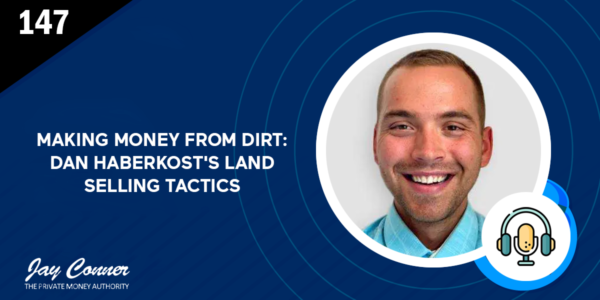
Ever wonder why landowners don’t list their properties themselves?
Dan Haberkost & Jay Conner reflect on this, affirming one lesson: Never second-guess people’s choices. There’s profit in understanding different perspectives.
In the world of real estate investing, having access to capital is as crucial as identifying the right property. Jay Conner, an authority on private lending, recently shared invaluable insights on his podcast, ‘Raising Private Money,’ featuring an interview with Dan Haberkost, who has raised over $2 million in private funds and left his traditional job by the age of 23 to pursue real estate investing full time.
The Genesis of a Real Estate Mogul
At 16, Dan Haberkost was already managing a farm and rental properties, dealing with tenant issues, and learning the harsh realities of running older real estate. This early foray into property management taught him the types of real estate he didn’t want to own. By 21, he purchased his first duplex and soon relocated to Colorado to expand his portfolio, quickly realizing the significance of having financial backing for investing.
Front Range Land: A Model of Arbitrage
Dan Haberkost detailed his venture, Front Range Land, which focuses on buying land at a discount and then reselling it, mostly through direct marketing efforts. He emphasized the distinction between his active business, which is not investing per se but a means to an end—an arbitrage business aimed at generating funds for further investment into his preferred buy-and-hold asset classes.
Understanding the Investor Mindset
Dan Haberkost advises new investors against short-term thinking. Plans like hosting a real estate group might not pay off immediately, but they establish credibility and authority, attracting long-term business connections. He stresses maintaining a solid reputation and ensuring lenders are always made whole, even if it results in personal loss.
Raising Private Money: A Balancing Act
While Sean advocates securing deals before having all the funds lined up, given the abundance of investment-ready cash, Jay Conner takes a more cautious approach, advising to secure funds first. Both agree that educating potential lenders on Private Money and self-directed IRAs is paramount, stressing that teaching and leading with a servant’s heart can build trust and open funding pathways.
Land Investing: Inefficiency Equals Opportunity
Investing in land can be more efficient due to its market inefficiency. Unlike residential properties or multifamily units, land is often mispriced and not well understood, allowing for profitable arbitrage opportunities. Dan Haberkost uses direct marketing to reach landowners, capitalizing on their apathy rather than distress, and selling the property for a profit on the multiple listing service.
Looking ahead, Dan Haberkost and his partner have launched GroundUp Partners, offering capital for land deals in response to limited lending options for this asset class. They’re now raising funds to grow this endeavor, showcasing Dant’s keen insight into realizing where the demand lies and fulfilling it to shape his real estate future.
Investing in Long-Term Success:
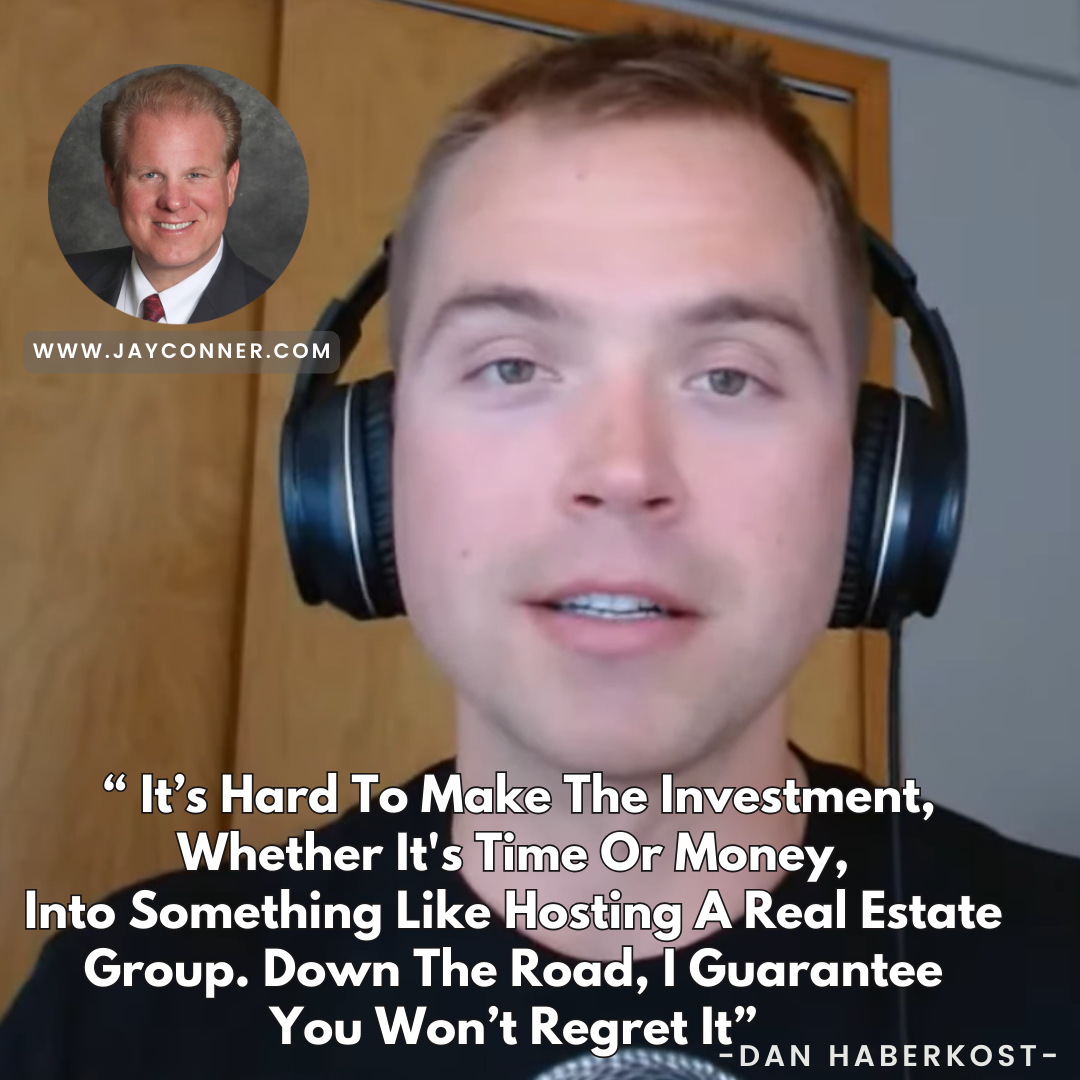
“It’s always hard to make the investments into something like hosting a real estate group, whether it’s time or money, … but down the road, you’re gonna be really glad you did them.” – Dan Haberkost
Visit https://www.JayConner.com for more information on Private Money benefits in real estate, and keep an eye out for future enlightening episodes from Jay Conner, dedicated to helping real estate investors climb to new heights through strategic private funding.
Questions discussed in this episode:
- What specific types of land does Dan focus on for simple subdivision, and how does the resale process work through multiple listing services?
- Based on Dan’s experience, why might some landowners choose not to list their properties themselves, and how does this create opportunities for land investors?
- Discuss the contrast between Dan’s advice on securing deals before having money lined up and Jay Conner’s approach of lining up funds first. Which do you think is more effective for new investors?
- How important do you think education and teaching potential lenders about private money and self-directed IRAs are to raising private capital?
- What strategies does Dan employ to build trust and maintain a good reputation among private money lenders?
Fun Facts:
- Dan began his journey into real estate at just 16 years old, managing a farm and rental properties, which taught him about the kind of real estate he did NOT want to own.
- In his direct marketing endeavors, Dan enjoys focusing on legitimacy and the ability to close, as this is a major concern for land sellers who have often had their time wasted by others who couldn’t follow through with a deal.
- Dan and a friend have recently launched GroundUp Partners, providing capital for land deals due to the scarce lending options for land, showing his innovative approach to identifying and solving industry problems.
Timestamps
0:01 – Raising Private Money Without Asking For It
5:16 – Started helping a developer, now owns a company.
9:41 – Investing in new opportunities pays off later.
13:45 – Struggles with finding money for educational deals.
17:09 – Owning rental properties gives a passive income stream.
18:28 – Real estate investing, efficiency, and business strategies.
22:26 – Simple infill lots, specific areas, acreage subdivides.
25:13 – Teaching acquisition managers about new construction essentials.
27:47 – Connect with Dan Haberkost: https://www.DanHaberkost.com
28:20 – Land financing challenges lead to business opportunities.
31:27 – Jay Conner’s Free Money Guide: https://www.JayConner.com/MoneyGuide
Connect With Jay Conner:
Private Money Academy Conference:
Free Report:
https://www.jayconner.com/MoneyReport
Join the Private Money Academy:
https://www.JayConner.com/trial/
Have you read Jay’s new book: Where to Get The Money Now?
It is available FREE (all you pay is the shipping and handling) at https://www.JayConner.com/Book
What is Private Money? Real Estate Investing with Jay Conner
http://www.JayConner.com/MoneyPodcast
Jay Conner is a proven real estate investment leader. Without using his own money or credit, Jay maximizes creative methods to buy and sell properties with profits averaging $67,000 per deal.
#RealEstate #PrivateMoney #FlipYourHouse #RealEstateInvestor
YouTube Channel
https://www.youtube.com/c/RealEstateInvestingWithJayConner
Apple Podcast:
Facebook:
https://www.facebook.com/jay.conner.marketing
Twitter:
https://twitter.com/JayConner01
Pinterest:
https://www.pinterest.com/JConner_PrivateMoneyAuthority
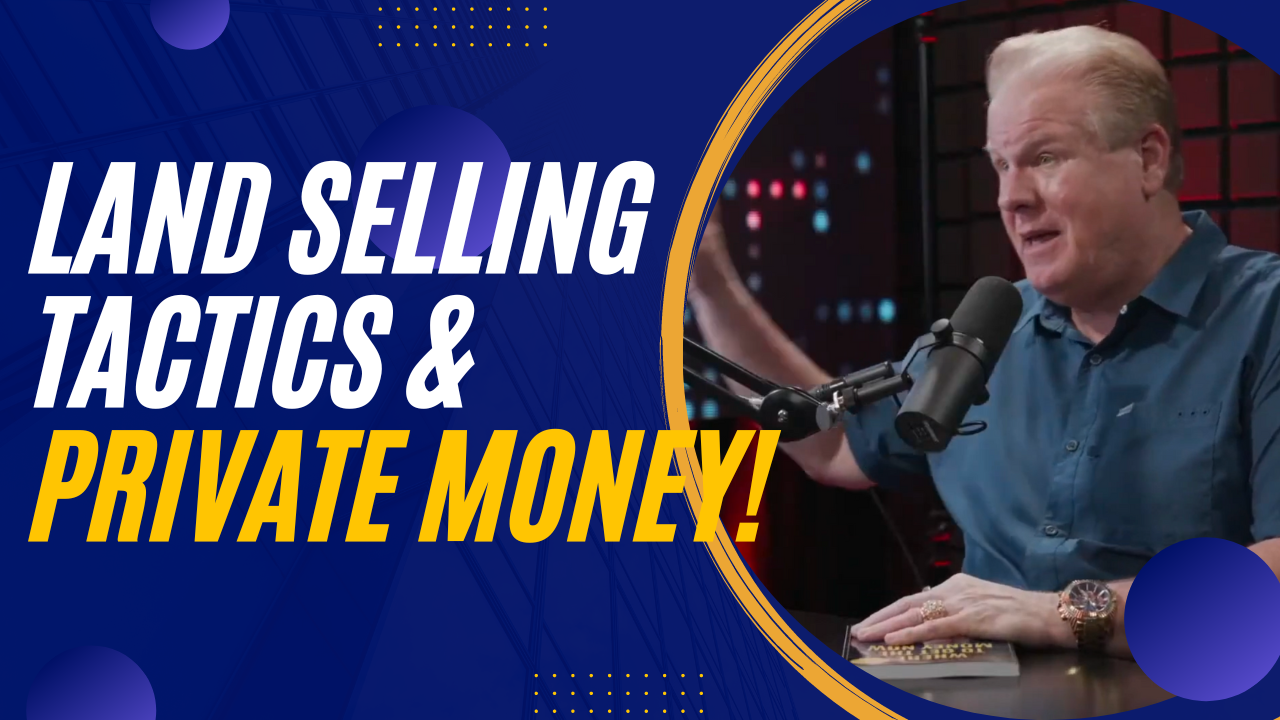
Making Money from Dirt: Dan Haberkost’s Land Selling Tactics
Jay Conner [00:00:02]:
Welcome to another amazing episode of Raising Private Money. I’m Jay Conner, and this is the show where we talk about how to raise money for your real estate deals without ever asking for money. Well, my guest today has raised over $2,000,000 in Private Money, and in fact, he’s actively raising more Private Money right now. Well, here’s what’s interesting. He started his real estate investing journey back when he was only 16 years old. Can you believe it? Now, in addition to that, he’s been buying rentals consistently since he was in college, and he’s built out quite an impressive land and development business, which continually feeds the acquisition of the rentals. Now he left his traditional full-time employment job, as in the two jobs, when he was only 23 years old. And now he’s got the freedom to work on what he wants to work on without being tied down to, you know, the day job.
Jay Conner [00:01:04]:
Well, he’s currently working on a mixture of new development land investing, and he’s still building his long-term buy and holds. In just a moment, you’re going to meet my friend and very special guest, Dan Haberkost, right after this.
Narrator [00:01:21]:
If you’re a real estate investor and are wondering how to raise and leverage Private Money to make more profit on every deal, then you’re in the right place. On raising Private Money, we’ll speak with new and seasoned investors to dissect their deals and extract the best tips and strategies to help you get the money because the money comes first. Now here’s your host, Jay Conner.
Jay Conner [00:01:50]:
Well, welcome to the show, Dan. Great to have you back on from a couple of years ago. How are you doing?
Dan Haberkost [00:01:57]:
Jay, I’m great. Thanks for having me. Excited to catch up.
Jay Conner [00:02:01]:
Absolutely. Well, I’m excited to have you back. And, you know, as I said here in the intro, I mean, you started real estate back in when you were 16. You quit the day job when you were only 23 years old. I don’t know. You look 24 now, but
Dan Haberkost [00:02:18]:
I shaved this morning. So. You shaved
Jay Conner [00:02:20]:
this morning. There you go. But take us back. So you, you know, you’re raising Private Money, you’ve raised over a couple of million in Private Money. You’ve got all kinds of deals going on. And in fact, you’re actively involved in, some pursuits right now that tie right into raising Private Money. We want to get into that and talk about exactly how you’ve been raising money. What are your favorite ways to raise Private Money? How do you start conversations with people? Where do you find these people to, you know, be private lenders? But before we dive into that, take us back to 16.
Jay Conner [00:02:55]:
How did you get started in real estate when you were only 16 years old?
Dan Haberkost [00:03:00]:
Sure. So I’m from Ohio originally. I live in Colorado now. But when I was 16, I was managing a farm, and my boss would go to Aruba for a good portion of the year and leave me to manage his farm and also his rental properties. And so if something was wrong, tenants would call me. I remember being in high school and having to leave early to deal with a tenant problem in the middle of winter when I was 16 or 17 years old. And so that was my first experience with real estate, and it taught me all about the real estate I do not wanna own. Anyone from Ohio can tell you that most of the buildings there, whether it’s single-family, multi-family, or anything, are generally much older.
Dan Haberkost [00:03:42]:
I was in a suburb of Cleveland, a very rural suburb of Cleveland, and a lot of Century Homes, which is a constant problem, not a great tenant demographic. And so that was a useful experience, but not exciting, for a 16, 17, 18-year-old. Fast forward through college, worked full time, and went to school full time. And when I was about 20 years old, I kind of was doing some planning, right, reflecting. I was getting close to finishing school, and I thought, well, what am I gonna do when I get out? If I can handle 45, to 50 hours of work per week plus full-time school, I can certainly start some sort of business or do something to accelerate myself financially, once done with school. And started reading about equities, different types of investing, business, etcetera, and, like, pretty much everybody else, it was when I read Rich Dad, Poor Dad, that it was like a light bulb moment. And, so read Rich Dad, Poor Dad. I don’t know.
Dan Haberkost [00:04:36]:
I was 20, and 21, and ended up buying a duplex, a house hack in Parma, Ohio when I was 21. And so that was my first ever personal acquisition. Soon thereafter, decided I didn’t wanna stay in Ohio, moved to Colorado Springs, and bought another house hack. Great. I had a 2 property portfolio. Well, it was around that time I still had a job, and I realized the low and no money down stuff as far as actual investing, actual buy and hold rentals, it doesn’t work so well as far as scaling a large portfolio. You need money. I bought rentals on 0 or 100% owner financing, and you still need money because things are gonna go wrong.
Dan Haberkost [00:05:16]:
So I thought, alright. I hate having a job anyway, so how do I find some sort of active business I can start to then complement or feed the investing? And long story there, but I met a guy at the local real estate group here in Colorado, which I host now, who had been doing land and development for the last 40, 50 years. I drive an hour south every weekend to Pueblo West, Colorado for anyone who knows where that is, and I’d help him in his business, help him he was building houses at the time, simple infill spec homes or presales oftentimes. And so it started by helping him here and there with the land acquisitions and going off-market and getting lots to build on and participating in the builds, and ultimately, that’s where Front Range Land came from. So fast forward to today and quite simply, Front Range Land is a giant direct-to-seller marketing funnel centered around buying land cheaply from 30 to 70¢ on the dollar, depending on what I intend to do with it, and and the specifics of the lot. A few lots at a time, I’ll I’ll put new construction on, and a lot of them are just simple wholesale to retail. And to be clear, rarely do assignments. I close on them, but I mean buy low, sell high.
Dan Haberkost [00:06:28]:
That’s the disposal strategy for most of them, working on some small subdivides, that sort of thing. But it’s all about buying a good deal, and it’s always within the context of land. And so that’s my active business, and that is what has fed the purchase of more and more rental properties. And, right now, I am building a couple of duplexes that I will keep as rentals. So, that’s the quick synopsis of how I got where I am today.
Jay Conner [00:06:56]:
Sure. Well, I wanna talk with you about your experience in raising Private Money, and then I want to come back around and talk about this land, an asset that you’re interested in why that excites you etcetera. Let’s start with the Private Money. What was it? I mean, I’ve discovered over the years that most real estate investors have something that happens in their business that then triggers them or forces them to learn about Private Money. How did you get first introduced to this world of Private Money, and how did you start raising Private Money? What happened?
Dan Haberkost [00:07:36]:
Yeah. The first time I ever raised Private Money was with the older friend and mentor I told you about where I went out, I did a bunch of direct-to-seller marketing, and got a bunch of land deals, far more than I could afford to to close on. And so that was the impetus to go figure that out, and he started funding deals for me, and we split them 5050, which oh, man. I can’t imagine those annualized returns he was getting in hindsight, so I joke with him about that, today. But so that was the original impetus. And from there, it’s grown via referrals. You know? Like I said, I host the real estate group in town. Just talking about what I do, I haven’t ever asked anyone directly, or let me say this again.
Dan Haberkost [00:08:21]:
I haven’t initiated the conversation. It’s more they approached me because a friend of a friend or they heard me at the real estate group or they heard me on a podcast or followed me online, and they started asking questions about how they might be able to participate. And so that, it is where it started, but let me pause there before I go on any further.

Jay Conner [00:08:41]:
No. That’s fine. Well, one thing you had to do to get people interested in you is people needed to hear your story so they would even be, you know, involved in it. So the real estate investing group that you were referring to, did you happen to start that or run it, or were you a member, or what was your association with the group?
Dan Haberkost [00:09:04]:
I started going to it when I moved here in 2018, and then I got to know the host who had started it before I even lived here. One was moving, and he had become a friend, so I took his place a little over 3 years ago hosting the group. So I host it now.

Jay Conner [00:09:18]:
Okay. Well, there’s a lot to be said for either starting your group hosting a group, or being the go-to person, because that right there elevates you with credibility, trust, and authority for being the person who runs the group. And that right there is going to attract other people that want to do business with you. Right?
Dan Haberkost [00:09:41]:
Absolutely. And I just wanna pause and say it’s especially for new people, it’s always hard to make the investments into something like hosting a real estate group, whether it’s time or money, hosting a real estate group or all the things that might not pay off right away, might not make you any money tomorrow, but down the road, you’re gonna be really glad you did them. And that’s a good example of that in that, you know when I started hosting that 3 years ago or when I started going to it 6 years ago, there was a big time investment upfront, but now, you know, years down the road, that pays off in a variety of ways. And so try you know, this is more speaking to the new people in the room because when you’re new, you wanna make money, you’re thinking 60, 90, 120 days ahead, and oftentimes you shoot yourself in the foot, you know, a year from now, 2 years from now by only focusing on the short term. And so when you’re new, and I think about this today, I think about 10 years from now, 15, 20 years from now, and I make sure that I am planting seeds, right, that will produce down the road and may maybe won’t do anything for me right now, but will pay off down the road. And so hosting that real estate group and what that’s done just as far as reputation has been invaluable, but it certainly didn’t pay off for quite a while.
Jay Conner [00:10:57]:
Right. Yeah. That is that is a long-term play. Does a mistake come to mind or, something that you would have done differently, since you started, working with Private Money lenders? What advice would you give to other investors, when it comes to working with private lenders? What would you do differently now? Or what do you do differently now in working with private owners that you may have changed since you started?

Dan Haberkost [00:11:27]:
Well, the biggest thing that I do daily is just offer reasonable returns. Again, those giving 50% of the deal, on many of these deals to the passive lender, and we’re talking 2 to 4-month land flips where they’re almost doubling their money. I mean, they were just obscene returns. So, of course, I wouldn’t pay multiple 100% annualized interest. That’s one thing. Another point, which I’m happy to say I have not made this mistake, but I’ll just say it to everyone because this is essential. Reputation matters more than anything, and I don’t care if you’re losing money. I don’t care what the scenario is.
Dan Haberkost [00:12:03]:
No matter what, always make your lenders whole. So I just wanna make that point, and that’s that’s essential. Under no circumstances do your lenders ever lose money, you know, barring you going bankrupt, I guess. And then let’s see. Don’t be shy. Don’t be shy about it. I limited myself where, I could have done more sooner if I wasn’t if I didn’t have a fear around, raising money. And kinda as a corollary to that, there’s always the chicken or the egg sort of debate, you know, where, people don’t wanna go get a deal because they don’t have money, but then, oh, I don’t wanna start talking to people because I don’t have a deal.
Dan Haberkost [00:12:43]:
It’s easier to raise the money once you have a good deal under contract or you’re close. Right? So I would be of the the mindset of working to find the deal first. Well, work on them in conjunction, but don’t be afraid of going out and pursuing a deal and getting something under contract, again, assuming it’s a good deal because you haven’t yet figured out the money. After all, that is very solvable if you have a good deal under contract. Especially right now, there is so much cash sitting in people’s bank accounts. It’s crazy.

Jay Conner [00:13:13]:
Yeah. I’ve had more Private Money chasing me since this side of COVID than actually before COVID. But, you know, one thing I say all the time is desperation has got a smell to it. Yeah. And so, Dan, and you, you and I will perhaps differ on this point, but that’s okay. We all do business a little bit differently. I practice and preach, getting the money lined up first. I’ll tell you one thing that drives me crazy, and I know you’ve heard this.
Jay Conner [00:13:45]:
I know you’ve heard this, but I’ve heard it. And it drives me nuts, particularly when it comes to educators. They’ll say, oh, just go get the deal on the contract. The money will show up. And I want to say where? Well, I mean, if somebody’s got no idea where the money’s going to show up and they’ve got a deal on the contract, it’s like, I don’t want to deal with that stress. And so for me, in my experience, it’s always been easier to get the money pledged as long as I’ve got a plan on how I will win. I don’t want to go have money pledged, and I have no idea as to how I’m going to get deals, lined up. But one thing that I heard you say a few minutes ago resonated with me, and that is I’ve never asked or you said that you’ve never, like, asked directly for money.

Jay Conner [00:14:34]:
You know what? I’ve raised 8 and a half $1,000,000. I’ve never asked anybody for money. And people say, Jay, how in the world do you do that? Well, I simply put on my teacher hat, and I know you’ve got this spirit, Dan. I started teaching people that I’ve got some kind of relationship with. I put on my Private Money teacher app and teach people what Private Money is, what self-directed IRAs are, and how they can make high rates of returns safely and securely. And I lead with a servant’s heart, educating people. So I have my program, particularly for single-family houses. Here’s how much I paid.
Jay Conner [00:15:12]:
Here’s the length of the notes. Here’s how you can get your money back in case of an emergency. And then once they tell me that, oh, well, I’m interested in that and how much they got to work with, then I give them a call, which is called the good news phone call.
Dan Haberkost [00:15:27]:
And the
Jay Conner [00:15:27]:
a good news phone call is I call them up and let’s say, Dan, let’s say you’re one of my private lenders. I’ll call you up and I say, I got great news. I can now put your money to work. I got a house under contract in Newport. The funding requires $150,000 I know you got 150,000. You already told me. And the closings next Wednesday. You have to have your funds wired to my real estate attorney’s trust account by next Tuesday.
Jay Conner [00:15:52]:
I’m going to have my attorney email you the wiring instructions. End of conversation. The most stupid question I could ask is do you want to fund the deal? Well, of course, you want to fund the deal because I’m not bringing a deal for my private lender to fund unless it’s a deal that matches up to the criteria of the program, you know, that I already taught them. But, anyway, you’re well on your way to raising a lot of Private Money. You have all different kinds of asset classes going on. What is, I mean, you’ve got different asset classes. You got buy and hold. You’ve got land that you’re into.
Jay Conner [00:16:32]:
You’ve got development. What’s your favorite asset class and why?
Dan Haberkost [00:16:39]:
Well, I want to make the distinction clear that front-range land is just a means of making money. It isn’t you know, I probably say this accidentally where, oh, its land investing. It’s not investing. It’s just a simple arbitrage business to make money so that I can go invest. I bought a 4plex last Monday. That is investing. And so it depends, Jay. I mean, for the buy and hold, I like nice residential properties.
Dan Haberkost [00:17:09]:
Granted, there are plenty of types of assets I’ve never bought, so perhaps that’ll change in the long run. But, you know, I look at some of the houses or small duplexes I own and hear from the tenants maybe once a year. They keep it immaculate. You know, they take care of it like it’s it’s like it’s their own house. So often what people tell us about the advantages of multifamily are also negatives, and, it’s more about selling something than it is reality. Right? There are pros and cons to everything. I look at some of these houses and it’s just it is passive. And so going forward, you know, I mentioned I having a couple of duplexes built just to keep asset class.
Dan Haberkost [00:17:49]:
Sure. They’re ground up, but they’re these are infill lots, and building a house or a duplex is so simple. It’s a box with some infrastructure. And so I like buildings that are younger than me, that are in b plus or better areas where I can have tenants that at least have a 700 credit score because my experience has been that I have no problems with that demographic. So for buy and hold, that’s more of what I’m I’m I’m interested in. And especially going forward, when I think about where I wanna put my time, It’s gotta be either new or very new and very, very nice or I don’t wanna touch it. You know, I’m from Cleveland. Don’t wanna touch anything back there in the Cleveland metro.
Dan Haberkost [00:18:28]:
Old buildings, poor tenants, terrible weather, that sort of thing, not interested. You can make a lot of money doing that. That’s just not what I wanna do. Now switching to the active side of how I make money every day, I love land because it’s it’s incredibly inefficient. And so I’ll never forget going back to the beginning of the show when I told you when I was, you know, 20 ish years old, started reading about different assets, different means of investing, and I read about the efficient market hypothesis and how that pertains to equities, and that’s really where it came from. But I think about that concept as it applies to real estate and something like multifamily or housing, single-family housing would be far more efficient where it’s really hard to go buy a discounted large apartment or single-family house, and you could do it. You do it all the time, but there’s a whole system and process beyond. There’s a whole business of direct-to-seller marketing.
Dan Haberkost [00:19:22]:
It’s it’s not easy. And then within the world of real estate, land is the very, very you’re one of the very, very inefficient asset classes, not well understood. People don’t know how to price it. Just, again, not well understood is the best way to say it. And so it’s inefficient and much easier to buy at a discount. And so, again, for day-to-day making of money to go buy nice, buy and hold assets, I like land.
Jay Conner [00:19:50]:
So you said something a moment ago that I want to unpack or get you to unpack. So, first of all, Front Range Land, you’ve said that a couple of times. That’s your company. You’re the CEO of Front Range Land. So we want to talk about what your company does. And you said also right after that, you said that it’s an arbitrage play that allows you to make money. So unpack all that. What in the world does that mean? What does Front Range Land do? What do you mean by arbitrage and how do people make money, in what you’re talking about?
Dan Haberkost [00:20:26]:
Sure. Sure. You know, it’s funny. I’ve tried not to go off on a tangent here, but I like to tell anecdotes really to drive points home. And so I finished a book recently called The World for sale. I forgot what the subtitle was, but it was all about, commodity traders, their history, and then how they’ve grown and talked or the history of some of the biggest commodity trading businesses in the world. And some of these companies are worth 5, 6, $700,000,000,000, probably a trillion today because this was written, like, 7 or 8 years ago. And all these companies do is simple arbitrage where they can buy at x and sell it to x, 3x, 4x, but they do it on a worldwide scale.
Dan Haberkost [00:21:08]:
That’s all or almost all I’m doing with Front Range Land. Direct to the seller via mailer, cold calling, or email to buy land at a discount off the market. Much of it, we just resell on the market. That’s it. Really, simple. And then, you know, I’m working on some deals just east of where I live out in Eastern El Paso County. That’s Colorado, not Texas. And, doing some small work on some small subdivides out there.
Dan Haberkost [00:21:35]:
You know? So sometimes it’s a modest improvement to the land to then resell it at a higher price, but the vast majority of the time, it’s simple wholesale to retail. Buy it at x and sell it at 2 x. And so it’s all about just identifying the avatar that sells at a discount. I’m sure you do the same thing with single-family homes, and then marketing to and ultimately sifting for that avatar, and then buying and selling.
Jay Conner [00:22:03]:
So you mentioned direct to sellers. So you’re talking about direct marketing, which I suppose you do direct mail as part of your marketing, direct mail to the owners of the land. Are you direct mailing to people who just own lots, or you may direct mailing people who have acreage that could be a farm or all the above?
Dan Haberkost [00:22:26]:
Mostly simple infill lots, but working on some very specific, areas with acreage to do some small simple subdivides. Because depending on the county, depending on the zoning codes, subdivides can be very, very simple. East of me and Eastern El Paso County, so east of Colorado Springs, if you keep them 35 or larger, you can take these several 100-acre tracks, split them up into 30 fives for a few $1,000 to have an architect or engineer just redraw the plat, get a new survey, record it yourself, and you’re done. And so so subdividing can be a massive process that takes years and years depending on the the size and complexity, and then sometimes it’s very simple. You know, in whatever county you’re looking, talk to the planning department about minor versus major subdivisions and what goes into that.
Jay Conner [00:23:16]:
Gotcha. So you’re doing your direct marketing to the owners, And then that I hear you say after you acquire it or purchase it, you just list it with a realtor in the multiple listing service and just flip it? Most of the time. Yep.

Jay Conner [00:23:31]:
Well, that’s pretty simple, isn’t it? Yeah. And I’m sure some people would say, well, why didn’t the owner of that lot just list themselves and put it in the multiple listing service? I want to hear your answer, but my answer is I never try to second guess why people do what they do.

Dan Haberkost [00:23:49]:
So I’m glad you said that. I need to make a point there. Stop assuming that your perspective is that of everyone everywhere in the world. Like, everyone does this. Well, I wouldn’t sell the discount. Well, who cares what you want? You know, half the places I do business, I would never go there. I don’t wanna live there. And I’ve heard people say, oh, that market you know, such and such market, I don’t wanna go there.
Dan Haberkost [00:24:11]:
Who cares if you wanna go there? Is there demand? Anyway, so I don’t wanna go down that rabbit hole, but you’re not the center of the world. Stop assuming you are. So to your point, I’ll tell you another quick anecdote that answers the question very simply. I was talking to my dad the other day, and he and my mom have retired. And they were getting rid of both their cars, and they were consolidating to just a truck. And my dad’s Subaru was only a couple of years old. It was pretty nice. It was one of the nicer ones, and he told me he traded it into the dealer.
Dan Haberkost [00:24:39]:
And I said, Dad, why didn’t you sell that yourself? You know, you have the time. You could’ve sold it substantially higher. They’re just gonna turn around and flip it. And he just goes, you know, I’ve pinched and and saved my whole life. I just didn’t wanna deal with it because I didn’t have to. And that’s who sells at a discount.
Jay Conner [00:24:57]:
That’s it. This they just wanna be done. Just wanna be done. And what is your unique selling proposition or what is it that you offer as a benefit to the sellers to do business with you and to sell to you?
Dan Haberkost [00:25:13]:
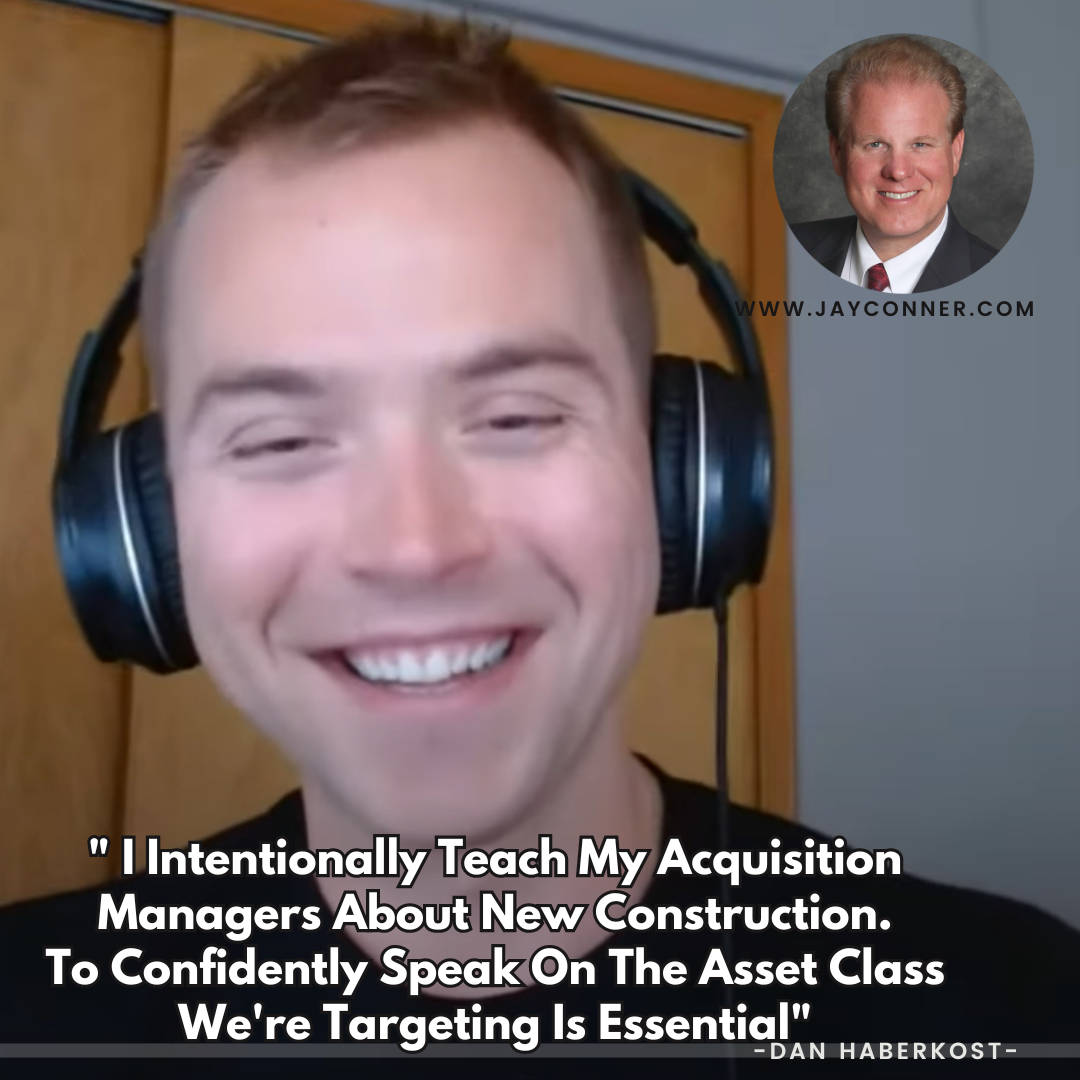
2 things. So number 1, I intentionally teach my acquisition managers about new construction. Going back to how and when I learned. I learned by actually building single-family houses with my older friend and mentor, and so many of the people that have moved into land and direct to southern marketing, don’t know anything about new construction. They don’t know what a plat map is or what setbacks are or plot plan, perk test, all these different, terms that are all essential to being able to put new construction on a lot, and so that helps a lot because many of these sellers are retired developers that just have a couple lots left. And so actually being able to confidently speak on the asset class we’re targeting is essential. And then kinda as a corollary to that, again, so many people have tried to come from single-family house wholesaling or flipping into land, and they assume that the avatar is the same. It’s not.
Dan Haberkost [00:26:09]:
It’s oftentimes apathy more than it is distress. In several 100 deals, maybe 3 to 5% of the time is any form of distress, and most of the time these people have money, they have time, they just don’t wanna deal with it. And so understanding that and marketing accordingly is really important. Don’t put fast cash close on your postcards or letters to, land sellers. It’s it’s land. What else are you gonna close with? To that point, focusing on legitimacy and the ability to close has been powerful because so many of, again, these people who come from the wholesaling world, don’t have money, and so they’re trying to assign lots. And many of these sellers have had their time wasted with somebody who put them under contract and they couldn’t close, so we emphasize proof of funds. Well, in a lot of cases, if it’s a market, really no.
Dan Haberkost [00:27:04]:
We’ll put up nonrefundable earnest money on day 1. Here’s our title agent. We’ve done dozens of transactions with our attorney, whether it’s in the Carolinas or an attorney state. You can talk to our attorney or title agent, and all of this builds legitimacy in the seller’s mind, which is the most important pain point. It’s not speed. It’s not a quick cash close. It’s legitimacy. Is this a scam? Can this person close? And so aligning all of our marketing, talk tracks, and scripts around that, helps us get deals where other people do know.
Jay Conner [00:27:35]:
How are you funding, these infield lots? Private Money or or, other ways?
Dan Haberkost [00:27:41]:
It’s a mix. I have a good amount of my own money in it. I have a bunch of lines of credit, and then I use Private Money as well.
Jay Conner [00:27:47]:
Awesome. Very good. Well, I have a question for you. And that is, if somebody is interested, and I know they are, to learn more about how you do what you do, how can they connect with you?
Dan Haberkost [00:28:01]:
www.DanHaberkost.com or Dan Haberkost on Instagram or Facebook. Easy as well.
Jay Conner [00:28:07]:
That’s pretty easy.
Dan Haberkost [00:28:08]:
Yeah. Shoot me a message. Do we have a few more minutes, I have a whole other, endeavor on the topic of Private Money I wanted to talk about.
Jay Conner [00:28:18]:
Please do. Go for it.
Dan Haberkost [00:28:20]:
Okay. So I mentioned that land is inefficient, and part of that is if you wanna go buy a single-family house or the strip center down the street or a storage facility, there are endless lenders for that product. Right? For land, if you need money, there are no institutions or companies really or very, very few that will lend on land. I know some companies do for a mom-and-pop that wants to build a house and live at it a land-at-home package, but it’s based around doing new construction soon, and it’s it doesn’t work for what I’m talking about. And so everyone I know in the land space that’s just buying and selling or buying and improving via entitlements or subdivide and reselling has trouble raising money. So whenever you identify a problem that everyone in the industry has that presents an opportunity. So a a friend of mine who has the same business as me, and I recently launched GroundUp Partners where we are providing capital for land deals. We’ll partner with the person who brings the land deal, help double-check the due diligence, and then do a profit split on the back end.

Dan Haberkost [00:29:31]:
But to the whole point of this show, Jay, we just signed, actually with an attorney and are putting together a a fund and working on raising quite a bit of money. I’ll I’ll pause there because I’m realizing as we speak, I’m not sure how much I can and can’t say, but, working on doing this at scale more efficiently and simply, to to grow that business because it’s a huge opportunity because almost nobody’s providing capital for land yet in a building boom because there’s a housing shortage, and to construct new housing, you need land.
Jay Conner [00:30:05]:
Well, that’s fantastic. Well, you’re exactly right. I mean, you’ve identified an area where people need funding for land deals. And so now you’re putting together a platform to where they can. And so you’re raising money for that fund as well. Right? Mhmm. So, if someone is listening here and interested in getting some returns on their funds, they could reach out to you and talk about that fund and how they could participate. Right?
Dan Haberkost [00:30:32]:
Yes, absolutely.
Jay Conner [00:30:34]:
That’s fantastic. Dan, thank you so much for joining me again here on Raising Private Money. It’s so good to see you again. And thank you for bringing value to the audience.
Dan Haberkost [00:30:44]:
Thanks, Jay. It was fun.
Jay Conner [00:30:47]:
Absolutely. Well, there you have it. Another amazing episode of Raising Private Money. I’m Jay Conner, and we appreciate it if you happen to be listening on iTunes Spotify, or any of the podcast platforms, be sure and follow me so you don’t miss out on any of the other upcoming episodes. If you are on YouTube, please subscribe, and ring that bell so you get notice of the very next episode. I’m looking forward to being a part of taking your business to the next level. I’m Jay Conner, The Private Money Authority. Looking forward to seeing you right here on the next episode of Raising Private Money.
Narrator [00:31:27]:
Are you feeling inspired by the knowledge you gained in this episode? Then head over to www.JayConner.com/MoneyGuide. That’s www.JayConner.com/MoneyGuide, and download your free guide that shares seven reasons why Private Money will skyrocket your real estate investing business right now. Again, that’s www.JayConner.com/MoneyGuide to get your free guide. We’ll see you next time on raising Private Money with Jay Conner.